

Scott Morrison's tone-deaf leadership is the last thing traumatised flood victims need. Here are two ways he can do better
- Written by: Alex Haslam, Professor of Psychology and ARC Laureate Fellow, The University of Queensland
As French statesman Charles de Gaulle once said, faced with crisis a man of character “falls back on himself. He imposes his own stamp of action, takes responsibility for it, makes it his own”.
So how, then, might we judge Prime Minister Scott Morrison’s character amid the flood catastrophe facing parts of Queensland and New South Wales?
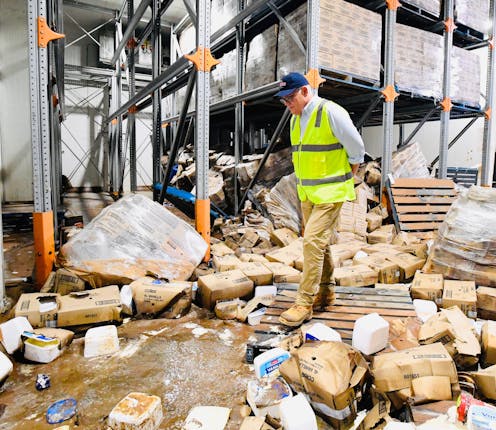
Morrison has faced heavy criticism for his sluggish response. When touring flood-ravaged Lismore in NSW this week, he avoided locals who wanted to meet him. And his declaration of a national emergency came many days too late, well after the floodwaters peaked.
For the last two decades, I’ve worked with colleagues around the world to study the psychological resilience of communities in a crisis, and the importance of leadership in dealing with trauma. We offer lessons that might help Scott Morrison and other leaders better serve disaster-stricken people next time.
Give us hope
Only three months in, 2022 has already provided a glut of crises around the world requiring strong leadership. Along with the horrendous flooding along Australia’s east coast, we have a new wave of a deadly virus and Russia’s invasion of Ukraine threatening to start a world war.
For Australian leaders, COVID has been one long lesson in crisis management. What’s more, it came on the heels of devastating bushfires in the summer of 2019-20 and floods in early 2021.
But Morrison has struggled with this crash course in leadership. When criticised about the speed of his flood response, the PM focused almost entirely on limits to material resources, saying:
I don’t think in situations like this there can ever be enough support […] I mean, no amount of support is going to measure up to what people need in a desperate situation like this.
At a material level, this is entirely true. Indeed, given the utterly desperate situation in which Ukrainians find themselves, President Volodymyr Zelentskyy might well have made the same point to his people even more convincingly.
He didn’t, though. The core task for a leader in a crisis is not to explain why we are going to fail. People need hope that, together, we can prevail – and that costs nothing.
So how might Morrison have done better?
My colleagues and I recently released a book examining the dynamics of effective leadership across contemporary society. We have also published research on leadership during recent crises, notably COVID-19 and the Black Summer bushfires.
Our work points to several lessons for leaders looking to rally the groups they lead. Below, I focus on the two most important.
Being one of us
Whatever group they belong to, people are generally most influenced by those who seem to represent that group – whether it’s our team, our party or our country.
The more a leader is seen to represent us, the more we’re inclined to trust and follow them.
This is particularly important in a crisis. After the Christchurch massacre, New Zealand Prime Minister Jacinda Ardern went to great lengths to engage with the Muslim community, and dressed in ways that spoke to a sense of shared grief and shared identity.
Likewise, in Kyiv, Volodymyr Zelenskyy reassured Ukrainians by posting videos of himself in battle fatigues on the ground, mingling with his followers. “We are all here,” he proclaimed. “Our soldiers are here. The citizens are here. And we are here”.
Yet for many Australians, a defining feature of Morrison’s crisis leadership is that he is never here. And when he is, he seems not to be here for us.
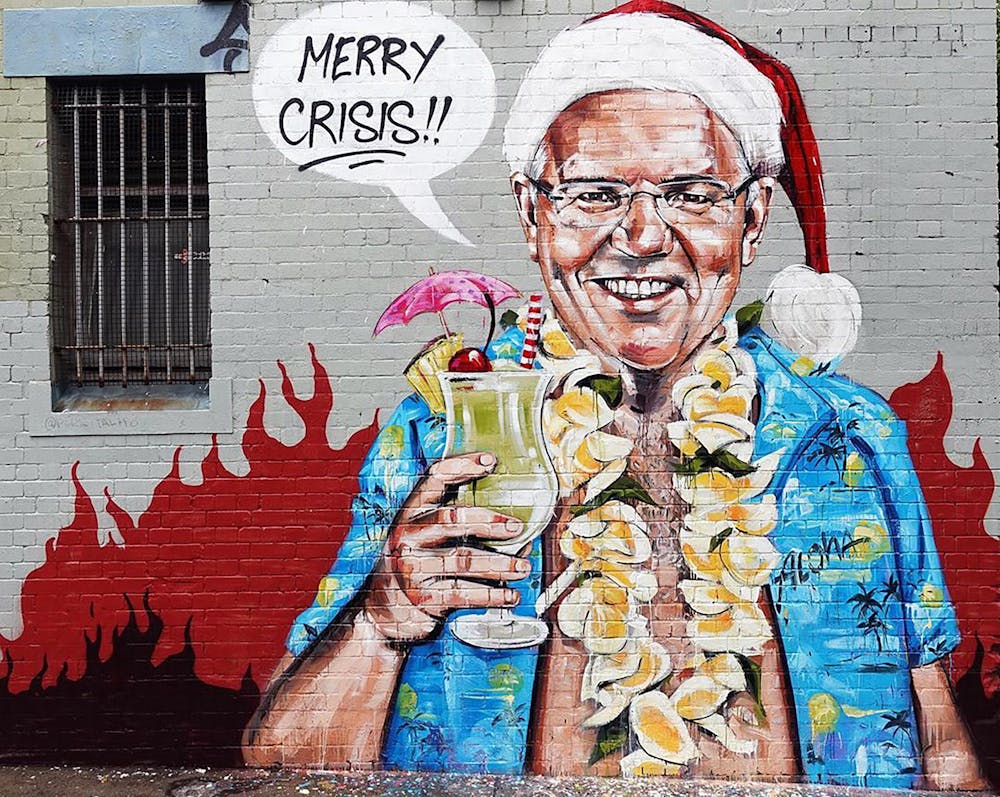
Probably the most enduring image of Morrison’s handling of a disaster is of his holiday in Hawaii as bushfires raged in the summer of 2019-2020.
Unfortunate timing perhaps, but it was compounded by his seeming reluctance to return to Australia, together with his excuses for not doing so.
“I don’t hold a hose,” Morrison famously said in his defence.
As a statement of fact this is correct – just as Ardern didn’t hold a stretcher in Christchurch and Zelenskyy didn’t hold a rocket launcher in Kyiv. Psychologically though, they did. And it was this that motivated others to put their shoulders to the collective wheel.
Read more: Whether people prepare for natural disasters depends on how the message is sent
Doing it for us
A key reason leaders need to represent shared identity in a crisis is to allow communities to draw from a sense of solidarity and provide a platform for social support.
Finding common ground with a stranger allows us empathise with their plight. It motivates us to offer a hand to help others, and in turn motivates them to accept it. Without this – as we saw when a volunteer firefighter withdrew his hand from Morrison during the 2019-2020 bushfires – aid is ineffective and unwelcome.
Shared identity also fuels resilience – helping people cope with ongoing stress and overcome trauma.
The power of shared identity came to the fore as the COVID-19 pandemic took hold, when “mutual aid” groups sprang up around the world. These groups involved people helping their neighbours, such as by collecting groceries, walking pets or giving moral support.
This cooperation involved people from all walks of life, creating a life-saving sense of meaningful community at a deeply challenging time.
Read more: The community-led movement creating hope in the time of coronavirus
Holding the hose
Social identity is the most important resource leaders need to build and draw upon in a crisis.
It doesn’t necessarily require money, though this can help. It isn’t created by meaningless photo opportunities. It comes from a genuine identification with the people you represent and from a desire to work together to “make us better”.
One senses this point would not be lost on Volodymyr Zelenskyy. But after more than three years as leader, Scott Morrison still appears to be struggling with the idea of being there as one of us, for all of us.
Read more: Why good leaders need to hold the hose: how history might read Morrison's coronavirus leadership
Authors: Alex Haslam, Professor of Psychology and ARC Laureate Fellow, The University of Queensland


















