

A brief (political) history of Australian picnics
- Written by: Adele Wessell, Discipline Chair, Humanities and Social Science, Southern Cross University
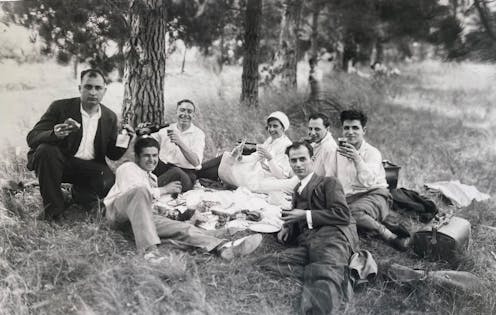
Picnics and other Australian food traditions were once described as imported, banal and unappealing. But the practice of sharing food and eating outdoors has a long history, one that has been decidedly political.
First Nations people came together across great distances to share food for Bunya Gatherings: not just places for consuming food, but also for ceremony and stories.
Wiradjuri scholar Dr Michelle Bovill explains how midden sites capture “moments in time, celebrations and ceremonies of our ancestors”.
Paul van Reyk’s new history of food in Australia reminds us of the ways in which Indigenous Australians contribute to our foodways (the eating habits and culinary practices of a community).
Read more: True to the Land: a new history of food in Australia begins 65,000 years ago
The British custom of the picnic was connected to the shift from pastoral to urban living and changes in work conditions as a result of industrialisation and travel.
As Walter Levy explains in The Picnic: A History, as more people worked in cities, there was an urge to leave “home and city for the country, or even some facsimile of country, a lawn or a grove of trees” .
Picnics are established in the English tradition as the antithesis of work. Yet that distinction is not so clear in Australia. Picnics were established as an “Australian institution” by the 1880s, in a trend which coincided with the union movement – South Australia was the first place in the British Empire to allow the legal formation and registration of trade unions in 1876.
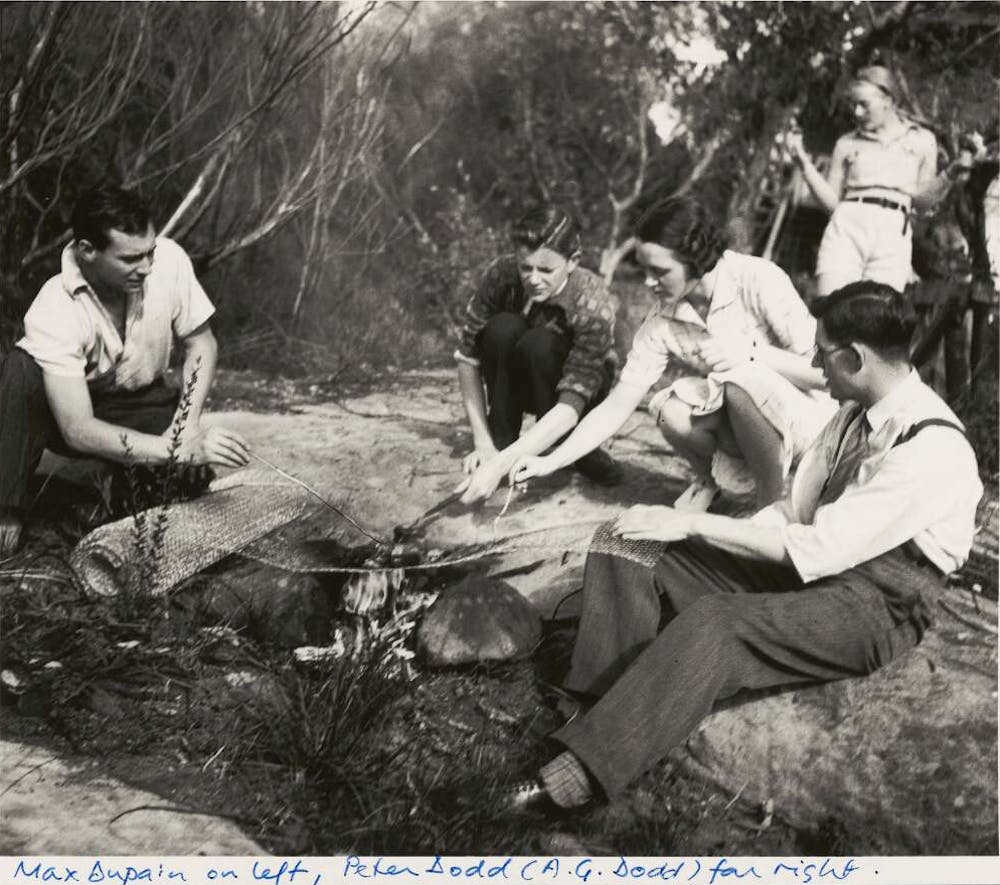
The union picnic
Through this unionisation also sprung the “works picnic”. The Ballarat Miners’ Association held their first annual picnic at the Botanical Gardens in March 1881, where 2,000 miners were joined by their families and friends. A struggle with gatecrashers in the rotunda over the proprietary of the beer finished the rowdy picnic early.
Thousands of people assembled at Parramatta Park in 1884 for a picnic to celebrate the eight-hour day, drawing unionists and parliamentarians together, described as a “banquet”.
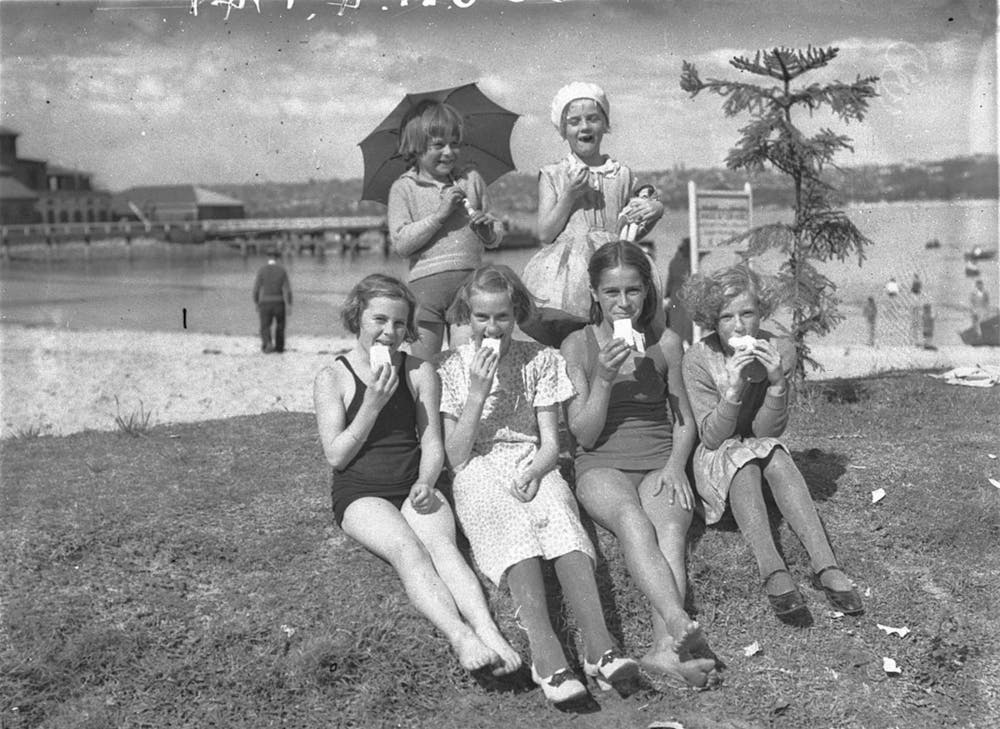 Children at the Australian Paper Mills union picnic, Clifton Gardens, 1935.
State Library of New South Wales
Children at the Australian Paper Mills union picnic, Clifton Gardens, 1935.
State Library of New South Wales
From the 1960s, union picnics began to fade away. Changes in union rights and the decreasing membership from the 1970s contributed to the decline.
The South Australian “chop picnic”, which required carrying a rack to cook chops, sausages and onions over a fire was replaced by the barbecue and fewer people were attending the picnic that was part of their award. Historian and political activist Humphrey McQueen saw the decline of union picnics as a sign of “how the workplace has become less a site for life’s satisfactions”.
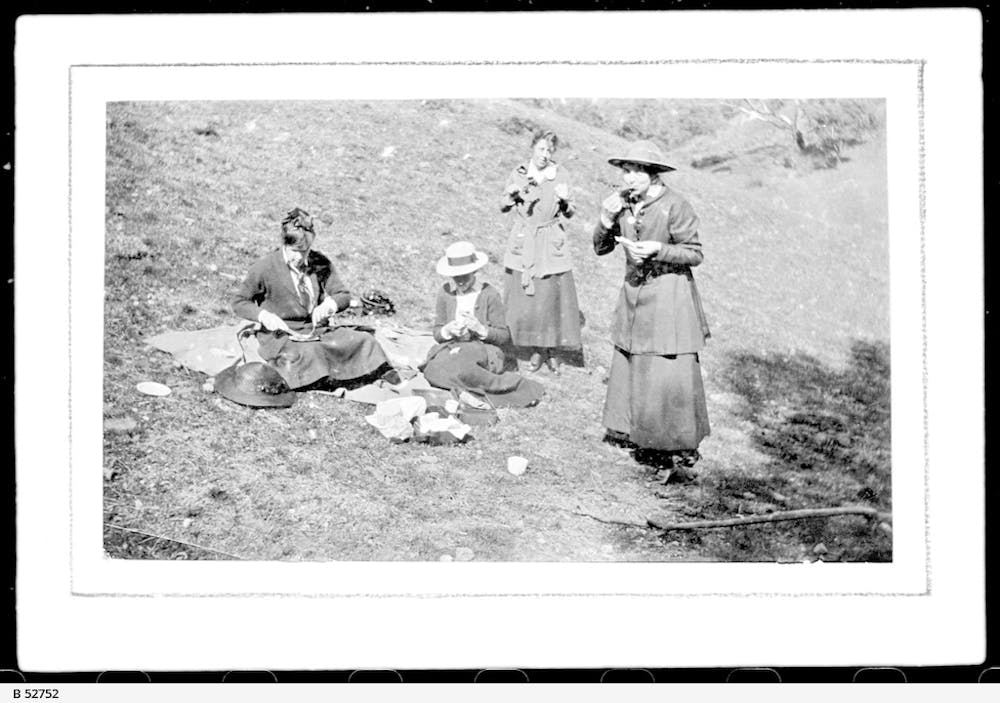 A ‘chop picnic’ party, photographed around 1920.
State Library of South Australia
A ‘chop picnic’ party, photographed around 1920.
State Library of South Australia
By 2000, two-thirds of awards contained no provision for union picnics. Only the Northern Territory was able to maintain their Picnic Day as public holiday.
Beyond work politics
Unions were not the only organisations that lent a political dimension to picnics.
In 1880, the Sydney mayor organised a complimentary picnic in Clontarf honouring the distressed in Ireland, toasting the royal family and “the land we live in”.
Throughout the 1880s, picnics brought Irish Australians together on both sides of the Home Rule movement and members of the Hibernian Australasian Catholic Benefit Society.
 The Young Ireland Society picnic at Ferntree Gully, 1917.
Museums Victoria
The Young Ireland Society picnic at Ferntree Gully, 1917.
Museums Victoria
Attendees frequently played a game of “Aunt Sally”, where players throw sticks or battens at a ball balanced on top of a stick, traditionally a model of an older woman’s head. At the eighth annual picnic in Adelaide in 1881, “young men appeared to take delight in damaging her beaming face as much as possible”.
The society cherished the memory of Ireland and fostered loyalty to Australia.
Chinese Australians were also committed to promoting the Republic of China and celebrating Australia as their home at picnics. In 1912, thousands gathered all over the country to celebrate the anniversary of the establishment of the Chinese Republic – a tradition that continued for many years.
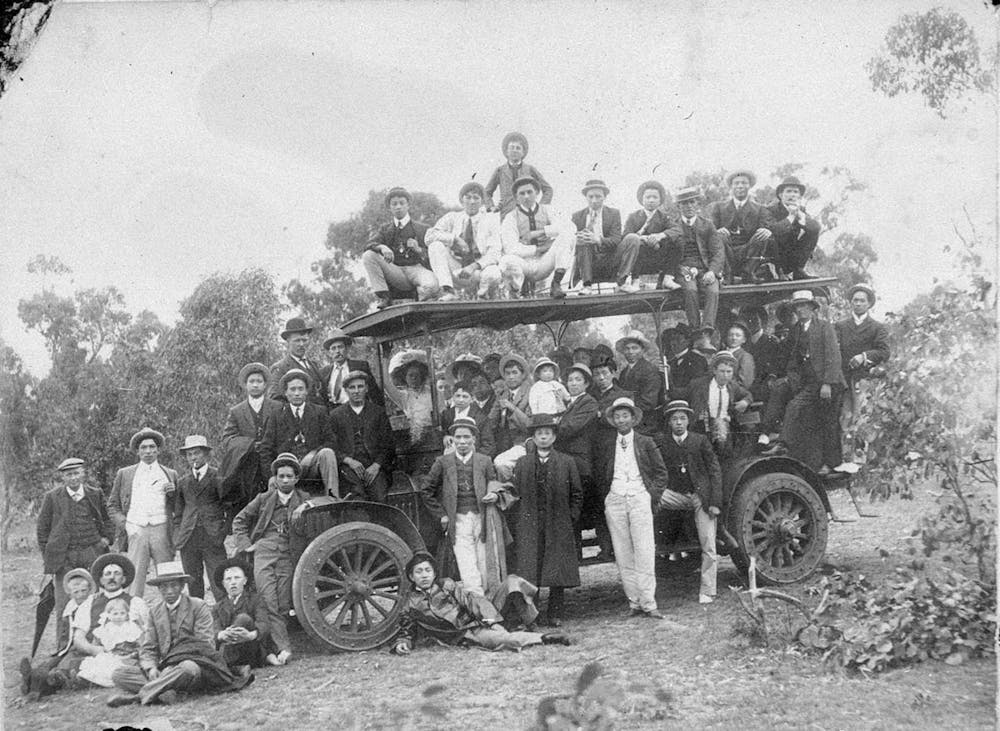 Chinese picnic held at Emmaville, NSW, c. 1908.
State Library of New South Wales
Chinese picnic held at Emmaville, NSW, c. 1908.
State Library of New South Wales
Greek picnics were reported in the press throughout the century and across the country, as early as 1916 in Lismore. The inauguration of the Greek Republic celebrated with a picnic in Adelaide in 1924 was the first occasion for members of the community to meet in South Australia.
While Greek cafes introduced American style milk bars and food to Australia and provided establishments you could eat out in with family, they brought their own food to share with each other at such events before they transformed Australian food culture.
Work for some
A picnic was a practical way of bringing together family and friends, unconstrained by the size of dwellings. They brought nationalities together and could expose divisions, such as between Italian unionists and fascists in 1938.
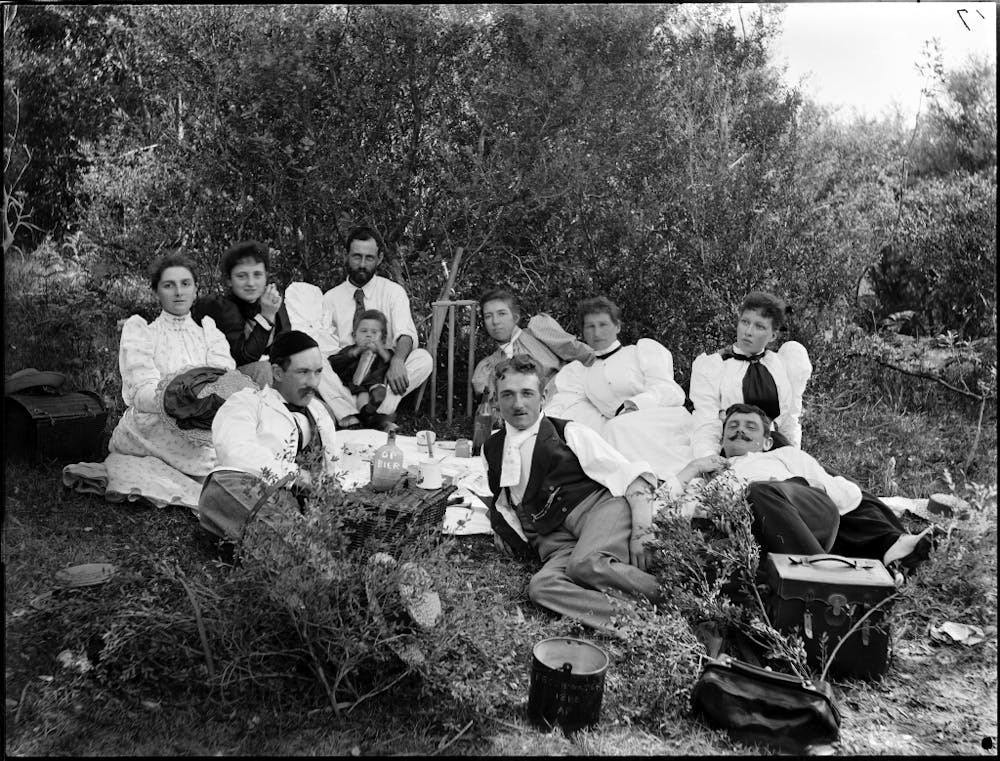 A picnic scene at Freshwater, glass, photographer possibly Arthur Phillips, Australia, 1895.
Photo attributed to Arthur Phillips. Collection: Museum of Applied Arts and Sciences. Gift of the Estate of Raymond W Phillips, 2008
A picnic scene at Freshwater, glass, photographer possibly Arthur Phillips, Australia, 1895.
Photo attributed to Arthur Phillips. Collection: Museum of Applied Arts and Sciences. Gift of the Estate of Raymond W Phillips, 2008
Picnics are defined by some as leisure, but in reality the work of preparing and serving food was still largely undertaken by women, inspiring “toasts to the ladies” in the 1900s – and feminist activists later as well. In the 2010s, using picnics as a gathering for consciousness raising, feminist artist collective LEVEL declared:
The picnic may once have been seen just as a wholesome pastime, but in an era of asynchronous eating — when so many people eat quickly and alone — the invitation to sit, eat and talk for as long as it feels comfortable and desirable, constitutes an act of resistance.
Authors: Adele Wessell, Discipline Chair, Humanities and Social Science, Southern Cross University
Read more https://theconversation.com/a-brief-political-history-of-australian-picnics-170779
-history-of-australian-picnics&media=https://www.modernaustralian.com/https://images.theconversation.com/files/437085/original/file-20211213-15-5qi0vd.jpeg?ixlib=rb-1.1.0&rect=0%2C0%2C3922%2C2487&q=45&auto=format&w=496&fit=clip&description=A%20brief%20(political)%20history%20of%20Australian%20picnics "Pin It")

















