How to choose a legal decision-maker as you get older – 3 things to consider
- Written by: Joseph Ibrahim, Professor, Health Law and Ageing Research Unit, Department of Forensic Medicine, Monash University

“It’s my life and I’ll do what I want,” sang Eric Burdon of The Animals to the baby boomer generation. Unfortunately, that’s not always the case. As we get older, sometimes we are no longer capable of making our own decisions. Diseases that affect the brain such as dementia, stroke and head injury can impair cognition and thinking.
Some people may choose to appoint a medical treatment decision-maker or an enduring power of attorney to make certain decisions on their behalf. Alternatively, a legal tribunal or court may appoint a guardian or trustee to help guide decisions about health care, finances, accommodation and lifestyle.
Who is the right person to take on this important role? Is it the family member or partner who knows you best? Or someone with time and energy? Perhaps someone who understands the services you need – like a nurse, accountant or real estate agent?
The role of a decision-making representative has changed significantly in recent years, shifting from a paternalistic approach to a more person-centred focus. Our research looks at the differences between these approaches and how subconscious bias can influence decision-making.
Read more: Safe at home? We need a new strategy to protect older adults from violent crime
Taking care
These days, guardianship has moved from deciding what’s deemed to be in the individual’s “best interests” to what best reflects their “will and preferences”.
While previously, decisions were made for the person by their guardian or representative, new laws require representatives to enact the person’s “will and preferences”. That is, to make decisions with them.
This is an important difference. The newer model gives the represented person more autonomy over personal, financial and other decisions. It recognises that even though a person may struggle with aspects of decision-making, they should not be excluded from decisions about how they live their life. This fundamental shift was earlier adopted by the United Nations in the Convention on the Rights of Persons with Disability, to which Australia is a signatory.
Read more: There's no need to lock older people into nursing homes 'for their own safety'
Challenging in real world situations
The will and preferences framework may sound simple, but it can be challenging in practice, when concepts of empowerment are tricky to define and the will of someone with cognitive difficulties is hard to discern.
Representatives bring their own biases, perceptions and lived experience to the role of supporting another person to make decisions. This subjectivity is a natural and an inherent part of decision-making. The representative faces the challenge of setting aside their own opinion and, instead, stepping into the shoes of the represented person to give effect to what they want.
A mismatch between the age, gender, ethnicity, religion or socioeconomic status of the representative and the represented person can exacerbate this challenge.
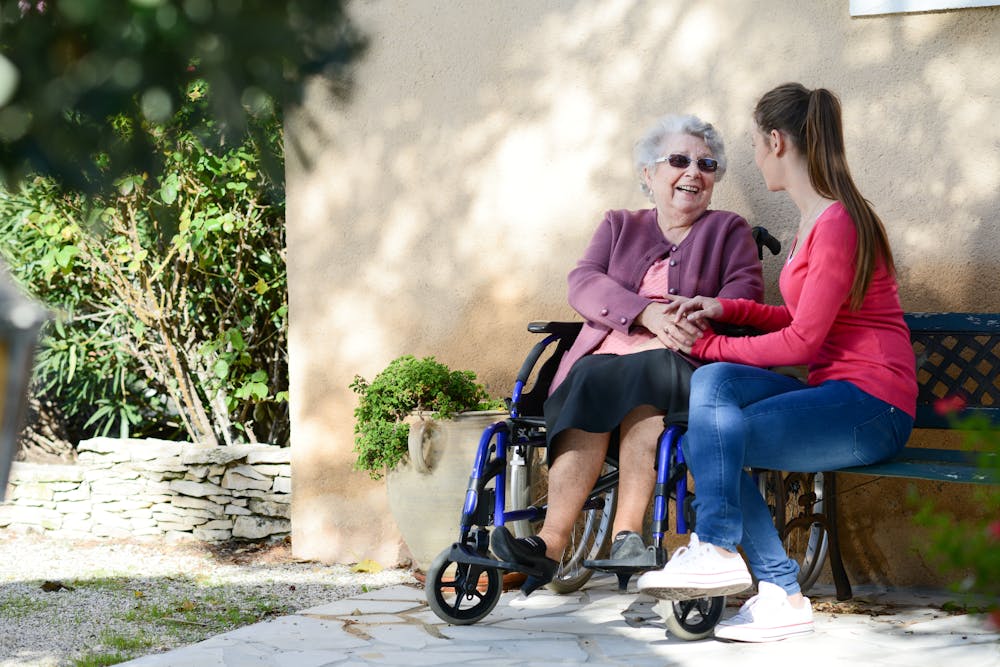
An older able-bodied female, who is deeply religious and from a middle-to-high income background might find it difficult to represent a young man with a disability who is an atheist and from a working-class background. Now, imagine a scenario where the young man expresses a desire to go bungee-jumping or parachuting, despite previously showing a fear of heights. What’s his representative to do?
Older people and women generally have a lower appetite for risk, as do those who have a faith and with a high socioeconomic status.
A heightened perception of danger or a feeling the activity as frivolous, may lead to the representative reframing the situation with their subconscious bias. They may fail to respect the younger person’s will and preferences.
Understanding what might shape a representative’s approach to decision-making is essential. Especially when decisions involve health or living arrangements.
3 things to look for when selecting a legal decision-making representative
1. Deep understanding
An intimate understanding of your situation is crucial. An ideal representative is someone who actively listens and has a holistic view of your circumstances. This may come from discussions with you and your loved ones. The representative must be careful your views are not outweighed by those of family or friends who are often more vocal. They should have a deep sense of who you are as an individual.
2. Self-awareness
The person you choose should be able to describe their personal views and values and understand how their perspective may influence their decisions. This is vital to mitigate the effects of pre-existing bias. They should be able to reflect on their own lived experiences, to understand how their history shapes their approach to decision-making. They should be able to assess whether what you would do is the same as what they think you should do, and why.
3. Effective documentation
A record of conversations between the representative and represented person often helps to illuminate a person’s will and preferences. Writing or recording compels us to commit to an idea and explain what we mean. It helps to clarify what is intended far better than a one-time conversation that may be remembered differently by participants.
Further research is needed to better match representatives with represented persons. Improved tools are needed to identify the role of bias in decision-making and evaluate whether the represented person’s wills and preferences are being respected.
Authors: Joseph Ibrahim, Professor, Health Law and Ageing Research Unit, Department of Forensic Medicine, Monash University