

Modern Australian
Times Advertising

What is petrol excise, and why does Australia have it anyway?

  • Written by John Freebairn, Professor, Department of Economics, The University of Melbourne
What is petrol excise, and why does Australia have it anyway?

One government, in New Zealand, has already cut its fuel excise, by 25 cents per litre for the three months it hopes will be the worst of the oil price crisis, and in the United States and Australia there’s talk of the same sort of thing.

Before considering whether it should be cut, temporally waived, or removed in this month’s budget, it’s worth reacquainting ourselves with what it is.

As is the case with the goods and services tax, it isn’t explicitly quoted when we buy petrol or other fuels; it is rolled into the advertised price.

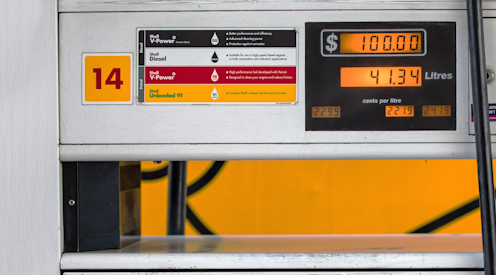
At the moment the excise on standard unleaded petrol is 43.3 cents per litre, an impost which itself is subject to the goods and services tax. This brings the total to 47.6 cents per litre, something that would have been significant a year ago when the price of petrol was lower, accounting for one third of the price.

It is now less important, accounting for 22% of the price of petrol.

The fuel excise is imposed by the Commonwealth government. As a matter of law and as required by the Constitution, all revenue raised by the Commonwealth goes into “one consolidated revenue fund”. But from 1926 to 1959 all or part of the fuel excise was earmarked for spending on roads.

Since then, it has generally been available for any sort of spending – although the impression remains that it is a crude form of user fee for roads and associated government-funded infrastructure, and for maintenance of that infrastructure.

Effectively a road user charge

The excise is collected at the points of distribution from local refineries and importers rather than at the petrol pump, making it easy to administer.

Making it much more difficult to administer are the substantial rebates offered to off-road users of petrol and diesel, which have the effect of making it a charge for using roads. They cut the total takings from about A$20 billion to A$11 billion.

State and territory governments impose another set of taxes on the use of motor vehicles. These include stamp duty on the registration, annual registration fees, the charge for drivers licenses, and taxes on vehicle insurance. State taxes on the use of motor vehicles amounted to A$11.3 billion in 2019-20.

Read more: It's hard to find a case for a cut in petrol tax – there are other things the budget can do

These taxes also go into general revenue, and with no specific link to state government decisions on road infrastructure and maintenance or the provision of services such as traffic police and hospitals.

Taken together, the Commonwealth’s takings from fuel excise and the states’ takings from special motor vehicle taxes appear to roughly equal their spending on roads and associated infrastructure and fall short of the total costs imposed by road users on others including the costs of noise, pollution and policing.

There are better ways to do it

In an ideal world we would charge explicitly for road use, pollution and congestion in the cities during peak hours.

Fuel excise is an increasingly inappropriate way of charging for road use because more and more cars (including hybrids) are using less fuel per kilometre, and some (including all-electric vehicles) are using none.

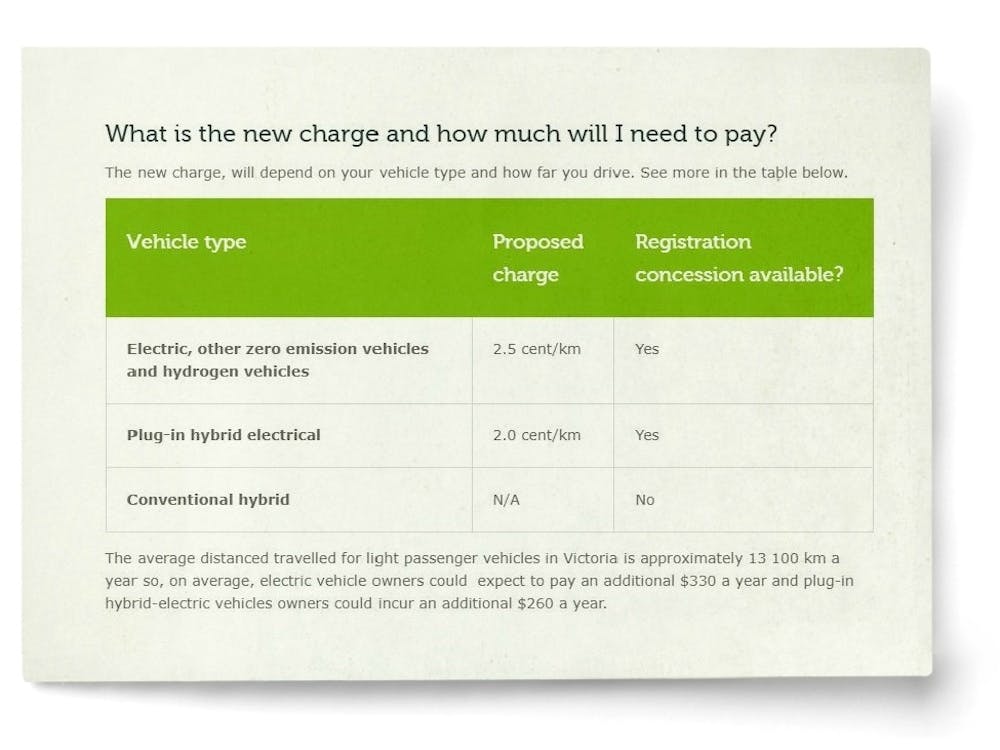
Some states, including Victoria, charge electric vehicles per kilometre travelled. Owners are required to provide a photo of their odometer and the fee is added to the cost of their registration.

While in the spirit of user charging, what Victoria and other states are doing is a limited first step.
Ideally, and subject to considerations of simplicity and operating costs, the user charge would vary by weight per axle, aggregate weight and distance travelled, and perhaps by road type. Given the fixed cost of much road investment and maintenance, a modified version of current annual registration fees should continue. The combustion of petrol and diesel generates external pollution costs not considered by businesses and individuals in their use of motor vehicles. Read more: High petrol prices hurt, but cutting excise would harm energy security External pollution costs include particulates with adverse effects on health and smog, and emissions of carbon dioxide that contribute to climate change. A pollution fee that is much smaller than the current 43.3 cents per litre excise should be imposed on fuel used for both off-road and on-road purposes as part of a comprehensive price on greenhouse gas emissions associated with the combustion of fossil fuels. Congestion causes costs estimated to be in the tens of billions in terms of lost time, uncertainty, and extra fuel use, with only a small portion borne by the road user concerned. An important part of the reform package should be a congestion charge for peak hours along the lines suggested by the Grattan Institute. This ideal set of changes would be imposed independent of the price of oil. Authors: John Freebairn, Professor, Department of Economics, The University of Melbourne

Read more https://theconversation.com/what-is-petrol-excise-and-why-does-australia-have-it-anyway-179373

What People Mean by “Alternative Doctor” And Why Expectations Around Care Are Changing

When people search for an “alternative doctor,” they’re usually looking for something specific, even if they haven’t fully defined it yet. I...

Why Does My Power Keep Tripping? Common Causes Explained by Electricians Sydney

The electrical system is the lifeblood of your home, powering everything from your phones to cooking utensils and more. But from time to time, your po...

Interstate Car Transporter Urges Buyers to Book Early

As the conflict in the Middle East continues to put increasing pressure on local fuel supply, Australian transport companies are experiencing increasi...

Digital Minimalism for Business Owners: Fewer Tools, Better Systems

Be honest. How many apps are open right now? One for scheduling, another for invoices, a third for customer notes, plus a spreadsheet someone email...

The Importance Of Proactive NDIS Renewal Preparation For Sustaining Your Provider Business

Your NDIS renewal notice is not a signal to start preparing. By the time it arrives, preparation should already be well underway. For new providers, s...

Why Fire Extinguisher Testing in Sydney Is Becoming a Records Game, Not Only a Maintenance Job

A fire extinguisher used to feel like one of the simpler parts of building safety. It hung on the wall, wore a service tag, and sat there quietly unle...

The Switchboard Upgrade Question Every Melbourne Renovator Should Ask Before the Walls Close Up

Renovations have a funny way of making people think on surfaces first. Splashback, stone, joinery, tapware, paint. Fair enough too. That is the exciti...

Winter Sanitation Gaps in Parramatta Kitchens: A Hidden Pest Risk

Winter brings a host of changes to our homes, from the chill in the air to the cozy warmth indoors. However, this season also introduces sanitation ch...

When to Seek Advice from Employment Lawyers in Melbourne

Australian employment law is detailed and, at times, complex, with rights and obligations that aren't always obvious to employees or employers witho...

7 Benefits of Professional Gutter Cleaning for Australian Homeowners

Gutters aren't exactly glamorous. They sit up there on the edge of your roof, doing their job quietly - until they stop working. Clogged, overflowing ...

Pipe Floats Strengthening Pipeline Performance In Demanding Environments

Pipelines often travel through environments that are anything but predictable, water currents shift, terrain changes, and materials keep moving unde...

Why Ceiling Fans Are Essential For Comfort, Efficiency, And Modern Living

Creating a comfortable indoor environment is not just about temperature; it is about how air moves, how a room feels, and how efficiently energy is ...

Why Duct Cleaning In Melbourne Is A Smart Investment For Healthier Living Spaces

Behind your walls, ceilings, and vents lies a network quietly working every day to keep your home comfortable. Yet over time, this system can become...

Disability Service Providers Supporting Inclusive And Independent Living

Finding the right support system can feel like assembling a puzzle where every piece must fit just right. For individuals and families navigating di...

A Beginner's Guide to Owning a Caravan in Australia

Owning a caravan opens up a style of travel that's hard to match for freedom and flexibility. However, for those just starting out, the process of c...

Preparing Your Air Conditioner for Summer: What Most Homeowners Overlook

As temperatures rise, many homeowners switch on their air conditioning for the first time in months — only to find it’s not performing the way i...

What Actually Adds Value to Properties in Newcastle

Newcastle has seen steady growth over the past few years, with more buyers looking beyond Sydney for lifestyle, space, and long-term value. As dema...

What is Design and Build in Construction?

Imagine you’re about to start a new construction project, maybe it’s a custom home or a commercial building. You’ve got the idea, the land, an...
















