

Tasmania’s forests are burning more as climate change dries them out. Our old tools can’t fight these new fires
- Written by: David Bowman, Professor of Pyrogeography and Fire Science, University of Tasmania
The summer of 2021-22 will be remembered for the extraordinarily destructive flooding across eastern Australia. At the same time, however, western Tasmania was experiencing extreme drought, with some areas receiving their lowest rainfall on record.
This drought fits an observed drying trend across the state, which will worsen due to climate change. This is very bad news for the ancient wilderness in the state’s World Heritage Area, where the lineage of some tree species stretch back 150 million years to the supercontinent Gondwana.
The drying trend has seen a steady increase in bushfires ignited by lightning, imperilling the survival of Tasmania’s Gondwanan legacy, and raising profound fire management challenges. Indeed, climate change means we’re on a learning curve, and the usual practices of managing fire are no longer necessarily fit for purpose.
There is increasing scientific recognition of the risk of the Gondanwan ecosystem collapsing from climate change driven fires. A new draft fire management plan outlines key steps to ensure these iconic forests survive for decades to come – and it must receive dedicated funding.
Tasmania’s drought
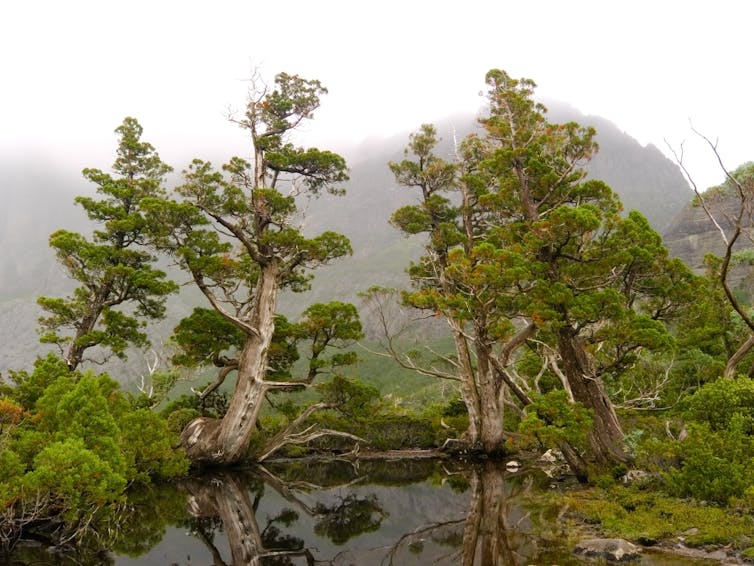
Western Tasmania is one of Australia’s wettest regions, where average annual rainfall can exceed 3 metres. Cool temperatures, year-round rainfall, and complex topography have created fire refugia – landscapes naturally protected from fire. This is why western Tasmania is home to a suite of so-called “living fossils”, such as Huon pines and pencil pines.
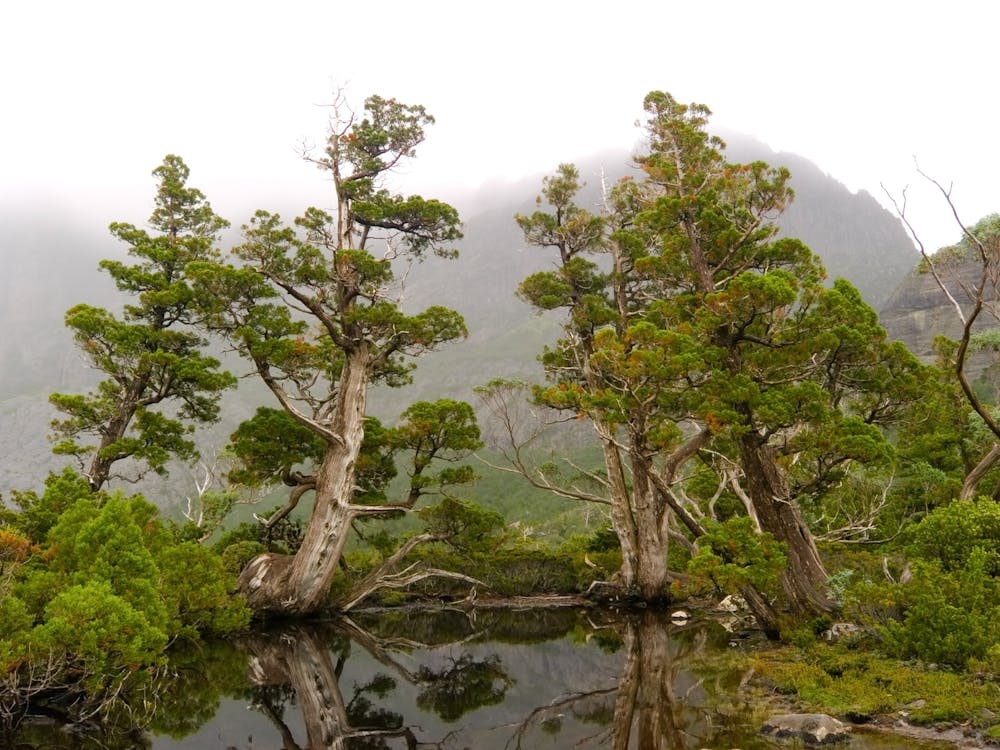
The survival of these relic species hangs in a delicate balance. They occur in small patches surrounded by large areas of highly flammable Australian vegetation, such as eucalypts, tea-tree and, within in the World Heritage site, the ubiquitous buttongrass moorland.
The cool moist climate, combined with the skilful, intentional application of fire by Aboriginal people, have conserved ancient, unique trees for millennia. However, the changes in fire patterns following colonialism have caused some Gondwanan refugia to collapse.
Read more: Australia, you have unfinished business. It's time to let our 'fire people' care for this land
Western Tasmania’s current drought is its worst in 40 years, despite the presence of La Niña – a natural climate phenomenon that brings cool, wet weather to parts of Australia. It has also been one Tasmania’s hottest summers on record.
Fortunately, the past summer has seen only a few bushfires ignited by lightning. Nonetheless, one of these fires was near the last remaining stand of unlogged Huon pine forest.
To understand the level of risk to Tasmania’s World Heritage Area, we can look to bushfires in 2016 and 2019 when massive dry lightning storms ignited fires in remote wilderness areas, threatening ecologically irreplaceable areas such as the Walls of Jerusalem and Mt Anne.
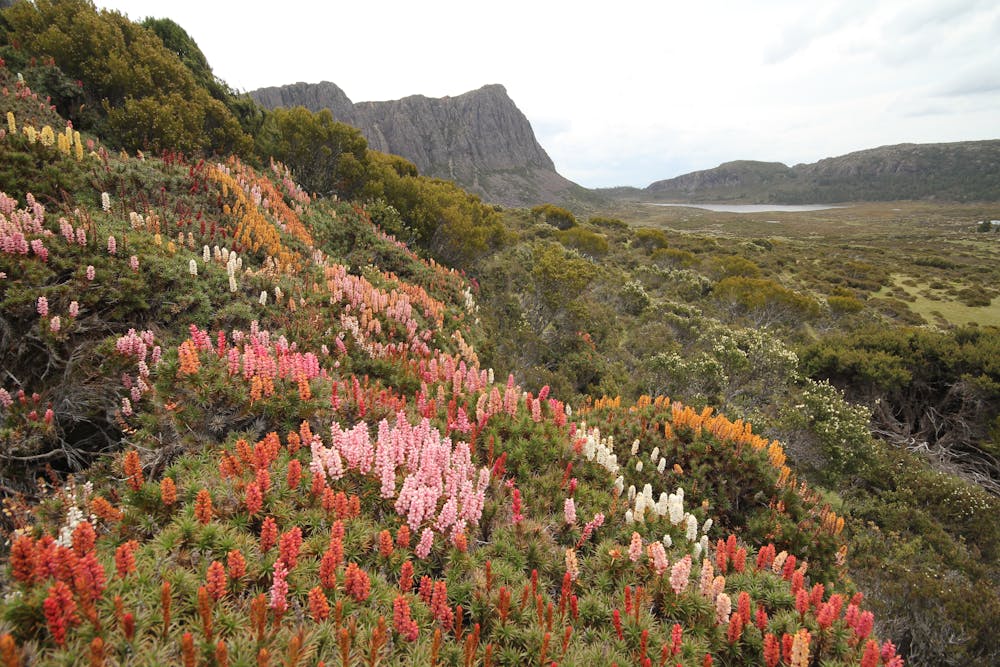 The Walls of Jerusalem is an alpine park in northwest Tasmania.
Shutterstock
The Walls of Jerusalem is an alpine park in northwest Tasmania.
Shutterstock
And let’s not forget, the largest fire in the 2019-20 bushfire crisis, which threatened many Blue Mountains towns, was ignited by a lightning strike in a remote and rugged area.
Likewise, the devastating 2003 Canberra bushfires was caused by lightning strikes in Kosciuszko and Namadgi National Parks.
There can be no doubt effective management of Tasmania’s wilderness will provide protection for nearby towns.
So what does sustainable fire management look like?
It’s widely accepted among Australian fire management agencies and conservation groups that aerial firefighting is key to controlling remote bushfires. But there are significant downsides to this approach.
The two most important are the very high costs of using aircraft, and the environmental impacts of firefighting chemicals. Some firefighting chemicals can, for instance, change soil chemistry so it favours weed invasion.
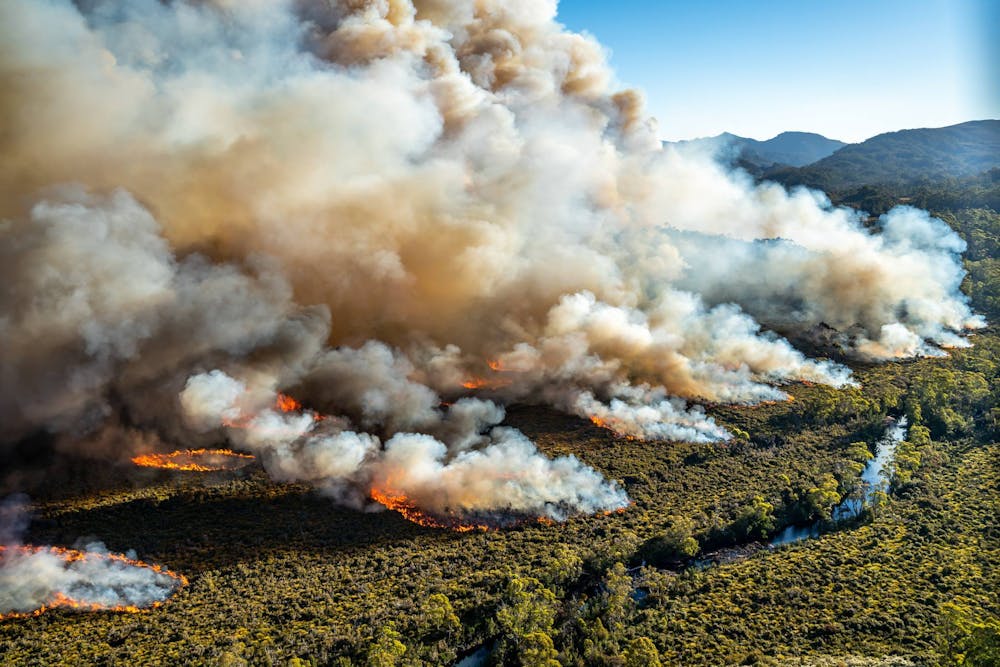 Fires in 2019 razes some 55,0000 hectares of wilderness and bushland across Tasmania.
AAP Image/Tasmania Parks and Wildlife Service
Fires in 2019 razes some 55,0000 hectares of wilderness and bushland across Tasmania.
AAP Image/Tasmania Parks and Wildlife Service
Tasmania’s Wilderness World Heritage Area needs a sustainable fire management approach which, crucially, employs and involves Aboriginal people. This would not only benefit the environment, but also enable Aboriginal people in Tasmania to reconnect with important cultural sites.
A sustainable approach is one that reduces the number of large bushfires while also intentionally applies fire to ecosystems and threatened species that require regular burning. For example, the critically endangered orange bellied parrot needs regularly burned buttongrass moorland as part of its habitat.
For this to work, we need to create carefully designed fuel breaks across the landscape – strips of land with less vegetation available to burn, which slows bushfires.
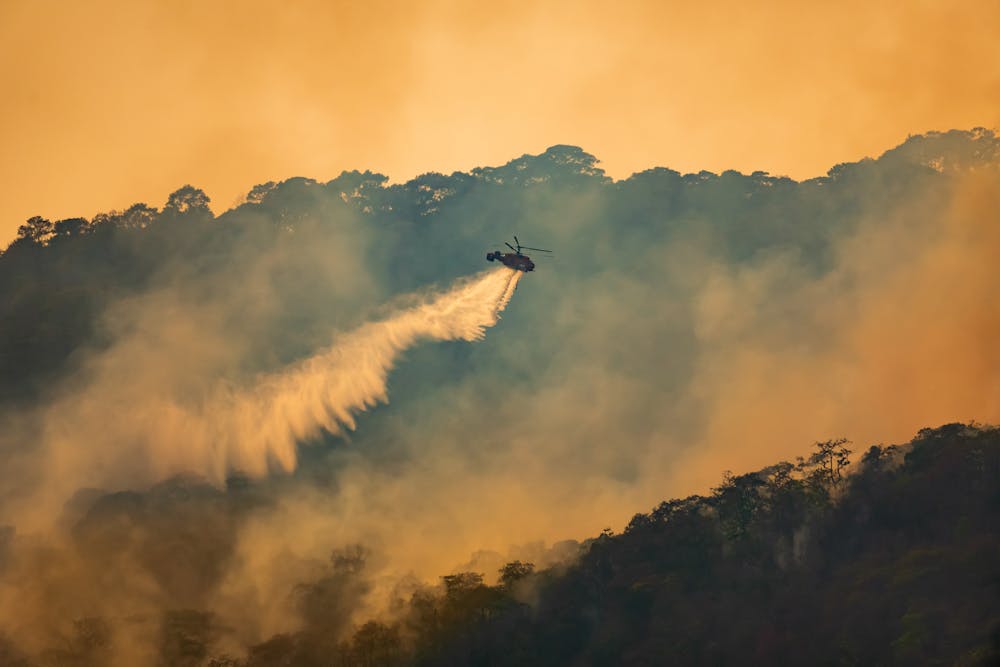 There are downsides to aerial firefighting, such as releasing toxic chemicals into the environment.
Shutterstock
There are downsides to aerial firefighting, such as releasing toxic chemicals into the environment.
Shutterstock
Naturally, such planned burning must consider biodiversity, ensuring fire sensitive plants that can’t bounce back – such as pencil pines and alpine vegetation – are protected. At the same time, we must continue to burn native plants that depend on fire to regenerate.
Protecting biodiversity can be achieved through carefully implementing a practice called “mosaic” burning. This is where small areas are regularly burnt to create a patchwork of habitats so wildlife has a diversity of resources and places to shelter in.
Ultimately, well-designed landscape management will give managers confidence to let some fires run free, rather than attempting costly aerial firefighting campaigns. By contrast, areas with internationally important natural and cultural values should be the focus of fire protection efforts when bushfires do occur, such as the innovative use of sprinklers to protect the shores of Lake Rhona.
More fire in our future
The above fire management approaches are outlined in the current draft fire management plan for the World Heritage Area. Realising its objectives will require dedicated, recurrent funding, without which the plan’s goals will remain aspirational.
What’s more, any fire management evaluation going forward must be publicly transparent to see continual improvement. It will also ensure there’s a broader community understanding of the need to make difficult decisions to adapt to climate change-driven bushfires.
Read more: Photos from the field: capturing the grandeur and heartbreak of Tasmania's giant trees
The 2019-20 bushfire crisis that shocked the world has been overwritten by many other subsequent crises, such as the pandemic, flooding, and geopolitical turmoil.
Indeed, the soggy summer in eastern Australia has no doubt engendered a widespread belief bushfires have gone away. They haven’t. The luxuriate growth from the La Niña is priming landscapes across eastern Australia to burn again.
We must keep focus on adapting to bushfires that are being turbo charged by climate change. With serious investment to protect Tasmania’s precious environment, the rest of Australia – and indeed other flammable wildernesses elsewhere in the world – can too learn how to sustainably manage increasingly devastating bushfires.
Authors: David Bowman, Professor of Pyrogeography and Fire Science, University of Tasmania


















