

Indigenous peoples across the globe are uniquely equipped to deal with the climate crisis
- Written by: Janine Mohamed, Distinguished Fellow and CEO, The Lowitja Institute
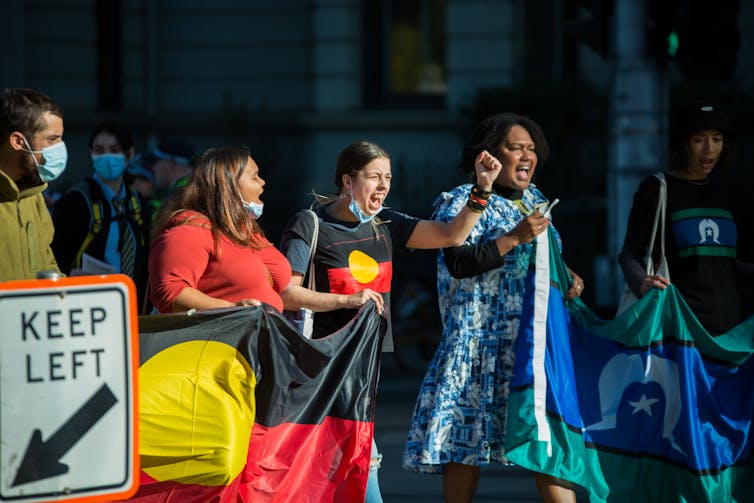
The urgency of tackling climate change is even greater for Aboriginal and Torres Strait Islander people, and other First Nation peoples across the globe. First Nations people will be disproportionately affected and are already experiencing existential threats from climate change.
The unfolding disaster in the Northern Rivers regions of New South Wales is no exception, with Aboriginal communities completely inundated or cut off from essential supplies.
Aboriginal and Torres Strait Islander peoples have protected Country for millennia and have survived dramatic climatic shifts. We are intimately connected to Country, and our knowledge and cultural practices hold solutions to the climate crisis. Despite this, we continue to be excluded from leadership roles in climate solution discussions, such as the recent Intergovernmental Panel on Climate Change (IPCC) report.
Read more: Why the Australian government must listen to Torres Strait leaders on climate change
This continued exclusion is why investigation of the impacts of climate change on First Nations people is needed.
In October last year, the Lowitja Institute, in partnership with the Aboriginal and Torres Strait Islander National Health Leadership Forum and the Climate and Health Alliance, brought together researchers, community members, young people and advocates from across the country at a round-table discussion.
Together, they put together the findings for the Discussion Paper Climate change and Aboriginal and Torres Strait Islander health.
How climate change impacts Indigenous peoples
As the paper tells us, climate change threatens our social and cultural determinants of health, including access to Country, traditional foods, safe water, appropriate housing and health services.
Aboriginal health services are already struggling to operate in extreme weather, with increasing demands and a reduced workforce. All these forces combine to exacerbate already unacceptable levels of ill-health within Aboriginal and Torres Strait Islander populations and compound the historical and contemporary injustices of colonisation.
During the round table, we heard powerful and moving stories from communities on the front line of climate change.
Norman Frank Jupurrurla, a community leader from Tennant Creek, spoke of sacred waterholes drying up, ancient shade trees dying, temperatures rising, inadequate housing, power going out and spoiled essential food and medicines.
Vanessa Napaltjarri Davis, a Warlpiri/Northern Arrente woman and Senior Researcher at Tangentyere Council in Mparntwe/Alice Springs, spoke of changes to the availability of bush foods and medicines – essential to our health and well-being – due to changing temperatures and seasons.
For example, as Norman Frank Jupurrurla wrote:
…now the country is burning, getting destroyed, because of climate change. Already, I cannot see sand goannas any more.
Aboriginal and Torres Strait Islander peoples hold a deep and painful knowledge of the role dominant culture, racism and colonial power dynamics play within climate change. Although there have been many suggested solutions to climate change, access to these solutions is not equally or equitably available across Australia.
Norman Frank Jupurrurla demonstrated this when he shared the almost impossibly drawn-out process he has completed to become the first person to install solar panels on public housing in Tennant Creek, Northern Territory.
Indigenous peoples’ voices excluded from climate change conversations
Colonisation has ignored Indigenous ways of knowing, doing and being, right down to the weather. Colonisers insisted we live according to just four seasons, instead of the many seasons our people knew and respected.
This experience of marginalisation continues today where we have not been sufficiently included in national and international conversations about climate change, including being pushed to the sidelines at COP26.
The IPCC acknowledged this globally in its report last year. The report states that data and most reporting on climate change do not include Aboriginal and Torres Strait Islander or local knowledge in the assessment findings.
The IPCC’s most recent report looks to recognise this omission and focuses specifically on the importance of our role and knowledge in addressing the climate crisis and the need for climate justice.
The calls from our work are clear. We must elevate Aboriginal and Torres Strait Islander voices within climate change action and centre Aboriginal and Torres Strait Islander peoples as leaders in protecting Country. In the words of Seed Mob, “We cannot have climate justice without First Nations justice.”
In seeking solutions, we must consider how colonial ideologies and practices around climate change can impact on our peoples. As Rhys Jones wrote, “It is not possible to understand and address climate-related health impacts for Indigenous peoples without examining this broader context of colonial oppression, marginalisation and dispossession.”
The Uluru Statement from the Heart, a gift to the Australian People, provides the road map for action:
We must correct power asymmetries and establish co-governance arrangements and become strong advocates of, not only our interests, but our capabilities to tackle climate change.
We must restore access to basic rights that will lay the groundwork for action that includes appropriate community participation/decision-making and incorporates cultural, environmental and sustainable design.
We must weave our knowledges and strengthen partnerships to ensure that our collective wisdom and knowledge as Australia’s First Nations is integrated into climate adaptation and mitigation planning, directly benefitting the whole nation.
Indigenous people know about this continent; we’ve looked after it for millennia.
The Uluru Statement from the Heart gives the opportunity to restore that ancient power – for the benefit of us all and the survival of the planet.
Authors: Janine Mohamed, Distinguished Fellow and CEO, The Lowitja Institute


















