

Australia’s environment law doesn’t protect the environment – an alarming message from the recent duty-quashing climate case
- Written by: Laura Schuijers, Deputy Director, Australian Centre for Climate and Environmental Law and Lecturer in Law, University of Sydney
The Federal Court recently quashed a duty of care owed by the environment minister to Australian children, to protect them from the harms of climate change.
The duty was attached to Australia’s federal environment law, the Environment Protection and Biodiversity Conservation (EPBC) Act. In reversing the decision that had established the duty, the new judgment shone a spotlight on the EPBC Act’s limitations. Or at least, it should have.
Much of the commentary around the judgment focused on lamenting the hands-off position the court took in its unwillingness to delve into so-called political territory.
Less attention was paid to a key take-home message: the EPBC Act gives the minister power to approve coal projects, even if they’ll have adverse effects.
It doesn’t, in a general sense, protect the environment from these effects. It doesn’t protect the public from consequent harm, even if deadly. And it doesn’t, actually, tackle climate change at all.
Alarmed? You should be.
Why the duty was quashed
The appeal was heard by three judges, each with a different opinion on why there shouldn’t be a duty.
One key problem was that the class of victims won’t just include the children represented in the case. Currently unborn children will be affected too. The judges also found issues with the minister’s relationship with the children given the intervening steps that will lead to climate change, extreme weather events, and future harm.
To help resolve novel disputes, courts look to previous cases. One case that featured prominently was about protecting the public from contaminated oysters. In that case, a council wasn’t liable for failing to prevent water pollution that caused hepatitis infection. In another case, where there was no way of identifying the source of asbestos fibres that caused mesothelioma, it was found that whoever materially increased the risk of harm could be liable for it.
The fact these were considered the most relevant cases just goes to show how unprecedented the problem of climate change is. There was no case directly on point, which could help with the complex and cumulative cause-and-effects.

The problem of ‘incoherence’
Another important problem for two of the three judges was that the duty wasn’t coherent – meaning consistent or compatible – with the EPBC Act. That’s because the EPBC Act doesn’t squarely address climate change or human safety, and yet the duty concerns precisely those two things.
For decades, it’s been recognised that humans depend on the environment for survival, and that a stable climate system is necessary for life as we know it.
The third judge thought the minister’s obligations, embedded in an environment protection framework, could therefore sit side by side with a duty of care. Our environment, he said, “is not just there to admire and objectify.”
But the other two were dissuaded by their view that the EPBC Act doesn’t in fact protect the environment in a general sense. Nor does it explicitly aim to mitigate climate change. It operates in a piecemeal way, rather than concerning ecosystems as a whole, or our dependency on them.
Can this really be how the EPBC Act operates in practice? Well, yes.
We heard this same message just recently via the ten-yearly, independent review of the legislation. It concluded that the EPBC Act is outdated, and not fit for the purpose of environment protection.
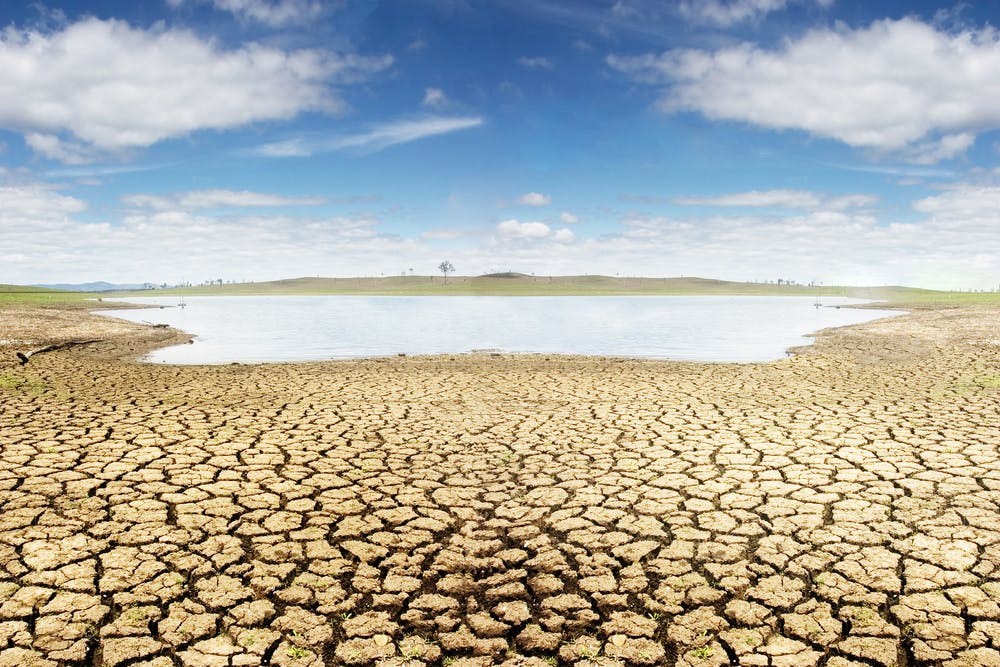 The EPBC Act operates in a piecemeal way, rather than concerning ecosystems as a whole, or our dependency on them.
Shutterstock
The EPBC Act operates in a piecemeal way, rather than concerning ecosystems as a whole, or our dependency on them.
Shutterstock
What does the EPBC Act do, then?
For the most part, the EPBC Act is an impact assessment law. It’s triggered when specific environmental matters, like individual threatened species, are likely to be harmed by a proposed project (such as a coal mine). When it’s triggered, it sets in motion a procedural process that requires the minister to consider whether to approve the project given its impacts.
Year after year, nearly every single project that is put forward is approved. In fact, the coal mine that was the subject of the case was approved even before the appeal went to court. This explains why so many, including the independent review, feel the EPBC Act doesn’t really do enough to adequately safeguard against environmental loss.
The review recommended the introduction of science-backed environmental standards. If this happened, it may be easier for courts to judge ministerial decisions, with a legal reference point for what’s considered politically acceptable. It also recommended decision-making incorporate climate scenarios.
A call to action
Back in 2020, I wrote that whether the children win or lose, their case would make a difference.
Although not over yet (they have two more weeks to lodge an application to appeal to the High Court), it already has. It’s drawn attention to the fact that Australia doesn’t have a climate law to protect its children. That it has no law to protect against harmful floods and fire that have already manifest since the case began. And it’s forced the Federal Court to acknowledge the uncontested risks of climate change.
Let’s look at this case as a call to action. The Federal Court has essentially said it can’t act. Reading the judgment closely, there are hints to suggest the High Court might be able to, and that eventually, the law will have to evolve to manage complex causation.
But the decision certainly doesn’t mean the government can’t act. In fact, that’s exactly who the judges indicated must.
Read more: A major report excoriated Australia's environment laws. Sussan Ley's response is confused and risky
Authors: Laura Schuijers, Deputy Director, Australian Centre for Climate and Environmental Law and Lecturer in Law, University of Sydney


















