

Dolphins, turtles and birds don’t have to die in fishing gear – skilled fishers can avoid it
- Written by: Leslie Roberson, Postdoctoral research fellow, The University of Queensland
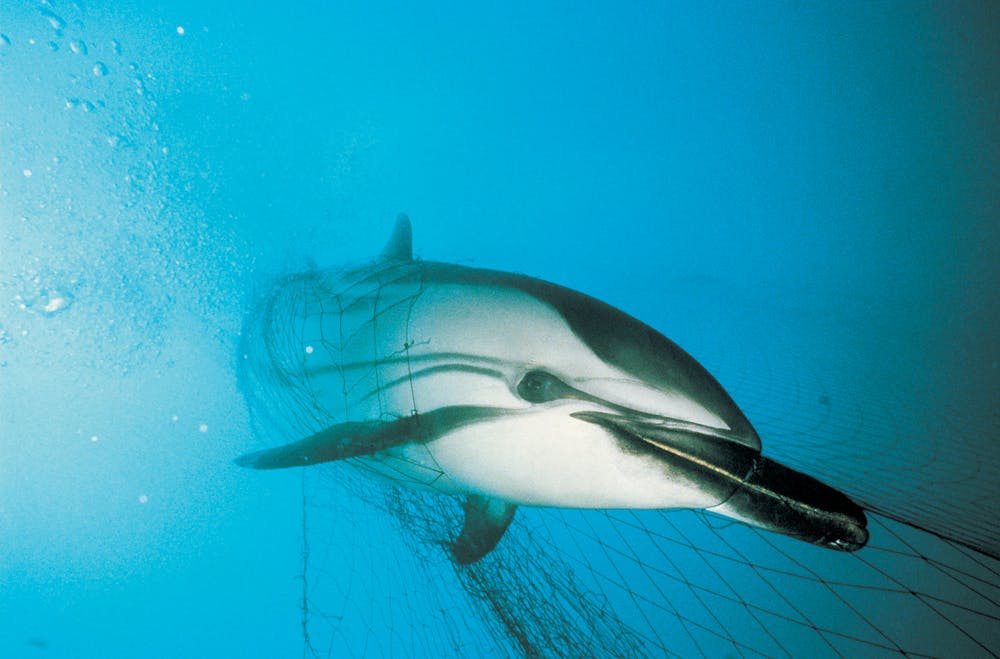
In 1987, a biologist went undercover on a commercial tuna fishing vessel. One video he took made headlines around the world: hundreds of dolphins encircled in purse seine nets, drowning in distress.
Before that, few people had given much thought to bycatch – the fish and marine animals caught when trying to catch something else. It was out of sight, out of mind. But now, everyone could see the shocking footage.
In the decades since, some of the most confronting bycatch issues have been solved. Even so, bycatch remains one of the most difficult obstacles to making the world’s seafood more sustainable.
So if better nets and better rules aren’t the full answer, what is? Our new research suggests part of it is the human factor. The more skilled fishers are, the more likely they are to avoid accidental bycatch.
We need more than technology and top-down solutions
So far, the solutions for bycatch have tended to be technical or regulatory. Think of modified fishing gear so non-target animals can escape, or closing high bycatch areas to fishing during certain seasons or when bycatch exceeds a threshold.
While they can work, these approaches are often expensive, especially for small or lower-value fisheries. They also require increased monitoring and enforcement to ensure fishing fleets follow the rules.
Top-down regulatory approaches are often met with stubborn resistance from fishers. Commercial fishing boat operators may feel they’re being targeted by experts who don’t understand the challenges they face.
Technology and regulation have so far failed to tackle the most challenging bycatch problems.
It’s proven very difficult, for instance, for trawlers to stop catching endangered sharks, rays and sea snakes at unsustainable rates – even though the same trawlers now sport clever turtle excluder devices which have slashed sea turtle deaths in northern Australia’s prawn fishery.
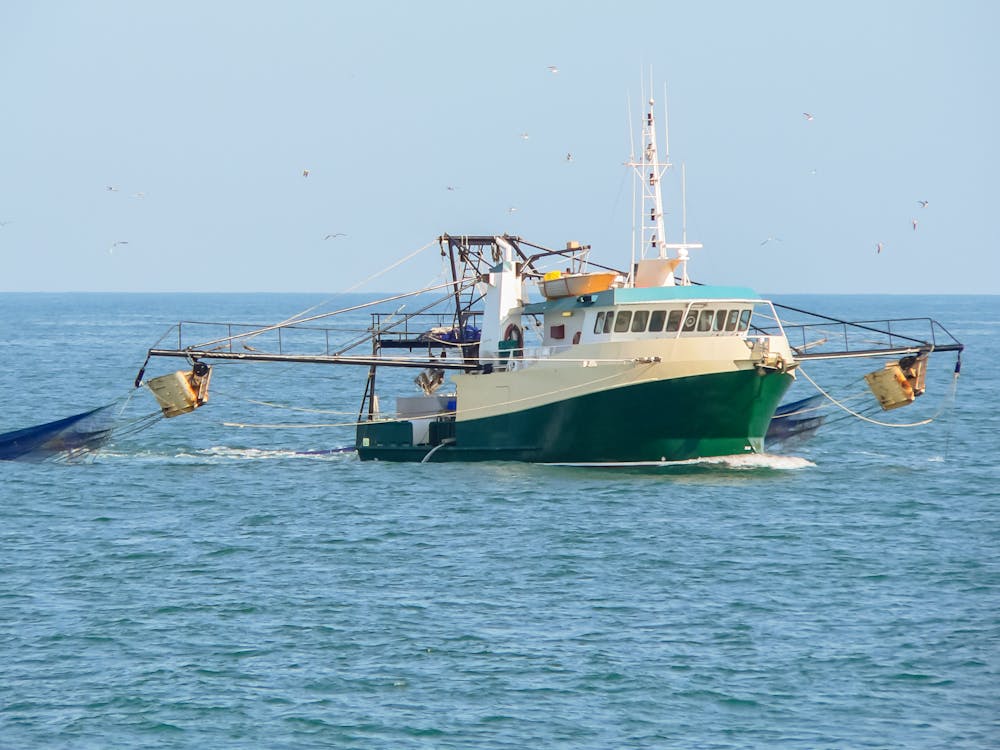 Australia’s prawn trawlers have adopted turtle excluding devices.
Shutterstock
Australia’s prawn trawlers have adopted turtle excluding devices.
Shutterstock
Or consider gillnets, which in Australia continue to catch and kill endangered sawfish, dugongs, and sharks. When fishers change techniques to avoid catching one type of bycatch, they often find bycatch of other species increases.
Every now and again, bycatch will resurface in the public mind. You might see grotesque images of lovable sea animals mangled in nets spreading through social media channels as part of a new bycatch campaign.
Progress does exist – but it’s slow, expensive and risks pushback. The prevailing industry attitude is that bycatch should be reduced where possible, but some is inevitable.
How boosting fishers’ skills could cut bycatch further
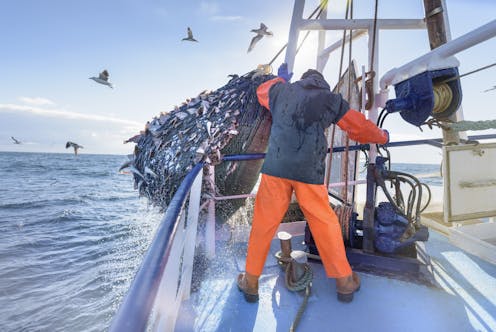
Many fisheries managers intuitively understand the importance of the human factor in managing environmental issues, such as bycatch. They know the vessels and captains in their fleet. And they know most compliance issues can usually be traced back to a small number of problem vessels.
We put these assumptions to the test in our new research into Australian fisheries, and found it was true.
We found a clear pattern across different locations and types of fishing gear, where specific fishers were able to maintain high target species catch with lower rates of bycatch. In short, skilled fishers can avoid catching dolphins, seabirds, sharks, and other bycatch species.
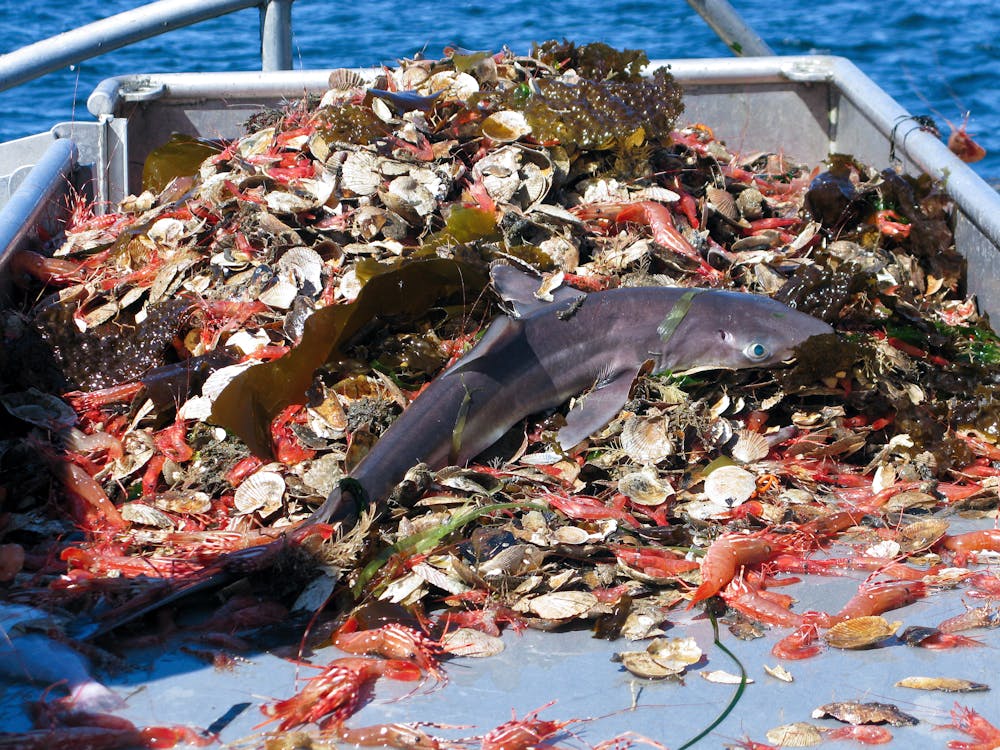 Sharks can still be caught as bycatch.
Getty Images
Sharks can still be caught as bycatch.
Getty Images
It was surprisingly difficult to test the managers’ assumptions with data. So how did we show this?
It’s well known that fishing skill varies. As a result, some fishers and boats are consistently more profitable. If fishers have variable skill in catching their target species, it follows they would have variable skill at avoiding bycatch species.
The pattern of varying skill had never been tested against bycatch rates. In part, that’s because we need a lot of data to isolate individual behaviour and skill from many other factors affecting bycatch. For instance, fishers often link high bycatch numbers to environmental factors, such as specific fishing grounds or breeding seasons.
Read more: There aren't plenty of fish in the sea, so let's eat all that we catch
While these factors do affect bycatch levels, we were able to draw out the effect of individual vessels by using robust data sets collected by scientific observers in five major commercial fishing sectors in Australia.
We found a clear signal in the data. Overall, individual vessels drove differences in bycatch rates more than fishing location, season, or year. In each of the five fisheries, we found high performance operators able to consistently achieve a high catch of target species and low bycatch, as well as low performers, who did the opposite. This holds even across fishing gear known for high bycatch globally, such as bottom trawls and gillnets.
We don’t know exactly what fishers are doing to avoid bycatch. Fishing “skill” is likely a mix of experience and knowledge of the environment, ability to effectively manage a crew, operate and maintain gear, and quickly respond to changing conditions at sea. These nuanced behaviours are not recorded in logbooks and are difficult to describe, which means we’ll have to work directly with fishers to really untangle the vessel effect.
Could we upskill our fishers?
Now we know the skill of our fishers matters so much, we have an opportunity to drive bycatch even lower than thought possible. We can challenge the belief bycatch is an unavoidable part of fishing.
Harnessing the skills and knowledge of high-performance fishers can motivate behaviour change in ways more likely to succeed than top-down regulations or new technologies.
We can look at incentives to encourage skilled and experienced fishers to spread their knowledge and abilities. This would raise the bar for low-performing fishers, and help the industry avoid punishments from the actions of a few highly damaging boats.
If we work closely with high-performance fishers, we could see even more innovation in cutting bycatch, as well as other longstanding issues such as waste management and abandoned “ghost nets” which can keep killing for years.
Authors: Leslie Roberson, Postdoctoral research fellow, The University of Queensland


















