

Modern Australian
The Times

The RBA has lost some patience on rates, but it isn't rushing to push them up: here's why

  • Written by Isaac Gross, Lecturer in Economics, Monash University

The RBA has lost some patience on rates, but it isn't rushing to push them up: here's why

It is coming up to 18 months since Australia’s Reserve Bank last cut its cash rate.

And what it did then was merely a further cut, from an unprecedented low of 0.25% to a fresh unprecedented low of 0.10%

Since it last changed the direction of rates (started cutting instead of hiking) it has been 10 years and five months.

Which is why it has been telling anyone who asked (and repeatedly using the phrase in its official communications) that it is “prepared to be patient” before changing again. It wants to be sure conditions necessitate such a move.
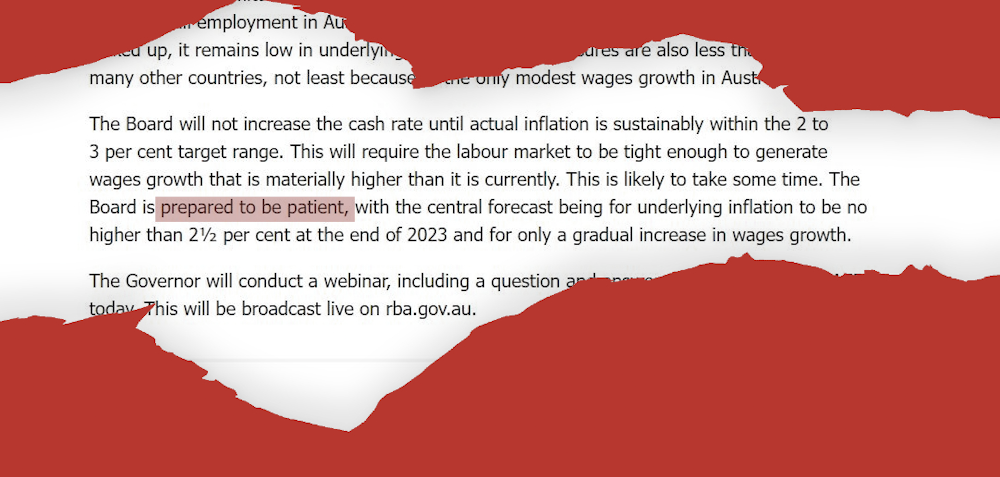
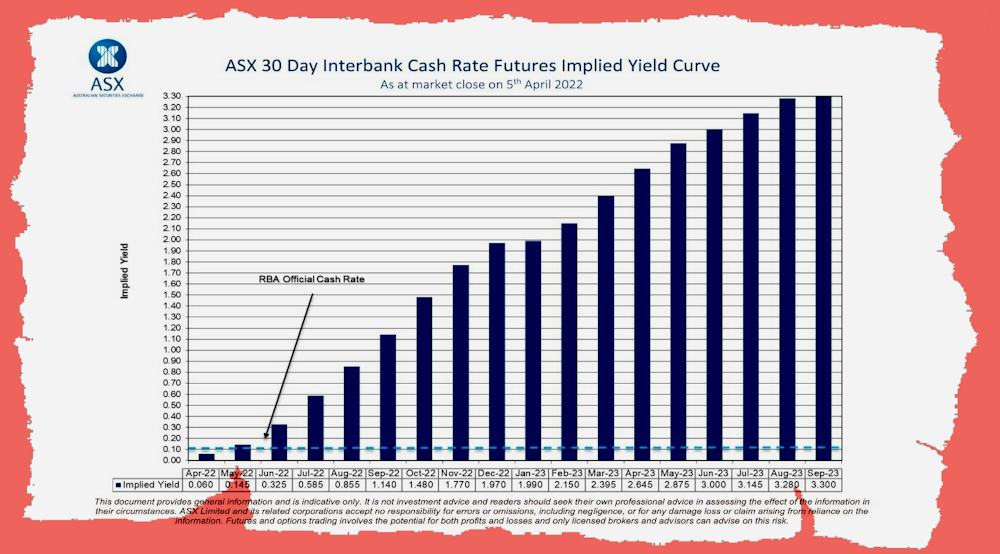
The Reserve Bank's usual wording On Tuesday, in the statement released after the board’s April meeting, the words “prepared to be patient” were missing. The board has literally lost its patience. Instead of saying it was prepared to be patient “as it monitors how the various factors affecting inflation in Australia evolve”, it said Over coming months, important additional evidence will be available to the board on both inflation and the evolution of labour costs. The clear message (and the words in Reserve Bank statements are chosen very carefully) is that if the bank doesn’t like what it sees on inflation and wage costs over the coming few months, it’ll jack up rates, for the first time in a decade. Prices, and wages So what is it waiting for? The first is the March quarter inflation results which will be published by the Australian Bureau of Statistics in three weeks on April 27 during the middle of the election campaign. Economists expect headline inflation to be quite high, up from the latest 3.5% So-called underlying inflation, which filters out unusual price moves, and is what the Reserve Bank actually targets, might not climb as high. But even if it does, there’s every chance it won’t overly alarm the bank. This is because the first three months of March were filled with temporary, one-off external shocks to the economy such as the increase in petrol prices and price the impact on supply chains of lockdowns in major Chinese cities. Conceivably these one-off effects could dissipate after a few months. We were already seeing petrol prices fall before last week’s cut in petrol excise. Many related price increases might fade away shortly after they arrive, making an increase in rates to restrain prices unnecessary. For inflation to be sustainably within its 2-3% target band the Reserve Bank says it wants to see an increase in wages growth as well. Read more: Why Australia's Reserve Bank won't hike interest rates just yet Wages are one of the main business costs meaning it is unlikely we will see long-lasting higher price inflation until we have higher wage inflation. This is why even though the board will have digested the inflation report by its next meeting on May 3 (just ahead of the election) it may well wait until June when it can see the latest wage figures as well. How high, how soon If the bank does start raising rates in June, where will it stop? Market pricing currently predicts the cash rate will jump from 0.10% to 2% by the end of the year, and to more than 3% by next year. They imply an average of one rate hike at every Reserve Bank board meeting for the next 18 months. Australian Securities Exchange This is probably an upper bound for what we can expect. Market economists (the people who advise traders) as opposed to market traders expect the bank to hike no more than a handful of times in the second half of this year. While jobs growth is strong, with underemployment at its lowest in a decade and unemployment close to its lowest in five decades, the bank will be cautious about slowing the recovery before it delivers widespread higher wage growth. Read more: Despite record job vacancies, Australians shouldn't expect big pay rises anytime soon – and here's why This raises the question of why interest rates are tipped to remain so low when unemployment is approaching its lowest level in half a century. It is partly because high household debt means any increase in rates will have a much larger impact on household budgets and spending than it would have. Interest rates won’t stay close to zero forever. But it will be a long time before they are back to the high levels of 4%+ last seen when the bank began cutting in 2010. Authors: Isaac Gross, Lecturer in Economics, Monash University

Read more https://theconversation.com/the-rba-has-lost-some-patience-on-rates-but-it-isnt-rushing-to-push-them-up-heres-why-180681

Plantation Shutters vs Curtains: Which Is Better for Your New Home?

Moving into a new home is an exciting opportunity to personalise your space and make it your own. While many homeowners focus on furniture, flooring...

Celebration of Life vs Traditional Funeral: What's the Difference?

When saying goodbye to someone you love, there is no single way to honour their life. Every family has different traditions, beliefs, and preference...

Building Approval for Roofing Projects: What Homeowners Need to Know

Roofing projects are an important part of maintaining and protecting your home. Whether you're repairing storm damage, replacing an ageing roof, or ...

Chatswood Tutoring And Its Role In Academic Achievement

Academic success often requires more than classroom attendance alone. Students face increasing expectations as they progress through school, particu...

Why Laser Hair Removal Treatments Continue Growing In Popularity

Managing unwanted hair can become time-consuming and frustrating for many people, especially when shaving, waxing, and other temporary methods requi...

Choosing the Right Devices for a Flexible Workplace

For IT leaders managing large fleets, the device layer is where workforce productivity and security policy meet. The shift towards flexible and hybrid...

How Business Advisory Services Help Companies Achieve Sustainable Growth

Every business owner aims to build a profitable and sustainable organisation. While dedication, innovation, and hard work are important, achieving l...

Why Body Contouring Has Become A Popular Cosmetic Treatment

Many people maintain healthy lifestyles through regular exercise and balanced eating habits but still struggle with stubborn areas of fat that are d...

How to Choose the Right POS Hardware for Your Business in Australia

A lot of Australian business owners spend weeks researching POS software but buy hardware almost as an afterthought. That's a mistake. The wrong har...

Why Material Handling Hose Is Critical for Industrial Efficiency

A high-performance material handling hose is an essential component in industries that transport abrasive, dry, or bulk materials on a daily basis...

How to Choose the Right Lawyer in Melbourne for Your Situation

Choosing legal support can feel difficult, especially when the stakes are personal or business-related. The right lawyer in Melbourne should underst...

Hoteliers Look to Clever Value Adds to Increase Revenue

The Australian hospitality industry is still in recovery mode after a notoriously rough patch in recent years. While there has been a post-COVID tra...

Moving to Queensland? Here’s How to Prep Your Car for the Big Move North

There’s no sign of the northern migration slowing down, with thousands of southerners fleeing from chaotic lifestyles and cooler climates for a brig...

Diesel Shortage to Impact Trades and Contractors

Strait of Hormuz blockage affecting all major parts of trades and construction Trades and construction across residential, commercial and industria...

Why Holiday Home Owners Turn to Rental Management Agents

The Allure — and the Reality — of Renting Out Your Property Owning a holiday home is a dream for many Australians. Whether it's a beachside sha...

Why Finding Reliable Doctors In Bundoora Is Important For Long-Term Health

Access to quality healthcare plays an important role in maintaining overall wellbeing and managing health concerns early. Trusted Doctors in Bundoor...

Understanding the Different Types of Car Services: Minor vs Major

When it comes to car maintenance, one of the most important things every vehicle owner should understand is the difference between a minor and a maj...

How Superannuation and TPD Insurance Work Together

Superannuation is an essential part of financial planning in Australia. It is designed to provide individuals with income during retirement, helping...
















