

Witchcraft and fascism collide in Jane Rawson's imaginative new novel
- Written by: Brigid Magner, Senior Lecturer in Literary Studies, RMIT University
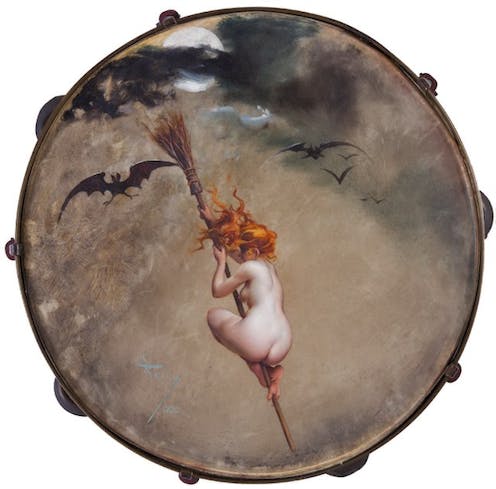
In an age of polarisation, it’s instructive to return to the late 1930s, in the lead up to World War II, when the far left and far right were energised and prominent. In Australia, we tend to think that Nazi sympathisers didn’t exist, or were never significant, but in fact there were documented events in Adelaide and Katoomba that revealed fervent support for Hitler’s rise to power.
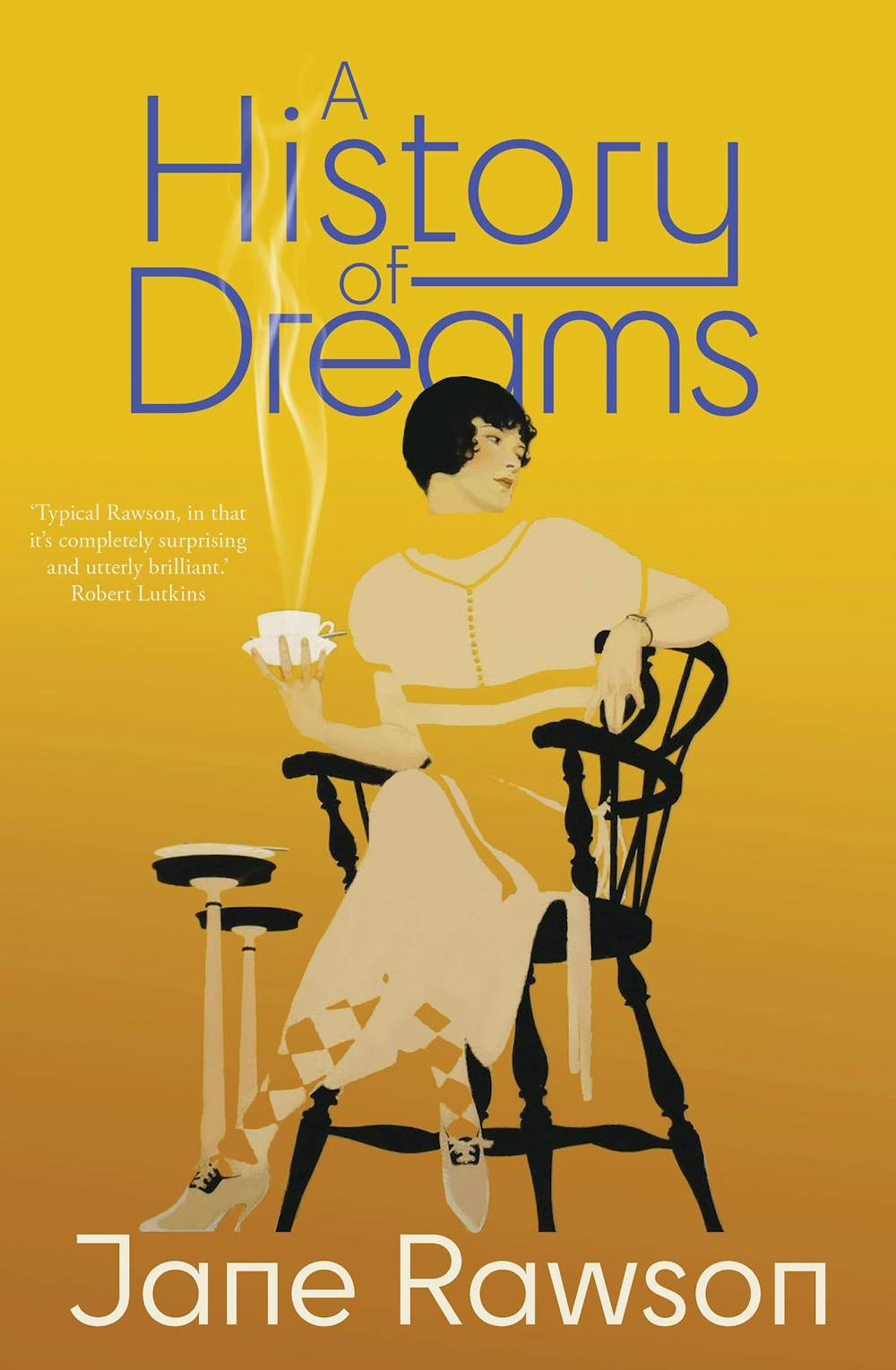
Review: A History of Dreams - Jane Rawson (Brio Books)
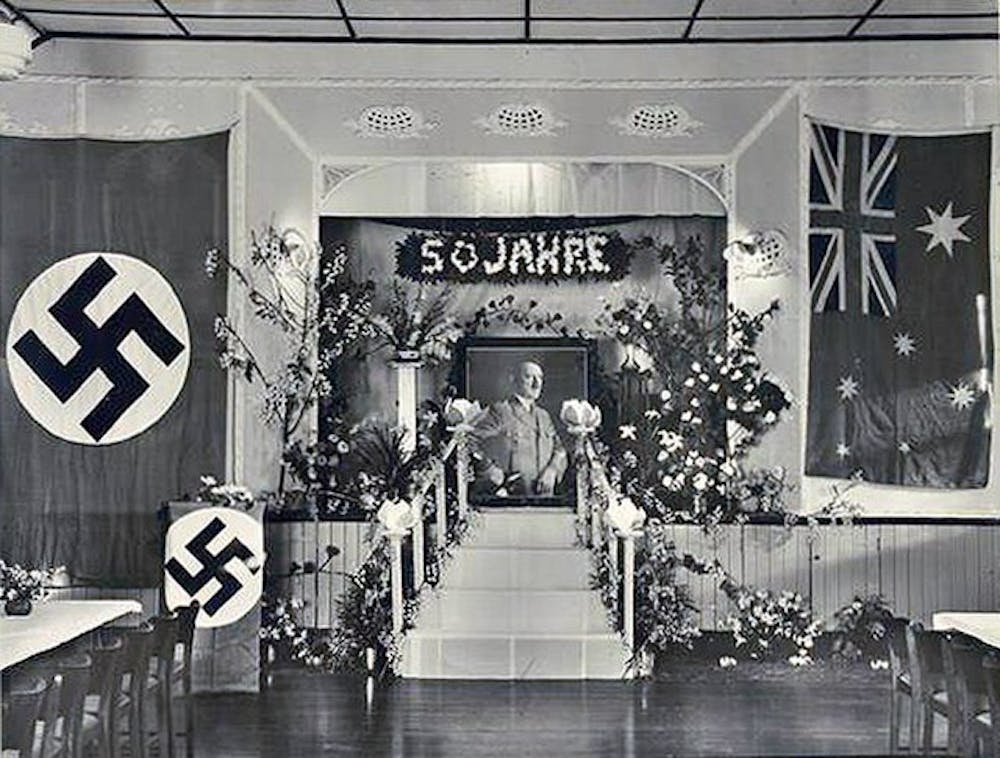 German Club celebration of Adolf Hitler’s 50th birthday, Adelaide, South Australia, 20 April 1939.
Public domain
Creeping authoritarianism
For most people living under autocratic governments, the full horror of their circumstances tends to creep up on them gradually. As in Margaret Atwood’s The Handmaid’s Tale (1985) and the accompanying television series, freedom is taken away by physical incarceration, but also through the denial of literacy and the forbidding of mobility and communication between women.
Phyl’s poverty drives her out to work, providing valuable intelligence about what is really going on. Working at the Foy & Gibson department store cosmetics counter, she learns about the predicament of her workmate Ruth’s family. Some of them are stuck in Germany; others had moved to Tanunda before being forced to relocate due to the proximity of “too many bad people”.
Tanunda was actually the home of Australia’s Gestapo chief in the 1930s, making it especially dangerous for people of Jewish origin. In Rawson’s parallel universe, fascist sympathisers need not hide themselves, because the government is on their side.
Despite these scattered allies, one of the most insidious effects of this totalitarian culture is that trust is eroded, straining human bonds and making people more vulnerable to manipulation.
German Club celebration of Adolf Hitler’s 50th birthday, Adelaide, South Australia, 20 April 1939.
Public domain
Creeping authoritarianism
For most people living under autocratic governments, the full horror of their circumstances tends to creep up on them gradually. As in Margaret Atwood’s The Handmaid’s Tale (1985) and the accompanying television series, freedom is taken away by physical incarceration, but also through the denial of literacy and the forbidding of mobility and communication between women.
Phyl’s poverty drives her out to work, providing valuable intelligence about what is really going on. Working at the Foy & Gibson department store cosmetics counter, she learns about the predicament of her workmate Ruth’s family. Some of them are stuck in Germany; others had moved to Tanunda before being forced to relocate due to the proximity of “too many bad people”.
Tanunda was actually the home of Australia’s Gestapo chief in the 1930s, making it especially dangerous for people of Jewish origin. In Rawson’s parallel universe, fascist sympathisers need not hide themselves, because the government is on their side.
Despite these scattered allies, one of the most insidious effects of this totalitarian culture is that trust is eroded, straining human bonds and making people more vulnerable to manipulation.
 Jane Rawson.
Image supplied.
Working as an underground resistance, the friends each make their own contributions, even when torn from each other by the patriarchy. They suspect one of them is behind the compelling dreams that are broadcast to the minds of all South Australians. To counteract the state-sanctioned ones, Esther dedicates herself to making magical capsules that produce a deep nocturnal blackness instead.
This might be read as a metaphor for the effort needed to resist the mental toll of such a regime – nothingness is preferable to lies.
The weaponising of sleep and dreaming is reminiscent of Ambelin Kwaymullina’s The Interrogation of Ashala Wolf (2012), in which a powerful “Sleepwalker” can do anything in her dreams, but an official tries to break her with “the machine”, which seeks to invade her memories and reveal her secrets.
At times, the men who inhabit A History of Dreams seem like caricatures, too impossibly dreadful to be believable. Thankfully, there are a few male figures who offer nuance. The first is Walt – a queer dance teacher who is sent overseas on a suicidal mission. His partner Benjamin is another warm presence, but he gives up hope when Walt is press-ganged into the army. Later, a “fake husband”, organised by a gay resistance that dare not speak its name, turns out to be a decent human who covertly supports the work of the witches.
The extremity of the novel’s scenario allows Rawson to explore received ideas about family, identity and belonging. Only people operating outside of hetero-normative cultural rules seem able to resist the men in charge. Notably, the witches must renounce matrimony to practice their art and almost all organised resistance comes from the queer community.
Esther’s miserable experience of unwanted pregnancy stands starkly against the ideology of perfect motherhood propounded by the perpetrator of her assault and his cronies. Her ability to parent her daughter Amelia is further shaken by imprisonment and torture, but her allies rally around the raise Amelia collectively, allowing her to carry their magic inheritance into the future.
Rawson’s novel reminds us that although fascism is always with us, so is our capacity for solidarity – and powerful dreaming.
Authors: Brigid Magner, Senior Lecturer in Literary Studies, RMIT University
Jane Rawson.
Image supplied.
Working as an underground resistance, the friends each make their own contributions, even when torn from each other by the patriarchy. They suspect one of them is behind the compelling dreams that are broadcast to the minds of all South Australians. To counteract the state-sanctioned ones, Esther dedicates herself to making magical capsules that produce a deep nocturnal blackness instead.
This might be read as a metaphor for the effort needed to resist the mental toll of such a regime – nothingness is preferable to lies.
The weaponising of sleep and dreaming is reminiscent of Ambelin Kwaymullina’s The Interrogation of Ashala Wolf (2012), in which a powerful “Sleepwalker” can do anything in her dreams, but an official tries to break her with “the machine”, which seeks to invade her memories and reveal her secrets.
At times, the men who inhabit A History of Dreams seem like caricatures, too impossibly dreadful to be believable. Thankfully, there are a few male figures who offer nuance. The first is Walt – a queer dance teacher who is sent overseas on a suicidal mission. His partner Benjamin is another warm presence, but he gives up hope when Walt is press-ganged into the army. Later, a “fake husband”, organised by a gay resistance that dare not speak its name, turns out to be a decent human who covertly supports the work of the witches.
The extremity of the novel’s scenario allows Rawson to explore received ideas about family, identity and belonging. Only people operating outside of hetero-normative cultural rules seem able to resist the men in charge. Notably, the witches must renounce matrimony to practice their art and almost all organised resistance comes from the queer community.
Esther’s miserable experience of unwanted pregnancy stands starkly against the ideology of perfect motherhood propounded by the perpetrator of her assault and his cronies. Her ability to parent her daughter Amelia is further shaken by imprisonment and torture, but her allies rally around the raise Amelia collectively, allowing her to carry their magic inheritance into the future.
Rawson’s novel reminds us that although fascism is always with us, so is our capacity for solidarity – and powerful dreaming.
Authors: Brigid Magner, Senior Lecturer in Literary Studies, RMIT University 

















