

Remind me again, why is salt bad for you?
- Written by: Evangeline Mantzioris, Program Director of Nutrition and Food Sciences, University of South Australia
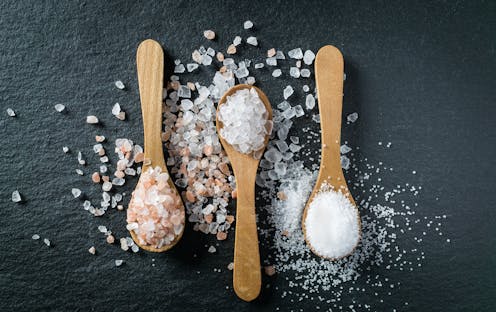
Despite most of us knowing we should cut down on salt, Australians consume on average almost twice the recommended daily maximum per day.
Salt has been used in food preservation for centuries, and idioms like “worth your weight in salt” indicate how valuable it was for preserving food to ensure survival. Salt draws moisture out of foods, which limits bacterial growth that would otherwise spoil food and cause gastrointestinal illnesses. Today, salt is still added as a preservative, but it also improves the taste of foods.
Salt is a chemical compound made of sodium and chloride, and this is the main form in which we consume it in our diet. Of these two elements, it’s the sodium we need to worry about.
Read more: Is salt good for you after all? The evidence says no
So what does sodium do in our bodies?
The major concern of consuming too much sodium is the well-established link to the increased risk of high blood pressure (or hypertension). High blood pressure is in turn a risk factor for heart disease and stroke, a major cause of severe illness and death in Australia. High blood pressure is also a cause of kidney disease.

The exact processes that lead to high blood pressure from eating large amounts of sodium are not fully understood. However, we do know it’s due to physiological changes that occur in the body to tightly control the body’s fluid and sodium levels. This involves changes in how the kidneys, heart, nervous system and fluid-regulating hormones respond to increasing sodium levels in our body.
Maintaining tight control on sodium levels is necessary because sodium affects the membranes of all the individual cells in your body. Healthy membranes allow for the movement of:
nutrients in and out of the cells
signals through the nervous system (for example, messages from the brain to other parts of your body).
Dietary salt is needed for these processes. However, most of us consume much, much more than we need.
When we eat too much salt, this increases sodium levels in the blood. The body responds by drawing more fluid into the blood to keep the sodium concentration at the right level. However, by increasing the fluid volume, the pressure against the blood vessel walls is increased, leading to high blood pressure.
High blood pressure makes the heart work harder, which can lead to disease of the heart and blood vessels, including heart attack and heart failure.
While there is some controversy around the effect of salt on blood pressure, most of the literature indicates there is a progressive association, which means the more sodium you consume, the more likely you are to die prematurely.
Read more: Salt overload – it's time to get tough on the food industry
What to watch out for
Certain groups of people are more affected by high-salt diets than others. These people are referred to as “salt-sensitive”, and are more likely to get high blood pressure from salt consumption.
Those most at risk include older people, those who already have high blood pressure, people of African-American background, those who have chronic kidney disease, those with a history of pre-eclampsia (high blood pressure during pregnancy), and those who had a low birth weight.
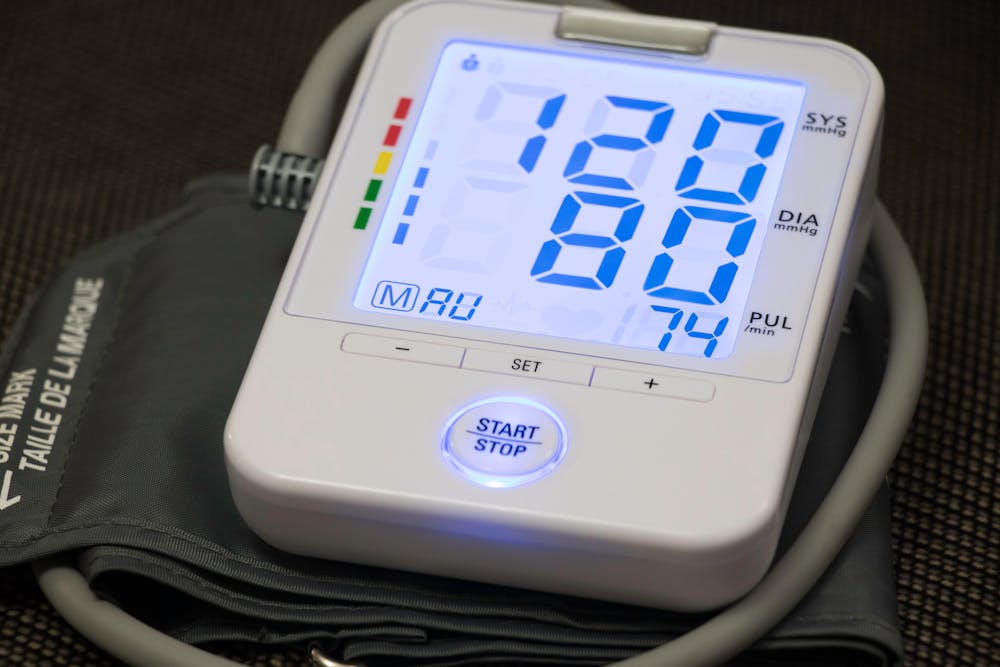 Optimal blood pressure is 120/80.
Shutterstock
Optimal blood pressure is 120/80.
Shutterstock
It is important to be aware of your blood pressure, so next time you visit your doctor make sure you get it checked. Your blood pressure is given as two figures: highest (systolic) over lowest (diastolic). Systolic is the pressure in the artery as the heart contracts and pushes the blood through your body. The diastolic pressure in the artery is when the heart is relaxing and being filled with blood.
Read more: There's more hidden salt in your diet than you think
Optimal blood pressure is below 120/80. Blood pressure is considered high if the reading is over 140/90. If you have other risk factors for heart disease, diabetes or kidney disease, a lower target may be set by your doctor.
How to reduce salt intake
Reducing salt in your diet is a good strategy to reduce your blood pressure, and avoiding processed and ultra-processed foods, which is where about 75% of our daily salt intake comes from, is the first step.
 Try to use less salt in your cooking, but home prepared meals are not the worst culprit.
Shutterstock
Try to use less salt in your cooking, but home prepared meals are not the worst culprit.
Shutterstock
Increasing your intake of fruit and vegetables to at least seven serves per day may also be effective in reducing your blood pressure, as they contain potassium, which helps our blood vessels relax.
Increasing physical activity, stopping smoking, maintaining a healthy weight and limiting your alcohol intake will also help to maintain a healthy blood pressure. Blood pressure reducing medications are also available if blood pressure can not be reduced initially by lifestyle changes.
Read more: What we may think are the healthiest bread and wrap options actually have the most salt
Authors: Evangeline Mantzioris, Program Director of Nutrition and Food Sciences, University of South Australia
Read more https://theconversation.com/remind-me-again-why-is-salt-bad-for-you-179768


















