

Modern Australian
Times Advertising

Vaccine resistance has its roots in negative childhood experiences, a major study finds

  • Written by Richie Poulton, CNZM FRSNZ, Director: Dunedin Multidisciplinary Health & Development Research Unit (DMHDRU), University of Otago
Vaccine resistance has its roots in negative childhood experiences, a major study finds

Most people welcomed the opportunity to get vaccinated against COVID-19, yet a non-trivial minority did not. Vaccine-resistant people tend to hold strong views and assertively reject conventional medical or public health recommendations. This is puzzling to many, and the issue has become a flashpoint in several countries.

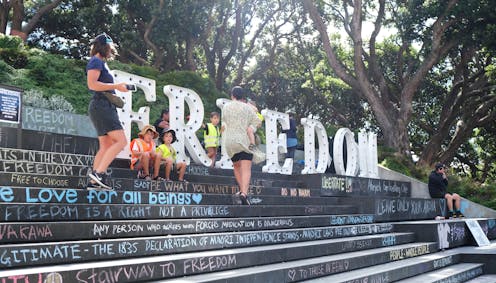
It has resulted in strained relationships, even within families, and at a macro-level has threatened social cohesion, such as during the month-long protest on parliament grounds in Wellington, New Zealand.

This raises the question: where do these strong, often visceral anti-vaccination sentiments spring from? As lifecourse researchers we know that many adult attitudes, traits and behaviours have their roots in childhood. This insight prompted us to enquire about vaccine resistance among members of the long-running Dunedin Study, which marks 50 years this month.

Specifically, we surveyed study members about their vaccination intentions between April and July 2021, just prior to the national vaccine roll out which began in New Zealand in August 2021. Our findings support the idea that anti-vaccination views stem from childhood experiences.

The Dunedin Study, which has followed a 1972-73 birth cohort, has amassed a wealth of information on many aspects of the lives of its 1037 participants, including their physical health and personal experiences as well as long-standing values, motives, lifestyles, information-processing capacities and emotional tendencies, going right back to childhood.

A study participants undergoes an eye examination to test the health of optic nerves and the eye’s surface.
Among many assessments, study participants undergo eye examinations to test the health of optic nerves and the eye’s surface. Guy Frederick, CC BY-ND

Almost 90% of the Dunedin Study members responded to our 2021 survey about vaccination intent. We found 13% of our cohort did not plan to be vaccinated (with similar numbers of men and women).

When we compared the early life histories of those who were vaccine resistant to those who were not we found many vaccine-resistant adults had histories of adverse experiences during childhood, including abuse, maltreatment, deprivation or neglect, or having an alcoholic parent.

These experiences would have made their childhood unpredictable and contributed to a lifelong legacy of mistrust in authorities, as well as seeding the belief that “when the proverbial hits the fan you’re on your own”. Our findings are summarised in this figure.

A graph that tracks the life history of vaccine resistance
Dunedin Study, CC BY-ND Personality tests at age 18 showed people in the vaccine-resistant group were vulnerable to frequent extreme emotions of fear and anger. They tended to shut down mentally when under stress. They also felt fatalistic about health matters, reporting at age 15 on a scale called “health locus of control” that there is nothing people can do to improve their health. As teens they often misinterpreted situations by unnecessarily jumping to the conclusion they were being threatened. The resistant group also described themselves as non-conformists who valued personal freedom and self-reliance over following social norms. As they grew older, many experienced mental health problems characterised by apathy, faulty decision-making and susceptibility to conspiracy theories. Negative emotions combine with cognitive difficulties To compound matters further, some vaccine-resistant study members had cognitive difficulties since childhood, along with their early-life adversities and emotional vulnerabilities. They had been poor readers in high school and scored low on the study’s tests of verbal comprehension and processing speed. These tests measure the amount of effort and time a person requires to decode incoming information. Such longstanding cognitive difficulties would certainly make it difficult for anyone to comprehend complicated health information under the calmest of conditions. But when comprehension difficulties combine with the extreme negative emotions more common among vaccine-resistant people, this can lead to vaccination decisions that seem inexplicable to health professionals. Read more: COVID-19 vaccine hesitancy can be overcome through relatable stories and accessible information Today, New Zealand has achieved a very high vaccination rate (95% of those eligible above the age of 12), which is approximately 10% higher than in England, Wales, Scotland or Ireland and 20% higher than in the US. More starkly, the New Zealand death rate per million population is currently 71. This compares favourably to other democracies such as the US with 2,949 deaths per million (40 times New Zealand’s rate), UK at 2,423 per million (34 times) and Canada at 991 per million (14 times). How to overcome vaccine resistance How then do we reconcile our finding that 13% of our cohort were vaccine resistant and the national vaccination rate now sits at 95%? There are a number of factors that helped drive the rate this high. They include: Good leadership and clear communication from both the prime minster and director-general of health leveraging initial fear about the arrival of new variants, Delta and Omicron widespread implementation of vaccine mandates and border closure, both of which have become increasingly controversial the devolution by government of vaccination responsibilities to community groups, particularly those at highest risk such as Māori, Pasifika and those with mental health challenges. A distinct advantage of the community-driven approach is that it harnesses more intimate knowledge about people and their needs, thereby creating high(er) trust for decision-making about vaccination. A local vaccination clinic
Community organisations can build on higher trust and better knowledge of people’s concerns and needs. Fiona Goodall/Getty Images

This is consistent with our findings which highlight the importance of understanding individual life histories and different ways of thinking about the world – which are both attributable to adversities experienced by some people early in life. This has the added benefit of encouraging a more compassionate view towards vaccine resistance, which might ultimately translate into higher rates of vaccine preparedness.

Read more: The 9 psychological barriers that lead to COVID-19 vaccine hesitancy and refusal

For many, the move from a one-size-fits-all approach occurred too slowly and this is an important lesson for the future. Another lesson is that achieving high vaccination rates has not been free of “cost” to individuals, families and communities. It has been a struggle to persuade many citizens to get vaccinated and it would be unrealistic not to expect some residual resentment or anger among those most heavily affected by these decisions.

Preparing for the next pandemic

COVID-19 is unlikely to be the last pandemic. Recommendations about how governments should prepare for future pandemics often involve medical technology solutions such as improvements in testing, vaccine delivery and treatments, as well as better-prepared hospitals.

Other recommendations emphasise economic solutions such as a world pandemic fund, more resilient supply chains and global coordination of vaccine distribution. The contribution of our research is the appreciation that citizens’ vaccine resistance is a lifelong psychological style of misinterpreting information during crisis situations that is laid down before high school age.

We recommend that national preparation for future pandemics should include preventive education to teach school children about virus epidemiology, mechanisms of infection, infection-mitigating behaviours and vaccines. Early education can prepare the public to appreciate the need for hand-washing, mask-wearing, social distancing and vaccination.

Read more: 5 strategies to prepare now for the next pandemic

Early education about viruses and vaccines could provide citizens with a pre-existing knowledge framework, reduce citizens’ level of uncertainty in a future pandemic, prevent emotional stress reactions and enhance openness to health messaging. Technology and money are two key tools in a pandemic-preparedness strategy, but the third vital tool should be a prepared citizenry.

The takeaway messages are twofold. First, do not scorn or belittle vaccine-resistant people, but rather attempt to glean a deeper understanding on “where they’re coming from” and try to address their concerns without judgement. This is best achieved by empowering the local communities that vaccine resisters are most likely to trust.

The second key insight points to a longer-term strategy that involves education about pandemics and the value of vaccinations in protecting the community. This needs to begin when children are young, and of course it must be delivered in an age-appropriate way. This would be wise simply because, when it comes to future pandemics, it’s not a matter of if, but when.

Authors: Richie Poulton, CNZM FRSNZ, Director: Dunedin Multidisciplinary Health & Development Research Unit (DMHDRU), University of Otago


Read more https://theconversation.com/vaccine-resistance-has-its-roots-in-negative-childhood-experiences-a-major-study-finds-180114

Interstate Car Transporter Urges Buyers to Book Early

As the conflict in the Middle East continues to put increasing pressure on local fuel supply, Australian transport companies are experiencing increasi...

Digital Minimalism for Business Owners: Fewer Tools, Better Systems

Be honest. How many apps are open right now? One for scheduling, another for invoices, a third for customer notes, plus a spreadsheet someone email...

The Importance Of Proactive NDIS Renewal Preparation For Sustaining Your Provider Business

Your NDIS renewal notice is not a signal to start preparing. By the time it arrives, preparation should already be well underway. For new providers, s...

Why Fire Extinguisher Testing in Sydney Is Becoming a Records Game, Not Only a Maintenance Job

A fire extinguisher used to feel like one of the simpler parts of building safety. It hung on the wall, wore a service tag, and sat there quietly unle...

The Switchboard Upgrade Question Every Melbourne Renovator Should Ask Before the Walls Close Up

Renovations have a funny way of making people think on surfaces first. Splashback, stone, joinery, tapware, paint. Fair enough too. That is the exciti...

Winter Sanitation Gaps in Parramatta Kitchens: A Hidden Pest Risk

Winter brings a host of changes to our homes, from the chill in the air to the cozy warmth indoors. However, this season also introduces sanitation ch...

When to Seek Advice from Employment Lawyers in Melbourne

Australian employment law is detailed and, at times, complex, with rights and obligations that aren't always obvious to employees or employers witho...

7 Benefits of Professional Gutter Cleaning for Australian Homeowners

Gutters aren't exactly glamorous. They sit up there on the edge of your roof, doing their job quietly - until they stop working. Clogged, overflowing ...

Pipe Floats Strengthening Pipeline Performance In Demanding Environments

Pipelines often travel through environments that are anything but predictable, water currents shift, terrain changes, and materials keep moving unde...

Why Ceiling Fans Are Essential For Comfort, Efficiency, And Modern Living

Creating a comfortable indoor environment is not just about temperature; it is about how air moves, how a room feels, and how efficiently energy is ...

Why Duct Cleaning In Melbourne Is A Smart Investment For Healthier Living Spaces

Behind your walls, ceilings, and vents lies a network quietly working every day to keep your home comfortable. Yet over time, this system can become...

Disability Service Providers Supporting Inclusive And Independent Living

Finding the right support system can feel like assembling a puzzle where every piece must fit just right. For individuals and families navigating di...

A Beginner's Guide to Owning a Caravan in Australia

Owning a caravan opens up a style of travel that's hard to match for freedom and flexibility. However, for those just starting out, the process of c...

Preparing Your Air Conditioner for Summer: What Most Homeowners Overlook

As temperatures rise, many homeowners switch on their air conditioning for the first time in months — only to find it’s not performing the way i...

What Actually Adds Value to Properties in Newcastle

Newcastle has seen steady growth over the past few years, with more buyers looking beyond Sydney for lifestyle, space, and long-term value. As dema...

What is Design and Build in Construction?

Imagine you’re about to start a new construction project, maybe it’s a custom home or a commercial building. You’ve got the idea, the land, an...

Commercial roof leak detection: why early action protects your building

Water ingress is one of the most disruptive and costly issues facing commercial properties. For property managers and facilities teams, even a minor...

Custom Photo Frames: Turning Everyday Moments into Lasting Displays

Photos capture moments, but how you display them determines how they’re experienced every day. A meaningful photograph deserves more than a generi...















