

To make our wardrobes sustainable, we must cut how many new clothes we buy by 75%
- Written by: Samantha Sharpe, Research Director, Institute for Sustainable Futures, University of Technology Sydney

If things don’t change fast, the fashion industry could use a quarter of the world’s remaining global carbon budget to keep warming under 2℃ by 2050, and use 35% more land to produce fibres by 2030.
While this seems incredible, it’s not. Over the past 15 years, clothing production has doubled while the length of time we actually wear these clothes has fallen by nearly 40%. In the EU, falling prices have seen people buying more clothing than ever before while spending less money in the process.
This is not sustainable. Something has to give. In our recent report, we propose the idea of a wellbeing wardrobe, a new way forward for fashion in which we favour human and environmental wellbeing over ever-growing consumption of throwaway fast-fashion.
What would that look like? It would mean each of us cutting how many new clothes we buy by as much as 75%, buying clothes designed to last, and recycling clothes at the end of their lifetime.
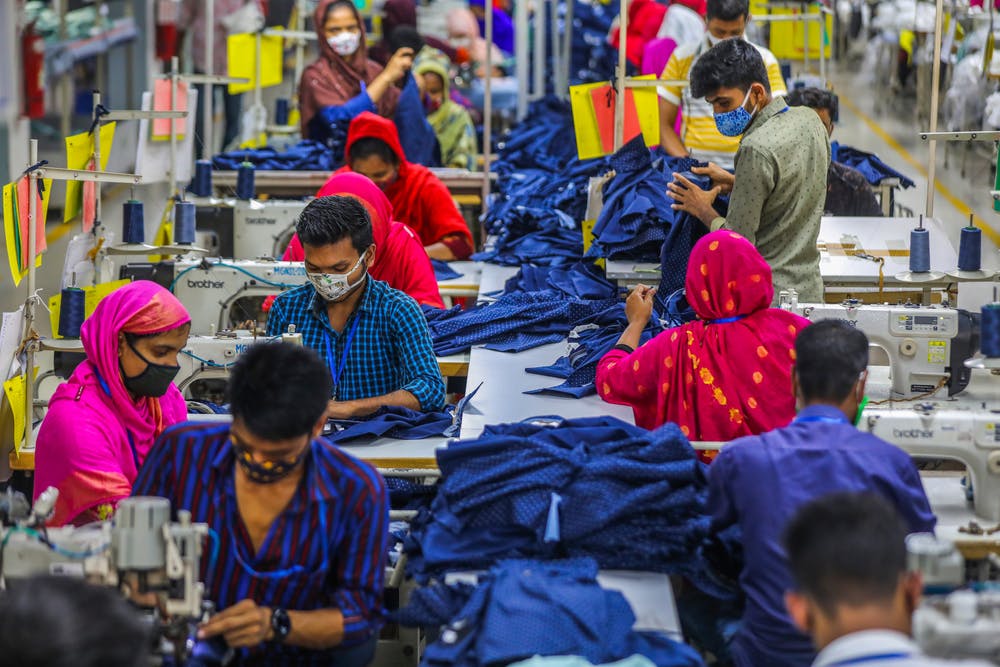
For the sector, it would mean tackling low incomes for the people who make the clothes, as well as support measures for workers who could lose jobs during a transition to a more sustainable industry.
Sustainability efforts by industry are simply not enough
Fashion is accelerating. Fast fashion is being replaced by ultra-fast fashion, releasing unprecedented volumes of new clothes into the market.
Since the start of the year, fast fashion giants H&M and Zara have launched around 11,000 new styles combined.
Over the same time, ultra-fast fashion brand Shein has released a staggering 314,877 styles. Shein is currently the most popular shopping app in Australia. As you’d expect, this acceleration is producing a tremendous amount of waste.
Read more: 'I can only do so much': we asked fast-fashion shoppers how ethical concerns shape their choices
In response, the fashion industry has devised a raft of plans to tackle the issue. The problem is many sustainability initiatives still place economic opportunity and growth before environmental concerns.
Efforts such as switching to more sustainable fibres and textiles and offering ethically-conscious options are commendable. Unfortunately, they do very little to actually confront the sector’s rapidly increasing consumption of resources and waste generation.
On top of this, labour rights abuses of workers in the supply chain are rife.
Over the past five years, the industry’s issues of child labour, discrimination and forced labour have worsened globally. Major garment manufacturing countries including Myanmar, Cambodia, Bangladesh and Vietnam are considered an “extreme risk” for modern slavery.
Here’s what we can do to tackle the situation.
1. Limit resource use and consumption
We need to have serious conversations between industry, consumers and governments about limiting resource use in the fashion industry. As a society, we need to talk about how much clothing is enough to live well.
On an individual level, it means buying fewer new clothes, as well as reconsidering where we get our clothes from. Buying secondhand clothes or using rental services are ways of changing your wardrobe with lower impact.
2. Expand the slow fashion movement
The growing slow fashion movement focuses on the quality of garments over quantity, and favours classic styles over fleeting trends.
We must give renewed attention to repairing and caring for clothes we already own to extend their lifespan, such as by reviving sewing, mending and other long-lost skills.
3. New systems of exchange
The wellbeing wardrobe would mean shifting away from existing fashion business models and embracing new systems of exchange, such as collaborative consumption models, co-operatives, not-for-profit social enterprises and B-corps.
What are these? Collaborative consumption models involve sharing or renting clothing, while social enterprises and B-corps are businesses with purposes beyond making a profit, such as ensuring living wages for workers and minimising or eliminating environmental impacts.
Read more: Following a t-shirt from cotton field to landfill shows the true cost of fast fashion
There are also methods that don’t rely on money, such as swapping or borrowing clothes with friends and altering or redesigning clothes in repair cafes and sewing circles.
4. Diversity in clothing cultures
Finally, as consumers we must nurture a diversity of clothing cultures, including incorporating the knowledge of Indigenous fashion design, which has respect for the environment at its core.
Communities of exchange should be encouraged to recognise the cultural value of clothing, and to rebuild emotional connections with garments and support long-term use and care.
What now?
Shifting fashion from a perpetual growth model to a sustainable approach will not be easy. Moving to a post-growth fashion industry would require policymakers and the industry to bring in a wide range of reforms, and re-imagine roles and responsibilities in society.
You might think this is too hard. But the status quo of constant growth cannot last.
It’s better we act to shape the future of fashion and work towards a wardrobe good for people and planet – rather than let a tidal wave of wasted clothing soak up resources, energy and our very limited carbon budget.
Authors: Samantha Sharpe, Research Director, Institute for Sustainable Futures, University of Technology Sydney


















