

the not so great power politics of China, the US and Australia
- Written by: Mark Beeson, Adjunct professor, University of Technology Sydney
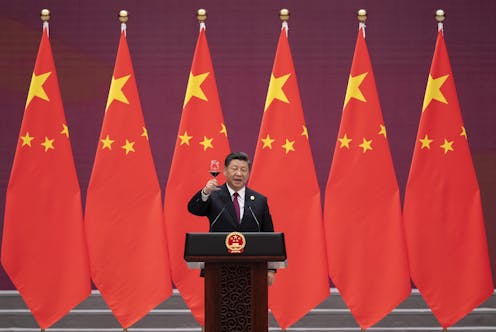
Many foreign policy specialists think there is something universal about the threats nation states face. Russia’s brutal invasion of Ukraine is a reminder that uncertainty is a perpetual feature of international affairs.
Review:
The Avoidable War: The Dangers of a Catastrophic Conflict Between the US and Xi Jinping’s China – Kevin Rudd (Hachette).
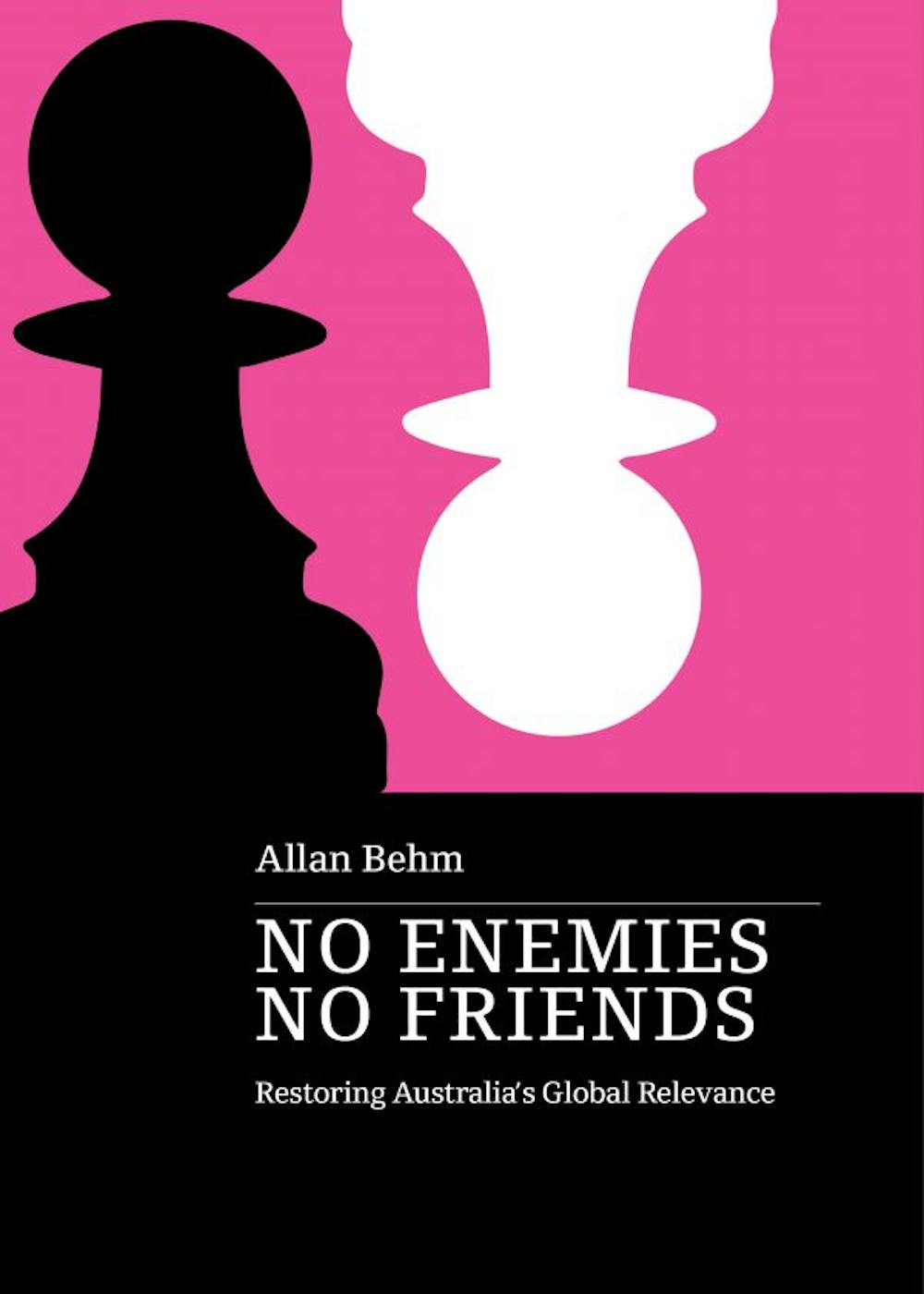
No Enemies No Friends: Restoring Australia’s Global Relevance – Allan Behm (Upswell).
Neither former PM Kevin Rudd nor Allan Behm, Director of the International and Security Affairs Program at the Australia Institute, can be blamed for not taking the thought processes of Vladimir Putin into account when they penned their respective analyses of China-US relations and Australian foreign policy.
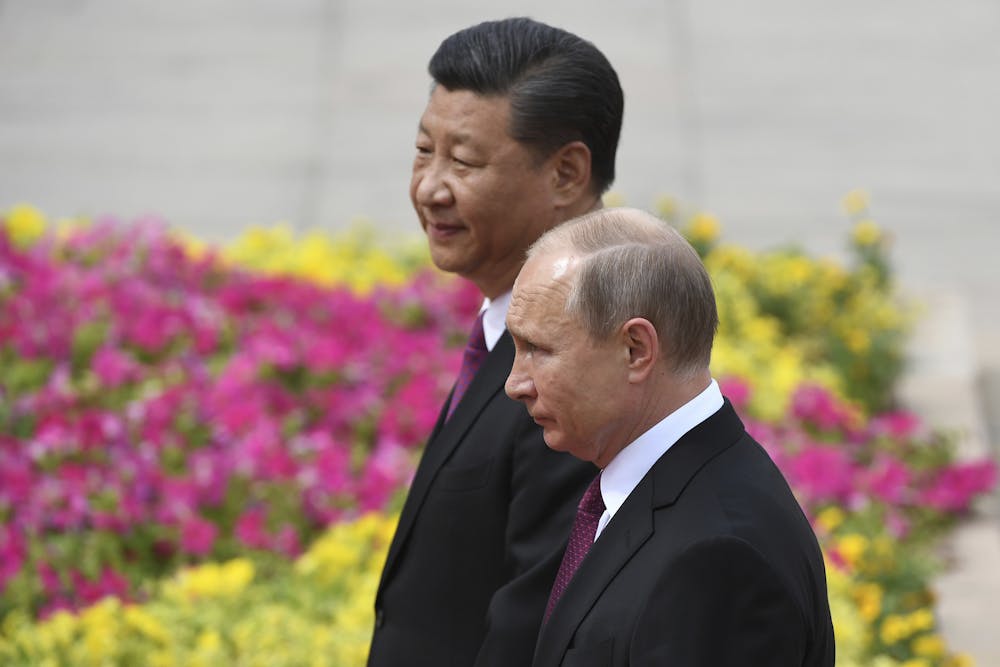
What Rudd calls “managed strategic competition” is, he contends, the mechanism with which US-China rivalry can be stopped from spilling over into what some think is the very real possibility of military conflict.
Rudd, currently president of the Asia Society Policy Institute, is a self-confessed “realist”, so he takes military capabilities seriously. One of the core beliefs of this paradigm is that a durable balance of power is central to international stability. Credible forms of deterrence are the key to ensuring that states do not embark on risky behaviour.
Putin is currently giving the lie to that assumption, reminding us that unaccountable autocrats and/or megalomaniacs cannot be relied upon to act “rationally”. To be fair, Rudd is alert to this possibility and argues that “the risk of nuclear escalation between the US and China must be considered afresh”.
A theatre of the absurd
The Avoidable War is a big book with some big ideas, and Rudd spends a lot of time spelling out how the US and China find themselves in such fraught geopolitical circumstances. Although the overall discussion is about the bilateral relationship, most attention is paid to Chinese perspectives, which is unsurprising given Rudd’s deep understanding of the People’s Republic.
It is also a useful corrective to much of the commentary, which is overwhelmingly US-centric. As Rudd points out, while China’s
understanding of modern America may be imperfect, it is more disciplined and sophisticated than … Washington political elites in their understanding of what actually makes China tick.
For policymakers keen to fill in some of the more glaring gaps in their knowledge of China, Rudd offers “ten concentric circles of interest” that underpin Xi Jinping’s world view.
Given that Xi is likely to be around for a while, one might hope that the book will be widely read, not least by the current generation of Australian defence and foreign policy officials. But as Behm suggests, that is unlikely, given that “we have turned our relationship with China into a theatre of the absurd played on the domestic political stage”.
This makes unpacking China’s unique history, as well as the distinctive attitudes and beliefs it has generated in its leaders and the population more generally, an especially useful and important part of Rudd’s book. Although Rudd is at pains to point out that this is not a traditional “scholarly” work – there is not a single reference in 400 pages – The Avoidable War a great primer for anyone trying to understand the relationship between our most important economic and strategic partners.
Read more: China does not want war, at least not yet. It's playing the long game
Economic challenges
Of the key objectives that shape Xi’s thinking and policy agenda, none are more important than maintaining the centrality of the Chinese Communist Party and national security.
One of Rudd’s more perceptive insights is that economic management is not Xi’s strong suit, but his pivotal position in Chinese policymaking means his views are decisive. As Rudd points out,
while the economy is not everything, it is nearly everything when it comes to our efforts to understand the underlying dynamics of US-China relations …
While the chapter on the economy is generally outstanding, I think the jury is still out when it comes to assessing whether the American or the Chinese versions of capitalism will prove to be sustainable.
Plainly, the stakes are higher in Xi’s China: “communist” countries aren’t supposed to suffer from crises of capitalism, after all. As Rudd makes clear, successfully managing continuing economic development remains the core domestic challenge for Xi, one that will determine the standing and legitimacy of the CCP. An expanding economy also makes it possible to reinforce China’s growing military capacity and its supposed deterrent effect, of course.
Whether the Americans will be deterred by increasingly sophisticated Chinese military hardware remains to be seen. But in the event of conflict erupting over the status of Taiwan or one of the other all-too-numerous “flashpoints” that seem to dot the geopolitical landscape, Rudd suggests
it is more likely than not that Xi Jinping would be predisposed to escalating a military conflict with America once one has begun in order to retain nationalist support.
This is another key idea Rudd develops: nationalism is becoming one of the most important determinants of China’s foreign policy. It is simply not possible for Xi to back down on some of the more grandiose expressions of China’s growing power such as the Belt and Road Initiative, because they are so closely associated with the paramount leader himself.
A failure to resolve the contested status of Taiwan on his watch may prove an even more combustible and existentially challenging problem for Xi.
An excoriating critique
Although Allan Behm’s No Enemies No Friends is primarily about Australian foreign policy, China looms large in this volume, too.
 Behm is a former Chief of Staff to Greg Combet when he was a Minister in the Rudd and Gillard governments, and a former senior advisor to Shadow Minister for Foreign Affairs Penny Wong. He provides a nice complement to Rudd, as he is preoccupied with thinking about the way great-power competition impacts on smaller states like Australia, and how “we” might respond to a rapidly changing international environment.
In this context, there is one area in which relations with China might be easily improved: “there is one thing above all that China wants,” Behm argues, “and that we can easily give to China: respect”.
If this suggestion isn’t enough to induce apoplexy amongst the nation’s strategic hardheads and foreign policymakers, some of Behm’s other observations undoubtedly will. His book is an excoriating critique of Australian foreign policy failures, in which
we have gone from being the kind of country that many in Asia would have liked to model themselves on to one that is seen as a largely irrelevant remnant of white colonialism.
The principal cause of this decline, Behm argues, is uncertainty about who “we” are and a concomitant failure to develop a plan or vision that might underpin foreign policy in particular.
What he regards as Australia’s insular, unambitious mindset is a direct consequence of
complacency, national introspection and self-absorption, lethargy, a lack of national self-confidence, and absence of national ambition, and deep anxiety and insecurity.
Looking at Australia’s history as an independent state, it is hard to disagree. A continuing dependence on the presumed security guarantee that the US provides is both a symptom and cause of our collective failure to chart a more independent course.
This is an especially important consideration given that Behm claims “the strategic position in north Asia has changed irretrievably for the United states: it can no longer deter China”.
Rudd, by contrast, still thinks that a “sustained counter strategy” could restore America’s standing, even if “the overall trend lines appear to favour Xi Jinping’s China”.
Read more:
The US and China must find a way to cooperate at COP26 and beyond. Otherwise, global climate action is impossible
What about climate change?
Given that a former prime minster and a senior public servant thought national politics, regional relations and the wider world were not in great shape before Putin started talking obliquely about the possibility of World War III, why aren’t the populations of Australia, the US and China more agitated about their prospective fate than they are?
While Behm provides some plausible explanations for our foreign policy shortcomings and the complacency of Australians more generally, it is striking that foreign policy is still something of a specialist interest, even in those countries that can actually change the course of history for better or worse. Or it is until the bullets start flying, at least.
The question for policymakers (and not just in democracies) is this: how are we to collectively make sense of such barbarities and fit them into our comforting narratives about progress, security and a better life for our children?
Even before Ukraine provided an unwanted reality check, policymakers should have been focusing intently on the one problem that will inevitably overturn all of our dreams of achieving the good life. I refer, of course, to climate change, which has not gone away and will only intensify as we become preoccupied with dealing with “traditional” threats to our collective security.
Behm rightly claims that Australia’s self-serving attitude toward the environment means “we are rapidly heading towards pariah status in the world climate change forums”.
Rudd devotes a chapter to environmental sustainability in China, but for a man who claimed that this was the great moral challenge of our time, the discussion is a bit underwhelming and seen as less important than traditional security threats. If and when they put the guns down in Ukraine and start the process of rebuilding, climate change will still be coming to get us, just more quickly than we thought.
Behm is a former Chief of Staff to Greg Combet when he was a Minister in the Rudd and Gillard governments, and a former senior advisor to Shadow Minister for Foreign Affairs Penny Wong. He provides a nice complement to Rudd, as he is preoccupied with thinking about the way great-power competition impacts on smaller states like Australia, and how “we” might respond to a rapidly changing international environment.
In this context, there is one area in which relations with China might be easily improved: “there is one thing above all that China wants,” Behm argues, “and that we can easily give to China: respect”.
If this suggestion isn’t enough to induce apoplexy amongst the nation’s strategic hardheads and foreign policymakers, some of Behm’s other observations undoubtedly will. His book is an excoriating critique of Australian foreign policy failures, in which
we have gone from being the kind of country that many in Asia would have liked to model themselves on to one that is seen as a largely irrelevant remnant of white colonialism.
The principal cause of this decline, Behm argues, is uncertainty about who “we” are and a concomitant failure to develop a plan or vision that might underpin foreign policy in particular.
What he regards as Australia’s insular, unambitious mindset is a direct consequence of
complacency, national introspection and self-absorption, lethargy, a lack of national self-confidence, and absence of national ambition, and deep anxiety and insecurity.
Looking at Australia’s history as an independent state, it is hard to disagree. A continuing dependence on the presumed security guarantee that the US provides is both a symptom and cause of our collective failure to chart a more independent course.
This is an especially important consideration given that Behm claims “the strategic position in north Asia has changed irretrievably for the United states: it can no longer deter China”.
Rudd, by contrast, still thinks that a “sustained counter strategy” could restore America’s standing, even if “the overall trend lines appear to favour Xi Jinping’s China”.
Read more:
The US and China must find a way to cooperate at COP26 and beyond. Otherwise, global climate action is impossible
What about climate change?
Given that a former prime minster and a senior public servant thought national politics, regional relations and the wider world were not in great shape before Putin started talking obliquely about the possibility of World War III, why aren’t the populations of Australia, the US and China more agitated about their prospective fate than they are?
While Behm provides some plausible explanations for our foreign policy shortcomings and the complacency of Australians more generally, it is striking that foreign policy is still something of a specialist interest, even in those countries that can actually change the course of history for better or worse. Or it is until the bullets start flying, at least.
The question for policymakers (and not just in democracies) is this: how are we to collectively make sense of such barbarities and fit them into our comforting narratives about progress, security and a better life for our children?
Even before Ukraine provided an unwanted reality check, policymakers should have been focusing intently on the one problem that will inevitably overturn all of our dreams of achieving the good life. I refer, of course, to climate change, which has not gone away and will only intensify as we become preoccupied with dealing with “traditional” threats to our collective security.
Behm rightly claims that Australia’s self-serving attitude toward the environment means “we are rapidly heading towards pariah status in the world climate change forums”.
Rudd devotes a chapter to environmental sustainability in China, but for a man who claimed that this was the great moral challenge of our time, the discussion is a bit underwhelming and seen as less important than traditional security threats. If and when they put the guns down in Ukraine and start the process of rebuilding, climate change will still be coming to get us, just more quickly than we thought.
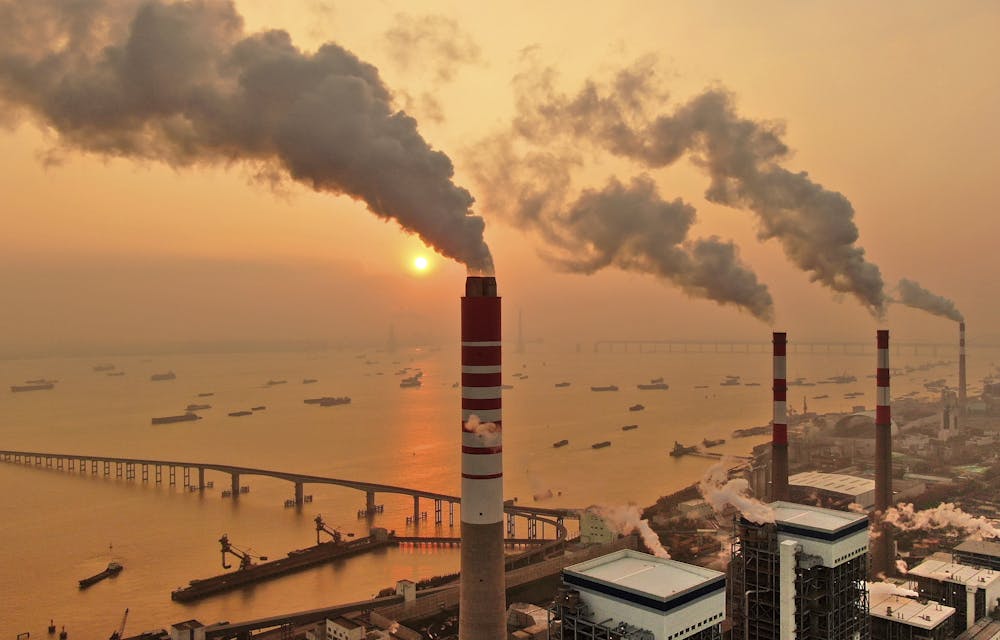 The sun sets near a coal-fired power plant on the Yangtze River in Nantong in eastern China’s Jiangsu province on Dec. 12, 2018.
Chinatopix/AP
Read more:
China: taking history seriously
Poverty of imagination and abrogations of responsibility
In their different ways, these books are excellent contributions to the general foreign policy literature in their respective areas. They are both full of pointed observations and, especially in Rudd’s case, advice for policymakers about what ought to be done.
But I don’t think it is unrealistic to say that neither book is likely to have much success in that context.
Neither the US nor China are likely to take notice of, much less welcome, unsolicited advice about how to manage their affairs. Much the same might be said of Australia, where both Labor and the Coalition go out of their way to demonstrate their unswerving fealty to the US and essentially abrogate responsibility for foreign and strategic policy.
This is more than a pity. We are about to waste yet more billions on unproven weapons systems that won’t arrive for decades and will be out of date when they do. They will not deter anyone (i.e. China) from acting in ways we would prefer they didn’t, but we will lose more time to address the very real threats we actually do face and could conceivably do something about.
Many people in Australia bang on about “creative middle power diplomacy”, but it remains conspicuous by its absence. In this regard, Behm is right to highlight the poverty of imagination and self-belief that distinguishes Australian policymaking; even Rudd fell victim to this when in power.
Indeed, it is noteworthy that policymakers only become creative after they’ve left the political stage and are free of the no doubt realist burdens of office.
The best we can hope for, according to Rudd, is to avoid a nuclear cataclysm and preserve the deeply unsatisfying status quo. If so, we are definitely on track for a climate apocalypse, because only historically unprecedented levels of European-style cooperation can possibly address problems that are truly planetary in scale.
That is not likely to happen when rich, remarkably safe countries like Australia pursue what Behm calls “unconscionable” environmental policies. Perhaps our leaders are simply too stupid, self-absorbed and parochial to save us.
Understanding our place in the international scheme of things is not easy, but putting things in geographic and historical context helps. Even if the end proves to be nigher than we imagined, these books offer some entertaining and informative reading while the sun goes down.
Authors: Mark Beeson, Adjunct professor, University of Technology Sydney
The sun sets near a coal-fired power plant on the Yangtze River in Nantong in eastern China’s Jiangsu province on Dec. 12, 2018.
Chinatopix/AP
Read more:
China: taking history seriously
Poverty of imagination and abrogations of responsibility
In their different ways, these books are excellent contributions to the general foreign policy literature in their respective areas. They are both full of pointed observations and, especially in Rudd’s case, advice for policymakers about what ought to be done.
But I don’t think it is unrealistic to say that neither book is likely to have much success in that context.
Neither the US nor China are likely to take notice of, much less welcome, unsolicited advice about how to manage their affairs. Much the same might be said of Australia, where both Labor and the Coalition go out of their way to demonstrate their unswerving fealty to the US and essentially abrogate responsibility for foreign and strategic policy.
This is more than a pity. We are about to waste yet more billions on unproven weapons systems that won’t arrive for decades and will be out of date when they do. They will not deter anyone (i.e. China) from acting in ways we would prefer they didn’t, but we will lose more time to address the very real threats we actually do face and could conceivably do something about.
Many people in Australia bang on about “creative middle power diplomacy”, but it remains conspicuous by its absence. In this regard, Behm is right to highlight the poverty of imagination and self-belief that distinguishes Australian policymaking; even Rudd fell victim to this when in power.
Indeed, it is noteworthy that policymakers only become creative after they’ve left the political stage and are free of the no doubt realist burdens of office.
The best we can hope for, according to Rudd, is to avoid a nuclear cataclysm and preserve the deeply unsatisfying status quo. If so, we are definitely on track for a climate apocalypse, because only historically unprecedented levels of European-style cooperation can possibly address problems that are truly planetary in scale.
That is not likely to happen when rich, remarkably safe countries like Australia pursue what Behm calls “unconscionable” environmental policies. Perhaps our leaders are simply too stupid, self-absorbed and parochial to save us.
Understanding our place in the international scheme of things is not easy, but putting things in geographic and historical context helps. Even if the end proves to be nigher than we imagined, these books offer some entertaining and informative reading while the sun goes down.
Authors: Mark Beeson, Adjunct professor, University of Technology Sydney 

















