

how a 1970s poetry collection, The Honey of Man, still brings hope in grim times
- Written by: Jen Webb, Dean, Graduate Research, University of Canberra
For decades, researchers have investigated what reading affords us, whether “us” means individuals or communities. Their research points to the benefits reading offers in terms of physical and mental health, education, and, perhaps most of all, empathic attunement to other people, and to other times, places, cultures and traditions.
Those of us who read, whether for recreation, research and study or because it is the centre of our lives, might agree in principle that reading is “good for us”, but few find it easy to elucidate precisely what benefits we gained from spending hours immersed in an imaginary world filled with what Roland Barthes called “paper beings”. And yet we keep doing it.
I am one of that community of readers, but still, right into my adolescence, the majority of my reading was of works originally written in English, or translated from Western European languages; of works that were mostly written by men, and by those whose names were securely in the literary canon.
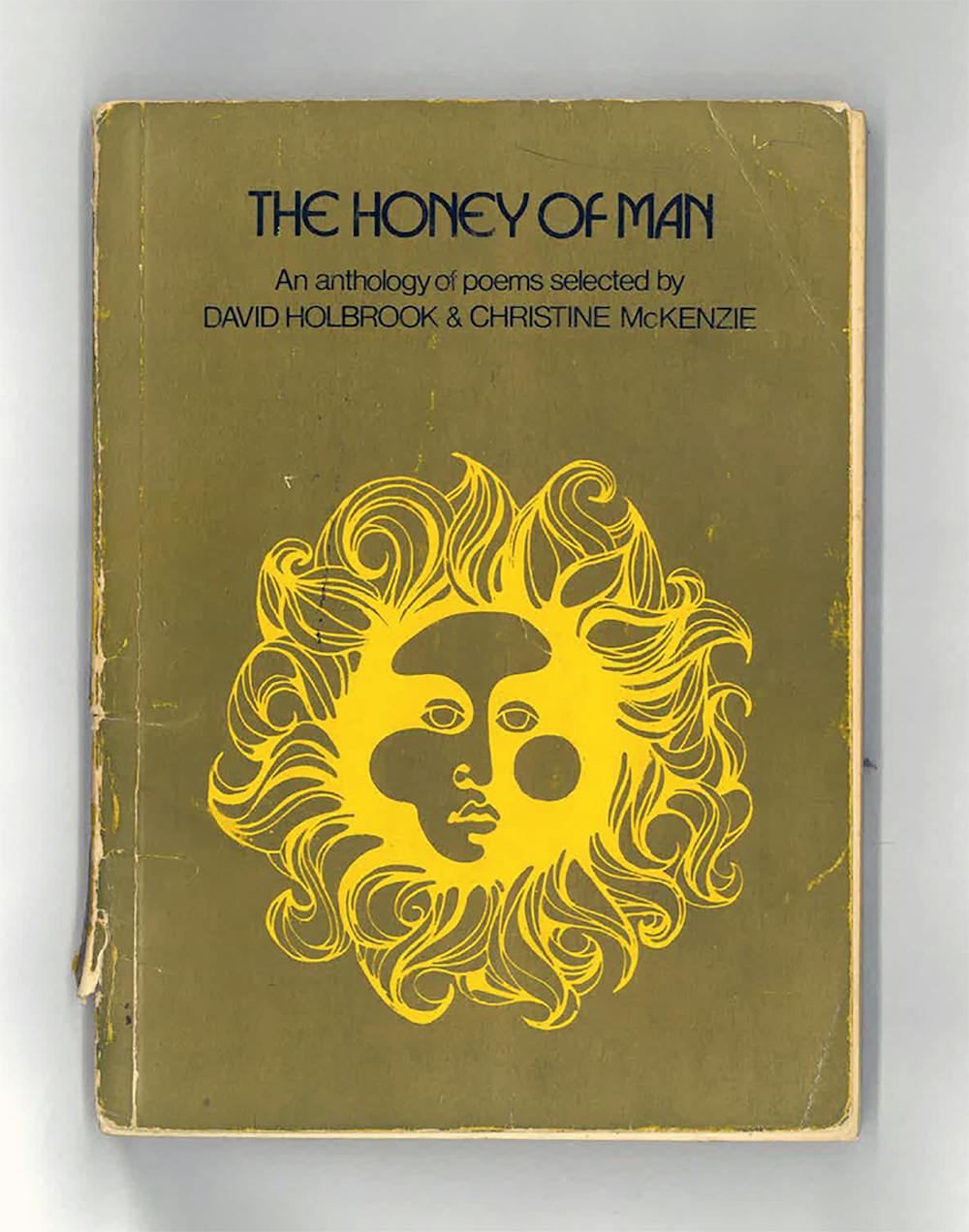
That was, until my birthday in 1975, when my mother gave me, hot off the press, an anthology titled The Honey of Man (edited by David Holbrook and Christine McKenzie). The book takes its name from Denise Levertov’s “Second Didactic Poem”, which starts: “the honey of man is / the task we’re set to: to be / ‘more ourselves’ in the making”.
As the poem unscrolls, it sets the tone for a collection that sometimes casts a harsh light on human cruelties and stupidities, but never falls into hopelessness or helplessness.
There are 107 works in total in the collection, in 122 section-stitched pages encased in a soft cover that could, surely, only have been designed in the 1970s.
 Solzhenitsyn returning to Russia in 1994.
Wikimedia Commons
These writers convinced me that one need not patiently forgive cruelty, but can speak assertively against it. Read Yambo Ouologuem, whose bitter humour excoriates racism (“Everyone thinks me a cannibal / But you know how people talk …”); or Anna Akhmatova’s “He was jealous”, which directly confronts domestic abuse.
This collection showed me that despite all I knew about all the ways human societies are divided, we remain anyway connected. The collection juxtaposes writers from radically different time periods, cultures and languages; and it sits the unnamed and unknown alongside the famous.
It presents a sort of kaleidoscope, creating patterns by mirroring ancient and new, combining Nobel laureates with a poem by a 7-year-old girl, Susannah Eliott, about feeling and being. In its selection and organisation, the book refuses hierarchy, connecting works by theme and vision, not by social measures.
Solzhenitsyn returning to Russia in 1994.
Wikimedia Commons
These writers convinced me that one need not patiently forgive cruelty, but can speak assertively against it. Read Yambo Ouologuem, whose bitter humour excoriates racism (“Everyone thinks me a cannibal / But you know how people talk …”); or Anna Akhmatova’s “He was jealous”, which directly confronts domestic abuse.
This collection showed me that despite all I knew about all the ways human societies are divided, we remain anyway connected. The collection juxtaposes writers from radically different time periods, cultures and languages; and it sits the unnamed and unknown alongside the famous.
It presents a sort of kaleidoscope, creating patterns by mirroring ancient and new, combining Nobel laureates with a poem by a 7-year-old girl, Susannah Eliott, about feeling and being. In its selection and organisation, the book refuses hierarchy, connecting works by theme and vision, not by social measures.
 The Honey of Man reminds us of the beauty and importance of ordinary things.
Shutterstock
It persuaded me too of the beauty and importance of ordinary things – fragments, broken objects, the everyday. Zbigniew Herbert’s “Five Men” is one such example.
Eloquently, heartbrokenly, this poem reminds readers that what matters, in the end, is memory; that what remains after our death are the ordinary things – buttons, bootlaces; and that poets can write these and, “in dead earnest, offer to the betrayed world / a rose”.
And finally, it convinced me that what matters will continue. A.D. Hope’s “Inscription for any war” builds on a centuries-long tradition of invoking the bitter epitaph Simonides offered those who died in the battle of Thermopylae (480BCE): “Go tell the Spartans … that here, obedient to their laws, we lie”.
As I watch today’s news broadcasts, and read all the armchair military strategists, what keeps scrolling through my mind are the last two lines of Hope’s short verse:
Go tell those old men, safe in bed, / We took their orders, and are dead.
Authors: Jen Webb, Dean, Graduate Research, University of Canberra
The Honey of Man reminds us of the beauty and importance of ordinary things.
Shutterstock
It persuaded me too of the beauty and importance of ordinary things – fragments, broken objects, the everyday. Zbigniew Herbert’s “Five Men” is one such example.
Eloquently, heartbrokenly, this poem reminds readers that what matters, in the end, is memory; that what remains after our death are the ordinary things – buttons, bootlaces; and that poets can write these and, “in dead earnest, offer to the betrayed world / a rose”.
And finally, it convinced me that what matters will continue. A.D. Hope’s “Inscription for any war” builds on a centuries-long tradition of invoking the bitter epitaph Simonides offered those who died in the battle of Thermopylae (480BCE): “Go tell the Spartans … that here, obedient to their laws, we lie”.
As I watch today’s news broadcasts, and read all the armchair military strategists, what keeps scrolling through my mind are the last two lines of Hope’s short verse:
Go tell those old men, safe in bed, / We took their orders, and are dead.
Authors: Jen Webb, Dean, Graduate Research, University of Canberra 

















