

Is the Easter bunny real? How to answer, according to a psychologist
- Written by: Elizabeth Westrupp, Senior Lecturer in Psychology, Deakin University
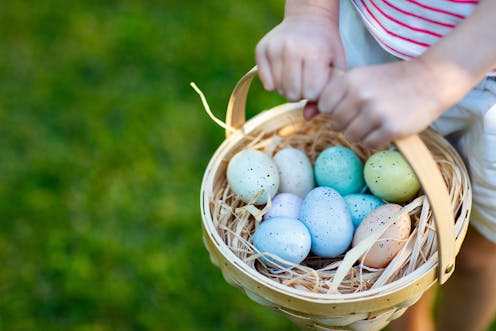
You’re leaving for your family Easter lunch, trying to make sure all children are wearing shoes and socks. Then you’re hit with the dreaded question, “Dad, is the Easter bunny real?”.
For many families, Easter traditions bring a special kind of magic for both children and adults. Like Santa and the tooth fairy, the Easter bunny represents the pure innocence and fun of childhood. With a dash of imagination, and plenty of beautifully wrapped chocolate, what could go wrong?
Well, unfortunately, the truth may be what goes wrong, leading to tears for disappointed children.
Thankfully, there are ways to manage this situation gracefully and even use it as a learning opportunity.
Family traditions and Easter
Some families organise Easter egg hunts in the backyard or park for children to find eggs the Easter bunny leaves behind. Some families create magic through shared games, gifts and delicious food, without telling white lies about the Easter bunny.
However, whatever holiday traditions you follow in your family, children often hear about the Easter bunny at school.
So even if you don’t welcome the Easter bunny into your family, you may still be faced with the dreaded question.
Read more: The Easter Bunny tale: fun fiction or harmful myth?
Part of a rich storytelling tradition
Storytelling has played a rich part in our human history and evolution. When we tell stories to children, we teach them about about social norms – the rules and expectations society expects of us all.
Santa and the tooth fairy teach children about socially desirable behaviour – behave well and you’ll be rewarded. The Easter bunny teaches children about celebration and showing appreciation through giving gifts.
Children are usually very good at separating the unreal from the real. Depending on the circumstances, this can even be as young as three years old.
The strength of children’s beliefs is directly related to the amount of supporting “evidence” they’ve experienced over the years.
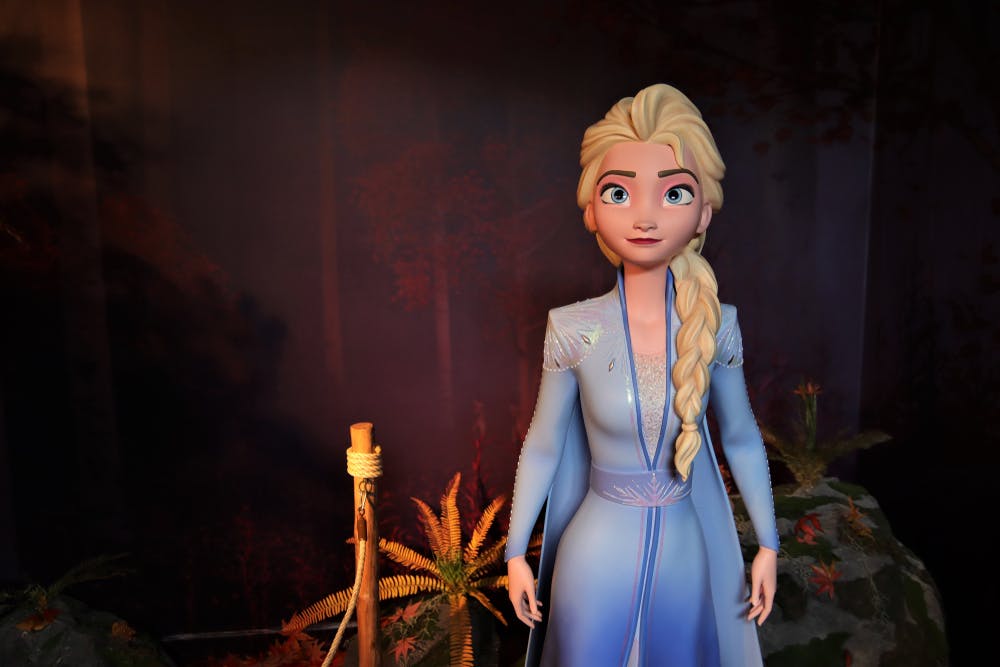
Beliefs about cultural figures, such as the Easter bunny and Santa, are often stronger than beliefs about fictional television or book characters (such as SpongeBob SquarePants or Frozen’s Elsa). That’s because rituals for Easter and Christmas are so widespread and are reinforced in western society.
Children’s beliefs are often stronger in families where parents provide more detail about the story or ritual, or if parents go the extra mile in providing evidence by putting out carrots for the Easter bunny, or milk and cookies for Santa.
Read more: Why do we tell stories? Hunter-gatherers shed light on the evolutionary roots of fiction
It’s a time to celebrate
There’s some loss for kids in finding out the truth, but there’s also a gain.
The process of children finding out the truth can be a really important learning experience for your child. Asking questions (about the Easter bunny or other tricky matters) develops their critical thinking skills, important milestones in child development.
However awkward you may feel, such critical thinking should be celebrated and supported.
So, what shall I say?
You’ll be relieved to know you can handle the question, “Is the Easter bunny real?” without ruining the magic and ritual of Easter.
If your child is questioning and unsure
To support your child, you can relax, listen carefully and be guided by your child. Aim to answer questions in a simple, straight-forward way. But remember, you don’t need to give the answer straight away.
You might say: “Hmm, can you tell me why you think the Easter bunny might not be real?”
When children learn their parents will always listen to them, take them seriously, and answer their questions as best they can, this will strengthen their bond by building trust.
If your child has heard other kids asking
Some kids may be asking about the Easter bunny because they’ve heard other kids asking the question, but make it clear to you in other ways they still want to believe.
You might say: “Even though other kids are asking about it, it sounds like you still believe in the Easter bunny? Should we see what happens this year?”.
If your child is sad about the truth
For most kids, finding out the truth is a positive experience. But some may feel really sad and upset when they find out. For these kids, it will help if parents acknowledge and validate their feelings.
You might say: “I know it feels so sad and disappointing to find out the Easter bunny isn’t real.”
Celebrate the moment
Parents can also talk about how it’s such a big important milestone for kids to be ready for the truth.
You might say: “All kids hear the story about the Easter bunny, and when they figure out it’s not real, it’s a really special moment. It shows how much you’ve grown and how clever you are at working things out on your own. I think we should celebrate!”
Coming-of-age tradition
Parents might also want to turn the occasion into a positive coming-of-age tradition, where they learn Easter is about family togetherness and celebration.
You might tell your child: “Even though there’s no actual Easter bunny, the magic of Easter is really about doing all the fun things together with our family and friends, and showing each other we love them by giving chocolate gifts.”
Kids like to feel involved, so you could ask: “What would you like to keep doing each year to keep the magic of Easter alive?”
Read more: Why children really believe in Santa – the surprising psychology behind tradition
When are kids ready to hear the answer?
In advising parents, my usual rule of thumb is, if a child is asking a question, they’re ready to hear the answer. This goes for all topics, including painful or embarrassing ones.
But kids communicate in a number of ways, so take your lead from your child.
Every child is different, and although all kids pass through broad developmental stages, some kids may want to hold onto beliefs about the Easter bunny and Santa for longer.
Read more: 7 ways to make Easter safe and inclusive for children with food allergies
Rope in the older kids
How do you handle the situation where there are children of different ages in the family? If parents want younger children in the family to believe in the Easter bunny, it may work to “recruit” older children in on the secret.
Older kids are more likely to support the magic of the Easter bunny for their younger brothers and sisters if they feel important and are part of something special.
However, if the younger child learns from their older sibling the Easter bunny isn’t real, that’s OK too. Older siblings can help younger kids develop a range of complex cognitive skills. Watching bigger kids find out the truth about the Easter bunny may help everyone.
Authors: Elizabeth Westrupp, Senior Lecturer in Psychology, Deakin University


















