

your guide to six urgent, boundary-breaking books
- Written by: Camilla Nelson, Associate Professor in Media, University of Notre Dame Australia
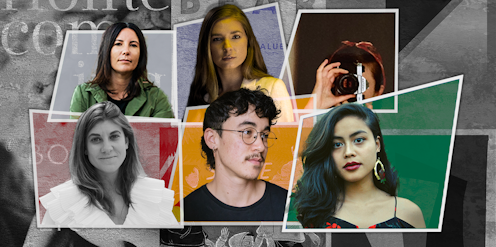
This year the Stella Prize has shortlisted a searing collection of experimental work. What these writers have to say won’t fit within the boundaries of literary convention.
The shortlisted books, including poetry, essays, graphic fiction and just one novel, tear apart traditional forms, making language over again. And because language is the first tool we reach for to understand the world, old ways of seeing and thinking are also jettisoned.
The issues these books address are urgent – histories of institutionalised racism, the Stolen Generations, the sexual abuse of women and children in frightening numbers, dark memories caught up and entangled in the present.
The impact feels – at times – like a head-on collision. The reader is stuck in the headlights, and there’s nowhere to hide.
But there are also moments of joy – and the effect is strangely hopeful, bringing a sense that all this energy can be harnessed to build a better future.
These books are not easily summed up. But here are some clues.
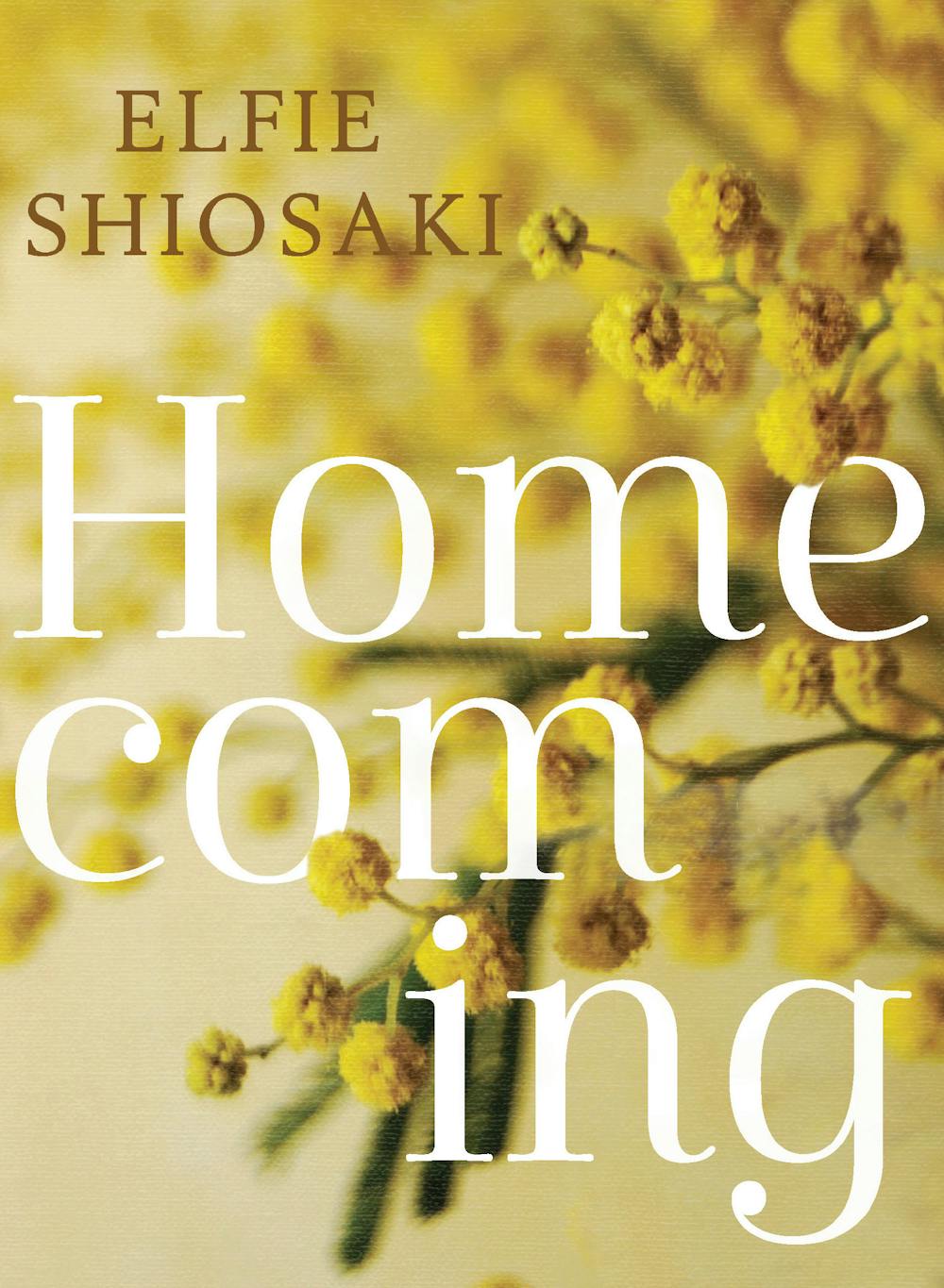
Homecoming by Elfie Shiosaki
The colonial archive is violent. Elfie Shiosaki’s collection of poetry, archival fragments and spoken stories – family letters, letters of protest, records of the Aborigines Department, fragments of evidence and testimony tendered to commissions of inquiry – speaks back to the archive’s violence.
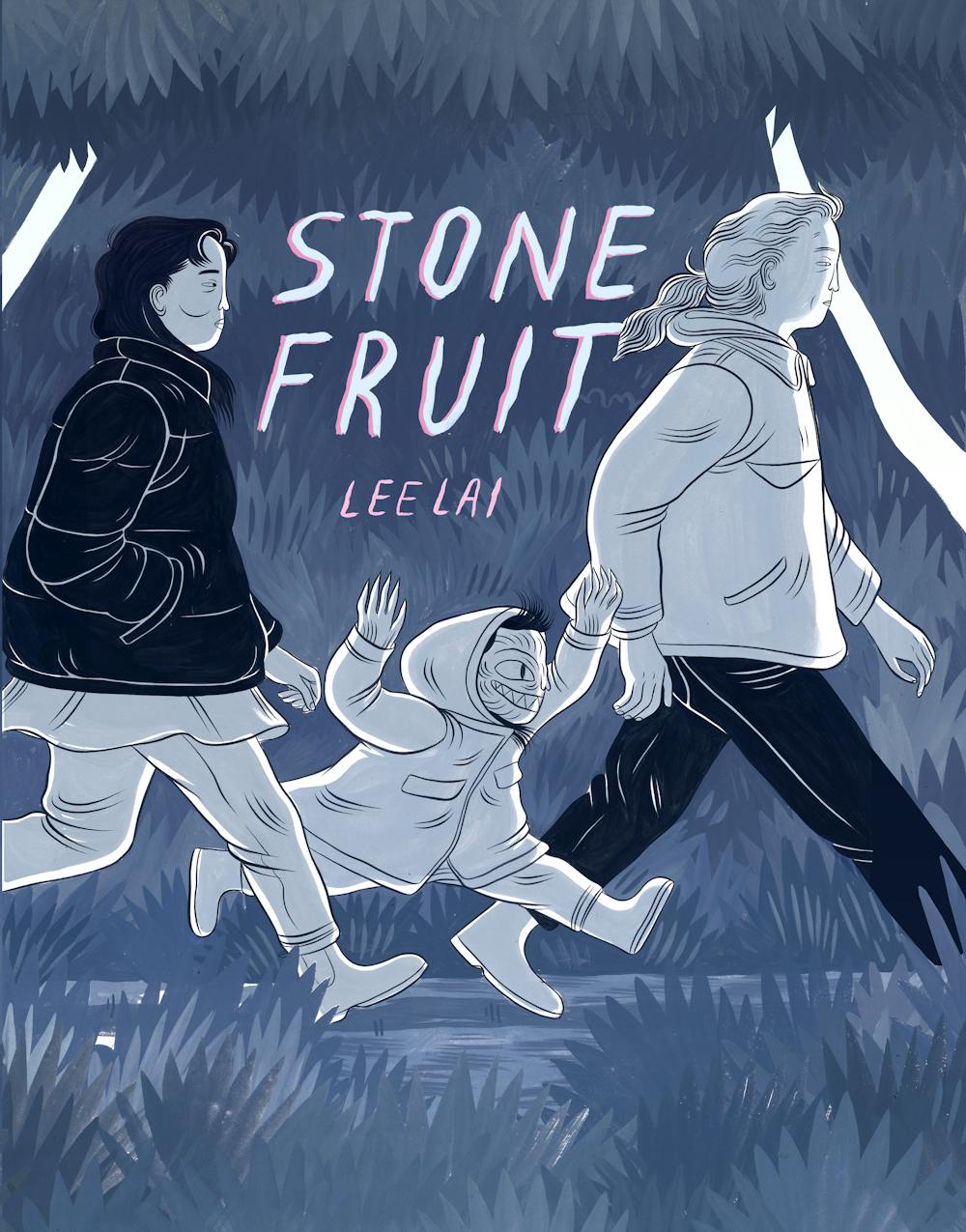 With its sparse, naturalistic storyline, Stone Fruit shows how painful it can be to connect with the people closest to you. The lyrical black-and-white pen drawings, with touches of blue wash, artfully capture the intimacy of characters who find it difficult to say what they think and feel.
Both women try to connect with their families, as their relationship with each other erodes. Bron, with her ultra-religious relatives, who cannot understand who she is or what she needs. Ray, with her harried, overworked, single-mother sister, who incessantly worries that her inadequacies are making her a bad parent.
Only when Ray and Bron are with Nessie can they really be themselves. Lee Lai captures this sense of freedom with her pen, transforming them into magical creatures running through grass and trees, filled with joy and energy, at ease with themselves and connected to the world.
Bodies of Light by Jennifer Down
Bodies of Light, Jennifer Down’s second novel, is a study in empathy. Its protagonist, Maggie Sullivan, elicits an astonishing depth of emotion from the reader. Maggie’s mother dies of an overdose when she is two. By the age of four, she has been sexually assaulted by her father’s friend – an event the reader infers as Maggie relays the experience through the things she can understand; she has bruises, and it hurts to pee.
With its sparse, naturalistic storyline, Stone Fruit shows how painful it can be to connect with the people closest to you. The lyrical black-and-white pen drawings, with touches of blue wash, artfully capture the intimacy of characters who find it difficult to say what they think and feel.
Both women try to connect with their families, as their relationship with each other erodes. Bron, with her ultra-religious relatives, who cannot understand who she is or what she needs. Ray, with her harried, overworked, single-mother sister, who incessantly worries that her inadequacies are making her a bad parent.
Only when Ray and Bron are with Nessie can they really be themselves. Lee Lai captures this sense of freedom with her pen, transforming them into magical creatures running through grass and trees, filled with joy and energy, at ease with themselves and connected to the world.
Bodies of Light by Jennifer Down
Bodies of Light, Jennifer Down’s second novel, is a study in empathy. Its protagonist, Maggie Sullivan, elicits an astonishing depth of emotion from the reader. Maggie’s mother dies of an overdose when she is two. By the age of four, she has been sexually assaulted by her father’s friend – an event the reader infers as Maggie relays the experience through the things she can understand; she has bruises, and it hurts to pee.
 After Maggie’s drug-addicted father is jailed for injecting and accidentally killing a friend, Maggie is taken into state care. Here, she is caught up in the vast welfare machinery of “cottage parents” and “resi units”, of scheduled meal times and TV times. Through it all, she tries to outrun her damage.
At least part of the novel’s brilliance is the empathy with which Maggie sees the world. “I thought about what it must be like … to see your likeness in someone else’s face, to share another’s memories.” Guarded and wary, Maggie does not search for blue skies, but “a hollow to fall through”. She shifts names and continents, only to find that who she is cannot be disentangled from the past.
This book is unafraid of sentiment, and indeed, calculated to elicit it. Maggie is a character who tries to make herself as “small as possible” but generates a reality that is huge.
No Document by Anwen Crawford
Anwen Crawford’s experimental work defies easy categorisation. It opens with a description of George Franju’s documentary Le Sang des Betes, and perhaps the logic of the image – the structure of films and photographs – ties the collection together.
After Maggie’s drug-addicted father is jailed for injecting and accidentally killing a friend, Maggie is taken into state care. Here, she is caught up in the vast welfare machinery of “cottage parents” and “resi units”, of scheduled meal times and TV times. Through it all, she tries to outrun her damage.
At least part of the novel’s brilliance is the empathy with which Maggie sees the world. “I thought about what it must be like … to see your likeness in someone else’s face, to share another’s memories.” Guarded and wary, Maggie does not search for blue skies, but “a hollow to fall through”. She shifts names and continents, only to find that who she is cannot be disentangled from the past.
This book is unafraid of sentiment, and indeed, calculated to elicit it. Maggie is a character who tries to make herself as “small as possible” but generates a reality that is huge.
No Document by Anwen Crawford
Anwen Crawford’s experimental work defies easy categorisation. It opens with a description of George Franju’s documentary Le Sang des Betes, and perhaps the logic of the image – the structure of films and photographs – ties the collection together.
 It is what allows Crawford to trace uncanny parallels between a horse at the abattoir – looking momentarily like a statuary piece from a carousel before it is shot, with a bolt through its head – and memories of protests and police horses, images of air strikes and dead civilians, of displaced people and asylum seekers in boats, “lying hot in the shadow cast by shipping containers” on the Tampa, journeying to Woomera and Christmas Island, and fleeing airstrikes in Syria and Iraq. She interrogates the belief, ripped from media soundbites and news headlines, that Australians “don’t behave barbarically”.
No Document is also a personal mediation on pain and loss (dedicated to a friend of Crawford’s who has died), in which her own pain mingles with the world’s injustices. “A hospital psychologist advised me to distinguish my own moods from the state of the world,” Crawford writes.
This essay marks her refusal. Grids and lines are inserted into the text, marking borders and boundaries. Missing words mark gaps in imagination and memory, making emptiness visible. Through it all, the abattoir is a recurring motif.
The reader will find themselves searching for moments of respite, like the photograph her deceased friend once brought to art class, showing the artist “kneeling at night on a pavement, digging through the concrete till it cracks, and then planting a sapling in the new wound”.
Here is hope – until the writer corrects you, and the text throws up fresh anguish.
Drop Bear by Evelyn Araluen
Evelyn Araluen, a descendant of the Bundjalung nation, tackles colonial appropriation in her debut collection of prose and poetry, repurposing white settler tropes to speak back to a long history of colonial myth-making by turning myth, kitsch and cliché back on itself.
It is what allows Crawford to trace uncanny parallels between a horse at the abattoir – looking momentarily like a statuary piece from a carousel before it is shot, with a bolt through its head – and memories of protests and police horses, images of air strikes and dead civilians, of displaced people and asylum seekers in boats, “lying hot in the shadow cast by shipping containers” on the Tampa, journeying to Woomera and Christmas Island, and fleeing airstrikes in Syria and Iraq. She interrogates the belief, ripped from media soundbites and news headlines, that Australians “don’t behave barbarically”.
No Document is also a personal mediation on pain and loss (dedicated to a friend of Crawford’s who has died), in which her own pain mingles with the world’s injustices. “A hospital psychologist advised me to distinguish my own moods from the state of the world,” Crawford writes.
This essay marks her refusal. Grids and lines are inserted into the text, marking borders and boundaries. Missing words mark gaps in imagination and memory, making emptiness visible. Through it all, the abattoir is a recurring motif.
The reader will find themselves searching for moments of respite, like the photograph her deceased friend once brought to art class, showing the artist “kneeling at night on a pavement, digging through the concrete till it cracks, and then planting a sapling in the new wound”.
Here is hope – until the writer corrects you, and the text throws up fresh anguish.
Drop Bear by Evelyn Araluen
Evelyn Araluen, a descendant of the Bundjalung nation, tackles colonial appropriation in her debut collection of prose and poetry, repurposing white settler tropes to speak back to a long history of colonial myth-making by turning myth, kitsch and cliché back on itself.
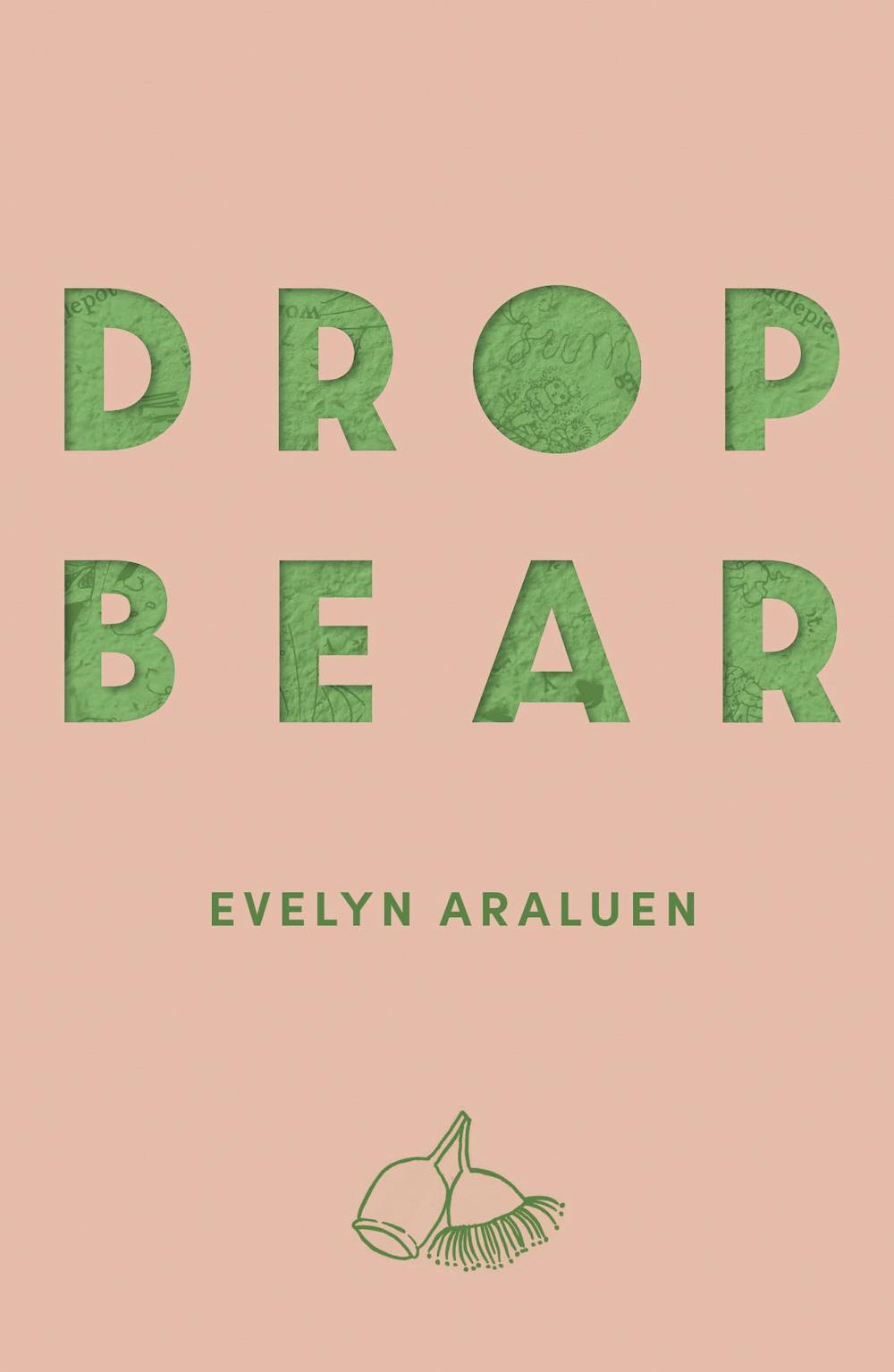 Araluen’s work cuts through literary conventions that treat the Australian landscape as an empty abyss, or conjure Country as a clichéd object of kitsch affection, populated by Bad Banksia Men and Gumnut Babies: a mythic interior where women endlessly tend hearth and home, as men drive sheep and rabbits across frontiers.
“Playing in the Pastoral” dissects the Arcadian genre as “a series of modes which assimilate natural and human worlds into objects of white Endeavour”. The frontier mythos of “discovery” is once again the object of dark pastiche in “The Last Endeavour”, which conjures the expedition of a “botanist captain astronomer”, “lips blessed with blood and coal” and the “boast of seal-touched hands”.
These white settler tropes are powerfully juxtaposed with the reality of a modern Australian landscape carved up into suburban sprawl like a “magic pudding for settlers to eat, and eat, and eat”.
“Humans! Please be kind to all Bush CreaturesTM”, Araluen writes in “Mrs Kookaburra Addresses the Natives”. In this poem, satirising May Gibbs appropriation of “This Delightful BushTM”, even “sadness” is marked “copyright”.
Words burn on every page.
TAKE CARE by Eunice Andrada
Violence is “a structure, not an event”, writes Andrada, in her visceral poetry collection. TAKE CARE traces themes from imperialism and colonialism to everyday misogyny, sexual assault, and climate change.
Images of N95 masks and Dettol wipes are scattered throughout, conjuring the years of flood, fire and plague – and striking the reader with unease – in a collection that pays particular attention to the ways in which structural inequalities and sexual exploitation intersect with histories of racism.
Araluen’s work cuts through literary conventions that treat the Australian landscape as an empty abyss, or conjure Country as a clichéd object of kitsch affection, populated by Bad Banksia Men and Gumnut Babies: a mythic interior where women endlessly tend hearth and home, as men drive sheep and rabbits across frontiers.
“Playing in the Pastoral” dissects the Arcadian genre as “a series of modes which assimilate natural and human worlds into objects of white Endeavour”. The frontier mythos of “discovery” is once again the object of dark pastiche in “The Last Endeavour”, which conjures the expedition of a “botanist captain astronomer”, “lips blessed with blood and coal” and the “boast of seal-touched hands”.
These white settler tropes are powerfully juxtaposed with the reality of a modern Australian landscape carved up into suburban sprawl like a “magic pudding for settlers to eat, and eat, and eat”.
“Humans! Please be kind to all Bush CreaturesTM”, Araluen writes in “Mrs Kookaburra Addresses the Natives”. In this poem, satirising May Gibbs appropriation of “This Delightful BushTM”, even “sadness” is marked “copyright”.
Words burn on every page.
TAKE CARE by Eunice Andrada
Violence is “a structure, not an event”, writes Andrada, in her visceral poetry collection. TAKE CARE traces themes from imperialism and colonialism to everyday misogyny, sexual assault, and climate change.
Images of N95 masks and Dettol wipes are scattered throughout, conjuring the years of flood, fire and plague – and striking the reader with unease – in a collection that pays particular attention to the ways in which structural inequalities and sexual exploitation intersect with histories of racism.
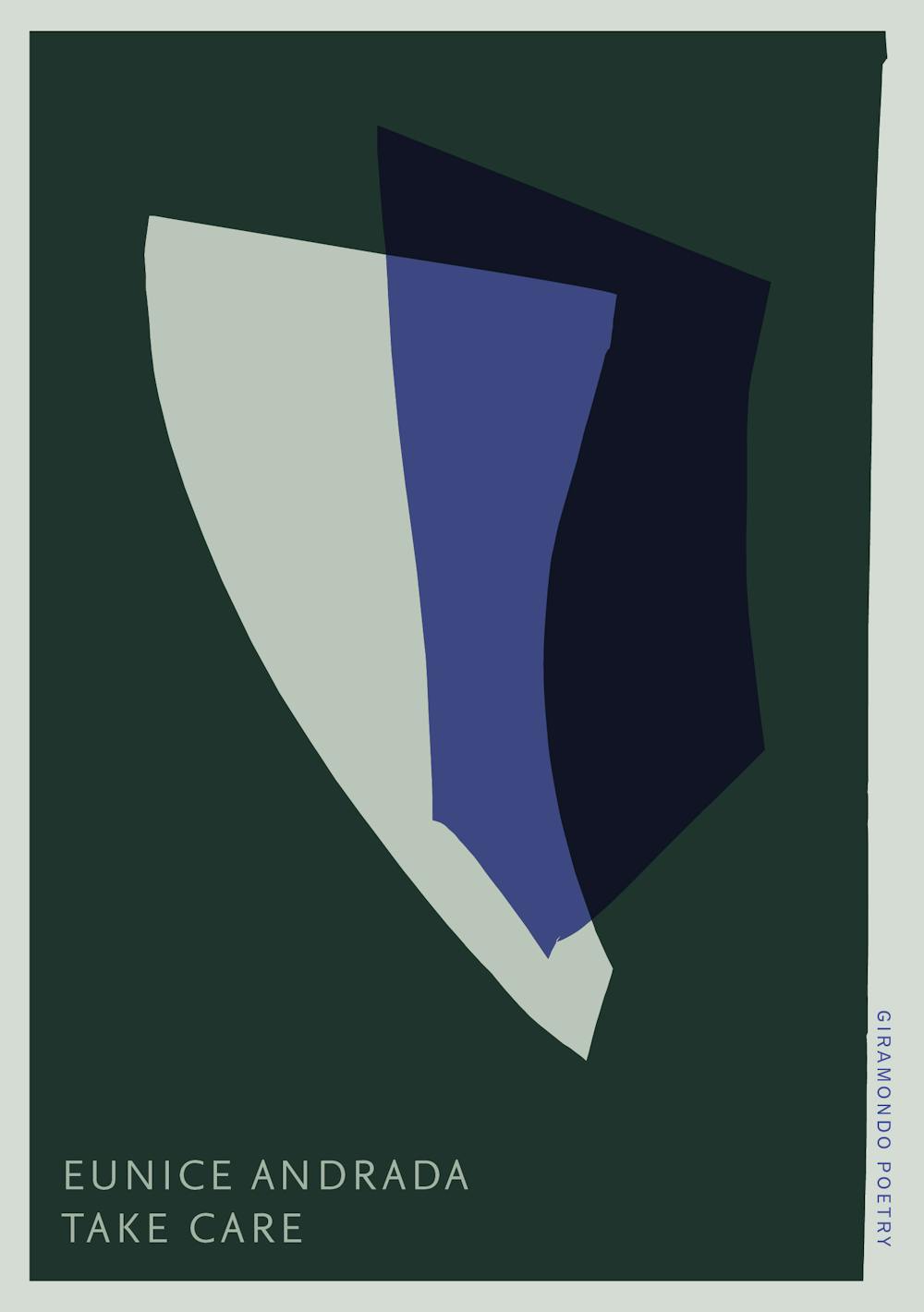 Andrada’s collection is divided into four parts: “Take”, “Comfort”, “Revenge” and “Care”.
“Comfort” uses documentary fragments to trace the contours of acts of rape within a history of military violence. “Another statue dedicated to ‘comfort women’ who were enslaved and raped in wartime has been removed in the Philippines,” the sequence starts. The words are rendered illegible by the silhouette of an erection that slices through the text, surfacing in reverse on the next page, “the reminder of a woman raped: in/tolerable, too real/too real, too real …”
The title of the collection, “TAKE CARE”, is double-edged. It signifies concern – an injunction to take care of yourself – but is also a warning that there is something the reader needs to be careful of, or frightened about. It is apt for a collection highlighting the failures of a society that promises equity and inclusion, but constantly falls short.
The 2022 Stella Prize winner will be announced tonight, April 28.
Authors: Camilla Nelson, Associate Professor in Media, University of Notre Dame Australia
Andrada’s collection is divided into four parts: “Take”, “Comfort”, “Revenge” and “Care”.
“Comfort” uses documentary fragments to trace the contours of acts of rape within a history of military violence. “Another statue dedicated to ‘comfort women’ who were enslaved and raped in wartime has been removed in the Philippines,” the sequence starts. The words are rendered illegible by the silhouette of an erection that slices through the text, surfacing in reverse on the next page, “the reminder of a woman raped: in/tolerable, too real/too real, too real …”
The title of the collection, “TAKE CARE”, is double-edged. It signifies concern – an injunction to take care of yourself – but is also a warning that there is something the reader needs to be careful of, or frightened about. It is apt for a collection highlighting the failures of a society that promises equity and inclusion, but constantly falls short.
The 2022 Stella Prize winner will be announced tonight, April 28.
Authors: Camilla Nelson, Associate Professor in Media, University of Notre Dame Australia 
















