

A new type of insurance pays out as soon as extreme weather hits – and we could try it in Australia
- Written by: Caroline Schuster, Senior Lecturer, School of Archaeology and Anthropology; Director, Australian National Centre for Latin American Studies, Australian National University
The floods that devastated parts of southeast Australia last month revealed, yet again, this nation’s growing insurance problem. Assessment of the damage was agonisingly slow, and rising premiums meant many victims were completely uninsured.
The disaster was part of a global trend towards localised, sudden and intense weather known in the insurance industry as “secondary perils”. These events, such as thunderstorms, hail, bushfires, drought, flash floods and landslides, are less severe than single, huge catastrophes such as a massive earthquake or cyclone.
But they can happen frequently – and still leave a big damage bill and displace thousands of people.
Australia is among the most exposed countries in the world to extreme weather resulting from climate change. That means we need to think seriously about how to manage the financial risk of secondary perils.
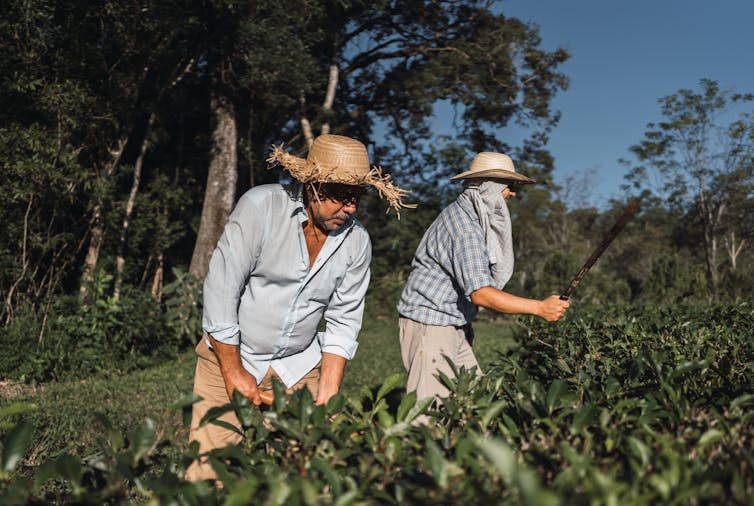
A new type of cover known as “weather index insurance” may be a piece of the puzzle. The insurance uses automatic payments to make the process easier for both victims and insurers. It’s been deployed as far afield as remote parts of Paraguay and Mongolia – and could work for Australia, too.
What is weather insurance?
Traditional insurance is paid out based on an assessment of damage caused by an event. Often, disaster victims must make detailed inventories of everything lost or damaged before they can make a claim. And the sheer number of claims can leave people waiting months or years for their money.
On the other hand, weather index insurance, sometimes just called weather insurance, is paid when an index is reached, such as a certain flood level. In the case of farmers facing drought, low rainfall can also trigger a payment.
The insurance is being trialled around the world – most commonly, among farmers in remote parts of developing countries.
After an extreme weather event, it can be hard for insurance assessors to make the long trip out to the steppes of Mongolia or floodplains of Bangladesh to assess the damage to farms.
But technologies such as remote sensing and satellites can tell an insurance company when extreme weather has occurred.
The payments are rapid and automatic; as soon as a weather event is recorded, the policyholder is paid.
The payment occurs regardless of whether a farmer’s crop survives. This gives the farmer an incentive to make the best decisions to ensure the crop doesn’t fail. If it survives, the farmer still receives the insurance payout as well as the crop revenue.
Insurers hope weather insurance will help them expand their markets to remote communities.
The weather index is linked to specific crops and their growing conditions. This way, the insurance company can predict the level of losses.
Global trials show promise
Having insurance can make poorer farmers more creditworthy, thereby increasing their access to loans.
In Ethiopia, a successful weather index insurance project was found to have benefited farmers. Speedy payouts meant policyholders didn’t have to sell valuable livestock to cope with a disaster. In some cases, farmers reinvested insurance payouts in their herds.
In Australia, research supports the viability of weather index insurance. It was recently rolled out to a small number of farmers, but is yet to be widely adopted.
Australian insurance providers are also offering weather policies overseas. CelsiusPro, for example, has worked with the World Bank and other aid organisations to bring such insurance to communities in the Pacific
Read more: After the floods comes underinsurance: we need a better plan
A note of caution
Weather index insurance is not a magic bullet, and should be adopted with caution.
For instance, the weather index is tied to the growing conditions of one plant. This can lock farmers into specialising in a single crop – exposing them to new risks such as volatile market prices, and scuttling their diversification strategies.
And payouts are not guaranteed. During an El Niño year in Paraguay, sesame farmers suffered flooding and then drought. But the conditions fell just short of the index in most areas and those farmers didn’t get a payout.
What’s more, the data gathered by insurers may not match what’s actually happening on the ground. Research in sub-Saharan Africa, for example, found a sizeable gap between environmental and weather indices measured by remote sensing, and the experience of policyholders.
Improving data and monitoring often requires substantial investments – from both governments and insurers – in infrastructure and technology such as weather stations, climate models and communications systems.
In Paraguay, local communities have shouldered much of the burden of obtaining good weather data. They help maintain meteorological equipment, provide valuable on-the-ground feedback and contribute to crop science, but are often not compensated for these efforts.
And in developing countries, coping with weather disasters is often a collective effort. Individual insurance policies can reinforce inequalities and erode a community-based response.
Finally, high premiums and low trust from farmers have limited uptake of weather insurance to date.
All this means weather insurance alone is unlikely to create a safety net against extreme weather risks.
What next?
In 2020, more than 70% of global insured losses from disasters were due to secondary perils.
They included the Black Summer bushfires in Australia, and a freak hailstorm in Canberra which caused an estimated A$1.65 billion in damage.
Weather indexed insurance is yet to be tested on property insurance. But the agonising wait for a payout in the recent floods in southeast Australia suggest bold new solutions are needed.
Some research has also found merit in weather insurance at a regional or national scale.
Australia’s high exposure to extreme weather should mean all insurance options are on the table – especially those that are inclusive and don’t relegate high-risk communities to the outcast pool of “uninsurables”.
Read more: Seriously ugly: here's how Australia will look if the world heats by 3°C this century
Authors: Caroline Schuster, Senior Lecturer, School of Archaeology and Anthropology; Director, Australian National Centre for Latin American Studies, Australian National University

















