

Community healthcare workers were left feeling isolated and under-appreciated during the pandemic
- Written by: Eleanor Holroyd, Associate Dean International & Engagement, Auckland University of Technology
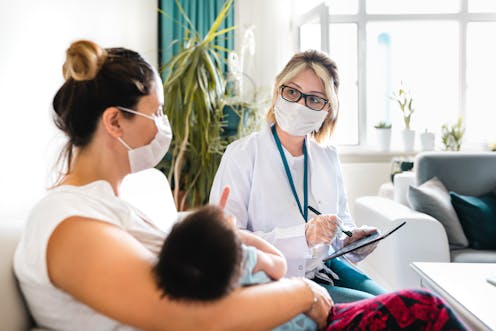
Aotearoa New Zealand’s community nurses and home and community care assistants have played a crucial yet largely invisible role in the country’s response to the global pandemic.
Across the country, personal care assistants help patients with the activities of daily living while community, district and primary care nurses’ roles include the delivery of complex nursing care and health promotion and health education.
COVID-19 highlighted that many community healthcare workers in Aotearoa had not been adequately prepared for the complexities and new demands on their roles that would emerge during a major public health crisis.
These included the need for additional reporting skills and ongoing assessment of patients’ risk and their own general mental well-being, while protecting themselves, their families and vulnerable and often isolated patients.
The effects of this are highlighted in recent pay disputes, threatened industrial action, attrition and burnout of front line care staff.
Nevertheless, the experiences of community nurses and home and community care assistants have often been overlooked or trivialised in comparison to the experiences of doctors and nurses working in hospitals.
Our research focused on understanding the particular challenges community healthcare workers in Aotearoa faced during COVID and identifying how they could be better supported in future pandemics.
We spoke with 22 community-based health care workers, 15 registered nurses working in public health, district nursing, primary care and mental health, two midwives and five home and community care assistants.
We found the workloads of community healthcare workers often increased substantially. Having become the main source of support for patients left isolated by bubble restrictions, those we spoke to went the extra mile to provide the care their patients needed.
One Māori care assistant told us how working during lockdown involved
needing to do more duties – going the extra mile. I would expect the same type of care for myself. I was brought up this way, being originally gifted as an adopted child to my aunt’s Māori family, it is natural of me to care. So, I went the extra mile. I put laboratory test results in letterboxes and got extra groceries for those living alone.
Impacts on mental well-being
Doing all this extra work for every patient amounted to many hours of extra work. This workload, coupled with pressure to protect themselves and their families, put strain on personal relationships and sometimes led to a downturn in their mental and emotional well-being, particularly during the initial 2020 lockdown.
When we interviewed community healthcare workers, many described feeling they had to enhance their work duties to be seen as “good carers” or “heroes”, particularly during lockdowns.
Caring for their patients in the community involved caring and worrying about patients and their families during the pandemic. This also had a negative impact on the carers’ families and social lives as well as their mental health.
Read more: Nurses don't want to be hailed as 'heroes' during a pandemic – they want more resources and support
Despite vigilant monitoring of their personal protective equipment (PPE), the need to safeguard family and community members generated considerable stress and anxiety. Many carers also faced personal isolation and loneliness as a result of lockdown restrictions.
A Pākehā care assistant told us:
I am a home carer for older adults with severe health issues living alone. I needed to shower and dress them as well as feeding some through tubes, plus my 16-year-old son was living with me at home. So, to keep him safe I had three bubbles – I slept in a shed to isolate him, so he was protected in his bubble, then I had all the work bubbles I needed to form with my home-based patients. I did this […] so we would be alright and would not be contaminated. And on top of that people I know looked sideways in the supermarket at me.
Undertaking extra safety protocols also increased workloads considerably, as a Pākehā nurse explained:
It’s giving of yourself and then our workloads increased so much, with extra cleaning, tracing and hygiene protocols. These took so long. That’s why nursing is so exhausting. It’s giving of yourself, then giving more at home, and in our family, and now along comes COVID-19.
Improving work conditions
Improvements for community-based healthcare workers must focus on addressing the consequences of increased responsibilities and complexity of the work during a pandemic and recognising that such work often takes place in profound isolation, professionally and personally. Professional and public recognition would go some way to reducing associated stress and anxiety.
We found the negative impacts of experiences during lockdowns often continued once restrictions had been lifted and we make several key recommendations for supporting community-based nurses, and home and community care assistants during respiratory disease pandemics.
First, we must acknowledge the crucial role they play and the stress and anxiety they endure. But at the same time we must demystify the heroism and self-sacrifice projected onto care workers.
Other improvements include the timely provision of adequate protective equipment, better remuneration and provision for time off, regular counselling, peer support groups and support with maintaining a healthy work-life balance.
Such measures must extend well beyond lockdowns because the psychological and social effects of stringent pandemic control measures can be long-lasting. While especially valuable during and after a pandemic, these measures should be considered best practice for supporting community healthcare workers at all times.
Above all, it is vital to recognise the specific contributions made by community healthcare professionals during pandemics. Rather than collapsing them into an undifferentiated category of “essential” workers, we must acknowledge these distinct contributions and anticipate them in future pandemic planning.
Authors: Eleanor Holroyd, Associate Dean International & Engagement, Auckland University of Technology

















