Can taking vitamins and supplements help you recover from COVID?
- Written by: Treasure McGuire, Assistant Director of Pharmacy, Mater Health SEQ in conjoint appointment as Associate Professor of Pharmacology, Bond University and Associate Professor (Clinical), The University of Queensland
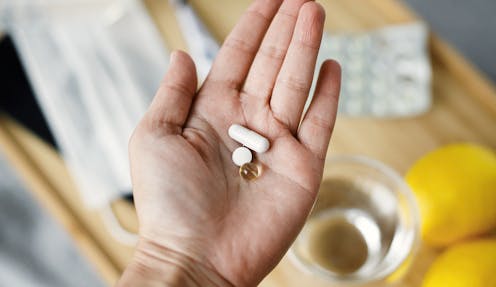
Australia’s surge in COVID cases this year has seen many people looking for ways to protect themselves or boost their immunity and recovery. An upswing in sales of dietary supplements has followed.
In Australia, the Therapeutic Goods Administration includes vitamins, minerals, amino acids, enzymes, plant extracts and microbiome supplements under the term “complementary medicine”.
The supplement industry’s global estimated worth was about US $170 billion (A$239 billion) in 2020. Australian complementary medicines revenue was estimated at A$5.69 billion in 2021 – doubling in size over the past decade. The latest data shows 73% of Australians bought complementary medicines in the previous year, with vitamins featuring in more than half of purchases.
But how likely are these purchases to be effective in preventing COVID or treating it?
Fear, avoidance and laboratory studies
Historically, the public has purchased supplements from sources that also provide health-care advice. Lockdowns and blanket health messages about social distancing and personal hygiene have created a new normal. So people are doing more shopping online for supplements and turning to the internet, friends or social media for vitamin recommendations. For some, this has led to an unhealthy fear of COVID (coronaphobia) and negative impacts on daily life.
As with any medicine, consumers should seek information from reliable sources (doctors, pharmacists or evidence-based peer-reviewed articles) about the potential benefits and harms of supplements before purchase. Strong evidence supports vaccination as effective against the acute respiratory symptoms of COVID. Researchers have also looked at whether supplements may prevent or reduce the duration and severity of this viral infection by boosting the immune response.
Deficiencies in essential nutrients that support immune function (vitamin C, vitamin D, zinc and selenium) have been shown to increase susceptibility to infection, including COVID. But there is little evidence supplementation in a healthy person prevents respiratory infections such as COVID. An evidence gap exists between a supplement’s action in laboratory or animal studies and findings from well designed and conducted clinical trials.
The dietary supplementary industry has doubled in size over the last decade. ShutterstockA pandemic ‘infodemic’
Ready access to supplements without a prescription from a myriad of online and shopfront sources and the uncontrolled spread of claims that supplements can prevent or treat COVID symptoms, has created an “infodemic”.
These claims are fuelled by supplement manufacturers being able to “list” their products on the Australian Register of Therapeutic Goods, with limited evidence of safety or effectiveness. This appearance of official approval tallies with the common misperception that “natural” means “safe”.
Supplements can cause harm in the form of adverse effects, drug interactions and expense. They also add to a patient’s medication burden, may delay more effective therapy, or give false hope to the vulnerable.
Read more: Lemon water won't detox or energise you. But it may affect your body in other ways
Vitamins A to zinc
The recent COVID A to Z Study illustrates some of the challenges involved.
It was designed to test the effectiveness of high-dose zinc, vitamin C, and a combination of both, to shorten the duration of COVID-related symptoms compared with usual care in adult outpatients with confirmed infection.
These nutrients were chosen because:
- vitamin C studies in mice showed this antioxidant to be essential for antiviral immune responses against the influenza A virus, especially in the early stages of the infection
- deficiency of zinc, an essential trace element, has been associated with increased susceptibility to viral infections.
The authors planned to include 520 patients but the safety monitoring committee recommended the study be stopped early, due to low likelihood of detecting significant outcome differences between the groups. There were also more adverse effects (nausea, diarrhoea, and stomach cramps) reported in the supplement groups than those receiving usual care.
Little evidence of benefits
Despite the large variety of complementary medicines marketed, most clinical trials to date have studied the impact of vitamin D, vitamin C or zinc to reduce the risk of contracting COVID, improve rates of hospitalisation or death.
Even with high treatment doses, results have been generally disappointing. Vitamin D, zinc and some probiotics may be beneficial to prevent viral infections. Vitamins D, C, A, zinc, calcium and some probiotics may be beneficial to treat viral infections. But other supplements studied (including copper, magnesium, selenium and echinacea) are unlikely to be beneficial or are not supported by sufficient data.
However, supplements may be beneficial when individuals are unable to achieve a balanced and varied diet.

Read more: Sugar detox? Cutting carbs? A doctor explains why you should keep fruit on the menu
Potentially harmful
High doses or chronic use of COVID supplements have also been linked with adverse effects: vitamin D with muscle pain and loss of bone mass; vitamin A with elevated liver function tests and blurred vision; vitamin E with bleeding risk; plant extracts, magnesium with gastrointestinal effects; and selenium with hair loss and brittle nails.
So, the evidence is not convincing that taking vitamins and supplements will prevent you catching COVID or help you recover from the infection, unless you have a known nutrient deficiency or a poor diet.
Read more: Vitamins and minerals aren't risk-free. Here are 6 ways they can cause harm
Authors: Treasure McGuire, Assistant Director of Pharmacy, Mater Health SEQ in conjoint appointment as Associate Professor of Pharmacology, Bond University and Associate Professor (Clinical), The University of Queensland
Read more https://theconversation.com/can-taking-vitamins-and-supplements-help-you-recover-from-covid-182220