

forming a Plan B can stop people driving into floodwaters
- Written by: Amy Peden, Research fellow, UNSW Sydney
Queensland residents are facing yet another arduous clean-up after floods inundated roads and towns last week.
In the current La Niña period, from November 2021 to present, at least 41 people have died (including three missing presumed dead) from floods across south-east Queensland, northern New South Wales, Greater Sydney, and Victoria. Many involved decisions to enter floodwater, often in vehicles.
Indeed, driving into floodwater is the leading cause of flood-related death. Despite media campaigns – such as Queensland’s “If It’s Flooded, Forget It” advertisements – people continue to enter the unpredictable water, risking their lives and the lives of their rescuers.
Our research exploring reasons why people drive into and avoid driving into floodwater has provided comprehensive insights into this behaviour. Having a Plan B could be the difference between life and death in these situations.
Queensland’s campaign to stop drivers entering floodwaters.Why people drive on flooded roads
We surveyed people who had previously driven into floodwaters for our research. We found many drivers acknowledge the dangers associated with entering floodwaters, though many identify circumstances where they think it’s safe to do so.
But only a small error in judgement can result in tragedy. Water can flow faster than anticipated, rise rapidly, and roads can be washed away, but not visible under murky floodwater. In fact, water can move fast enough to strip bitumen from roads and damage bridges.
A small car can float in just 15 centimetres of floodwater. The record-breaking floods in Lismore earlier this year saw flood waters peak at 14.4 metres, higher than the town’s levees. Dangerous floodwaters can be experienced even during minor flooding and have been widespread in recent months.
We learned many of the reasons people chose to drive into floodwaters were based on feeling pressure. Pressure to get to work, school, or home to family or pets. Pressure from passengers in the vehicle. Or pressure from other motorists on the road.
As one respondent said:
I saw, this is going to sound dreadful, I saw signs up saying the road was closed. But there were cars, four-wheel-drives coming towards me
I thought ‘oh I should turn around, I should turn around’. But I was panicking about being late for work […] And when I saw four-wheel-drives coming towards me I thought, ‘okay I can do this’.
Another said:
It was mainly the pressure […] to get there and lecture. The silly thing is once I got through [the floodwater], people were saying [my workplace] was out of power and totally flooded in there and they were cancelling the lecture anyway.
What we found
Our research from 2021 was conducted with the State Emergency Service in Newcastle, New South Wales – an area prone to regular flooding. It showed promising results for making plans with “if/then” scenarios in place. In other words if you were to be in a particular scenario or a danger were to arise, then what would you do?
Making alternative plans may stop drivers from being faced with a situation where they feel they need to drive into floodwaters. We experimentally tested if/then plans in Newcastle using two scenarios:
you have a trip planned but receive an alert to potential moderate or major flooding in Newcastle before you have started driving
you approach a flooded section of road, and you are being pressured by other cars to drive into the floodwater.
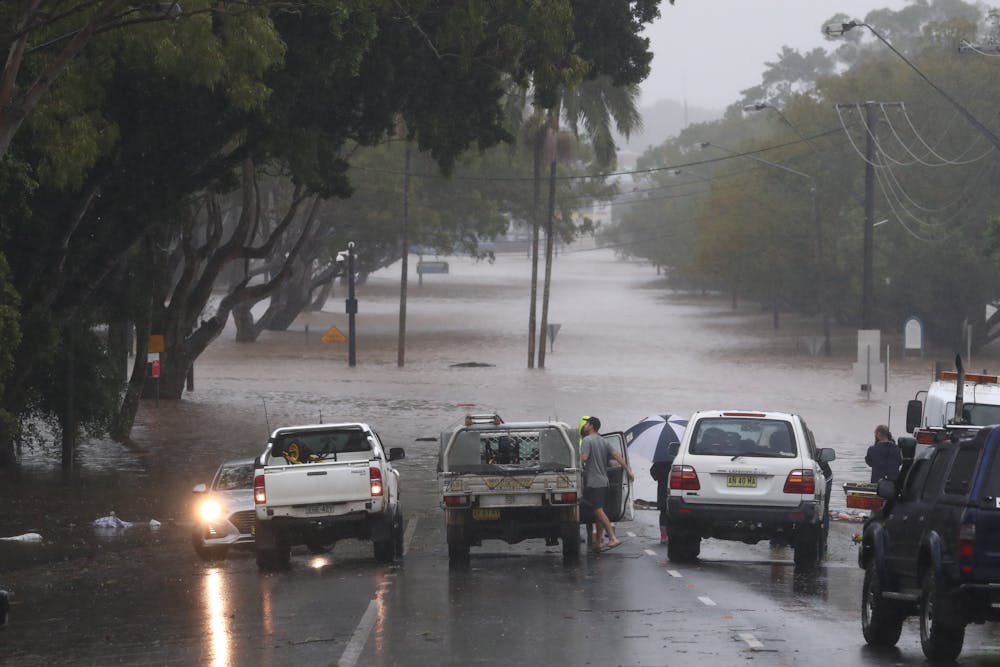 Drivers can feel pressure to enter floodwaters.
AAP Image/Jason O'Brien
Drivers can feel pressure to enter floodwaters.
AAP Image/Jason O'Brien
For scenario 1, an example if/then plan was: “If its time to leave work and I receive an alert for moderate or major flooding then I will stay at work until it is safe for me to proceed.”
For scenario 2, an example if/then plan was: “If cars behind me are pressuring me to drive through floodwater, then I will turn my hazards on and let them pass, then turn around.”
After an exercise exploring these scenarios with survey respondents, people reported being more willing to stay put until the threat had passed for scenario 1, and less willing to drive into floodwater after feeling pressured from other drivers for scenario 2.
Forming your own Plan B
Our findings show the importance of having a detailed if/then plan – a Plan B – for specific scenarios, as it can lower your chances of engaging in risky, potentially life-threatening driving during floods.
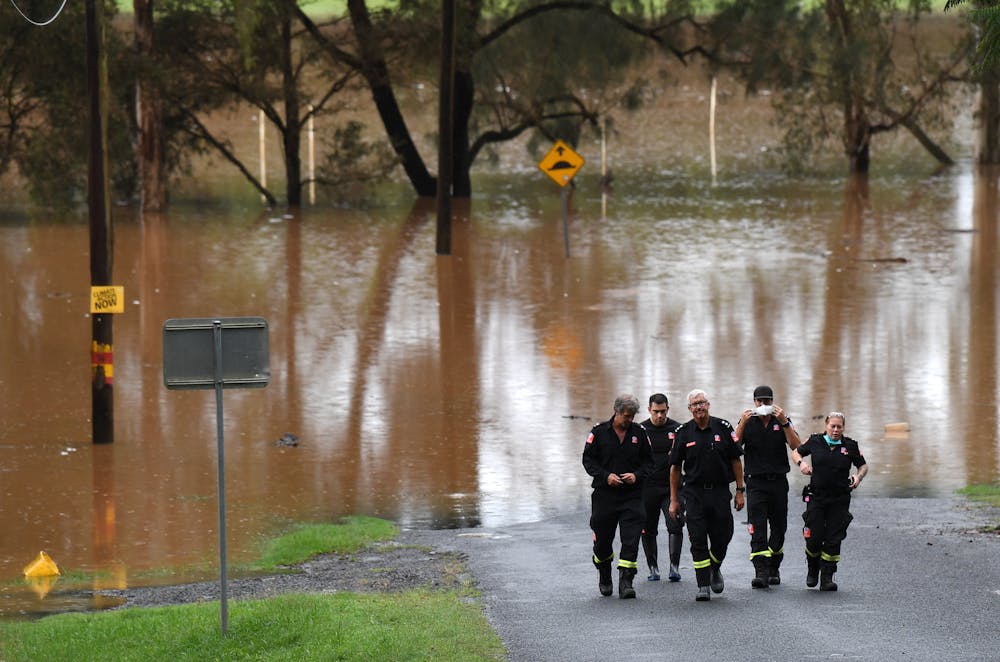 Driving into floodwaters not only put you in danger, but rescuers.
AAP Image/Darren England
Driving into floodwaters not only put you in danger, but rescuers.
AAP Image/Darren England
Your Plan B examples may include:
picking up children early from school or day care
allowing workers to leave early if flooding is predicted or work from home
knowing alternate routes should your intended route be flooded
preparing to have safe alternative behaviours, despite pressures to drive through.
Reinforcing your Plan B is vital to its success when faced with needing to make a quick decision in the moment.
We encourage people to formulate their plans for several scenarios, put these plans in writing, and revisit them regularly by posting them on the fridge and in the car.
It’s also a good idea to verbally communicate your plan to significant others, such as friends, family and work colleagues and employers, as an additional layer of intent to solidify your plan should flooding hit.
With Queensland in the grips of yet another flood crisis and La Niña predicted to last through May, and potentially into Winter, more extreme rainfall and flooded roads should be expected.
Forming your Plan B now just might help you make safer decisions, should the worst happen.
Authors: Amy Peden, Research fellow, UNSW Sydney


















