

Modern Australian
The Times

First Nations people in the NT receive just 16% of the Medicare funding of an average Australian

  • Written by Stephen Duckett, Honorary Enterprise Professor, School of Population and Global Health, and Department of General Practice, The University of Melbourne
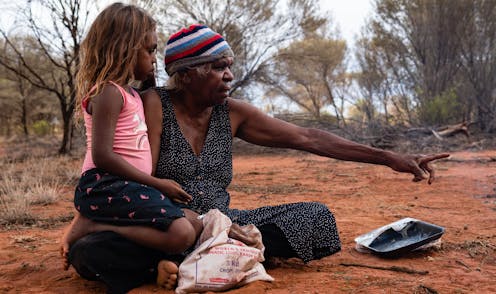
First Nations people in the NT receive just 16% of the Medicare funding of an average Australian

Medicare, Australia’s universal health insurance scheme, provides financial protection against the cost of medical bills, and makes public hospital care available without any charge to the patient. For the large majority of Australians in urban settings, it is a brilliant system – providing subsidised access to care.

But subsidised access is only useful for those who have access. If there is no doctor nearby, there is nothing to subsidise. This creates a huge inequity – most of Australia has good access to doctors, but the Northern Territory does not.

And what’s worse, there is no effective policy to redress the inequity that payments flow to areas where there are doctors.

In our recently published paper, we found NT residents receive roughly 30% less Medicare funding per capita than the national average (A$648 compared with A$969).

The gap is worse for First Nations Australians in the NT, who attract only 16% of the Medicare funding of the average Australian.

Read more: Labor's health package won't 'strengthen' Medicare unless it includes these 3 things

We measured the extent of the problem over the years 2010–20. We used the federal government’s published figures on Medicare to explore the impact of this uneven workforce distribution on Medicare billing in the NT.

The differences are stark.

The inequitable funding is even worse when the poorer health status of First Nations Australians and the additional costs associated with geographical remoteness are taken into account. The NT has a younger age profile than the rest of Australia, but this explains only one-third of the gap. What’s going wrong with the funding? Despite Medicare’s intended universality, the NT is systematically disadvantaged. People in the Territory have poorer access to primary health care, which includes GP services and those provided by Aboriginal community-controlled health services. Aboriginal health services receive some special additional funding separate from the Medicare-billing funding. However, even with that extra funding, there is still a shortfall to NT residents of about A$80 million each year. The NT government receives a relatively higher proportion of the GST funding pool in recognition of its challenges with remoteness and Indigenous services. But this is calculated assuming NT residents have the same access to Medicare as all other Australians. As we have shown, they don’t and so the extra GST funding does not result in a fair funding stream to meet NT primary care needs. The outcome of inadequate primary health care funding is increasing reliance on hospital services. People’s chronic health conditions worsen if they’re not well managed in the community and this increases the risk they will need a hospital admission, especially for “potentially preventable hospitalisations”. NT hospitals experience excessive pressure of workload and complexity as a result. Woman sits on a hospital bed, her back to the door.
Poorer access to primary care services results in more hospitalisations. Shutterstock

We have shown previously that effective primary health care for remote patients with chronic, long-term diseases can substantially reduce their use of hospital services and result in better health outcomes at a lower cost.

When visiting the NT in 2000, one of the architects of Medicare, John Deeble, observed the funding failure first hand and suggested another form of health-care financing was needed to adequately support remote primary health care.

In terms of health equity and our national commitment to close the life expectancy gap for First Nations peoples, the status quo is undeniably short-changing our efforts.

What needs to be done?

There needs to be a reset in how we finance remote primary health care services in the NT.

The value proposition is excellent. Due to the extreme health needs and vulnerable populations, the return on investment is high – more than A$5 in saved acute care costs for every dollar invested.

The federal government’s Health Care Homes funding reform trial was very successful in remote NT communities. For the first time, service providers received flexible funding to care for patients’ chronic conditions, rather than a fee for each service they provided. It also enabled the provider and patient to develop a relationship.

Unfortunately the Health Care Homes program ended in June 2021, and has not been renewed. This program should be reinvigorated for chronic disease care in the NT and extended to include other core programs of mental health and suicide prevention, and child and maternal health.

The federal government should take this opportunity to get remote primary health care financing right and ensure Medicare funds reach those who need them most.

Read more: How do the major parties rate on Medicare? We asked 5 experts

Acknowledgement: Xiaohua Zhang, Jo Wright, and Maja Van Bruggen from the Northern Territory Department of Health are co-authors of the journal article on which this article is based.

Authors: Stephen Duckett, Honorary Enterprise Professor, School of Population and Global Health, and Department of General Practice, The University of Melbourne


Read more https://theconversation.com/first-nations-people-in-the-nt-receive-just-16-of-the-medicare-funding-of-an-average-australian-183210

Chatswood Tutoring And Its Role In Academic Achievement

Academic success often requires more than classroom attendance alone. Students face increasing expectations as they progress through school, particu...

Why Laser Hair Removal Treatments Continue Growing In Popularity

Managing unwanted hair can become time-consuming and frustrating for many people, especially when shaving, waxing, and other temporary methods requi...

Choosing the Right Devices for a Flexible Workplace

For IT leaders managing large fleets, the device layer is where workforce productivity and security policy meet. The shift towards flexible and hybrid...

How Business Advisory Services Help Companies Achieve Sustainable Growth

Every business owner aims to build a profitable and sustainable organisation. While dedication, innovation, and hard work are important, achieving l...

Why Body Contouring Has Become A Popular Cosmetic Treatment

Many people maintain healthy lifestyles through regular exercise and balanced eating habits but still struggle with stubborn areas of fat that are d...

How to Choose the Right POS Hardware for Your Business in Australia

A lot of Australian business owners spend weeks researching POS software but buy hardware almost as an afterthought. That's a mistake. The wrong har...

Why Material Handling Hose Is Critical for Industrial Efficiency

A high-performance material handling hose is an essential component in industries that transport abrasive, dry, or bulk materials on a daily basis...

How to Choose the Right Lawyer in Melbourne for Your Situation

Choosing legal support can feel difficult, especially when the stakes are personal or business-related. The right lawyer in Melbourne should underst...

Hoteliers Look to Clever Value Adds to Increase Revenue

The Australian hospitality industry is still in recovery mode after a notoriously rough patch in recent years. While there has been a post-COVID tra...

Moving to Queensland? Here’s How to Prep Your Car for the Big Move North

There’s no sign of the northern migration slowing down, with thousands of southerners fleeing from chaotic lifestyles and cooler climates for a brig...

Diesel Shortage to Impact Trades and Contractors

Strait of Hormuz blockage affecting all major parts of trades and construction Trades and construction across residential, commercial and industria...

Why Holiday Home Owners Turn to Rental Management Agents

The Allure — and the Reality — of Renting Out Your Property Owning a holiday home is a dream for many Australians. Whether it's a beachside sha...

Why Finding Reliable Doctors In Bundoora Is Important For Long-Term Health

Access to quality healthcare plays an important role in maintaining overall wellbeing and managing health concerns early. Trusted Doctors in Bundoor...

Understanding the Different Types of Car Services: Minor vs Major

When it comes to car maintenance, one of the most important things every vehicle owner should understand is the difference between a minor and a maj...

How Superannuation and TPD Insurance Work Together

Superannuation is an essential part of financial planning in Australia. It is designed to provide individuals with income during retirement, helping...

Tiny Towns funding granted for Mt Hotham and Mt Buller upgrades

Alpine Resorts Victoria (ARV) has welcomed funding support from the Victorian Government’s  Tiny Towns Fund, with both Mt Hotham and Mt Buller se...

Locksmith Services: Why Professional Security Solutions Matter More Than Ever

Security is a critical concern for homeowners, businesses, and vehicle owners alike. Whether it involves protecting a property, replacing damaged lo...

Why Tooth Fillings Are Important For Protecting Damaged Teeth

Cavities and minor tooth damage are common dental problems that can worsen if left untreated. Professional tooth fillings help restore damaged teeth, ...















