

the big problem with free speech on platforms isn't censorship. It's the algorithms
- Written by: Kai Riemer, Professor of Information Technology and Organisation, University of Sydney
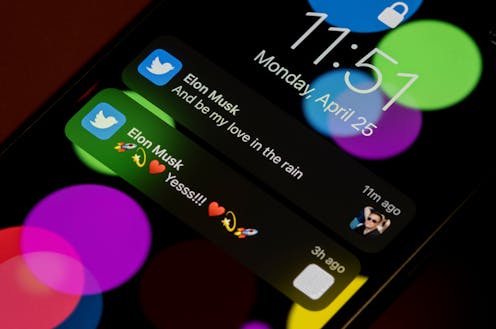
Imagine there is a public speaking square in your city, much like the ancient Greek agora. Here you can freely share your ideas without censorship.
But there’s one key difference. Someone decides, for their own economic benefit, who gets to listen to what speech or which speaker. And this isn’t disclosed when you enter, either. You might only get a few listeners when you speak, while someone else with similar ideas has a large audience.
Would this truly be free speech?
This is an important question, because the modern agoras are social media platforms – and this is how they organise speech. Social media platforms don’t just present users with the posts of those they follow, in the order they’re posted.
Rather, algorithms decide what content is shown and in which order. In our research, we’ve termed this “algorithmic audiencing”. And we believe it warrants a closer look in the debate about how free speech is practised online.
Our understanding of free speech is too limited
The free speech debate has once more been ignited by news of Elon Musk’s plans to take over Twitter, his promise to reduce content moderation (including by restoring Donald Trump’s account) and, more recently, speculation he might pull out of the deal if Twitter can’t prove the platform isn’t inundated with bots.
Musk’s approach to free speech is typical of how this issue is often framed: in terms of content moderation, censorship and matters of deciding what speech can enter and stay on the platform.
But our research reveals this focus misses how platforms systematically interfere with free speech on the audience’s side, rather than the speaker’s side.
Outside the social media debate, free speech is commonly understood as the “free trade of ideas”. Speech is about discourse, not merely the right to speak. Algorithmic interference in who gets to hear which speech serves to directly undermine this free and fair exchange of ideas.
If social media platforms are “the digital equivalent of a town square” committed to defending free speech, as both Facebook’s Mark Zuckerberg and Musk argue, then algorithmic audiencing must be considered for speech to be free.
How it works
Algorithmic audiencing happens through algorithms that either amplify or curb the reach of each message on a platform. This is done by design, based on a platform’s monetisation logic.
Newsfeed algorithms amplify content that keeps users the most “engaged”, because engagement leads to more user attention on targeted advertising, and more data collection opportunities.
This explains why some users have large audiences while others with similar ideas are barely noticed. Those who speak to the algorithm achieve the widest circulation of their ideas. This is akin to large-scale social engineering.
At the same time, the workings of Facebook’s and Twitter’s algorithms remain largely opaque.
Read more: Is your phone really listening to your conversations? Well, turns out it doesn't have to
How it interferes with free speech
Algorithmic audiencing has a material effect on public discourse. While content moderation only applies to harmful content (which makes up a tiny fraction of all speech on these platforms), algorithmic audiencing systematically applies to all content.
So far, this kind of interference in free speech has been overlooked, because it’s unprecedented. It was not possible in traditional media.
And it is relatively recent for social media as well. In the early days messages would simply be sent to one’s follower network, rather than subjected to algorithmic distribution. Facebook, for example, only started filling newsfeeds with the help of algorithms that optimise for engagement in 2012, after it was publicly listed and faced increased pressure to monetise.
Only in the past five years has algorithmic audiencing really become a widespread issue. At the same time, the extent of the issue isn’t fully known because it’s almost impossible for researchers to gain access to platform data.
But we do know addressing it is important, since it can drive the proliferation of harmful content such as misinformation and disinformation.
We know such content gets commented on and shared more, attracting further amplification. Facebook’s own research has shown its algorithms can drive users to join extremist groups.
What can be done?
Individually, Twitter users should heed Elon Musk’s recent advice to re-organise their newsfeeds back to chronological order, which would curb the extent of algorithmic audiencing being applied.
You can also do this for Facebook, but not as a default setting – so you’ll have to choose this option every time you use the platform. It’s the same case with Instagram (which is also owned by Facebook’s parent company, Meta).
What’s more, switching to chronological order will only go so far in curbing algorithmic audiencing – because you’ll still get other content (apart from what you directly opt-in to) which will target you based on the platform’s monetisation logic.
And we also know only a fraction of users ever change their default settings. In the end, regulation is required.
While social media platforms are private companies, they enjoy far-ranging privileges to moderate content on their platforms under section 230 of the US’s Communications Decency Act.
In return, the public expects platforms to facilitate a free and fair exchange of their ideas, as these platforms provide the space where public discourse happens. Algorithmic audiencing constitutes a breach of this privilege.
As US legislators contemplate social media regulation, addressing algorithmic audiencing must be on the table. Yet, so far it has hardly part of the debate at all – with the focus squarely on content moderation.
Any serious regulation will need to challenge platforms’ entire business model, since algorithmic audiencing is a direct outcome of surveillance capitalist logic – wherein platforms capture and commodify our content and data to predict (and influence) our behaviour – all to turn a profit.
Until we are regulating this use of algorithms, and the monetisation logic that underpins it, speech on social media will never be free in any genuine sense of the word.
Read more: Facebook is tilting the political playing field more than ever, and it's no accident
Authors: Kai Riemer, Professor of Information Technology and Organisation, University of Sydney


















