

class prejudices, the convict stain and a corpse-bride
- Written by: Sascha Morrell, Lecturer in Literary Studies, Monash University
In our Guide to the classics series, experts explain key works of literature.
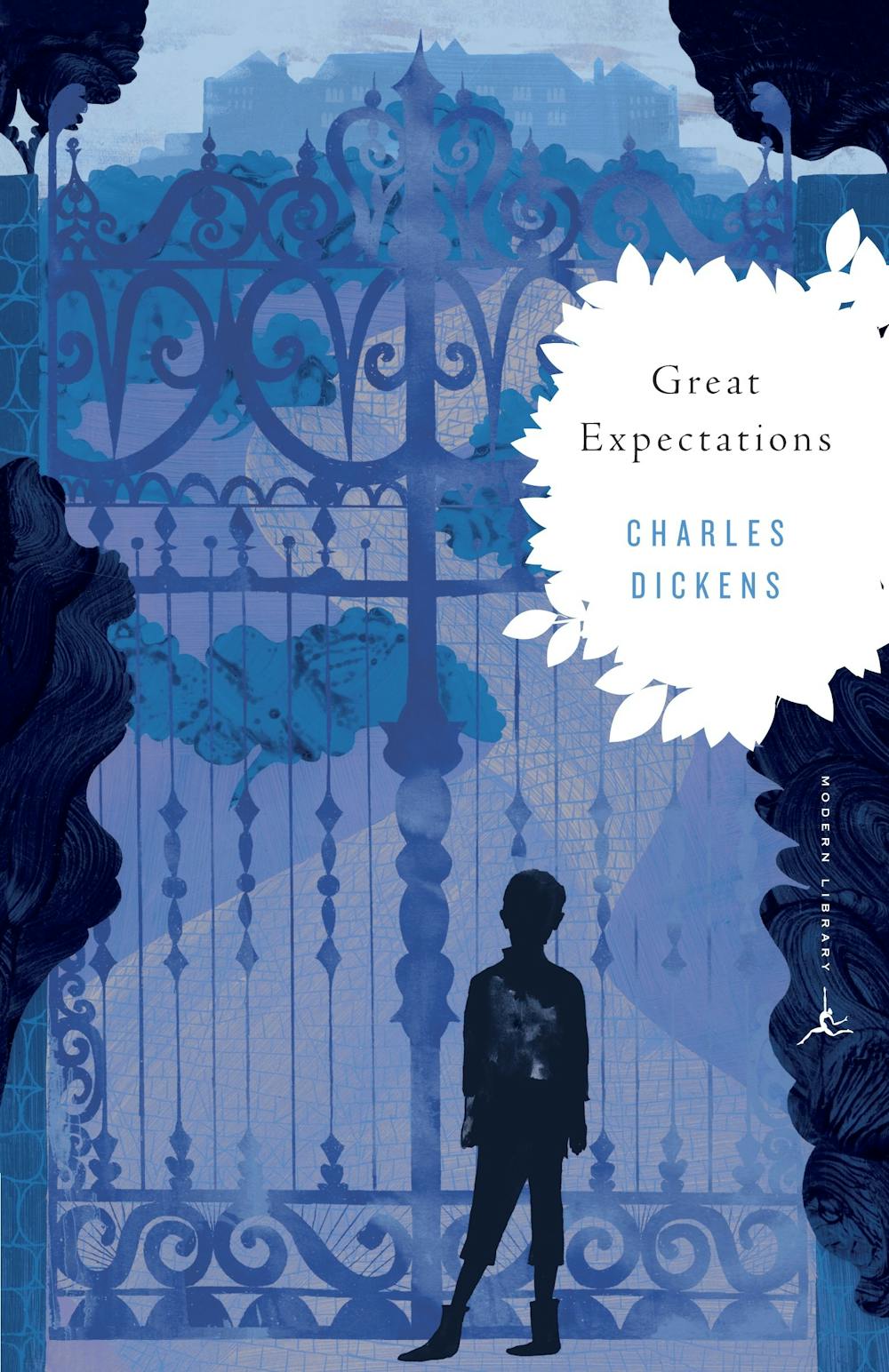
In Charles Dickens’ Great Expectations (1861), everything is connected. As plots and subplots converge and hidden relations are revealed, the novel elaborates a view of society in which no individual may be considered the master of his or her own fortunes – or “expectations” in the old-fashioned sense, meaning one’s future prospects.
Great Expectations blends literary styles and genres too. It fuses elements of the gothic with comic satire, realism, fairytale, crime fiction and melodrama. It can even be read as autobiographical, insofar as Dickens drew on aspects of his upbringing when depicting the deprived childhood of the young orphan Pip, the novel’s protagonist and narrator.
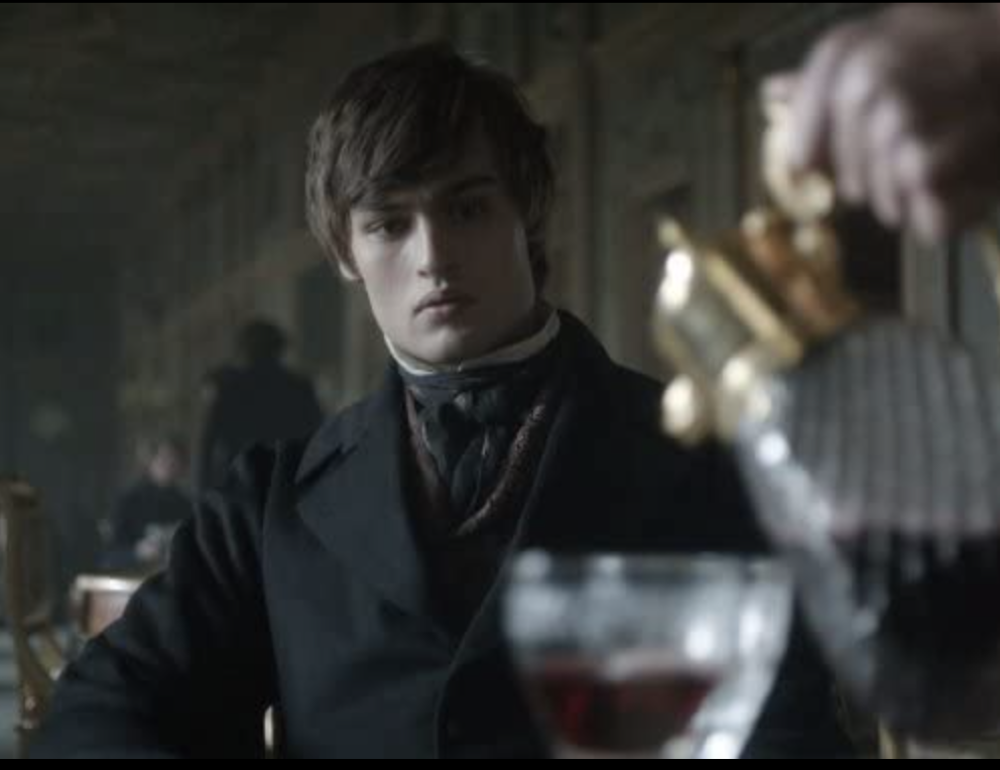 Douglas Booth as Pip in Great Expectations (2011): a rise to genteel affluence.
BBC, Masterpiece Theatre
At his forgery trial, Magwitch is made to feel like a “dunghill dog” when he sees how the system gives preferential treatment to his co-accused, Compeyson, thanks to the latter’s fine clothes and genteel deportment.
In “making a gentleman” of Pip, Magwitch hopes to infiltrate the ruling class and vicariously beat them at their own game. Pip recoils from his connection to Magwitch, which he believes bars him forever from courting Estella. This proves ironic when Estella’s own uncouth origins are revealed.
The novel links the convict stain to race, evoking the dispossession and exploitation of racially othered peoples in both Australia and America. As Magwitch tells Pip his Australian story, the smoke of the “Negro-head” tobacco in his “black pipe” threatens to “perplex the thread” of his tale.
References to Magwitch’s blackness and “savagery” evoke the racist discourse that served to legitimate white settlement in Australia. Magwitch also speaks of Compeyson having “made me his black slave”. His description of convict life is reminiscent of Dickens’ critique of U.S. slavery in his American Notes (1842) and in his novel Martin Chuzzlewit (1844).
Pip, in turn, feels “enslaved” by his dependency on Magwitch. Yet his crippling burden of guilt and debt has more to do with class and colonial entanglements than individual obligation. He comes to see himself not as a free agent, but a mere beam in a “vast engine”. He longs to have “the engine stopped, and [his] part in it hammered off.”
Douglas Booth as Pip in Great Expectations (2011): a rise to genteel affluence.
BBC, Masterpiece Theatre
At his forgery trial, Magwitch is made to feel like a “dunghill dog” when he sees how the system gives preferential treatment to his co-accused, Compeyson, thanks to the latter’s fine clothes and genteel deportment.
In “making a gentleman” of Pip, Magwitch hopes to infiltrate the ruling class and vicariously beat them at their own game. Pip recoils from his connection to Magwitch, which he believes bars him forever from courting Estella. This proves ironic when Estella’s own uncouth origins are revealed.
The novel links the convict stain to race, evoking the dispossession and exploitation of racially othered peoples in both Australia and America. As Magwitch tells Pip his Australian story, the smoke of the “Negro-head” tobacco in his “black pipe” threatens to “perplex the thread” of his tale.
References to Magwitch’s blackness and “savagery” evoke the racist discourse that served to legitimate white settlement in Australia. Magwitch also speaks of Compeyson having “made me his black slave”. His description of convict life is reminiscent of Dickens’ critique of U.S. slavery in his American Notes (1842) and in his novel Martin Chuzzlewit (1844).
Pip, in turn, feels “enslaved” by his dependency on Magwitch. Yet his crippling burden of guilt and debt has more to do with class and colonial entanglements than individual obligation. He comes to see himself not as a free agent, but a mere beam in a “vast engine”. He longs to have “the engine stopped, and [his] part in it hammered off.”
 Dickens’ exposé of the intersections of race, class and colonialism remains limited. Edward Said noted that Pip’s dependence on the colonies, meaning Australia, is transferred to “the East” with a convenient lack of specificity. An 11-year period is covered in just two sentences.
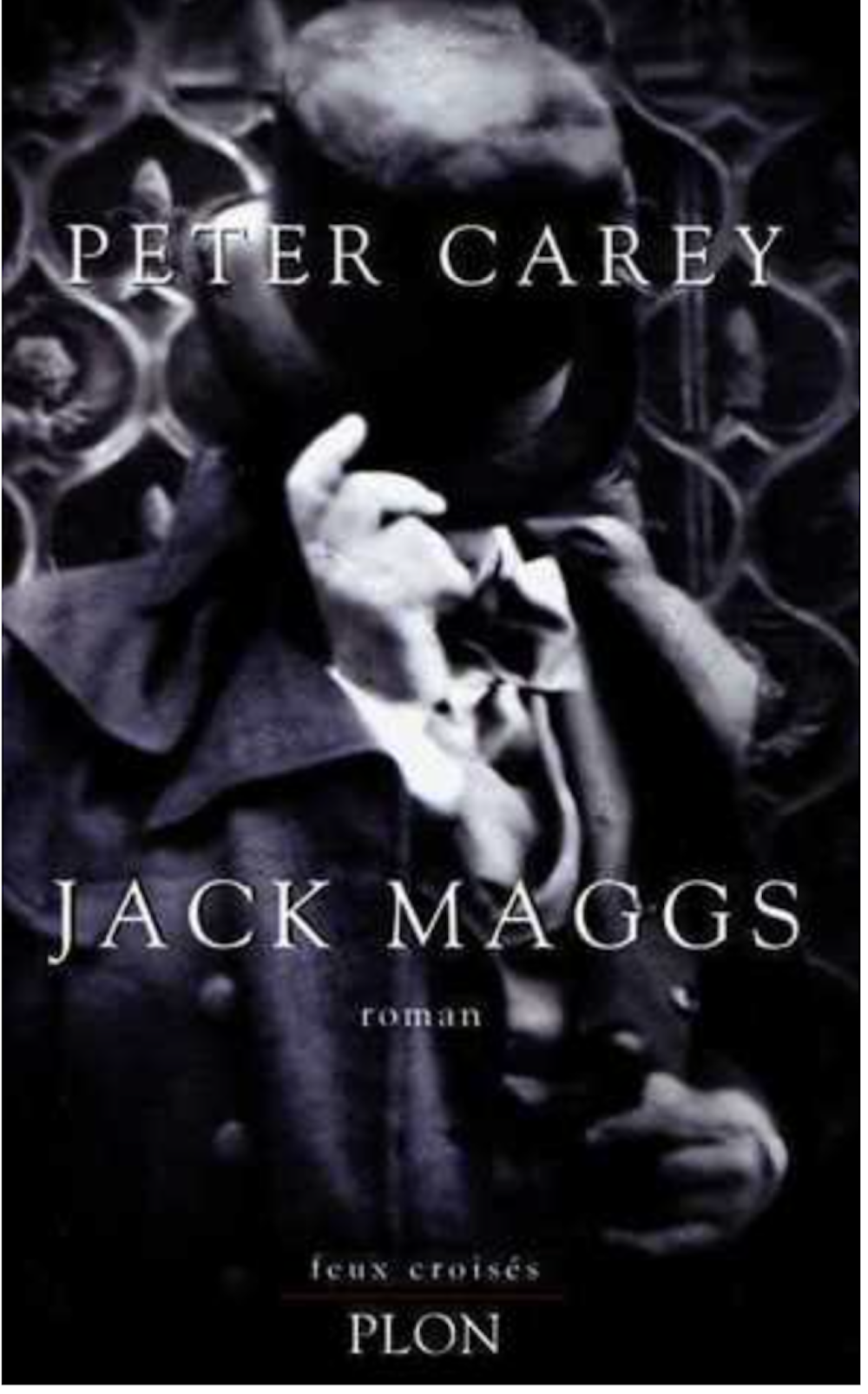
The novel’s depiction of Australia has inspired postcolonial rewritings, notably from the Australian novelist Peter Carey, whose Jack Maggs (1997) takes Dickens to task for failing to envisage the possibility that Magwitch might have forged a meaningful life in New South Wales.
Nonetheless, Dickens promoted emigration to Australia, through the Urania Cottage project aimed at rehabilitating “fallen women”. His sons Alfred and Edward emigrated to Australia at their father’s urging.
Read more:
Charles Dickens: 150 years on, debate still rages over his 'misogynist' label
Representations of women
Great Expectations’ representation of women has divided readers. Some critics see Pip as a masochist, whose brutal upbringing by a much older sister, who boasts of raising him “by hand”, leads him to associate a woman’s love with cruelty. Hence his predilection for the cold, mocking Estella over the caring Biddy.
The novel links its depiction of gender to its depictions of race and class. Pip’s sister, Mrs. Joe, calls herself a “negress slave”; Estella has a working-class “gypsy” mother.
Dickens’ exposé of the intersections of race, class and colonialism remains limited. Edward Said noted that Pip’s dependence on the colonies, meaning Australia, is transferred to “the East” with a convenient lack of specificity. An 11-year period is covered in just two sentences.
The novel’s depiction of Australia has inspired postcolonial rewritings, notably from the Australian novelist Peter Carey, whose Jack Maggs (1997) takes Dickens to task for failing to envisage the possibility that Magwitch might have forged a meaningful life in New South Wales.
Nonetheless, Dickens promoted emigration to Australia, through the Urania Cottage project aimed at rehabilitating “fallen women”. His sons Alfred and Edward emigrated to Australia at their father’s urging.
Read more:
Charles Dickens: 150 years on, debate still rages over his 'misogynist' label
Representations of women
Great Expectations’ representation of women has divided readers. Some critics see Pip as a masochist, whose brutal upbringing by a much older sister, who boasts of raising him “by hand”, leads him to associate a woman’s love with cruelty. Hence his predilection for the cold, mocking Estella over the caring Biddy.
The novel links its depiction of gender to its depictions of race and class. Pip’s sister, Mrs. Joe, calls herself a “negress slave”; Estella has a working-class “gypsy” mother.
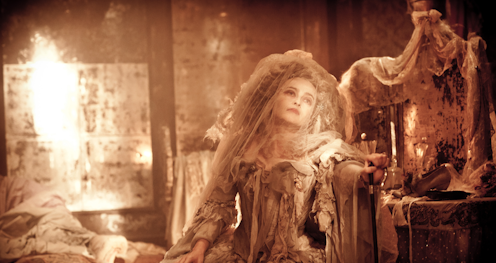
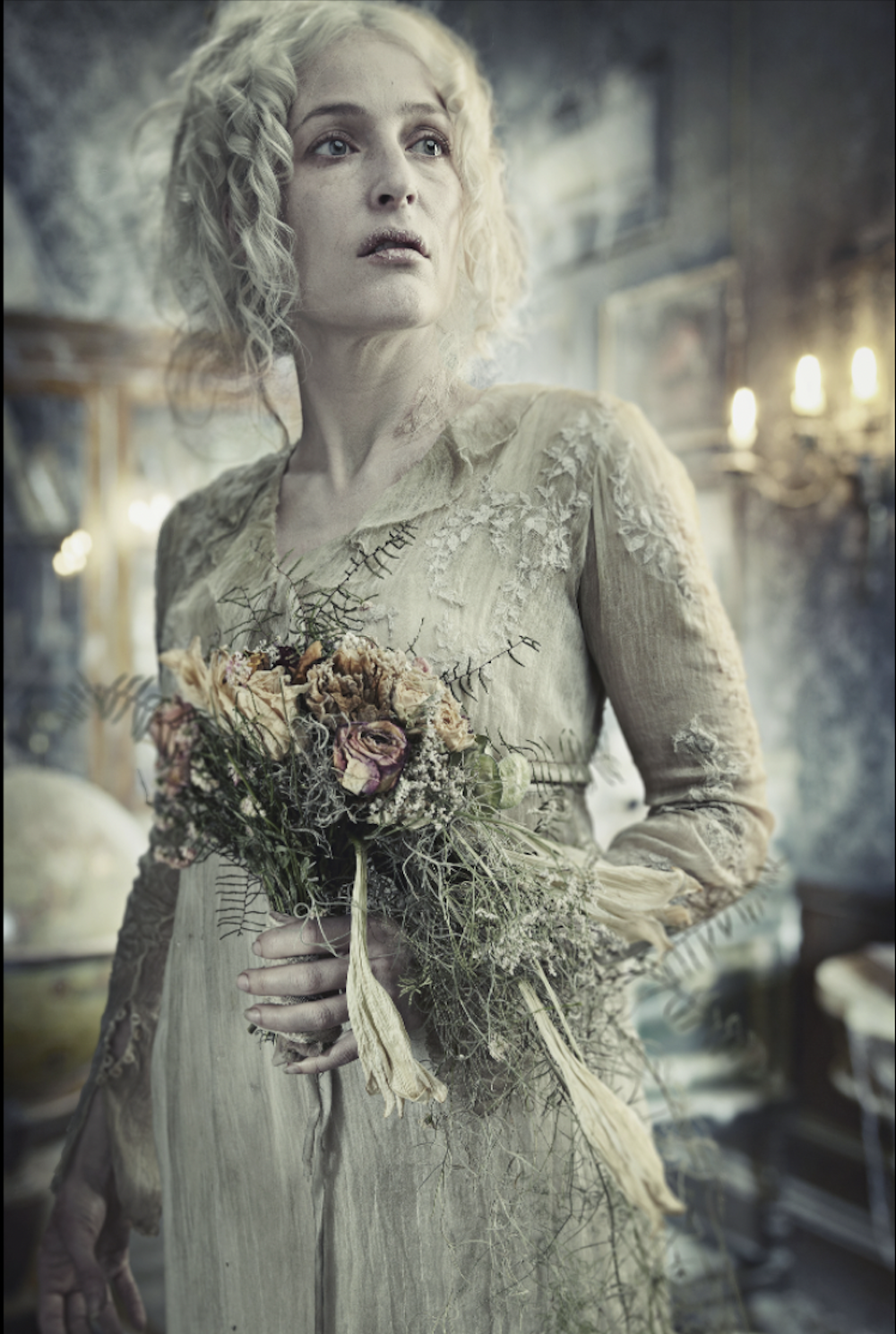 Gillian Anderson as Miss Havisham.
BBC, Masterpiece Theatre
Pip’s interactions with Miss Havisham also carry a claustrophobic sexual charge, which has been played up or down in the book’s many screen adaptations. The punishments meted out to these women as the plot unfolds have been read as symbolic expressions of Pip’s repressed violent urges against women.
It is the blacksmith Joe who exhibits more traditional maternal qualities. He displays a tender affection for Pip. That Joe can seem childlike in relation to the better-educated boy provides some of the novel’s gentlest comic relief. When Pip tries to teach him to read, Joe proves a slow but enthusiastic pupil:
when you do come to a J and a O, and says you, “Here, at last, is a J-O, Joe,” how interesting reading is!
The pleasures of reading Great Expectations are somewhat more complicated. The novel affirms the sentimental ideal of Victorian domesticity that Dickens’s earlier novels had been instrumental in shaping. The marriage of Joe and Biddy is followed by the birth of their son, named in Pip’s honour, in whom Pip sees “myself again”.
But Pip’s romantic fate remains uncertain. The ending of Great Expectations does not satisfy readerly “expectations” of a romantic union between Pip and Estella.
Dickens did, however, revise his bleak original ending to keep the possibility of such a union open, if only as a faint shadow, taking the advice of fellow novelist Edward Bulwer-Lytton.
The result is an ambiguous, thought-provoking final chapter that makes far more “interesting reading” than any neater conclusion would have provided, befitting an unsettling text that retains its haunting power more than 150 years on.
Authors: Sascha Morrell, Lecturer in Literary Studies, Monash University
Gillian Anderson as Miss Havisham.
BBC, Masterpiece Theatre
Pip’s interactions with Miss Havisham also carry a claustrophobic sexual charge, which has been played up or down in the book’s many screen adaptations. The punishments meted out to these women as the plot unfolds have been read as symbolic expressions of Pip’s repressed violent urges against women.
It is the blacksmith Joe who exhibits more traditional maternal qualities. He displays a tender affection for Pip. That Joe can seem childlike in relation to the better-educated boy provides some of the novel’s gentlest comic relief. When Pip tries to teach him to read, Joe proves a slow but enthusiastic pupil:
when you do come to a J and a O, and says you, “Here, at last, is a J-O, Joe,” how interesting reading is!
The pleasures of reading Great Expectations are somewhat more complicated. The novel affirms the sentimental ideal of Victorian domesticity that Dickens’s earlier novels had been instrumental in shaping. The marriage of Joe and Biddy is followed by the birth of their son, named in Pip’s honour, in whom Pip sees “myself again”.
But Pip’s romantic fate remains uncertain. The ending of Great Expectations does not satisfy readerly “expectations” of a romantic union between Pip and Estella.
Dickens did, however, revise his bleak original ending to keep the possibility of such a union open, if only as a faint shadow, taking the advice of fellow novelist Edward Bulwer-Lytton.
The result is an ambiguous, thought-provoking final chapter that makes far more “interesting reading” than any neater conclusion would have provided, befitting an unsettling text that retains its haunting power more than 150 years on.
Authors: Sascha Morrell, Lecturer in Literary Studies, Monash University 

















