

Modern Australian
The Times

How did ancient moa survive the ice age – and what can they teach us about modern climate change?

  • Written by Nic Rawlence, Senior Lecturer in Ancient DNA, University of Otago
How did ancient moa survive the ice age – and what can they teach us about modern climate change?

One species of iconic moa was almost wiped out during the last ice age, according to recently published research. But a small population survived in a modest patch of forest at the bottom of New Zealand’s South Island, and rapidly spread back up its east coast once the climate began to warm.

What we’re learning about this remarkable survival story has implications for the way we can help living species adapt to climate change, and how we conserve and restore what may be important future habitats.

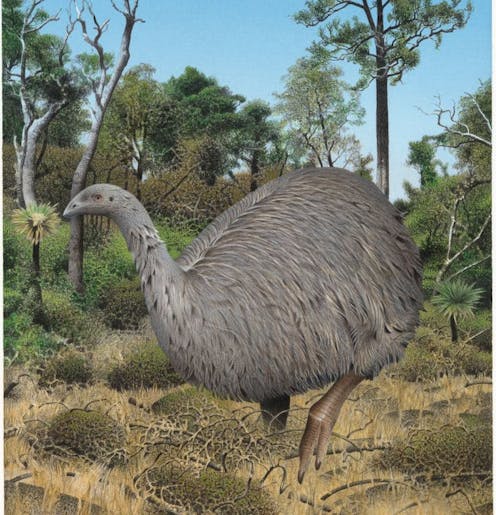
Growing to around 80kg and up to 1.8 metres tall, the eastern moa was one of the smaller of the nine extinct moa species. It got its name because its fossil bones have been found in sand dunes, swamps, caves and middens all along the eastern parts of the South Island – Southland, Otago, Canterbury and Marlborough.

Eastern moa became extinct from over-hunting and habitat destruction by humans, and possibly predation by kurī (dogs) and kiore (rats). But were eastern moa populations thriving when people arrived, or were they already in trouble due to ancient climate change?

Skull of an eastern moa. Genetic information can be obtained from moa bones even after thousands of years. Te Papa CC BY-NC-ND 4.0.

Refuge in the south

Between 29,000 and 19,000 years ago, New Zealand was in the grip of an ice age. Glaciers were much larger and more widespread than they are today, and the distribution of grasslands and forests changed as the climate became colder and drier.

Current climate change threatens the survival of many different species, and the same was true of climate change thousands of years ago. The fossil record hints that the ice age was bad news for eastern moa, as few eastern moa bones from this period have been discovered.

But a lack of fossils doesn’t necessarily mean a species was doing it tough. Perhaps they just avoided the caves and swamps where we might eventually discover their bones.

Read more: How a change in climate wiped out the 'Siberian unicorn'

To find out more, we sequenced DNA from dozens of eastern moa bones to see how their genetic diversity and population size changed over the past 30,000 years.

Large and healthy animal populations tend to have high genetic diversity, while low genetic diversity can be a sign that a population is in decline. We found eastern moa had very low genetic diversity immediately after the last ice age.

So eastern moa didn’t cope well with the ice age climate – but how did they manage to escape extinction? Our study provides a clue: their genetic diversity was highest in the very south of the South Island.

Rimu were prominent in the podocarp forests that eastern moa preferred. The distribution of these forests changed dramatically during the ice age. Katja Schulz/Flickr CC-BY 2.0

Preserving future habitats

During the ice age, grassland replaced wet podocarp forests in many areas. Those forests were the favourite habitat of eastern moa, possibly explaining why they struggled to survive.

Luckily for eastern moa, however, small pockets of forest survived in southern New Zealand during this time. While eastern moa disappeared from most of the country, our study suggests they clung on in remnant forest at the very south of the South Island.

Scientists have a special name for pockets of habitat where species can shelter and endure climate change – “refugia”.

Read more: How the warming world could turn many plants and animals into climate refugees

Once the climate began to return to pre-ice age conditions, eastern moa were able to return to parts of the country they had formerly occupied. They bounced back so well that they were the most common moa in some parts of New Zealand at the time of Polynesian arrival.

Ancient DNA from fossils across the world has shown that refugia play an important role in allowing species to adapt to climate change. The story of eastern moa shows this is equally true in New Zealand.

Importantly, though, the eastern moa was affected differently to other moa, showing not all species are affected by climate change in the same way. Our study emphasises the need to conserve and restore a diverse range of habitats for the future, given the places where species are found today may be unsuitable for them in the very near future.

By ensuring that species can continue to find appropriate refugia, we may reduce the number that become extinct as a result of our global impacts on the climate.

Authors: Nic Rawlence, Senior Lecturer in Ancient DNA, University of Otago

Read more https://theconversation.com/how-did-ancient-moa-survive-the-ice-age-and-what-can-they-teach-us-about-modern-climate-change-183350

Why Regular Skills Updates Are Essential for Licensed Security Officers

A guard at a Brisbane shopping centre gets a call about a shoplifter who's turned aggressive.  They’ve done the job for six years. But their de-...

10 Benefits of Choosing Professional Tutoring Penrith Services

Every student has unique learning strengths, challenges, and academic goals. While classroom teaching provides essential knowledge and structure, so...

Sunshine Coast Baby Classes Prove Big Hit Among First-Time Mums

There's a movement gaining traction on the Sunshine Coast, providing a village of support, socialisation and relief for first-time mothers and babie...

Father's Day Gift Ideas for Men Who Are Hard to Buy For

Some dads are easy to buy for. Others do not want anything, already have everything, or give you the classic "don't worry about me" answer every yea...

Top 5 Mistakes That Wear Out Your Brakes Faster

Brakes don't need frequent replacements like oil changes do.   But a lot of the wear happens quietly, over months, because of habits most drivers...

Plantation Shutters vs Curtains: Which Is Better for Your New Home?

Moving into a new home is an exciting opportunity to personalise your space and make it your own. While many homeowners focus on furniture, flooring...

Celebration of Life vs Traditional Funeral: What's the Difference?

When saying goodbye to someone you love, there is no single way to honour their life. Every family has different traditions, beliefs, and preference...

Building Approval for Roofing Projects: What Homeowners Need to Know

Roofing projects are an important part of maintaining and protecting your home. Whether you're repairing storm damage, replacing an ageing roof, or ...

Chatswood Tutoring And Its Role In Academic Achievement

Academic success often requires more than classroom attendance alone. Students face increasing expectations as they progress through school, particu...

Why Laser Hair Removal Treatments Continue Growing In Popularity

Managing unwanted hair can become time-consuming and frustrating for many people, especially when shaving, waxing, and other temporary methods requi...

Choosing the Right Devices for a Flexible Workplace

For IT leaders managing large fleets, the device layer is where workforce productivity and security policy meet. The shift towards flexible and hybrid...

How Business Advisory Services Help Companies Achieve Sustainable Growth

Every business owner aims to build a profitable and sustainable organisation. While dedication, innovation, and hard work are important, achieving l...

Why Body Contouring Has Become A Popular Cosmetic Treatment

Many people maintain healthy lifestyles through regular exercise and balanced eating habits but still struggle with stubborn areas of fat that are d...

How to Choose the Right POS Hardware for Your Business in Australia

A lot of Australian business owners spend weeks researching POS software but buy hardware almost as an afterthought. That's a mistake. The wrong har...

Why Material Handling Hose Is Critical for Industrial Efficiency

A high-performance material handling hose is an essential component in industries that transport abrasive, dry, or bulk materials on a daily basis...

How to Choose the Right Lawyer in Melbourne for Your Situation

Choosing legal support can feel difficult, especially when the stakes are personal or business-related. The right lawyer in Melbourne should underst...

Hoteliers Look to Clever Value Adds to Increase Revenue

The Australian hospitality industry is still in recovery mode after a notoriously rough patch in recent years. While there has been a post-COVID tra...

Moving to Queensland? Here’s How to Prep Your Car for the Big Move North

There’s no sign of the northern migration slowing down, with thousands of southerners fleeing from chaotic lifestyles and cooler climates for a brig...
















