

Can you use rapid antigen tests in children under 2 years old?
- Written by: Thea van de Mortel, Professor, Nursing and Deputy Head (Learning & Teaching), School of Nursing and Midwifery, Griffith University
As we head into winter, you may have a sniffly child under two years old at home. Is it just a cold? Or could it be COVID?
You may be tempted to reach into the cupboard for a rapid antigen test to find out. But some manufacturers say their COVID tests aren’t suitable for children under two.
Can you use a test intended for adults or older children? How do you test a wriggling or grumpy small child anyway? We’re infection control and child health researchers. Here are our tips.
Read more: Coronavirus or just a common cold? What to do when your child gets sick this winter
Are there special tests for this age group?
Of the 47 different rapid antigen tests authorised for home use in Australia at the time of writing, most (57%) state they are not suitable for children under two. This leaves 20 tests that are.
You can check the list on the Therapeutic Goods Administration (TGA) website to see if the test you have at home is one of them.
Just because a test isn’t approved for a particular age doesn’t necessarily mean it doesn’t work at all. It usually means the test has not been tested, or its use determined, for that age. But try to use a test approved for under twos if you can.
However, rapid antigen tests are generally not as accurate in children as they are in adults. They are:
highly specific – rapid antigen tests for children have high specificity. This means if the test is done correctly, it is unlikely to say your child is positive if it is not
but not as sensitive – rapid antigen tests are less sensitive in children than adults. In other words, they’re not as good at detecting if a child has COVID. But tests are more likely to correctly detect COVID if the child has symptoms.
Read more: 15 things not to do when using a rapid antigen test, from storing in the freezer to sampling snot
Which type of test to use?
Of the 20 tests approved for use in under twos, 16 use nasal swabs and four sample saliva.
The accuracy of different sampling methods in children differs by viral variant. While it was once thought nasal swabs were more accurate in children, this may not necessarily be the case with the Omicron variant.
There’s preliminary evidence, which has yet to be independently verified, saliva swabs may be better able to detect Omicron. So we’ll see how the evidence develops.
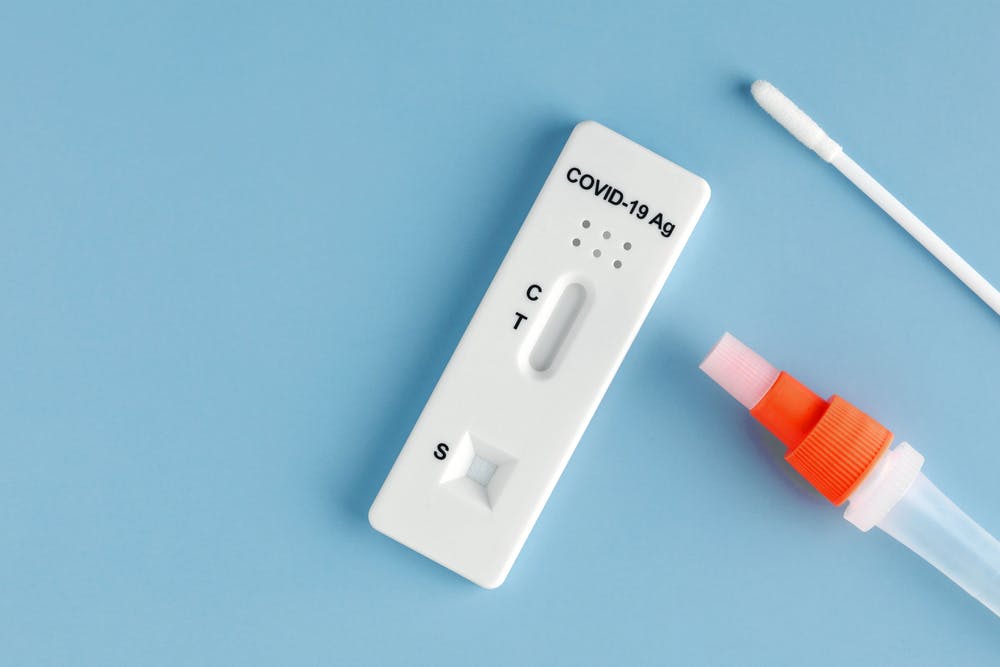
Taking a saliva sample may not be as straightforward as you think.
Depending on the test, your child may need to cough (several times, on demand) and spit into a tube. Or after you swab your child’s tongue and mouth, your child will need to keep the spongy tip of the swab in their mouth for a few minutes, without sucking or biting it. So getting an under two-year-old to cooperate is unlikely.
If you do go down this route you can use a tongue depressor to flatten the tongue to take the sample. You can buy these from a pharmacy.
But with a bit of preparation (and an extra pair of hands) you should be able to use a nasal test on a young child. You should be able to do this without causing pain or distress, a common worry for parents considering COVID testing their child.
Read more: How to prepare your child for a COVID test
How do I prepare?
Understand what the COVID test involves and plan to have the resources you need.
As you take the test components out of the packet, remember to keep them out of reach of your child. The chemicals can be toxic if swallowed, or can cause skin and eye irritation. Parents should also ensure small children don’t swallow test components, such as small bits of plastic.
 Holding a favourite toy or blanket may help your child relax.
Shutterstock
Holding a favourite toy or blanket may help your child relax.
Shutterstock
It’s also helpful to have two adults: one to perform the test and the other to hold and support the child.
Distraction helps take your child’s mind off the test by concentrating on something more pleasurable. Young children can be easily distracted by listening to a favourite song. So have a song ready on your phone.
For toddlers, it can help to have another adult to provide more engaging distraction such as watching a video on a phone or tablet, or switching on a light-up toy.
Holding a favourite toy or blanket may also help your child relax.
How do I actually take the sample?
One adult can use a secure hugging hold to reduce movement during the test while the other adult takes the sample.
The adult holding the child sits the child upright on their lap and holds them close to make them feel secure. They cross one arm across the child’s body and place the other hand on the child’s forehead.
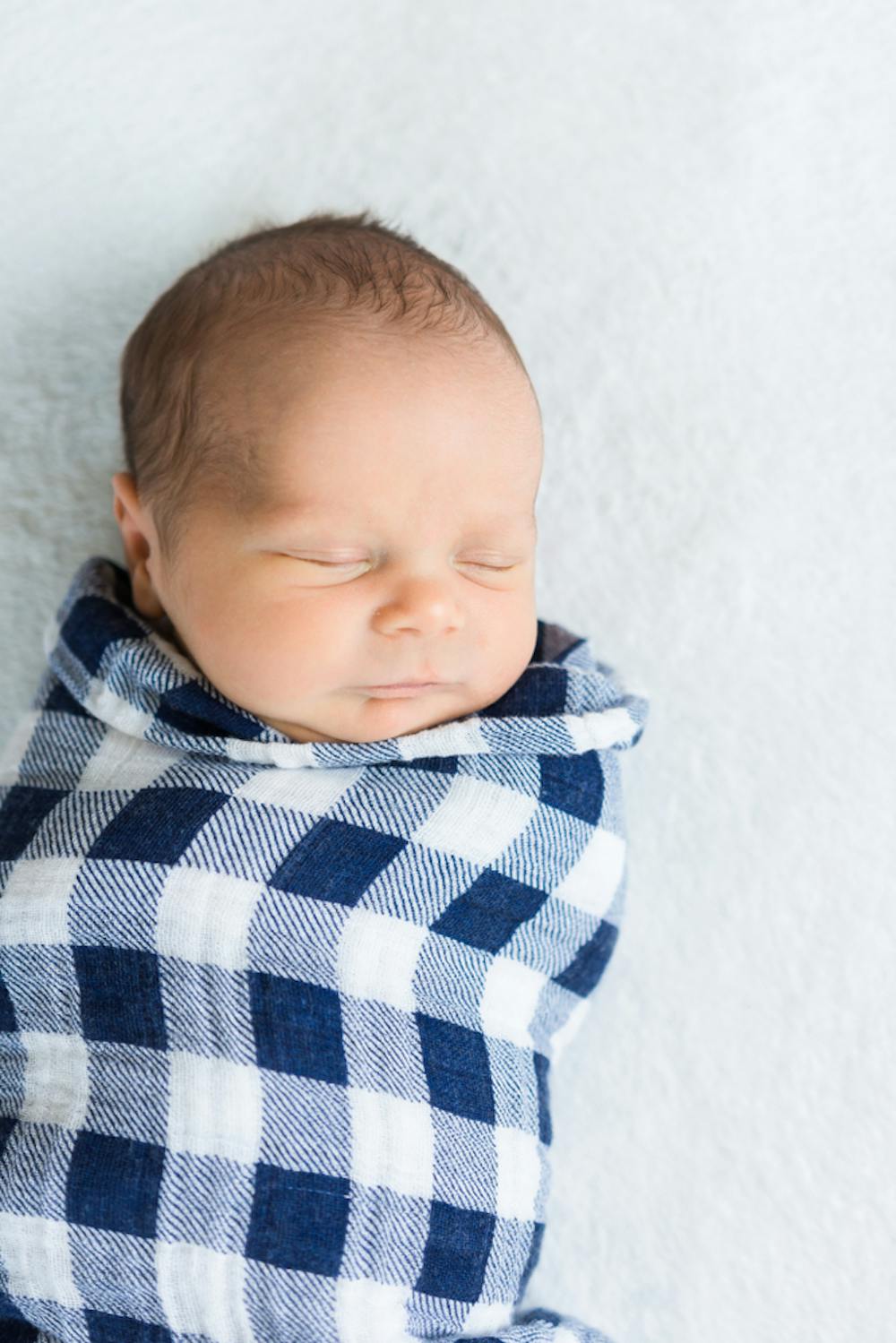 Wrapping in a blanket can help.
Shutterstock
Wrapping in a blanket can help.
Shutterstock
If you’re testing the child by yourself, you can wrap them in a blanket to hold them still while you take the sample.
Staying calm yourself communicates to your child they are safe. Maintain a steady voice and breathe calmly during the test.
Slowly insert the tip of the swab inside the nose for about 1cm or until you meet resistance. Angle it along the base of the inside of the nose horizontally rather than pointing it upwards as you insert it (go low).
There is at least one nasal test that provides a smaller swab for young children so check the TGA site if you wish to use it.
Read more: Go low, go slow: how to rapid antigen test your kid for COVID as school returns
What do I do next?
Children’s memories of medical tests can influence how they respond next time. So, as your young child may need another rapid antigen test in the future, finish on a positive note.
Play with your child after the test and provide positive reinforcement. Give your toddler a simple reward, such as a stamp or sticker.
If the test is unsuccessful, give your child a chance to recover before trying again.
However, if you feel anxious about performing the test, or repeating it, seek the support of a health professional. Every test should be the best possible experience for your child to avoid unnecessary distress.
Read more: COVID-19 in babies – here's what to expect
Authors: Thea van de Mortel, Professor, Nursing and Deputy Head (Learning & Teaching), School of Nursing and Midwifery, Griffith University
Read more https://theconversation.com/can-you-use-rapid-antigen-tests-in-children-under-2-years-old-182125


















