

Tapping mineral wealth in mining waste could offset damage from new green economy mines
- Written by: Anita Parbhakar-Fox, Principal Research Fellow/ Group Leader- MIWATCH, The University of Queensland
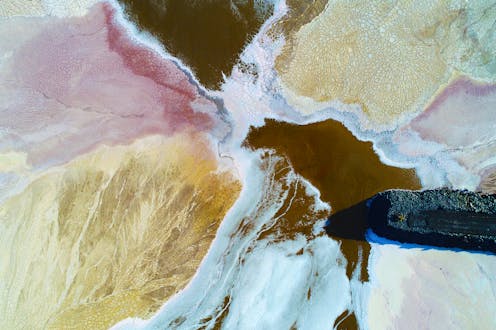
To go green, the world will need vast quantities of critical minerals such as manganese, lithium, cobalt and rare earth elements. But to some environmentalists, mining to save the planet is a hard pill to swallow if it leads to damage to pristine areas.
The good news is that in many cases, the mining for these minerals has already been done. After Australia’s major miners dig up iron ore, billions of tonnes of earth and rock are left over. Hidden in these rock piles and tailing dams are minerals vital to high tech industries of today and tomorrow.
In recent years, we have seen a welcome focus on remining – the extraction of valuable minerals and metals from mining waste. While Australia has been slow to adopt this approach, it holds real promise. We don’t necessarily have to mine more. We can mine smarter.
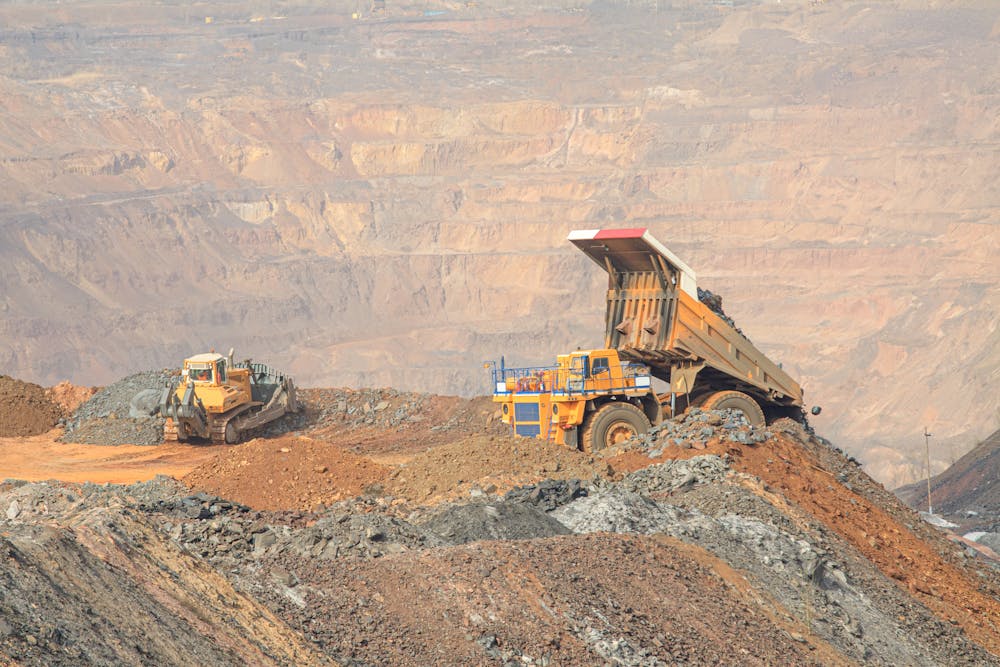
Why do critical minerals matter?
For our new government to deliver net-zero by 2050, we will have to mine more critical minerals. In Australia, these minerals include lithium, cobalt, rare earth elements, tin, tungsten and indium. These metals are essential for manufacturing the wind turbines and electric vehicles required to transition to a low-carbon economy.
In May, Four Corners explored the potential for critical minerals mining in Australia, such as Western Australia’s major lithium deposits, cobalt resources in New South Wales and Tasmania’s opportunities in tungsten and tin. For nearby communities, new mining can mean socioeconomic rejuvenation.
But some environmentalists are sceptical, with the Bob Brown Foundation calling it a form of “greenwashing”. They point out that increasing mining would mean more damage to the environment, and produce much more waste. Globally, mining produces over 100 billion tonnes of solid waste annually. This waste is usually deposited in tailings dams or waste rock dumps, which both have risks if not done properly. Tailing dams breaking due to geotechnical issues have caused lethal disasters. Another issue is acid mine drainage, when highly acidic water laden with heavy metals escapes containment.
If Australia does want to make the most of its critical minerals, it is important to improve mining methods. If we don’t, we are likely to see extremely high waste to product ratios, as we already do for traditional commodities like gold, copper and iron.
Balancing these concerns is difficult. For instance, the multi-metal Rosebery mine in Tasmania requires a new way to store tailings to continue operations. If it doesn’t, the mine’s operators say they may have to close. But the Bob Brown Foundation is strongly protesting its construction, due to the threat to a rare owl.
One solution? Mine the waste
How can we resolve these issues? One approach is to look to circular economy principles. By treating this waste as a source of value, we could reduce the environmental footprint of mining while producing critical minerals and other vital products such as sand.
For instance, at the Luossavaara-Kiirunavaara Aktiebolag mine in Sweden, the tailings from iron ore mining now comprise one of the largest deposits of rare earth elements in Europe. Recognising this, the mine’s owners are planning a circular industrial park to recover these valuable elements.
Similarly, the world’s annual phosphate production is estimated to contain around 100,000 tonnes of rare earth elements, a large proportion of which ends up in waste streams.
Copper deposits are a well-known source of many critical metals such as antimony and bismuth, as well as cobalt and indium.
Even in coal ash – the deposits left after burning coal – we can find valuable minerals such as gallium, scandium, vanadium and rare earth elements.
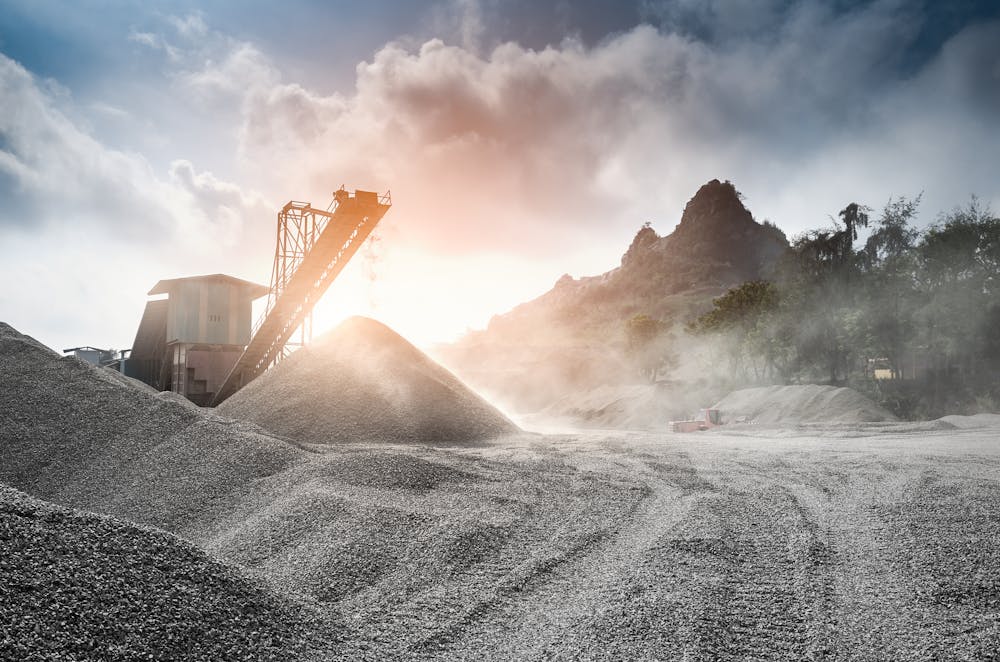 Phosphate mining can be a source of rare earth elements.
Shutterstock
Phosphate mining can be a source of rare earth elements.
Shutterstock
A growing area of interest
There is growing interest in extracting minerals from mining waste, with conferences held in the new area of remining in Europe and new prospecting ventures under way in Australia exploring mine waste.
The first to invest in this secondary prospecting was the Queensland government, which has funded sampling across 16 sites. Early results have found cobalt deposits rich enough to draw overseas investment.
New South Wales has recently launched a similar program, while work is under way by Geoscience Australia, the University of Queensland and RMIT to produce the first-ever atlas of mine waste in Australia.
Once complete, this atlas will be a valuable resource for companies keen to position themselves as tailings extraction experts such as New Century Resources.
Major miners are also paying attention. Rio Tinto has invested A$2 million into a new startup, Regeneration, which uses income from mine waste mineral recovery to pay for mining site rehabilitation.
Do we have the right technologies for the task?
Existing technologies are being put to work to extract manganese from waste from South 32 mines using aqueous solutions.
Read more: Critical minerals are vital for renewable energy. We must learn to mine them responsibly
Another proven technique, gravity separation, is being used to recover tungsten from mine waste at Mt Carbine.
For some deposits, however, we will need more advanced techniques. These might include emerging methods such as fine particle flotation, and even using remarkable plants to mine metal in a process called phytomining.
Given the federal government has committed A$240 million to develop critical mineral processing facilities, we should explore the use of mine waste as feedstock.
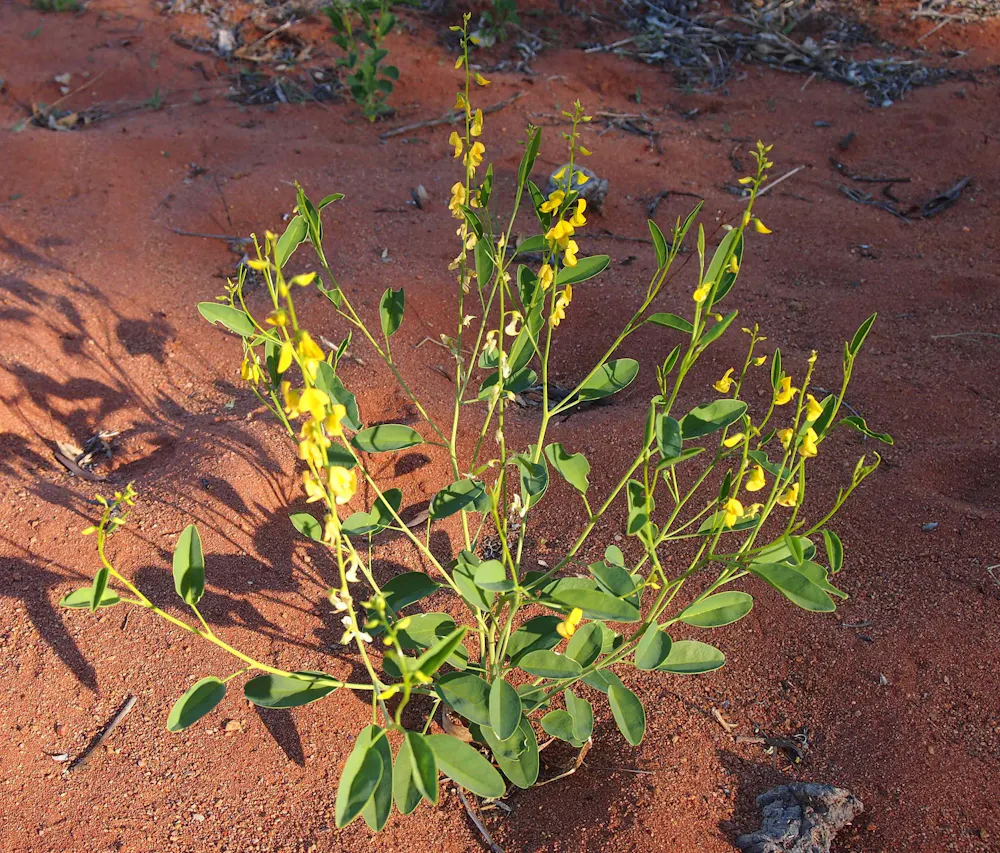 The New Holland rattlepod plant is a hyperaccumulator, meaning it takes up metals and can be used in phytomining.
Mark Marathon, Wikimedia Commons, CC BY
The New Holland rattlepod plant is a hyperaccumulator, meaning it takes up metals and can be used in phytomining.
Mark Marathon, Wikimedia Commons, CC BY
Early days for re-mining
Australia’s mineral wealth could see us become a renewable and critical mineral superpower. But to ensure this shift gains widespread support, we must do the best we can to tackle environmental concerns. To spur on this change, we can vote with our wallets. Companies like Volkswagen and Apple are looking for new providers of critical minerals, given ethical and geopolitical concerns around existing supplies.
If we as consumers call for a percentage to be sourced from mine waste, we could drive clean economic growth and reduce the need for new mines, while funding the rehabilitation of Australia’s 50,000 abandoned mine sites.
Dr Kamini Bhowany, Dr Kristy Guerin, Dr Laura Jackson and Dr Partha Narayan Mishra were interviewed for this article.
Authors: Anita Parbhakar-Fox, Principal Research Fellow/ Group Leader- MIWATCH, The University of Queensland



















