

When is a condition 'chronic' and when is it a 'disability'? The definition can determine the support you get
- Written by: Elizabeth Kendall, Professor, Director, Griffith Inclusive Futures, Griffith University, Griffith University

“Chronic conditions” and “disability” are not just words. They can determine the funding and supports we can access, how we’re treated and how we feel about ourselves.
For population data purposes, disability is defined as a limitation or impairment lasting at least six months that impacts everyday activities. Using this definition, 18% of Australians have a disability. But nearly half of all Australians (47%) have at least one chronic condition that restricts ability, and 19% have two or more.
Although definitions serve an important administrative purpose, they can also be misleading, discriminatory, dehumanising, distressing, and even dangerous. They oversimplify complex issues with significant ramifications.
It turns out people do not fit neatly into categories – but these boxes can determine who receives support and who does not.
What’s the difference?
Chronic conditions are long-lasting health issues with persistent impacts that are likely to worsen over time.
They are not immediately life-threatening, but they are a leading cause of premature death. The management of chronic conditions typically rests with state and territory health systems and general practice funded via Medicare.
The National Disability Insurance Scheme was implemented in 2013 to address serious disability, which they define as as a permanent and medically diagnosed impairment that substantially reduces what a person can do.
Physical and psychological injury – which may or may not result in permanent disability – is addressed through state and territory schemes such as the National Injury Insurance Scheme, Transport Accident Commission and Workcover. These injury schemes focus on loss of economic capacity (or earning potential) and provide the supports needed for a person to recover to their most productive state.
People may also hold private health insurance, which they can use to fund preventative or therapeutic services.
Gaps between systems
It sounds like a comprehensive system that should address everyone’s needs. But schemes don’t always match up, and eligibility gaps can raise insurmountable challenges. In extreme cases, the gaps can mean the difference between life and death.
Ironically, disability definitions that are meant to help can promote harmful stereotypes and low expectations by incentivising “deficit models” of thinking that focus on what a person can’t do, rather than what they can do.
The disability sector has spent decades shifting the definition of disability away from a focus on deficits and medical diagnoses. Newer understandings of disability focus on the interaction between people and their environments and the pursuit of human rights.
Read more: Labels like 'psycho' or 'schizo' can hurt. We've workshopped alternative clinical terms
Barriers and overlaps
The physical and social barriers that exclude people from society affect all people with impairments, whether they are labelled as chronic conditions or disability.
The reality for many Australians is there is no clear distinction between the two labels and, in fact, they often co-exist. Chronic conditions can result in disability and disability can increase vulnerability to a range of chronic conditions.
Separate definitions lead to misunderstandings about the reality of impairment in Australia, leaving us poorly prepared to manage its consequences.
If we consider common impairments that are rarely labelled as disability (deafness, visual decline, allergy, and chronic pain), then a massive 79% of Australians experience impairment. So, it makes little sense to refer to, and plan for, this population as though it is a minority.
Doing so promotes the marginalisation of disability and reduces any real pressure to redesign the way we support and engage with all members of our society.
People are messy
Even the most tangible aspect of these definitions – permanence – is not consistently or clearly determined.
Disability Support Pension eligibility for people aged 16 to 64 years requires a permanent and stable condition for at least two years and restricted ability to work. Other schemes use different time frames.
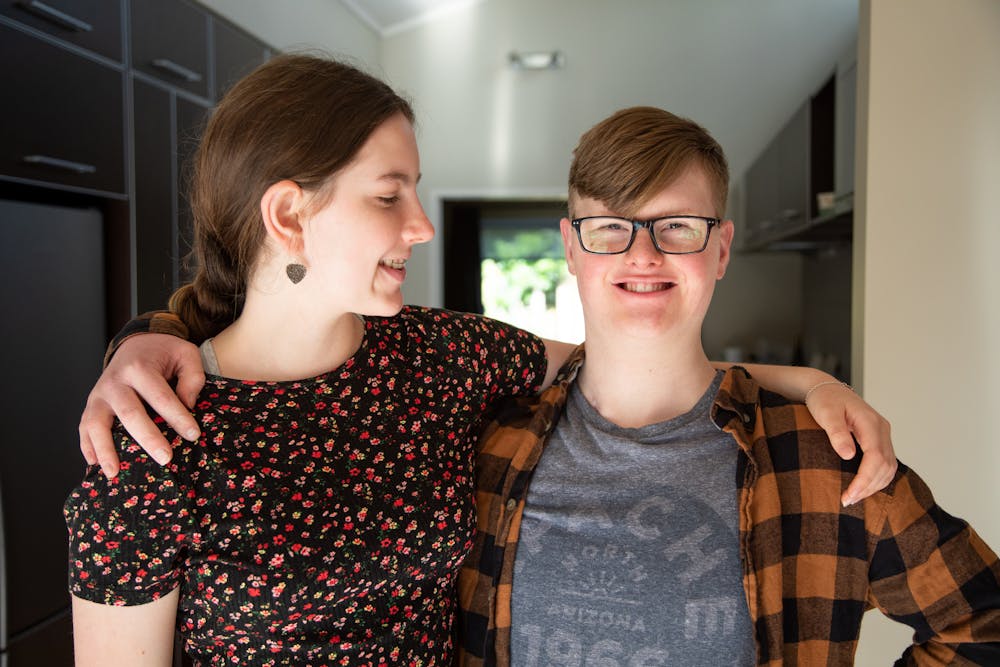 People are not labels, but systems find that hard to absorb.
Getty/Jessie Casson
People are not labels, but systems find that hard to absorb.
Getty/Jessie Casson
In the NDIS, the disability label can only be applied to people who are under 65 years, but where does that leave the 50% of over 65s with disability? They contend with the Aged Care system and its equally complex criteria.
As a participant in the Dignity Project, a disability citizen science initiative, said:
[…] my age makes my disability invisible. I don’t have the same rights as under 65s.
Dignity, not labels
The way in which disability occurs (and when) seems to determine how “deserving” an individual is of services – but this is not just and equitable.
Forcing people into categories removes humanity – but these are people whose lives have been affected by impairment, illness or trauma. The use of labels belittles people, dehumanises their experiences and homogenises their unique needs, interests, and sociocultural circumstances.
Our understanding of disability should be underpinned by the desire for everyone to enjoy dignified and personally meaningful lives. To achieve this, we need to harmonise definitions and build a deliberately inclusive society that can accommodate everyone.
We need to de-emphasise prescribed differences, join up fragmented systems and focus on universal design, while simultaneously acknowledging each person’s context, nature and needs.
Angel Dixon: ‘It’s really important for the people with lived experience, of our experiences, to be involved and help researchers without disability’.Authors: Elizabeth Kendall, Professor, Director, Griffith Inclusive Futures, Griffith University, Griffith University



















