

If the opposition wants a mature discussion about nuclear energy, start with a carbon price. Without that, nuclear is wildly uncompetitive
- Written by: John Quiggin, Professor, School of Economics, The University of Queensland
The idea of nuclear power in Australia has been hotly debated for decades. Most of this discussion has been unproductive, focusing on symbolism and identity politics rather than the realities of energy policy. For that reason alone, we should welcome the commitment by opposition party leaders David Littleproud and Peter Dutton to a mature conversation about nuclear power, free of political taboos.
Far and away the most important such taboo is the unwillingness of either Labor or the LNP to consider an effective price on carbon. A string of inquiries into nuclear power such as the 2006 Switkowski Review and the 2016 South Australian Royal Commission concluded nuclear power will never be commercially viable without a high price on carbon dioxide emissions.
The reasoning behind this conclusion is simple. Nuclear power directly competes with coal-fired electricity as a source of continuous 24-hour generation. But building nuclear plants is much more expensive than new coal-fired plants. In Australia, nuclear power would compete with existing coal plants, the construction costs of which were recovered long ago.
So nuclear power could only replace our ageing coal plants if its operating costs are lower. But as long as coal generators are permitted to dump their waste (carbon dioxide and particulate matter) into the atmosphere at no cost, nuclear power can’t compete, except in rare periods of ultra-high coal prices. As energy minister Chris Bowen pointed out yesterday, nuclear is “the most expensive form of energy.”
Why is a carbon price fundamental to nuclear being able to compete?
Take the example of the most recent nuclear plant under construction in the developed world, the UK’s Hinkley Point C plant. In 2012, the plant’s owners negotiated a guaranteed price for power of around $A160 per megawatt hour, pegged to inflation. That’s extraordinarily expensive.
In Australia, the typical wholesale price for coal power in our National Electricity Market is typically $A40 to $A60, though it fluctuates and is currently very high. Even if the costs of nuclear power fall substantially, and the market price of coal remains high, there will still be a gap which won’t be bridged without a carbon price.
Read more: Everything you need to know about mini nuclear reactors
Despite their calls for a mature discussion, none of Australia’s prominent advocates of nuclear power have suggested accepting a carbon price in return for removing the Howard government’s ban on nuclear power. Indeed, when I proposed this grand bargain with the support of a number of conservative economists, the idea was ignored or dismissed out of hand by LNP members sitting on parliamentary inquiries.
Where does that leave us? Just as the ban had no practical effect, the current calls for its removal are purely symbolic given we have no carbon price to make the economics stack up. Rather, the Coalition’s sudden nuclear push represents just another round in the endless culture wars bedevilling Australian politics for decades.
If we had a carbon price, large scale nuclear would still not stack up
Let’s assume our leaders reach agreement on a carbon price. Would nuclear stack up then?
Certainly not in its traditional form. Large, centralised power plants based on 20th century designs are dead, as most pro- and anti-nuclear advocates would agree. That’s due to cost and difficulty of construction. For many years, the most promising candidate for a large 21st century nuclear plant has been the AP1000 reactor built by US company Westinghouse. Massive cost and schedule over-runs on two US projects sent Westinghouse broke, almost taking parent company Toshiba with it.
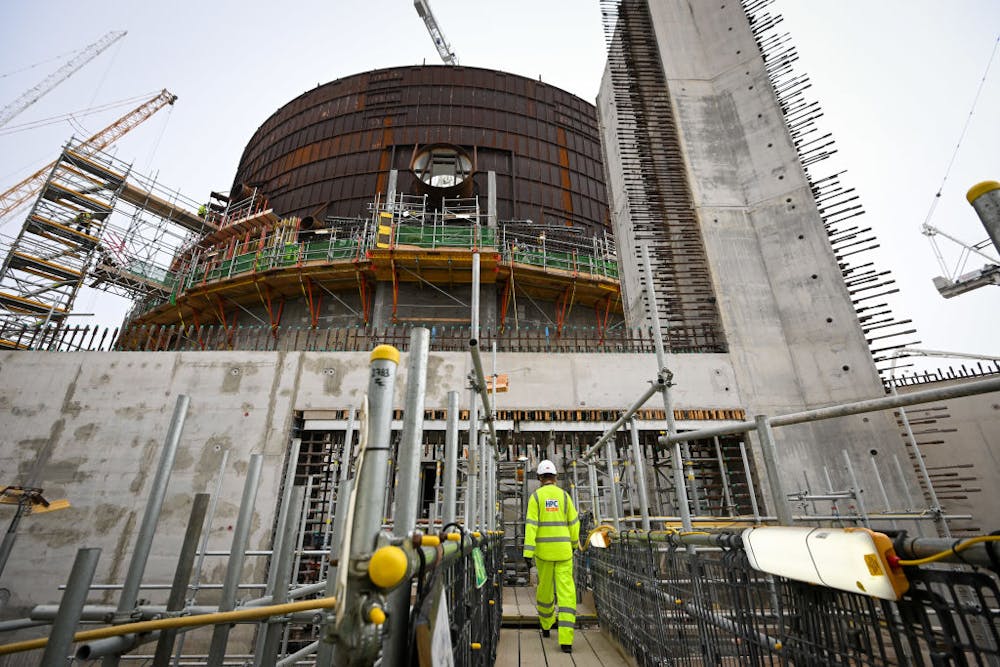 The UK’s Hinkley Point C nuclear power station is built to the European Power Reactor design.
Getty
The UK’s Hinkley Point C nuclear power station is built to the European Power Reactor design.
Getty
There are also the European Power Reactor and the APR1400 designed by Korean company KEPCO. The EPR, as it is now known, is the massively expensive design under construction at Hinkley Point. The same design has had disastrous cost overruns in other projects in France and Finland. Cost details on the APR1400 are harder to find, but there have been no new orders for a decade.
That leaves Chinese and Russian designs. Any prospect of Australia opting for one of these was almost certainly scotched by the Russian invasion of Ukraine. Finland, which unwisely went with Russian company Rosatom for its fifth nuclear plant, has pulled the plug, while the UK is trying to cut China out of its role in its new reactors.
What about the small reactors touted as the future?
The great hope for the future is “small modular reactors”. Here, small reactors of less than 100-megawatt capacity are built in factories and shipped to sites as needed (this is the “modular” bit). While many small reactor outfits have tried to latch on to the idea, US company NuScale is the only one worth considering.
Even given the smaller size, NuScale has hit major delays. In 2014, the company predicted the first project would be operating by 2023. That date has now been pushed out to 2030, though it hopes the first unit will be in place just before the end of this decade.
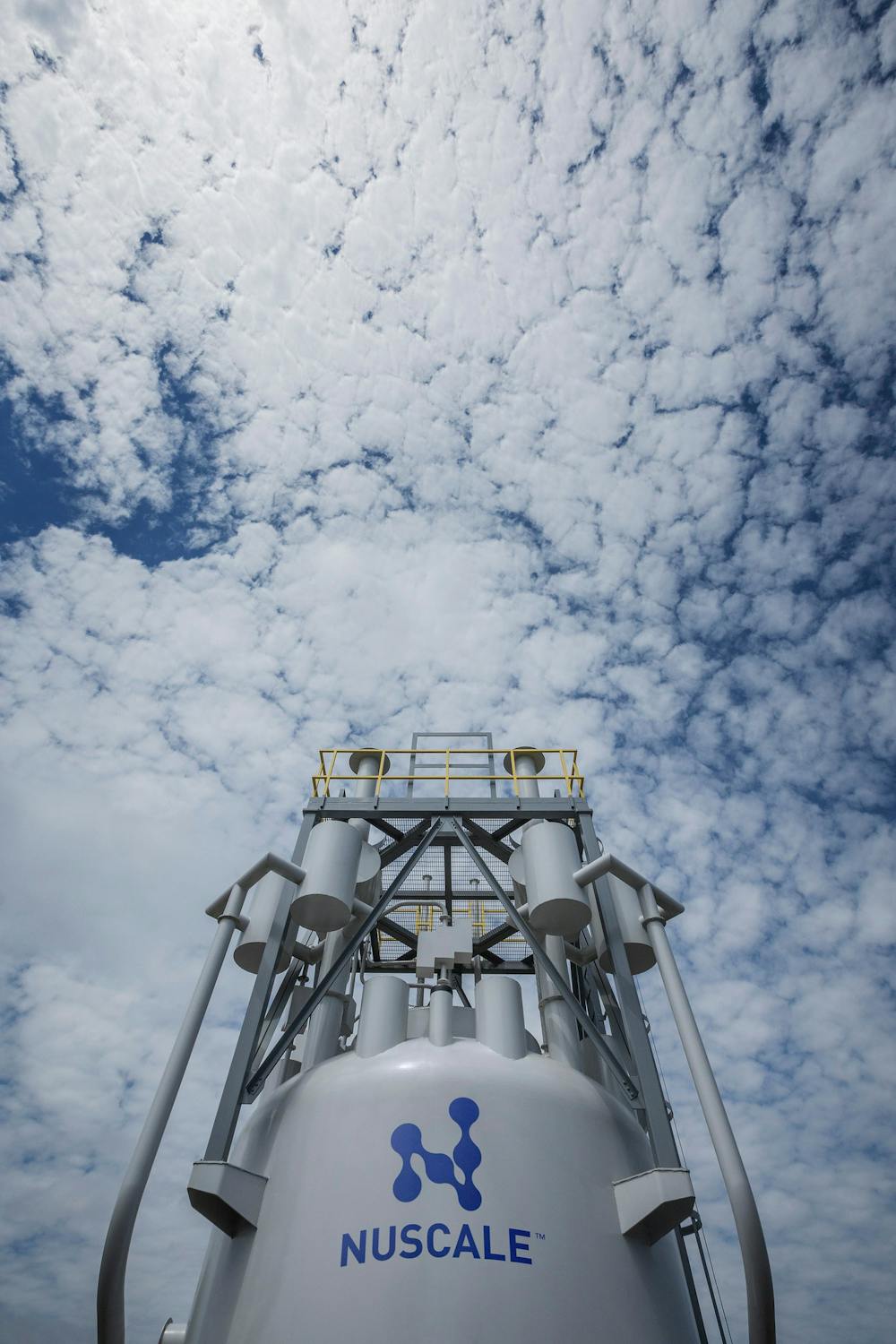 Small modular reactors like this mock-up from NuScale are much smaller than traditional nuclear plants.
Wikimedia Commons, CC BY
Small modular reactors like this mock-up from NuScale are much smaller than traditional nuclear plants.
Wikimedia Commons, CC BY
Let’s suppose, though, that everything goes right for nuclear. Imagine NuScale reactors can arrive on time and on budget, that Australia has a carbon tax high enough to make nuclear competitive with coal, and cheaper alternatives of firmed renewables (battery-backed solar and wind) run into issues. How long would it take before we could actually generate nuclear power in Australia?
Work on the legislative framework and the regulatory authority could be done in advance. But it would be silly to spend large amounts if the design isn’t proven. That means that we couldn’t start design approvals, site selections – which would be controversial – and impact assessment until the early 2030s.
With a determined push and broad social consensus, construction might start in the late 2030s and start producing electricity some time in the 2040s. That could be worthwhile as a backup to our energy system, which by then will be based mainly on solar and wind.
But to get to this point two decades away, the very first requirement for a mature discussion of nuclear energy is accepting a carbon price.
Until we see that, the opposition is offering a fantasy, not an energy policy.
Authors: John Quiggin, Professor, School of Economics, The University of Queensland



















