

First, COVID hit disadvantaged communities harder. Now, long COVID delivers them a further blow
- Written by: Danielle Hitch, Senior Lecturer in Occupational Therapy, Deakin University
Disadvantaged communities not only suffer disproportionately from COVID, they are even more likely to be impacted by the cascading effects of long COVID.
With a new federal government, now is the time to engage in transformative planning to address a range of societal issues, including the impact of the pandemic on the most disadvantaged Australians.
We outline three policy areas to address the impact of long COVID on disadvantaged communities.
Read more: Australia is failing marginalised people, and it shows in COVID death rates
Disadvantaged communities already at risk
The greater impact of pandemics on disadvantaged communities was recognised before COVID.
Along with medical risks such as obesity, these communities already contended with social risks such as poverty, unhealthy environments and disability.
The interaction between these risks produces sustained and multiplied disadvantage, compounding existing barriers to health care and other supports.
Read more: Pandemic pain remains as Australia’s economic recovery leaves the poor behind
Then came COVID
While the pandemic has taken a toll on everyone, there is growing international evidence of greater effects on disadvantaged communities.
Communities with greater insecure employment, housing density and linguistic diversity recorded a higher incidence of COVID infections.
Risk factors for poorer clinical outcomes from COVID – such as hypertension (high blood pressure), diabetes and respiratory disorders – are also more common in disadvantaged communities.
While many developed countries achieved good vaccine uptake, studies report greater vaccine inequity and hesitancy in these communities.

Low-paid, precarious, essential and manual workers also struggled to adhere to stay-at-home orders and social distancing in the face of food and financial insecurity.
All these factors – some in place before COVID, some new – contribute to a higher risk of COVID for disadvantaged communities. That’s even before we start considering the impact of long COVID.
Read more: As lockdowns ease, vaccination disparities risk further entrenching disadvantage
How about long COVID?
Most people with COVID make a full recovery. But for some, symptoms linger. The World Health Organization defines long COVID as new, persistent or fluctuating symptoms present three months after COVID infection, lasting at least two months, and not attributable to other diagnoses.
Globally, 43% of people with COVID have ongoing symptoms affecting daily life six months after infection. Fatigue and memory problems are the most commonly reported of the diverse symptoms linked to long COVID. However, an Australian study of long COVID estimated 5% of people have symptoms after three months.
So we need to learn more why these percentages differ.
Read more: Fatigue after COVID is way more than just feeling tired. 5 tips on what to do about it
Long COVID hits disadvantaged communities harder
In addition to the higher risk of exposure to COVID in the first place, disadvantaged communities lack accessible services and resources to support full recovery.
You can see how issues such as the rising cost of living and the lack of sick pay for casual workers can have a disproportionate impact on disadvantaged people who need to return to work before they are fully recovered.
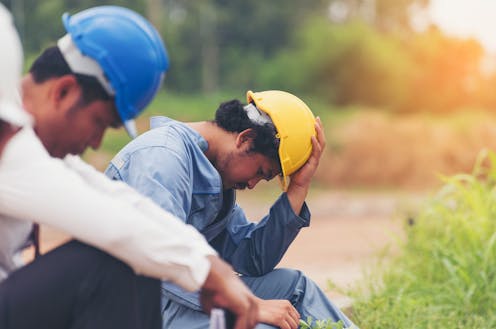
 Not everyone can afford to take time off with lingering COVID symptoms.
Shutterstock
Not everyone can afford to take time off with lingering COVID symptoms.
Shutterstock
In disadvantaged communities, there are also more barriers to accessing health care, excluding people already experiencing disadvantage.
For example, we know asylum seekers and undocumented migrants have experienced worse mental health, social isolation and access to health care than other groups during the pandemic.
While telehealth has opened up access for some, it increases barriers for others.
Geographical location is also a barrier for many Australians with long COVID, with most specialist clinics in metropolitan health services.
Read more: Five tips for young people dealing with long COVID – from a GP
A growing problem
The human and financial costs associated with the complex disadvantage resulting from COVID (and long COVID) are vast.
One analysis estimated there would be up to 60,000–133,000 long COVID cases as Australia eased restrictions.
Analyses by the Bank of England and the United States Brookings Institute flag long COVID as a significant factor in future labour shortages.
However, we have few mechanisms to measure and track any impacts. Even putting an accurate figure on the number of COVID cases is difficult due to the greater reliance on rapid antigen tests, rather than PCR tests.
Read more: We calculated the impact of 'long COVID' as Australia opens up. Even without Omicron, we're worried
What needs to happen next?
The relationship between long COVID and disadvantage is a collision between two highly complex issues. With new variants and reinfections, long COVID will be with us for years, further increasing an already complex (or “wicked”) problem.
However, we are yet to see leadership from local, state and territory, and federal governments on this issue.
Disadvantaged communities (particularly those most affected) are yet to be mobilised, to identify and tackle the local problems most affecting their recovery from COVID. Policies to tackle the disproportionate impact on them are yet to be developed.
These three actions would make a meaningful impact on health equity for everyone with long COVID.
1. Measure and track the issue
We urgently need high-quality data on long COVID to understand the trajectory and duration of recovery, and its interdependence with social determinants of health, for example, living in rural/remote Australia or being unemployed.
Investment in nationwide standardised data collection would enable targeted support for the communities that need it most.
2. Acknowledge diversity and intersectionality
A reductionist approach to long COVID or disadvantage that targets single aspects of someone’s identity will not work.
That’s because long COVID symptoms can be multiple and diverse, affecting all body systems. People may also experience multiple layers of disadvantage. So an “intersectional” approach acknowledges how various factors – such as health, poverty, gender or visa status – interplay.
3. Work with disadvantaged communities
Disadvantaged communities are the ones most affected by long COVID. So any policy needs to be developed with their meaningful involvement.
People know what tangible outcomes would work best (or fail) in their community. So it’s crucial to have this input if we are to make real improvements.
Authors: Danielle Hitch, Senior Lecturer in Occupational Therapy, Deakin University


















