

Should the census ask about race? It's not a simple question and may reinforce 'racial' thinking
- Written by: Amrita Malhi, Visiting Fellow, Coral Bell School of Asia Pacific Affairs, Australian National University
Unlike census questionnaires in the US, New Zealand and Canada, the Australian Census doesn’t include questions about “race” or “ethnicity” and asks instead about “ancestry”.
That may be about to change, with new Minister for Immigration, Citizenship, Migrant Services and Multicultural Affairs Andrew Giles saying he wants a new approach to “ethnicity” data in the next census in 2026.
Without this data, Giles said, Australia faces a “fundamental barrier to understanding the issues that face multicultural Australians.”
But is it ethical to classify the population by what is effectively race?
A large body of research on Malaysia, for example – including by anthropologist Joel Kahn and historian Sandra Manickam – shows systems aimed at classifying populations this way do not reflect naturally existing categories, but rather, create them.
Over time, these categories harden, so such systems function as “race-making instruments,” as political scientist Debra Thompson has put it.
How does Australia currently handle this issue?
The Australian Bureau of Statistics (ABS), which runs the Australian Census, classifies answers on “ancestry” using a tool called the Australian Standard Classification of Cultural and Ethnic Groups. It’s essentially a spreadsheet of categories into which ancestry answers are aggregated.
This spreadsheet consists of 278 “cultural and ethnic groups”, like “Malay”. There are also 28 “narrow groups,” like “Maritime Southeast Asian” and nine “broad groups,” like “Southeast Asian.”
Used in conjunction with the person’s birthplace, language spoken at home, religion, and parents’ birthplace, the ABS uses this special spreadsheet to make its best guess about Australians’ ethnicity.
There’s some room for nuance. It includes two self-identified and unranked answers, allowing people to show that although they were born in Malaysia, for example, they might be a member of a minority group that is, say, “Southern Asian,” or “Chinese Asian,” as the spreadsheet terms them.
It also allows people to identify as members of groups spread across national borders, like Kurds or Bengalis.
Because the answers aren’t ranked or weighted, the question doesn’t squeeze respondents into a single box. It prompts them to decide which two sources of identity are most salient to them, instead of including every single “diverse” ancestor they can possibly think of.
In other words, as the process described above shows, Australians are already categorised by ethnicity and race by the state, albeit without direct public acknowledgement.

So what’s the problem?
So, what problem is this change trying to solve? Several, it seems.
One is that important national data sets, including for example, the National Notifiable Diseases database, don’t ask people their ethnicity or race.
Nor does this database employ other proxy indicators such as language/s spoken at home or elsewhere, or country of birth.
As sociologist Andrew Jakubowicz has argued, this omission leaves researchers unable to confirm their impression that recent migrants from South and Southeast Asia, and the Middle East, have been more susceptible to contracting COVID at work than other Australians.
So why not roll out the ABS’ existing methodology, which it already updates from time to time, across all government agencies and beyond?
Perhaps it is because Australians are less “legible” to the state and multicultural advocates than we used to be.
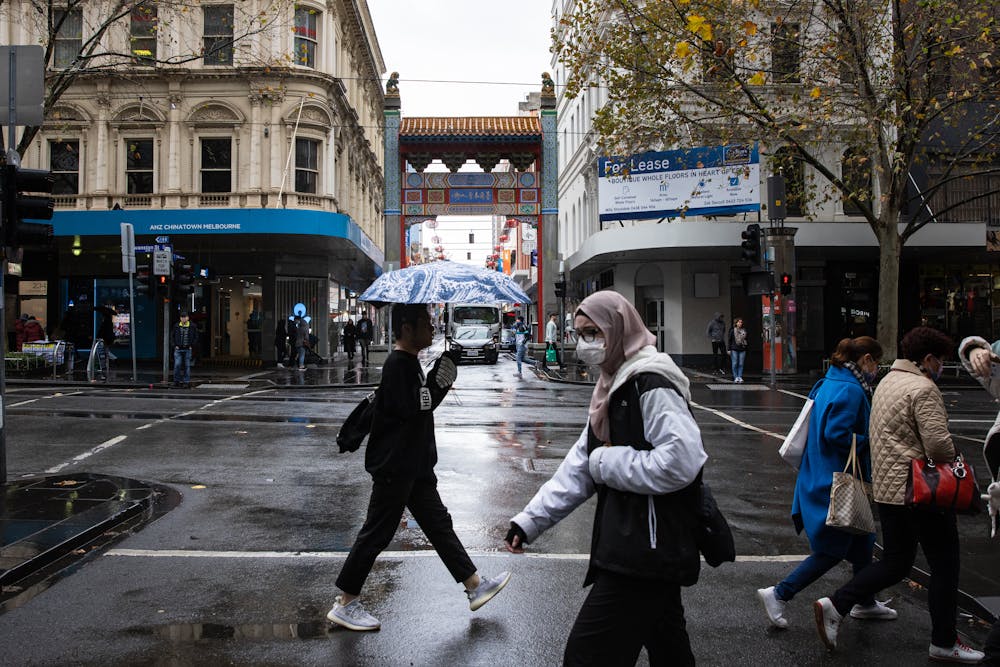 Is it ethical to classify the population by what is effectively race?
AAP Image/Diego Fedele
Is it ethical to classify the population by what is effectively race?
AAP Image/Diego Fedele
Times have changed
Australia’s multicultural system was created in the 1970s and 80s. Implicit within it was the assumption migrant minority groups would be few, discrete and distinct. Each would have a clear set of “representative” or advocacy associations and leaders for government to consult with.
Yet the volume and composition of migration flows has increased and diversified. The number of identity groups – ethnic, religious, cultural – has proliferated.
Layers of nested identities, and overlaps and intersections between categories, have also multiplied. Hybrid identities are common.
Australians are increasingly interacting and negotiating cultural differences without official intervention, assistance, or representation.
If a new generation of multicultural leaders can’t figure out how many of us are not white – because we might have been born in Australia or speak English at home, but our grandparents are Asian, for example – then how do they make claims on our behalf? How do they create constituencies out of us and compete for our loyalties?
If we have not arrived recently and do not require “settlement services” or visa assistance, are there other services or forms of advocacy we might need?
Are there new identity groups that could be built? For example “Asian Australian” – a loose category now under construction that might eventually hold Australia’s second and third generation East Asian “looking” migrants?
(Australians have trouble understanding South Asians as “Asians”).
Redesigning our approach to ethnicity data collection, however, will open up critical and complicated questions like:
- what is an ethnic group?
- what is a culture?
- what “races” should we group them into?
- where are the boundaries between these concepts, and what identity labels belong in each of them?
- where are the boundaries between one identity label and another? Should religious or political minorities like “Sikhs” or “Hong Kongers” be able to claim “ethnicity” status, or simply religious or no status at all?
- should “Ahmadis” be grouped with “Muslims?”
- which groups are European? Which are Asian? Which are white?
- what benefits or disadvantages will flow from the answers to these questions? Who will adjudicate?
Such questions have no fixed or universal answers because all the categories involved are fluid, dynamic, contested, and fundamentally political.
These are not questions of data science or demography, but of politics, ethics and context.
Universal schemes aimed at classifying populations by “race” or “ethnicity” can reinforce racial thinking and perpetuate racialising practices.
They can force us into a game of competing for better positions within a racial hierarchy, rather than creating broader solidarities that go beyond race.
Authors: Amrita Malhi, Visiting Fellow, Coral Bell School of Asia Pacific Affairs, Australian National University


















