

new graphic nonfiction interrogates 21st-century life
- Written by: Penni Russon, Senior Lecturer, School of Communication, University of Technology Sydney
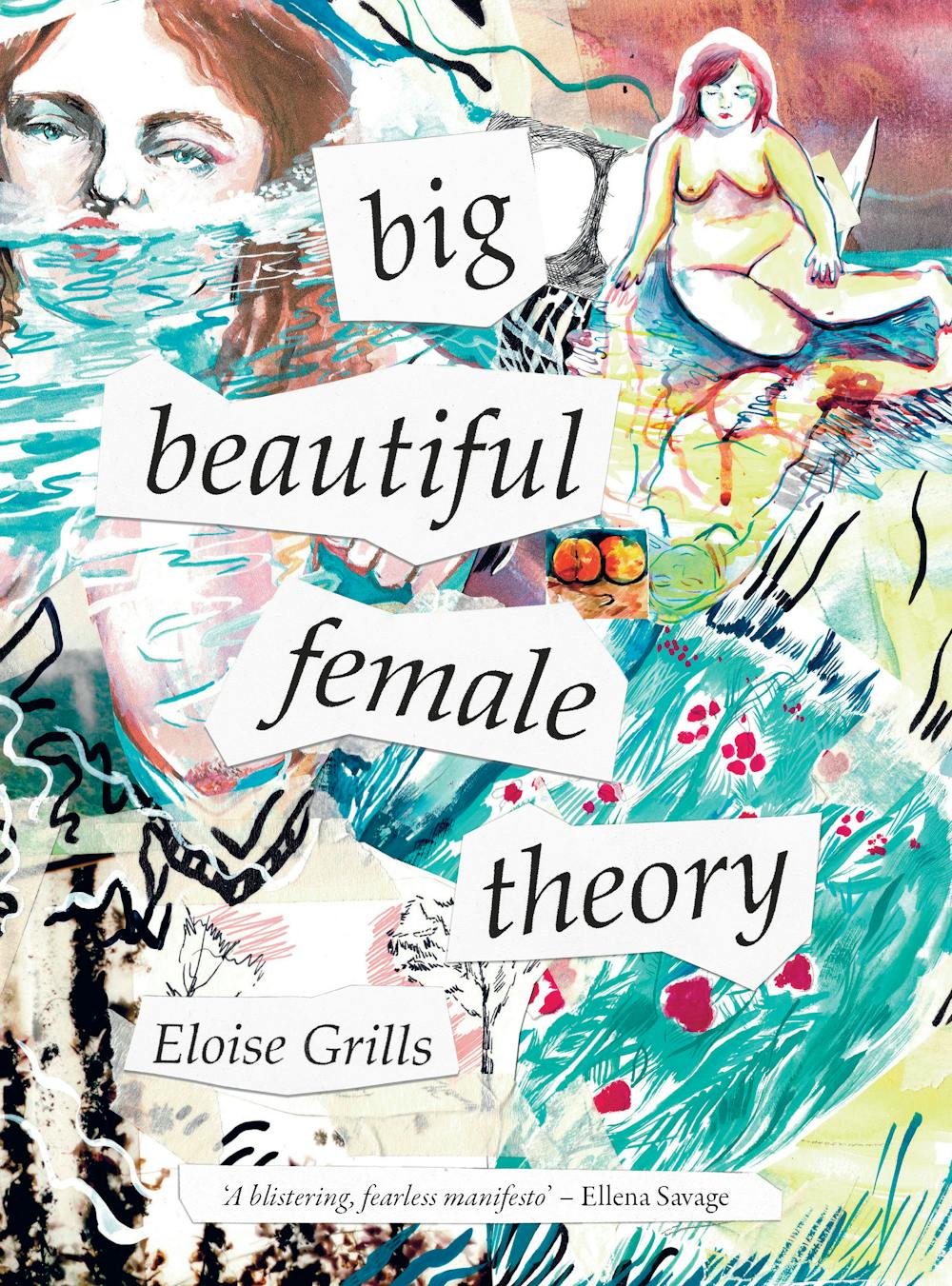
Sam Wallman and Eloise Grills are both well known and much loved in the Australian comics scene. Their respective new books, Our Members Be Unlimited (Scribe) and big beautiful female theory (Affirm Press) mark the first time with a mainstream publisher for each of them. Traditional publishing offers these authors the potential to reach new audiences and gain wider critical attention.
Review: Our Members Be Unlimited by Sam Wallman (Scribe) and big beautiful female theory by Eloise Grills (Affirm Press)
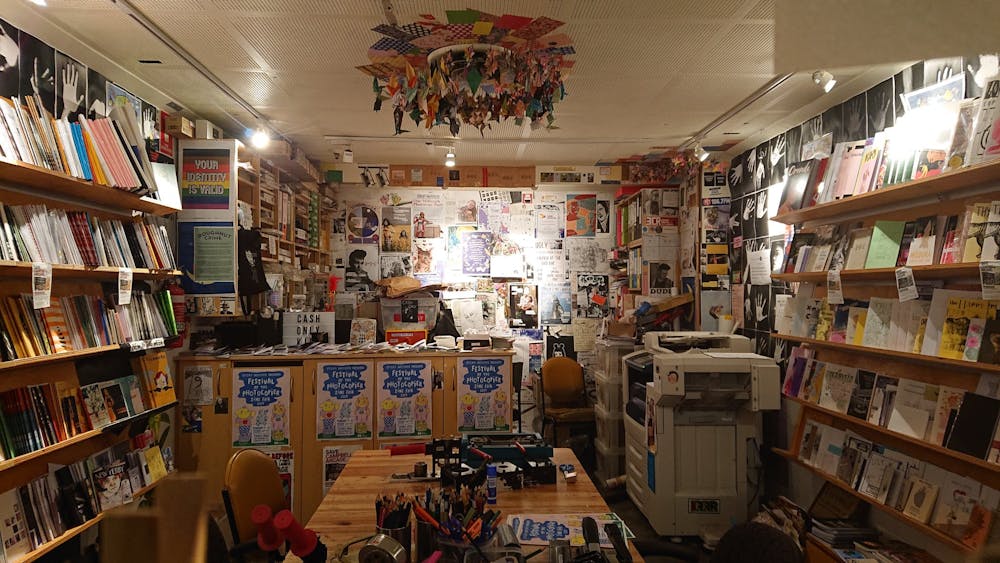 Melbourne’s Sticky Institute.
Sticky Institute
Comics creators may have studied creative writing and even come across a unit in graphic narratives. They may have degrees in visual arts or graphic design. Some have no tertiary qualifications at all. For the most part, learning happens through the process of making.
There is no formal training in Australia for publishers of comics and graphic narratives. I’m not sure whether any informal communities of practice exist. As graphic narratives have boomed in children’s, young adult and adult markets overseas, in Australia we seem to have a gap when it comes to publishing longform graphic works.
Melbourne’s Sticky Institute.
Sticky Institute
Comics creators may have studied creative writing and even come across a unit in graphic narratives. They may have degrees in visual arts or graphic design. Some have no tertiary qualifications at all. For the most part, learning happens through the process of making.
There is no formal training in Australia for publishers of comics and graphic narratives. I’m not sure whether any informal communities of practice exist. As graphic narratives have boomed in children’s, young adult and adult markets overseas, in Australia we seem to have a gap when it comes to publishing longform graphic works.
 Safdar Ahmed is published by Twelve Panels Press, a passion project set up by children’s publisher Erica Wagner, formerly of Allen & Unwin, academic Elizabeth MacFarlane and comics author and editor Bernard Caleo, to address the absence of a specialist graphic novel publisher in Australia. Many of our talented creators end up being signed and published overseas: Rachel Ang, Tommi Parrish, Campbell Whyte, Simon Hanselmann and Lee Lai to name a few.
It’s heartening that small publishers are willing to take a chance on comics acquisitions despite the long lead time and the cost of producing illustrated texts.
Read more:
Will Eisner and the evolution of the graphic novel
Invisible labour of editing
As I read, I found myself wondering about the invisible labour of editing: how much development work was done, or how much these creators relied on their own self-editing practice.
Safdar Ahmed is published by Twelve Panels Press, a passion project set up by children’s publisher Erica Wagner, formerly of Allen & Unwin, academic Elizabeth MacFarlane and comics author and editor Bernard Caleo, to address the absence of a specialist graphic novel publisher in Australia. Many of our talented creators end up being signed and published overseas: Rachel Ang, Tommi Parrish, Campbell Whyte, Simon Hanselmann and Lee Lai to name a few.
It’s heartening that small publishers are willing to take a chance on comics acquisitions despite the long lead time and the cost of producing illustrated texts.
Read more:
Will Eisner and the evolution of the graphic novel
Invisible labour of editing
As I read, I found myself wondering about the invisible labour of editing: how much development work was done, or how much these creators relied on their own self-editing practice.
 Structurally, there was some fragmentation in big beautiful female theory that may have been overcome by a strong mentoring relationship with a publisher – but it’s hard to imagine a first-time publisher having the skills to do more than enter into a rich, productive dialogue about what might be possible.
Our Members Be Unlimited was more cohesive; however, there are a few accessibility issues. In chapter nine, “Work Today and Work Tomorrow”, the text is small and hard to read. I felt this could have been overcome in the way the page was laid out. Some of the contrasts were tricky to manage in anything but the brightest light; I couldn’t read it on a plane.
I had similar problems with the comics in Grills’ work. This may be deliberate – be awake, be attentive, press your nose to the page, breathe it in – but I also wondered what sort of decisions a more experienced comics publisher might have made. I make the point to illuminate the fact that our comics creators are currently ahead of our trade book publishers in the craft of making comics. It’s important that Australian publishers are supported to catch up.
Read more:
Friday essay: the remarkable, prize-winning rise of our small publishers
‘No such thing as society’?
In Our Members Be Unlimited, Sam Wallman quotes Margaret Thatcher: “There is no such thing as society. There are individual men and women.” I found myself thinking about this as I read both of these graphic narratives.
We’ve been trained by capitalism to see ourselves as discrete units: personalities located in minds trapped in bone skulls, bound and separated by skin from others, each of us with a our own unique perception of the world. Grills reinforces how lonely this is, while Wallman reminds us we are interdependent organisms, part of a collective whole.
Structurally, there was some fragmentation in big beautiful female theory that may have been overcome by a strong mentoring relationship with a publisher – but it’s hard to imagine a first-time publisher having the skills to do more than enter into a rich, productive dialogue about what might be possible.
Our Members Be Unlimited was more cohesive; however, there are a few accessibility issues. In chapter nine, “Work Today and Work Tomorrow”, the text is small and hard to read. I felt this could have been overcome in the way the page was laid out. Some of the contrasts were tricky to manage in anything but the brightest light; I couldn’t read it on a plane.
I had similar problems with the comics in Grills’ work. This may be deliberate – be awake, be attentive, press your nose to the page, breathe it in – but I also wondered what sort of decisions a more experienced comics publisher might have made. I make the point to illuminate the fact that our comics creators are currently ahead of our trade book publishers in the craft of making comics. It’s important that Australian publishers are supported to catch up.
Read more:
Friday essay: the remarkable, prize-winning rise of our small publishers
‘No such thing as society’?
In Our Members Be Unlimited, Sam Wallman quotes Margaret Thatcher: “There is no such thing as society. There are individual men and women.” I found myself thinking about this as I read both of these graphic narratives.
We’ve been trained by capitalism to see ourselves as discrete units: personalities located in minds trapped in bone skulls, bound and separated by skin from others, each of us with a our own unique perception of the world. Grills reinforces how lonely this is, while Wallman reminds us we are interdependent organisms, part of a collective whole.
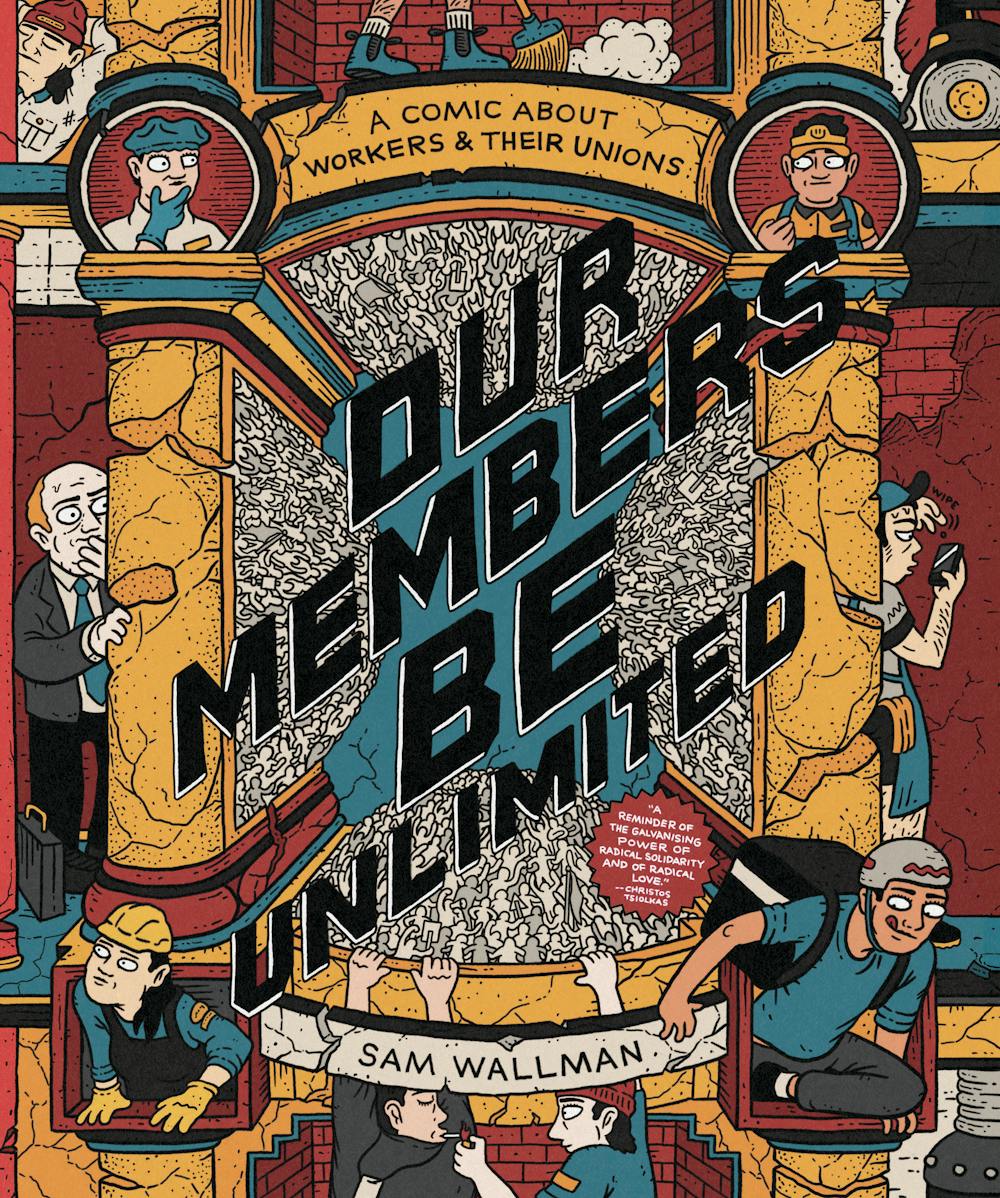
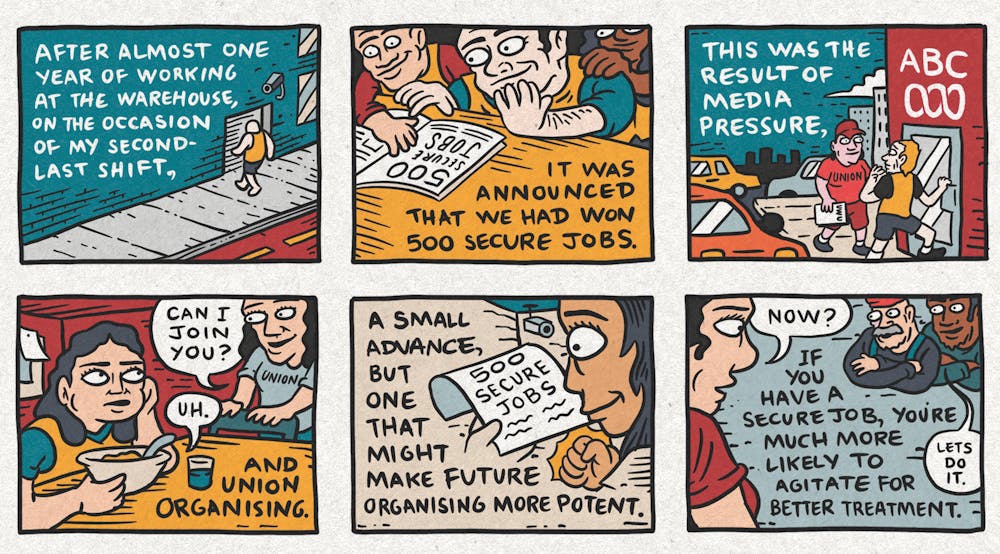 Edited image extract from Our Members Be Unlimited: A Comic About Workers and Their Unions by Sam Wallman (Scribe).
big beautiful female theory combines personal narrative, poetry, critical theory, argument, illustration and comics to explore embodied identity. Grills shows how embodied female identity forms (and evolves) from early girlhood, through adolescence and into adulthood:
When I was fourteen, me and my friends sat on MSN pretending to be seventeen-year-old girls with 34DD chests, talking to forty-year-old men who are pretending to be seventeen-year-old boys with 9-inch willies.
When I was 14, I wanted more than anything to be desired.
When I was 14, I didn’t want anyone to fucken touch me.
Grills uses the illustrative mode to play with reader perception, to monopolise our collective gaze; we’re often forced to be voyeurs, looking at her body in ways that make us complicit. Grills plays with female agency, but it’s not straightforward self-empowerment. The narrative accompanying her images is aware of the determining male gaze, and demonstrates how it impacts her sense of self and well-being.
Edited image extract from Our Members Be Unlimited: A Comic About Workers and Their Unions by Sam Wallman (Scribe).
big beautiful female theory combines personal narrative, poetry, critical theory, argument, illustration and comics to explore embodied identity. Grills shows how embodied female identity forms (and evolves) from early girlhood, through adolescence and into adulthood:
When I was fourteen, me and my friends sat on MSN pretending to be seventeen-year-old girls with 34DD chests, talking to forty-year-old men who are pretending to be seventeen-year-old boys with 9-inch willies.
When I was 14, I wanted more than anything to be desired.
When I was 14, I didn’t want anyone to fucken touch me.
Grills uses the illustrative mode to play with reader perception, to monopolise our collective gaze; we’re often forced to be voyeurs, looking at her body in ways that make us complicit. Grills plays with female agency, but it’s not straightforward self-empowerment. The narrative accompanying her images is aware of the determining male gaze, and demonstrates how it impacts her sense of self and well-being.
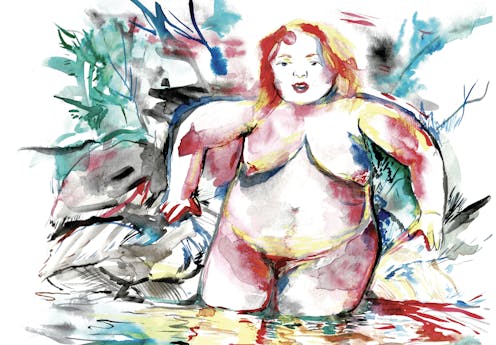
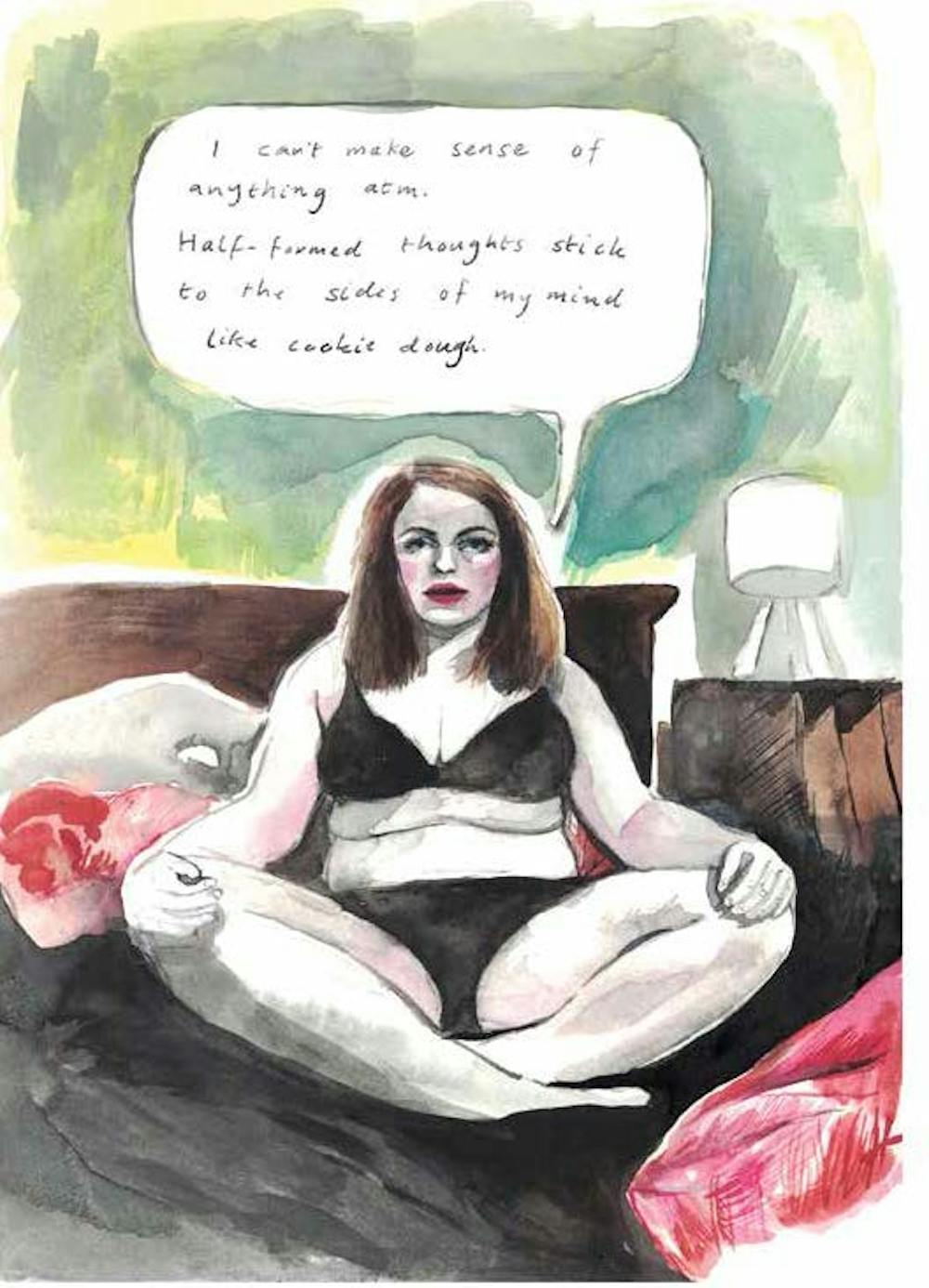 Image extract from big beautiful female theory by Eloise Grills (Affirm Press).
Grills is particularly interested in size and scale, exploring “thin” and “fat” subjectivities, which become her focus in the chapter “The fat bitch in art”. She explores the way women have been looked at, idealised and painted by men (and the way models have been treated at the hands of male artists), as well as the way women painters and photographers have represented themselves. It’s one of the strongest chapters in the collection. Grills seamlessly shimmies between self-disclosure and references to other artists as she reveals the social dynamics of self-representation.
Elsewhere Grills’ relentless double-coding, in which text and image communicate the same message, can get a bit intense – pushing us away while also drawing us uncomfortably close. This, as it turns out, is a deliberate strategy:
This is your eye: wide as a saucer
This is your mouth: a yawning dinnerplate
This was mine but I’ve handed it over
a gift, a wart I’ve sold you
yours to deal with
Grills fluctuates between radical self-acceptance and abjecting herself. As a woman reader, I am aware that I generate and multiply the internalised male gaze, and that I am also an object of it. Grills reflects, refracts and inflects my own sense of well-being, embodied precarity, vulnerability, violence, and abjection. She makes sure her reader knows that art-making and writing are ambivalent acts for her. They don’t necessarily alleviate the trauma of growing up female.
Image extract from big beautiful female theory by Eloise Grills (Affirm Press).
Grills is particularly interested in size and scale, exploring “thin” and “fat” subjectivities, which become her focus in the chapter “The fat bitch in art”. She explores the way women have been looked at, idealised and painted by men (and the way models have been treated at the hands of male artists), as well as the way women painters and photographers have represented themselves. It’s one of the strongest chapters in the collection. Grills seamlessly shimmies between self-disclosure and references to other artists as she reveals the social dynamics of self-representation.
Elsewhere Grills’ relentless double-coding, in which text and image communicate the same message, can get a bit intense – pushing us away while also drawing us uncomfortably close. This, as it turns out, is a deliberate strategy:
This is your eye: wide as a saucer
This is your mouth: a yawning dinnerplate
This was mine but I’ve handed it over
a gift, a wart I’ve sold you
yours to deal with
Grills fluctuates between radical self-acceptance and abjecting herself. As a woman reader, I am aware that I generate and multiply the internalised male gaze, and that I am also an object of it. Grills reflects, refracts and inflects my own sense of well-being, embodied precarity, vulnerability, violence, and abjection. She makes sure her reader knows that art-making and writing are ambivalent acts for her. They don’t necessarily alleviate the trauma of growing up female.
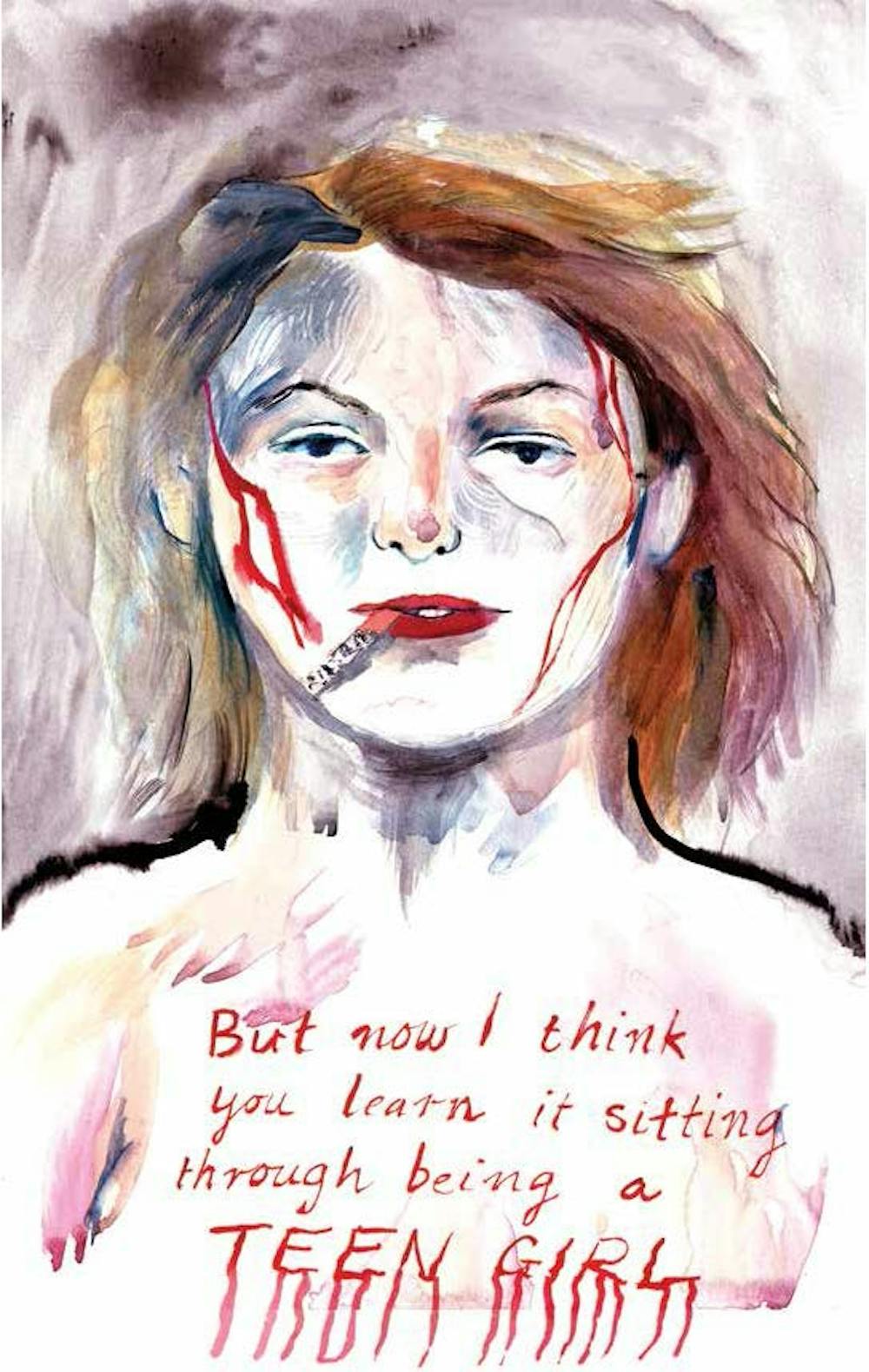 Illustration from big beautiful female theory by Eloise Grills (Affirm Press).
All of this left me with uncomfortable questions about my own role, as a reader, in perpetuating the suffering of women who feel compelled to disclose. It’s certainly something to think about as I teach young women who want to explore these themes in experimental, lyric non-fiction.
While I am inclined to warn them of the risk of disclosure and how it might impact them, it’s also important to be sensitive to the need or desire to disclose in the first place, and their agency in doing so. Grills’ text could aid a conversation about teaching students to observe and attend to the effects of disclosure on art-making and well-being, while leaving it up to them to decide what they’re comfortable with.
Making collective action personal
Sam Wallman’s work offers a history of labourers’ collective action and unionism through the 19th and 20th centuries. Wallman also places unionism in the context of 21st-century precarity through his personal account of working as a picker in Amazon’s Melbourne warehouse. This is one of the great strengths of his comics: the personal is political, but the political is also depicted as felt experience, deeply personal.
Wallman narrates the closeness and interdependence of his fellow workers at Amazon, and at the same time depicts the struggle of recruiting contemporary workers to the union. His colleagues feel frustrated, powerless, dehumanised – but also just want to get through their shifts, earn their money and clock off for the day, without risking drawing extra attention to themselves.
Illustration from big beautiful female theory by Eloise Grills (Affirm Press).
All of this left me with uncomfortable questions about my own role, as a reader, in perpetuating the suffering of women who feel compelled to disclose. It’s certainly something to think about as I teach young women who want to explore these themes in experimental, lyric non-fiction.
While I am inclined to warn them of the risk of disclosure and how it might impact them, it’s also important to be sensitive to the need or desire to disclose in the first place, and their agency in doing so. Grills’ text could aid a conversation about teaching students to observe and attend to the effects of disclosure on art-making and well-being, while leaving it up to them to decide what they’re comfortable with.
Making collective action personal
Sam Wallman’s work offers a history of labourers’ collective action and unionism through the 19th and 20th centuries. Wallman also places unionism in the context of 21st-century precarity through his personal account of working as a picker in Amazon’s Melbourne warehouse. This is one of the great strengths of his comics: the personal is political, but the political is also depicted as felt experience, deeply personal.
Wallman narrates the closeness and interdependence of his fellow workers at Amazon, and at the same time depicts the struggle of recruiting contemporary workers to the union. His colleagues feel frustrated, powerless, dehumanised – but also just want to get through their shifts, earn their money and clock off for the day, without risking drawing extra attention to themselves.
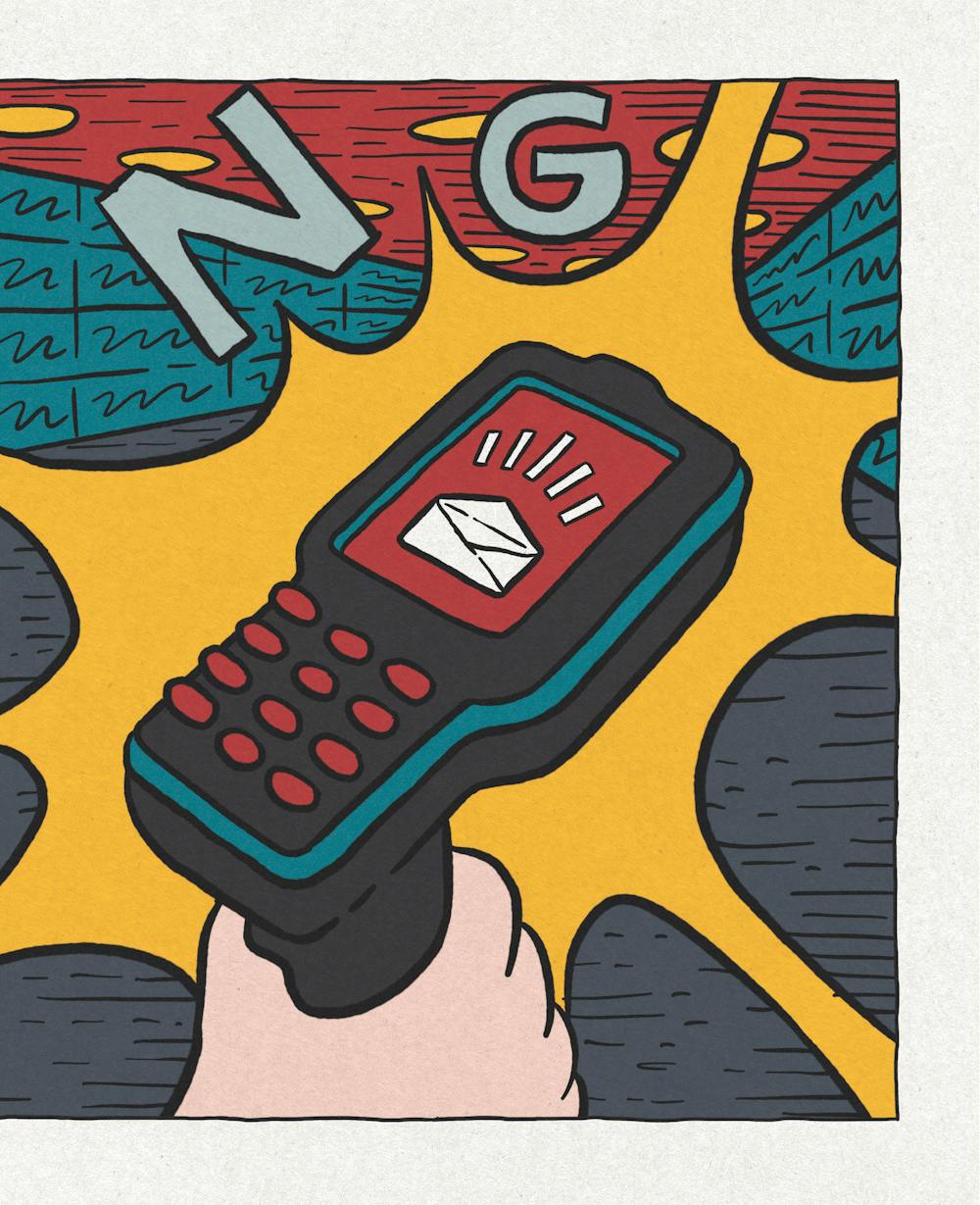 Edited image extract from Our Members Be Unlimited: A Comic About Workers and Their Unions by Sam Wallman (Scribe).
Scribe
Wallman shows us the messaging app on his scanner gun, a communication device that anonymously tells workers what to do and when to do it: to work faster, to stay behind an extra two hours, to knock off an hour early (without pay). This is at once dystopian and horrifyingly familiar.
It’s chilling to realise the many ways in which we all already live in this reality – how enculturated we are to obey the machines, the micro-tools employed in service of the giant human-powered machine. Not just at work, but every time we enter a system: health, school, Centrelink, financial services. Even my own children use my phone signal to monitor my movements.
The comics medium allows the reader to digest a lot of information very quickly. We can absorb historical facts while also seeing how that history was lived in the body. The past and the present are juxtaposed to help remind us that the collective strength and knowledge we can draw on to solve the problems of the present does not just include our immediate contemporaries.
Edited image extract from Our Members Be Unlimited: A Comic About Workers and Their Unions by Sam Wallman (Scribe).
Scribe
Wallman shows us the messaging app on his scanner gun, a communication device that anonymously tells workers what to do and when to do it: to work faster, to stay behind an extra two hours, to knock off an hour early (without pay). This is at once dystopian and horrifyingly familiar.
It’s chilling to realise the many ways in which we all already live in this reality – how enculturated we are to obey the machines, the micro-tools employed in service of the giant human-powered machine. Not just at work, but every time we enter a system: health, school, Centrelink, financial services. Even my own children use my phone signal to monitor my movements.
The comics medium allows the reader to digest a lot of information very quickly. We can absorb historical facts while also seeing how that history was lived in the body. The past and the present are juxtaposed to help remind us that the collective strength and knowledge we can draw on to solve the problems of the present does not just include our immediate contemporaries.
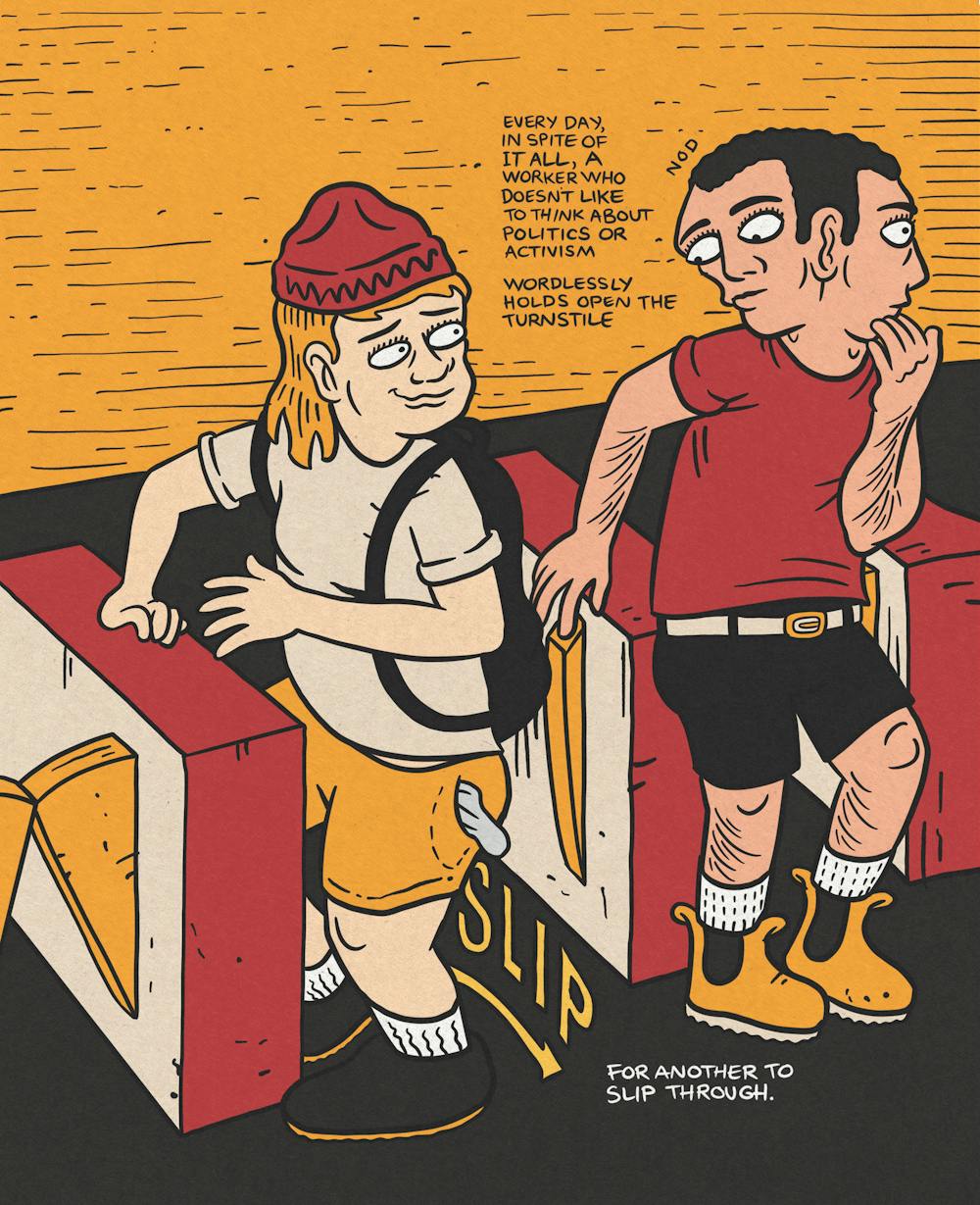 Edited image extract from Our Members Be Unlimited: A Comic About Workers and Their Unions by Sam Wallman (Scribe).
Scribe
Wallman’s special skill is showing relationships: between people, between systems, between ideas. (By contrast, Grills focuses on the isolated, commodified, individual body.) He employs various strategies to depict political collectivism and biological interdependence, whether it’s in scenes where bodies are amorphous and faceless, or scenes of collective endeavours where “rounder”, more visually descriptive characters work together towards a common goal. In the former, Wallman removes the face and other features to highlight the lumbering, gentle giant that is the body – that workhorse that carries us through life.
Edited image extract from Our Members Be Unlimited: A Comic About Workers and Their Unions by Sam Wallman (Scribe).
Scribe
Wallman’s special skill is showing relationships: between people, between systems, between ideas. (By contrast, Grills focuses on the isolated, commodified, individual body.) He employs various strategies to depict political collectivism and biological interdependence, whether it’s in scenes where bodies are amorphous and faceless, or scenes of collective endeavours where “rounder”, more visually descriptive characters work together towards a common goal. In the former, Wallman removes the face and other features to highlight the lumbering, gentle giant that is the body – that workhorse that carries us through life.
 Edited image extract from Our Members Be Unlimited: A Comic About Workers and Their Unions by Sam Wallman (Scribe).
Read more:
'They track our every move': why the cards were stacked against a union at Amazon
The work of capitalism
In the weeks that I read, thought about, lived with, and wrote about these comics (physically toting them back and forth between my office in Sydney and my home in Melbourne), I was teaching two undergraduate classes: one was a combined first- and second-year narrative theory class, in which we covered, among other things, the abject, queer fabulism, and the narrative gaze.
The other class I taught was a third-year industry subject (project-based, inquiry-led), looking at issues of work and labour in the writing and publishing industry: including underpayment, lack of representation and diversity across the sector, lack of transparency in work conditions and unionism in the bookselling and publishing industry.
Next year, both these books will have a place in my curriculum, if I am still there to teach these classes.
Edited image extract from Our Members Be Unlimited: A Comic About Workers and Their Unions by Sam Wallman (Scribe).
Read more:
'They track our every move': why the cards were stacked against a union at Amazon
The work of capitalism
In the weeks that I read, thought about, lived with, and wrote about these comics (physically toting them back and forth between my office in Sydney and my home in Melbourne), I was teaching two undergraduate classes: one was a combined first- and second-year narrative theory class, in which we covered, among other things, the abject, queer fabulism, and the narrative gaze.
The other class I taught was a third-year industry subject (project-based, inquiry-led), looking at issues of work and labour in the writing and publishing industry: including underpayment, lack of representation and diversity across the sector, lack of transparency in work conditions and unionism in the bookselling and publishing industry.
Next year, both these books will have a place in my curriculum, if I am still there to teach these classes.
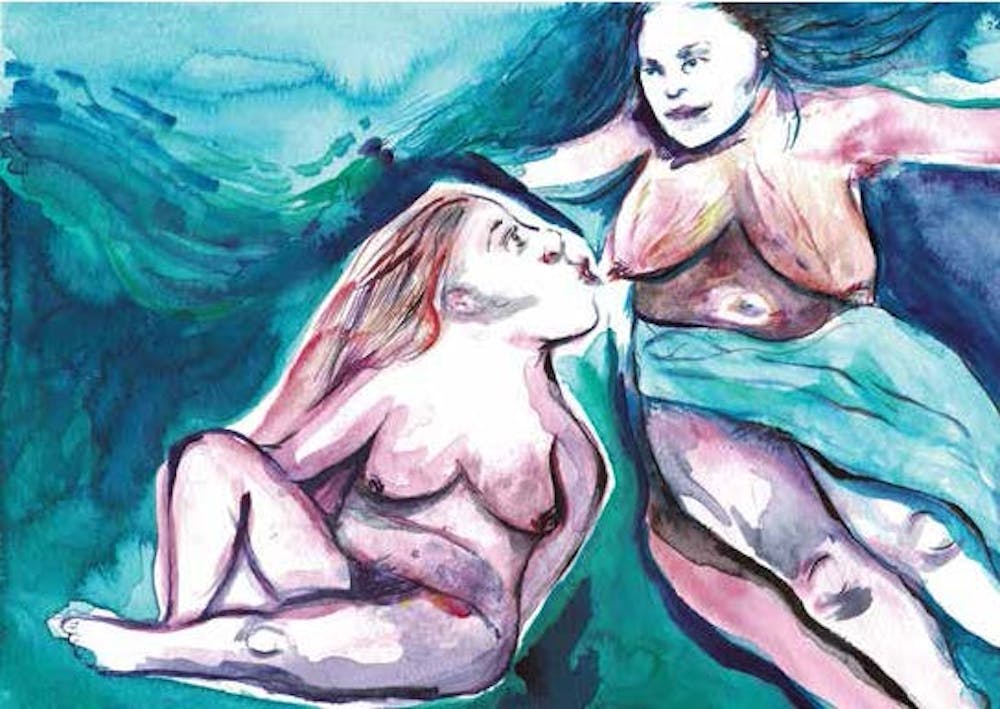 Image extract from big beautiful female theory, Eloise Grills (Affirm Press).
As a 47-year-old woman, I know I am now barely relevant to the determining male gaze Grills reveals and critiques, though I continue to feel its ongoing regulatory effects. As a mother of three children, I am most aware of the way it delimits their bodies.
I see the gaze in their Instagram feeds, in their consumer choices, in the way they define and express their gender identities, and in the manifestations of their mental illnesses.
Wallman’s comic made me aware of the extent to which the panopticon of capitalism has co-opted my eye. It sees me when I’m sleeping, it knows when I’m awake. I am aware, writing this review, of my own precarity: I’m currently 18 months into a two-year, fixed-term contract.
Even writing that sentence feels risky, like I’m writing it on the feedback whiteboard next to the manager’s desk at Amazon, with three security cameras pointed at it. In my daily work, which often involves teaching alone in the converted vestibule of my house where the front door used to be, I do the work of capitalism: I’m always self-monitoring my own productivity. In fact, I rose early today, just so I could finish this review before my working day began.
Authors: Penni Russon, Senior Lecturer, School of Communication, University of Technology Sydney
Image extract from big beautiful female theory, Eloise Grills (Affirm Press).
As a 47-year-old woman, I know I am now barely relevant to the determining male gaze Grills reveals and critiques, though I continue to feel its ongoing regulatory effects. As a mother of three children, I am most aware of the way it delimits their bodies.
I see the gaze in their Instagram feeds, in their consumer choices, in the way they define and express their gender identities, and in the manifestations of their mental illnesses.
Wallman’s comic made me aware of the extent to which the panopticon of capitalism has co-opted my eye. It sees me when I’m sleeping, it knows when I’m awake. I am aware, writing this review, of my own precarity: I’m currently 18 months into a two-year, fixed-term contract.
Even writing that sentence feels risky, like I’m writing it on the feedback whiteboard next to the manager’s desk at Amazon, with three security cameras pointed at it. In my daily work, which often involves teaching alone in the converted vestibule of my house where the front door used to be, I do the work of capitalism: I’m always self-monitoring my own productivity. In fact, I rose early today, just so I could finish this review before my working day began.
Authors: Penni Russon, Senior Lecturer, School of Communication, University of Technology Sydney 

















