

Hear me out – we could use the varroa mite to wipe out feral honey bees, and help Australia's environment
- Written by: Patrick O'Connor, Associate Professor, University of Adelaide
A tiny parasitic mite that lives on the European honeybee (Apis mellifera) has breached Australia’s border quarantine and been detected in managed bee hives in New South Wales.
This is bad news for Australia’s honey industry, with over 300 hives in Newcastle set to be destroyed and biosecurity zones in place. The potential economic impact to the honey industry is estimated at around A$70 million per year, but the broader impacts to agriculture are not yet known.
This is where much of the dialogue on the impact of varroa mite settling in Australia usually stops. But there’s another way to look at this pest: as an effective biocontrol for feral honeybees in Australia’s natural environment.
Honeybees were introduced to Australia almost 200 years ago and out-compete native pollinators, which may have dire flow-on effects for ecosystems. The varroa mite’s arrival in Australia was only a matter of time – and with better planning, we could benefit from one pest fighting another.
Making trade-offs
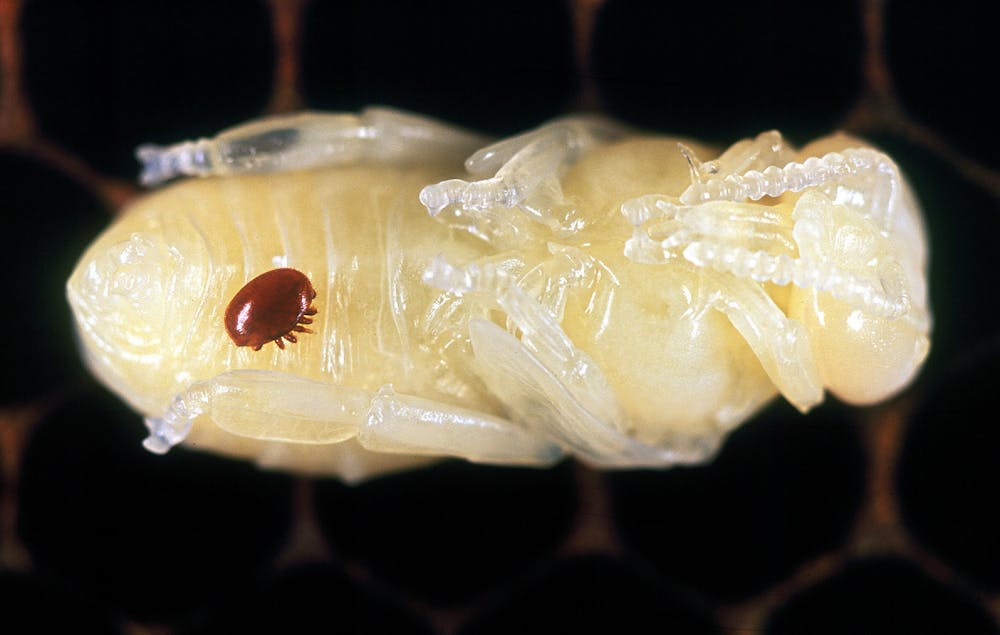
The varroa mite infests hives, parasitises the bees, and can spread viruses and other pathogens. They mainly feed and breed on honeybee larvae and pupae, causing malformation. If left unmanaged, heavy mite infestation can cause colony collapse in some circumstances.
The mite has spread across the world to colonise almost every known location of European honeybees. It has been kept out of Australia thanks to stringent border quarantine measures, but this tiny mite can easily hitchhike on imports, then establish and spread when it reaches a honeybee colony.
So would Australia benefit more from treating the varroa mite as a pest, or an environmental biocontrol? More research is needed to resolutely answer this question, but let’s look at a the potential trade-offs of either option.
Read more: Explainer: Varroa mite, the tiny killer threatening Australia's bees
Treating the mite as a pest
Treating the mite as a pest would mean chasing down known outbreaks and destroying hives, beefing up border quarantine measures and supporting the beekeeping industry to tide them over the impact and adjustment period.
Beekeepers can stop the mite in its tracks in managed hives with chemical controls, but this comes at a cost, including some loss of productivity. And a loss of productivity in managed hives can have a knock-on effect on the pollination industry, as beekeepers are paid to take their bees to pollinate crops.
Thirty-five agricultural industries in Australia rely entirely or in part on bee pollination, including almonds, apples and cherries. Indeed, the total contribution of honeybees to Australia’s economy is estimated at $14.2 billion.
The potential consequences for industrial beekeeping and agriculture, and increased costs of production, can have unwelcome effects on food prices.
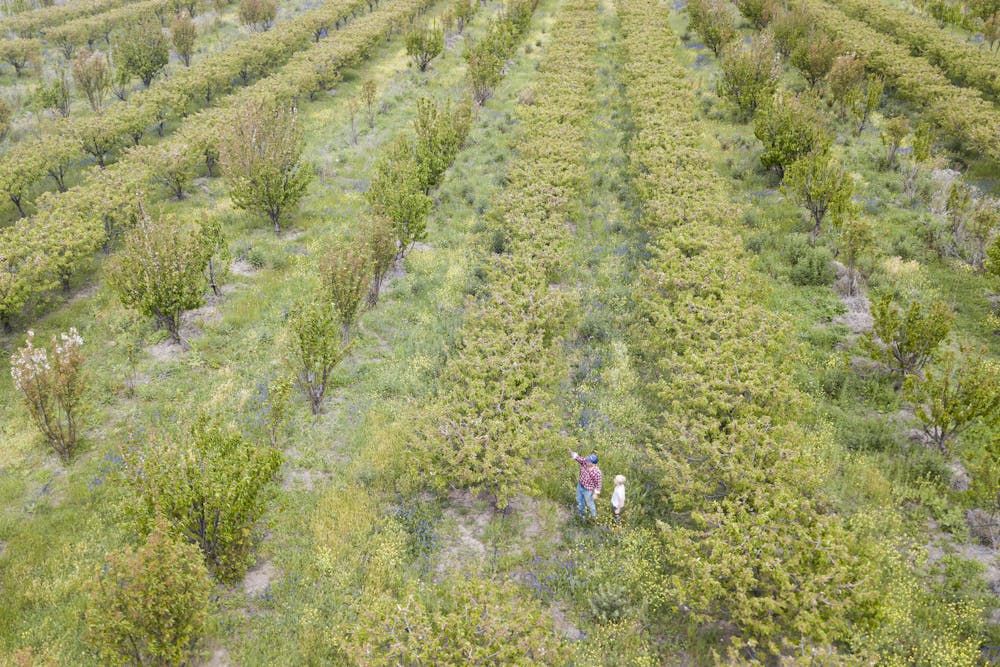 Honey bees are vital for pollinating cherries.
AAP Image/Lukas Coch
Honey bees are vital for pollinating cherries.
AAP Image/Lukas Coch
Treating the mite as a biocontrol
Treating the mite as an environmental biocontrol would mean diverting money for eradication and control measures to help industries live with varroa. This could be by, for instance, increasing the use of native pollinators for Australian agriculture.
It could also involve releasing the mite into feral honeybee hives, where we believe a rapid recovery of native pollinators is needed, such as in areas recovering from bushfires. The varroa mite has little impact on native bees because it’s specific to the Apis genus of the introduced bee, though the usual rules for biocontrol release would need to be followed.
Read more: Buzz off honey industry, our national parks shouldn’t be milked for money
Feral European honeybee populations are recognised as a key threatening process to Australia’s native biodiversity, with impacts felt across the country. Feral bees are abundant and efficient pollinators, and compete with native birds, insects and mammals (such as pygmy possums) for nectar from flowers.
Honeybees avoid, or only partially pollinate, some native plants. This means a high concentration of honeybees could shift the make-up of native vegetation in a region. They also pollinate invasive weeds such as gorse, lantana and scotch broom, which are particularly expensive to control in the wake of bushfires.
When the varroa mite breached New Zealand, feral honeybees declined by about 90% within a few years. However, there’s limited information about the ecological benefits of this, because the data was not collected while the focus was on agricultural industry impact.
It’s also worth noting that knocking down feral honeybees could also be good for the honeybee industry, as feral honeybees are a recognised competitor with commercial ones.
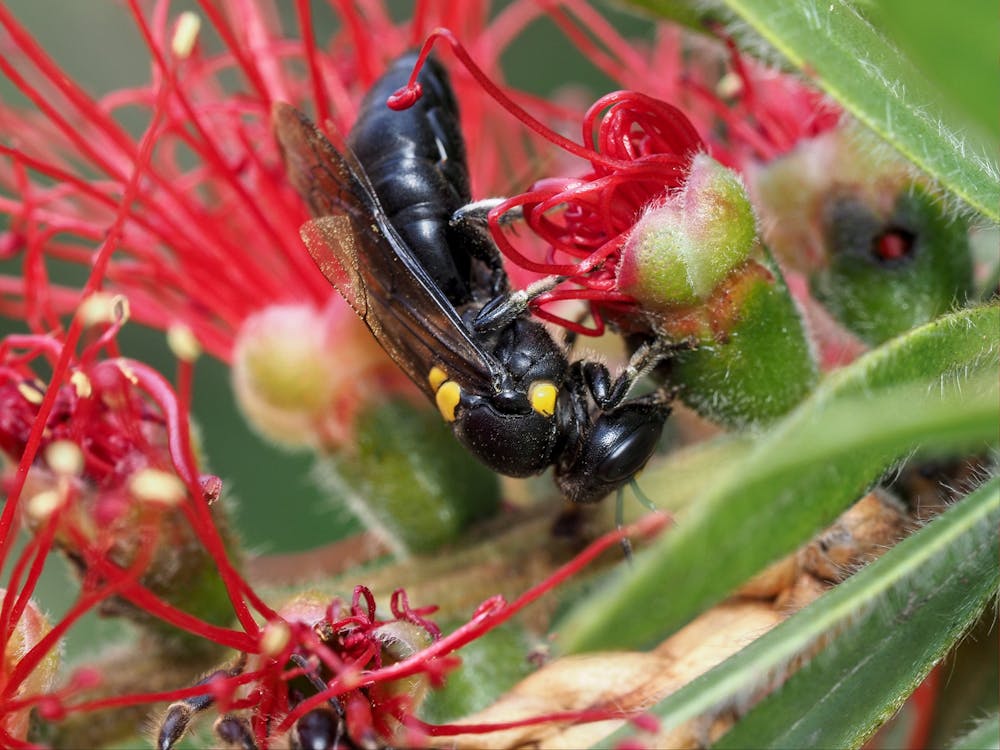 A native Australian bee Amphylaeus morosus
AAP Image/Supplied by iNaturalist Australia
A native Australian bee Amphylaeus morosus
AAP Image/Supplied by iNaturalist Australia
Making the best decision
Questions about trading-off potential agricultural costs for environmental benefits are difficult to answer. This is, in part, because any environmental benefits gained from reducing a widespread threat are usually indirect, such as flow-on effects of increased ecosystem health.
Another reason is because markets are well established for agricultural products and services, but they’re usually missing or only just forming for ecosystem services (such as flood control, water supply and quality, and cultural values).
To calculate the economic benefit of reducing feral honeybees, we first must put a value on the services natural ecosystems provide.
While some steps have been made, progress on implementation has been slow for the last decade. So far, we’ve predominately put values on ecosystem services from discrete natural assets, such as the Great Barrier Reef, which contributed an estimated $6.4 billion in 2015-2016 to Australia’s economy.
Read more: Pest plants and animals cost Australia around $25 billion a year – and it will get worse
In the case of the varroa mite, we have known the potential for opportunities and costs from a likely invasion for more than a decade. But the focus has been on preventing the invasion to protect agriculture, because we’re mostly concerned about the industry’s direct benefits and impacts.
There have been no estimations of the economic benefits of using the mite as an environmental biocontrol to lower feral honeybee populations, even though our New Zealand friends did suggest, in a paper, we prepare ourselves.
We may successfully eradicate the varroa mite’s recent incursion to the relief of agriculture and beekeepers. But given the near inevitability of the mite establishing in Australia, we must invest in better understanding the holistic economics of keeping a potentially very important biocontrol out of the country.
Authors: Patrick O'Connor, Associate Professor, University of Adelaide


















