

how 'Christmas in a cup' went from ancient medicine to an Aussie winter warmer
- Written by: Morag Kobez, Associate lecturer, Queensland University of Technology
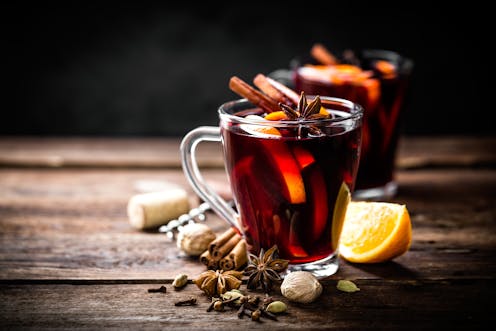
When the temperature drops in the southern hemisphere, you might like to stave off the chill with a big steaming pot of mulled wine, and fill your home with the comforting aroma of red wine, citrus and spice.
The mention of mulled wine conjures images of winter-wonderland white-Christmas scenes – no matter where in the world you live.
Although mulled wine is a staple of contemporary Christmas celebrations throughout Europe, and the customs and recipes may differ somewhat, the celebratory nature of the warm, spiced (usually) red wine is common to all – as are the ingredients sugar, cinnamon and cloves.
Its long history incorporates both pagan and Christian lore, traverses old and new worlds and established it as a favourite Christmastime beverage, travellers’ tipple of choice and a tonic of sorts in times of convalescence.
Read more: Appearance, aroma and mouthfeel: all you need to know to give wine tasting a go
Ancient pagan paradox
Whether for festivity or fortification, mulled wine has been around for at least 2,000 years.
The ancient Greek version of mulled wine, Ypocras or Hippocras, takes its name from Hippocrates, the Greek physician regarded as the father of medicine. (It is also the name of the apothecary’s bag or sieve used to strain this wine.)
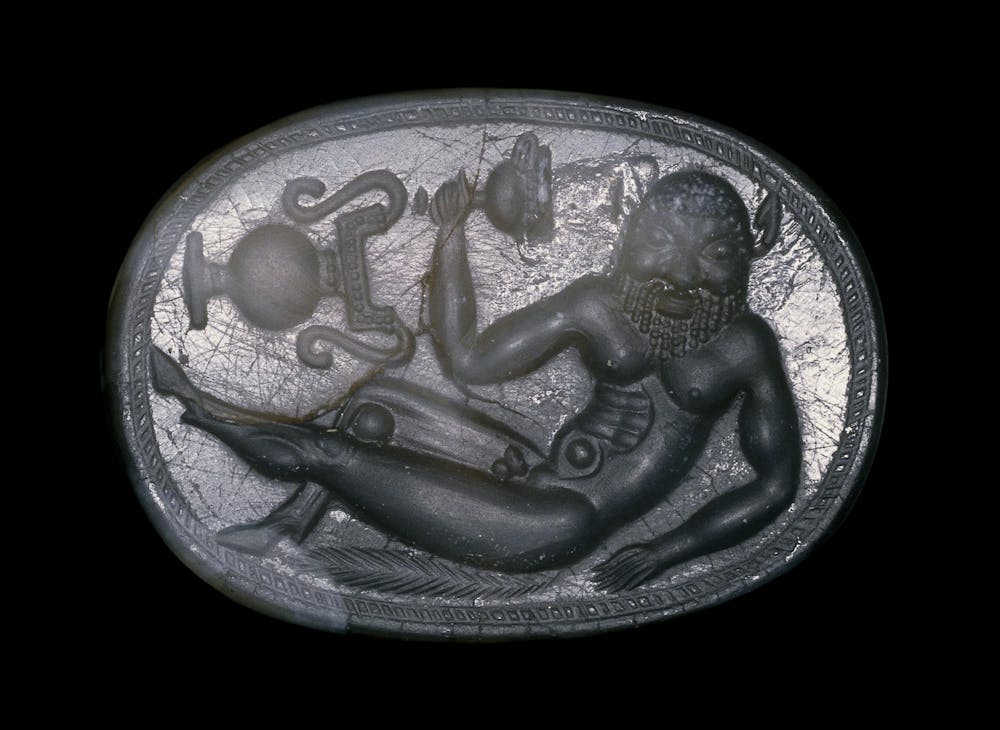
Wine played an important role in medicine in Greek antiquity. In the only ancient cookery book surviving to our times, De re coquinaria, we see a few versions of spice wine (conditum paradoxum) and wine with honey and pepper.
The latter, known as conditum melizomum viatorum was recommended for travellers: the honey and spices acted as a preservative, allowing the alcohol to accompany travellers on long journeys.
Conditum paradoxium became a prominent feature of the Saturnalia Festival in ancient Rome: the winter solstice celebration of the passing of the shortest day of the year and the rebirth of the Sun.
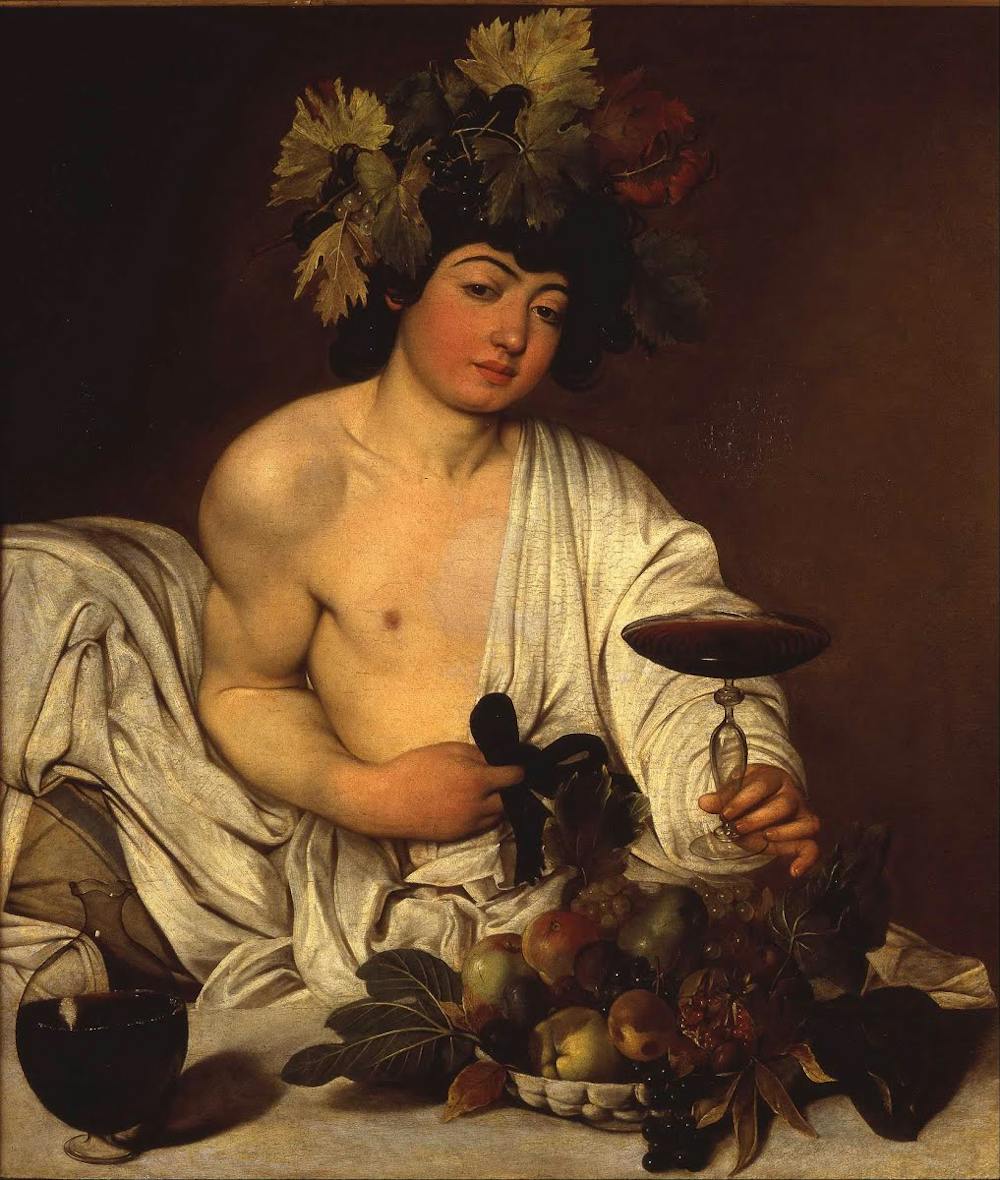 Conditum paradoxium was a prominent feature of the Roman winter festival, Saturnalia.
Uffizi/Wikimedia Commons
Conditum paradoxium was a prominent feature of the Roman winter festival, Saturnalia.
Uffizi/Wikimedia Commons
By the time of the late-Roman Republic, Saturnalia had grown from a one-day celebration to a week-long festival held each year from December 17 to 23. Consuming the warming wine as part of the celebrations was thought to help ward off winter illness and so became firmly associated with the December celebrations.
Towards the end of the 4th century, this pagan solstice celebration became interwoven with Christianity and the celebration of Christmas Day. By the middle ages, mulled wine had become entrenched as part of the festivities throughout Europe.
Read more: Pompeii is famous for its ruins and bodies, but what about its wine?
Mulling over the recipe
According to several medieval cookbooks the most common of the sweet, spiced wines in the late middle-ages were still referred to as hippocras, with the term “mulled wine” coming later.
Just as they do today, ingredients varied depending on the region, but key components were hot red wine blended with sugar and ground spices – usually ginger, cinnamon and pepper and sometimes nutmeg and cloves.
 In Europe, mulled wine is synonymous with winter scenes.
Shutterstock
In Europe, mulled wine is synonymous with winter scenes.
Shutterstock
Throughout Europe, mulled wine is synonymous with postcard scenes of snow-capped Alps, après-ski shenanigans, the aroma of roasting chestnuts and Christmas markets.
In Sweden, glogg comes sprinkled with almonds and plump raisins, which have soaked up the wine and taken on the flavour of the spices. It is often served with distinctive raisin-studded saffron buns called Lussekatter.
Bischopswijn (Bishop’s Wine) is the Dutch name, in honour of Saint Nicholas, the bishop celebrated during the Feast of Sinterklaas in early December in the Netherlands.
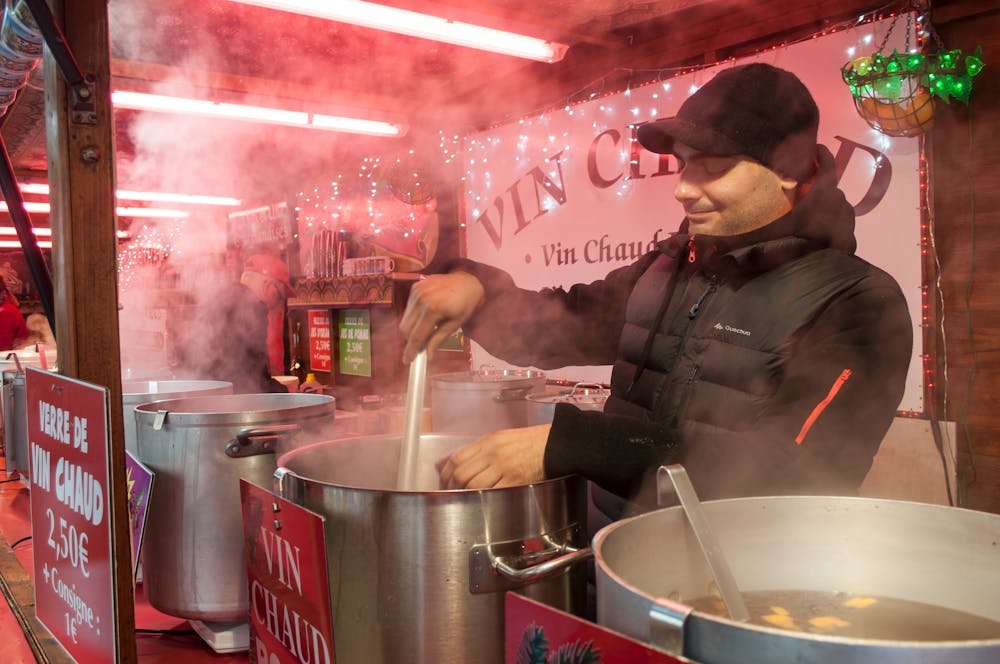 Mulled wine is a staple of European Christmas markets.
Shutterstock
Mulled wine is a staple of European Christmas markets.
Shutterstock
Italians call it vin hrüle (French for “burnt wine”). In Poland it’s called grzane wino and in Germany it is gluhwein, which both directly translate to mulled wine.
So beloved is gluhwein in Germany, that when popular Christmas markets were cancelled in December 2020 due to COVID restrictions, pop-up gluhwein stalls began appearing in parks and street corners in German cities despite the rules.
It sparked a plea in parliament from then German Chancellor Angela Merkel for citizens to forgo their usual Christmastime tipple to help avoid increased numbers of deaths.
Exorcising the winter chill
In France it’s called vin chaud (“hot wine”) and more likely than not to contain star anise. The larger-than-life French writer Colette described vin chaud as “the great exorcist of winter crepuscules [twilight] that fall as early as three o’clock” in an advertisement she wrote for a French wine merchant in the early 20th century.
Rather than a Christmastime tipple, in the first 100 years of Australian settlement, mulled wine was more likely to be administered during times of illness or convalescence rather than times of celebration.
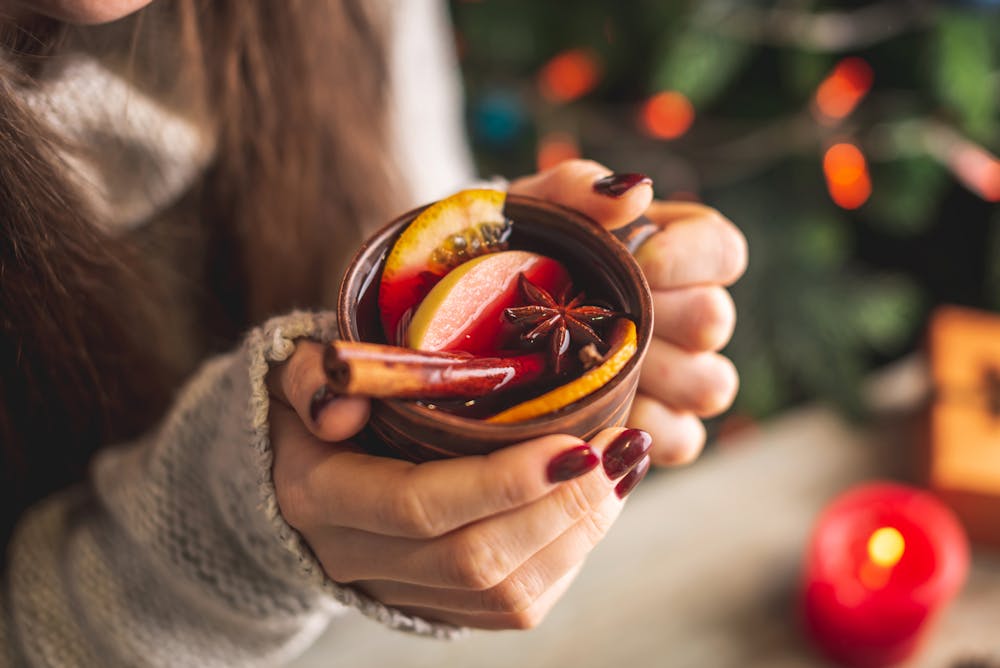 It may not be Christmas – but that doesn’t mean you don’t need a winter warmer.
Shutterstock
It may not be Christmas – but that doesn’t mean you don’t need a winter warmer.
Shutterstock
In the 19th and 20th centuries Australian domestic cookbooks commonly included recipes for sick or convalescing patients. Advice about food preparation for “invalids”, “convalescents” or “the sickroom” would commonly take up an entire section of cookbooks. Many of these included recipes for mulled wine.
With nobody under any illusions nowadays that mixing up a large amount of sugar in a hefty pot of red wine is good for anyone’s health, we find other similarly absurd excuses to partake. Christmas in July, anyone?
Authors: Morag Kobez, Associate lecturer, Queensland University of Technology


















