

stressed teachers find hope in peer-support model used by frontline health workers
- Written by: Anne Southall, Lecturer in Inclusive Education and Trauma, La Trobe University
Teachers are burning out and leaving the profession in unprecedented numbers. Classrooms and workloads are challenging, made worse by staff shortages, and teachers are stressed. Student welfare needs to be prioritised, but the educators supporting them need support too.
A model of peer support used by front-line health workers could provide a way forward. Results of a three-year trial in three regional Victorian primary and specialist schools are promising, our research shows. All 40 participants said it improved their mental health and workplace culture, and increased their ability to cope with the demands of working in challenging conditions.
Our model enables principals, teachers and support staff to take the time to reflect together on their work, which involves complex and often challenging relationships with students, parents and other members of the school community. As one teacher, Karen*, said:
“We put the personal side first. And we put our safety first and our emotional well-being first over the academic side and the teaching, which then filtered out because we were comfortable, and we felt safe and looked after. That filtered out into our roles and we were able to do our job.”
Read more: Could more online learning help fix Australia's teacher shortage?
Many teachers are at breaking point
The pandemic has caused more than two years of upheaval for educators through school closures and the return to work after remote learning. Burnout, staff turnover and extreme teacher shortages have followed.
But it may not be just the COVID-19 experience that accounts for this. A 2018 survey of 18,234 staff at public schools in New South Wales found 60% of teachers were already reporting unacceptably high work stress.
Read more: Read the room, Premier. Performance pay for teachers will make the crisis worse
Teachers have long been required to draw on their emotional resources every day. But, as interviewee Sally, a primary school teacher, told us, they “can’t keep giving from an empty bucket”.
Darren told us they want time with their peers dedicated to “thinking more deeply about what is going on in the classroom and really going deeper into it”. They want “to be able to acknowledge how you actually really feel and not have to hide it”, Paul added.
The burdens of being a caring profession
During the pandemic, teachers who became critical front-line workers began to show signs of exhaustion and burnout.
While the focus has been on prioritising student well-being, an important consideration has been overlooked.
When students are anxious and depressed, their educators worry about them, our soon-to-be-published research shows. And there is a catch-22 at play here. The more an educator cares, the more intense the emotions they experience when students are disengaged, falling behind or not coming to school.
In turn, how teachers are feeling directly affects their students – the stress can be “contagious”. In this way teachers’ concerns can inadvertently contribute further to negative classroom experiences.
So how do reflective circles help?
Teacher concerns and emotions can be processed in more effective ways using what we call the Reflective Circle Education Model (RCEM). It draws from similar forms of peer support in other professions.
Teachers analyse their professional experiences and personal reactions and, with small groups of colleagues, explore other ways of viewing them. This approach leads to personal and professional growth and better teaching practices, instead of a destructive cycle of exhaustion and deteriorating classroom climate.
Studies show that if teachers suppress their true emotions it leads to greater overall burnout. Despite this evidence, education systems are yet to provide embedded structures to support teachers’ needs.
What sets reflective circles apart is its more restorative approach. Members of the team can share different perspectives in a way that leads to personal growth and change. The focus is on building relationships and self-awareness rather than on content and curriculum, or accountability and performance.
Read more: What does equity in schools look like? And how is it tied to growing teacher shortages?
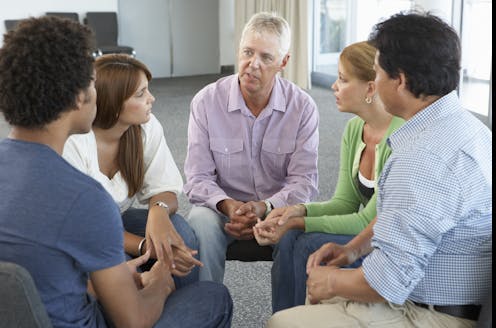
Small groups with four to six members explore an experience they have had at school. Each member completes a personal reflection from a structured series of questions before they come together in the reflective circle. There, each person begins by sharing a summary of their reflection. The other members of the group then explore the experience, offering other insights or perspectives.
For example, one teacher was struggling with their anger towards a student who “had been riding one of our bikes and threw the bike into the shed, damaging several other bikes. I was furious with him. I thought he should be more grateful. When I went to do the online reflection, though, I realised something: his mother had died and when he went to live with his grandmother, she died shortly after and I thought – why should he be grateful for an hour on a bike? It was a real revelation to me. It has changed the way I think about him and certainly changed the way I react to him.”
The second phase of the circle is designed to integrate these other meanings into new ways of thinking. It involves more questions to help work out new approaches to try.
Each participant decides what they will share and the actions they want to take in future.
This pilot research is consistently reporting all participants find value in not only sharing their emotions but also realising others are feeling the same way.
As participant Priah said:
“We walk out that door after reflective circles on cloud nine. And it doesn’t matter how deep and serious the conversations are, I walk out feeling like something has lifted off my shoulders, we are not in this alone.”
* All names are pseudonyms to protect trial participants’ privacy.
Authors: Anne Southall, Lecturer in Inclusive Education and Trauma, La Trobe University


















