

5 years on, would an outspoken Australian-Muslim activist 'get Yassmined?' Abdel-Magied herself hopes change is happening
- Written by: Fethi Mansouri, Professor/UNESCO Chair-holder; Founding Director, Alfred Deakin Institute for Citizenship and Globalisation, Deakin University
Does Australia still have a racism problem? Or does it simply suffer from a diversity and inclusion problem at the level of governance and political representation? Answering these questions is rarely straightforward and always depends on the personal experiences and ethno-religious backgrounds of those asking.
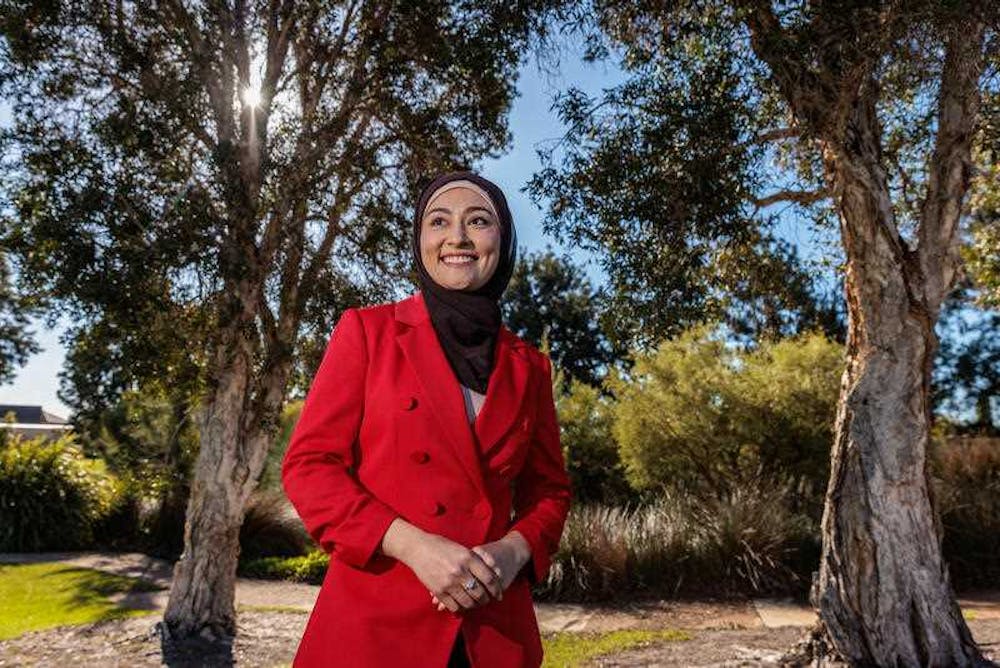
The new Albanese government has delivered the most diverse cabinet in Australian history: from the appointment of Linda Burney, the first First Nations woman to be Indigenous Affairs minister, to the elevation of Muslims Ed Husic and Anne Aly as ministers, to the election of Fatima Payman as Australia’s first hijab-wearing senator.
Diversity and inclusion, at least in political representation, seem to be much improved.
Yet while many national surveys show strong support for diversity and multiculturalism, racism in Australia endures. Often, it is most keenly felt by people of culturally and linguistically diverse backgrounds who dare disrupt dominant narratives about belonging and national identity.
Review: Talking About a Revolution - Yassmin Abdel-Magied (Penguin Random House)
Despite the nation’s increasing ethno-religious diversity, (as shown by the 2021 census data), such narratives still reflect a particularly narrow interpretation of the history of settler colonialism. The deep dispossession and violence inflicted upon First Nations communities and the state’s failure to remedy these injustices is often glossed over.
In addition, Australia’s participation in global wars, from the two world wars to the more recent ones in Iraq, Afghanistan and the so-called “global War on Terror”, continues to invite contested positions.
It is no surprise, then, that polarisation around Australia’s history of race relations, colonial settlement, international alliances and contemporary migration continues. Indeed, any criticism of or dissent from dominant narratives is often dismissed as part of the ongoing “culture wars”.
Read more: Racism is still an everyday experience for non-white Australians. Where is the plan to stop this?
A new generation
A flamboyant and outspoken Australian-Muslim social advocate, Yassmin Abdel-Magied, is at the forefront of a new generation of activists challenging entrenched structures of power and privilege. Her recent collection of essays, Talking about a Revolution, reflects on her life and political activism.
 Abdel-Magied refuses to accept the role of the subordinate, female, Muslim migrant passively resigned to her supposed second-class citizen status. Instead, she speaks out. She fights. She writes. She rebels. She revolts.
Hers is a powerful voice that has often divided opinions, yet it is a voice that cannot be ignored even when speaking from her self-imposed “exile” in London.
Abdel-Magied left Australia in 2017 following the outcry against her seven-word ANZAC day post “LEST.WE.FORGET. (Manus, Nauru, Syria, Palestine…)” on her personal Facebook page. Perhaps ironically, her book explores the power of language, particularly through a brief reference to the philosophical work of Ludwig Wittgenstein.
In doing so, she reflects on the ways in which particular words and phrases reveal, and often reinforce, power relations, becoming synonyms for socially constructed “truths”.
In Australia, taking the phrase “Lest we forget” in vain is a cardinal sin. Typically used to commemorate military service personnel, using it in the context of refugees languishing in offshore detention centres or to express solidarity with victims of the ongoing occupation of Palestinian territories drew an avalanche of public criticism on social media and in political circles.
Despite her unreserved apology, Abdel-Magied, who only a few years earlier had been named Young Queenslander of the Year, was hounded mercilessly by many on the right, particularly from within the Murdoch-owned Newscorp media, and ultimately driven out of the country.
Abdel-Magied refuses to accept the role of the subordinate, female, Muslim migrant passively resigned to her supposed second-class citizen status. Instead, she speaks out. She fights. She writes. She rebels. She revolts.
Hers is a powerful voice that has often divided opinions, yet it is a voice that cannot be ignored even when speaking from her self-imposed “exile” in London.
Abdel-Magied left Australia in 2017 following the outcry against her seven-word ANZAC day post “LEST.WE.FORGET. (Manus, Nauru, Syria, Palestine…)” on her personal Facebook page. Perhaps ironically, her book explores the power of language, particularly through a brief reference to the philosophical work of Ludwig Wittgenstein.
In doing so, she reflects on the ways in which particular words and phrases reveal, and often reinforce, power relations, becoming synonyms for socially constructed “truths”.
In Australia, taking the phrase “Lest we forget” in vain is a cardinal sin. Typically used to commemorate military service personnel, using it in the context of refugees languishing in offshore detention centres or to express solidarity with victims of the ongoing occupation of Palestinian territories drew an avalanche of public criticism on social media and in political circles.
Despite her unreserved apology, Abdel-Magied, who only a few years earlier had been named Young Queenslander of the Year, was hounded mercilessly by many on the right, particularly from within the Murdoch-owned Newscorp media, and ultimately driven out of the country.
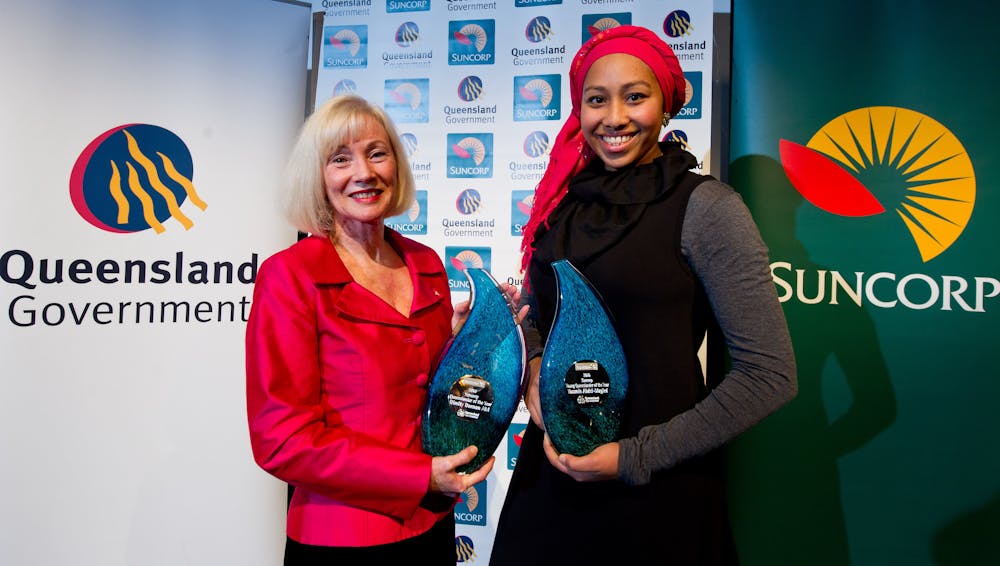 Queenslander of the Year Dimity Dornan and Young Queenslander of the Year Yassmin Abdel-Magied holding their awards in June 2010.
Sequel Communications/AAP
On self, society and systems of power
Her somewhat eclectic collection of essays includes previously published papers and newly penned ones. The book is organised around two major themes, “The Private and Public Self” and “Systems and Society”. Its unifying thread is Abdel-Magied’s unflinching take on enduring fissures around race, gender, belonging and identity.
These two themes reflect her own journey growing up as a young woman of colour in contemporary Australia. Now 31, she was born in Khartoum (Sudan). At the age of 18 months, she moved to Australia with her family following the 1989 Islamist coup d'état. The daughter of Midhat Abdel-Magied, who has a PhD in engineering from the United Kingdom, she grew up in Brisbane and would herself graduate to become a mechanical engineer.
It is not surprising, therefore, that she is uniquely placed to tell a story of fighting to disrupt stubbornly static social and political norms.
I was first made aware of this articulate young Muslim Australian activist at an international UNESCO-hosted conference on diversity and intercultural dialogue. As the founding director of the organisation Youth without Borders, Abdel-Magied was passionate about empowering young people and mobilising their full potential. She immediately struck me as a powerful advocate unafraid to speak her mind on the international stage.
Synthesising a collection written over a long period of time and covering a range of topics is naturally a challenging task. But Abdel-Magied makes optimal use of her usual openness, trademark optimism and critical lens.
She does, in the end, manage to convey a coherent argument around the importance of both personal and collective struggles for social justice. Her reflections on activism, belonging, diversity and social transformations provide an authentic exposé of the lived experience of a racialised female, Muslim activist.
As she reminds us in the book,
Eurocentric understandings of race come not from biology, but from the desire for power.
Indeed, race relations have historically been about power, control and exploitation. Imperial projects use socially constructed racial hierarchies to justify their acts of oppression and subjugation.
Abdel-Magied discovered, to her own cost, that challenging contemporary structures of power will inevitably lead to an oppressive counter-reaction.
Thus the book’s second major theme becomes fertile terrain for examining key institutional frameworks of power, such as citizenship, and the ways it can be experienced by different individuals and groups.
Queenslander of the Year Dimity Dornan and Young Queenslander of the Year Yassmin Abdel-Magied holding their awards in June 2010.
Sequel Communications/AAP
On self, society and systems of power
Her somewhat eclectic collection of essays includes previously published papers and newly penned ones. The book is organised around two major themes, “The Private and Public Self” and “Systems and Society”. Its unifying thread is Abdel-Magied’s unflinching take on enduring fissures around race, gender, belonging and identity.
These two themes reflect her own journey growing up as a young woman of colour in contemporary Australia. Now 31, she was born in Khartoum (Sudan). At the age of 18 months, she moved to Australia with her family following the 1989 Islamist coup d'état. The daughter of Midhat Abdel-Magied, who has a PhD in engineering from the United Kingdom, she grew up in Brisbane and would herself graduate to become a mechanical engineer.
It is not surprising, therefore, that she is uniquely placed to tell a story of fighting to disrupt stubbornly static social and political norms.
I was first made aware of this articulate young Muslim Australian activist at an international UNESCO-hosted conference on diversity and intercultural dialogue. As the founding director of the organisation Youth without Borders, Abdel-Magied was passionate about empowering young people and mobilising their full potential. She immediately struck me as a powerful advocate unafraid to speak her mind on the international stage.
Synthesising a collection written over a long period of time and covering a range of topics is naturally a challenging task. But Abdel-Magied makes optimal use of her usual openness, trademark optimism and critical lens.
She does, in the end, manage to convey a coherent argument around the importance of both personal and collective struggles for social justice. Her reflections on activism, belonging, diversity and social transformations provide an authentic exposé of the lived experience of a racialised female, Muslim activist.
As she reminds us in the book,
Eurocentric understandings of race come not from biology, but from the desire for power.
Indeed, race relations have historically been about power, control and exploitation. Imperial projects use socially constructed racial hierarchies to justify their acts of oppression and subjugation.
Abdel-Magied discovered, to her own cost, that challenging contemporary structures of power will inevitably lead to an oppressive counter-reaction.
Thus the book’s second major theme becomes fertile terrain for examining key institutional frameworks of power, such as citizenship, and the ways it can be experienced by different individuals and groups.
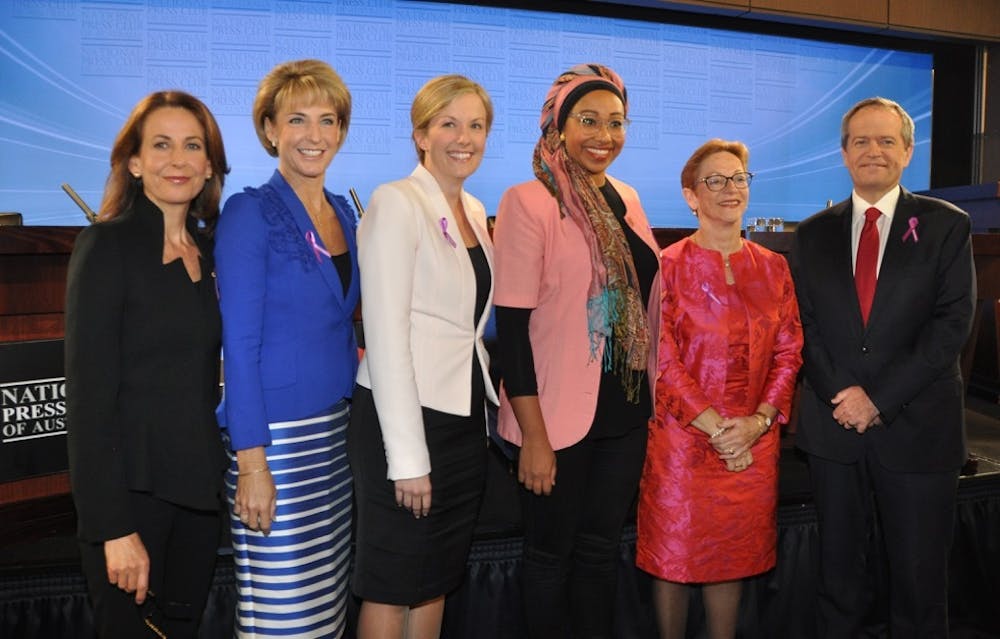 Journalist Virginia Haussegger (left), Senator Michaelia Cash (second left), Executive Director at the Australian National Committee for UN Women Julie McKay (third left), founder of Youth Without Borders Yassmin Abdel-Magied (third right), Director of the Workplace Gender Equality Agency Helen Conway (second right) and then Opposition leader Bill Shorten (right) at the National Press Club in 2015.
Australian National Committee for UN Woman/AAP
Citizenship is a concept that can engender a form of membership and belonging in a political community. But it is also, paradoxically, invoked to sanction, discipline and exclude.
Perhaps this inherent contradiction played out in Abdel-Magied’s case more than others. Although she grew up in Australia as a citizen who was a model of success, she was quickly ostracised by institutions and politicians alike.
When the ABC dropped Abdel-Magied’s program Australia Wide, the then immigration minister Peter Dutton reportedly said “one down, many to go”. She was attacked by government MPs with LNP backbencher George Christensen saying she should consider “self-deportation”.
Read more:
Abdel-Magied Anzac row is a storm over not much
Meaningful change
In what ways can enduring injustices and discrimination be resisted to bring about genuine, meaningful and transformative social change?
In exploring this question in her book, Abdel-Magied reflects on current emancipatory global movements such as #Black_Lives_Matter and the #MeToo campaign, and recent political movements across the Middle East and North African region.
Journalist Virginia Haussegger (left), Senator Michaelia Cash (second left), Executive Director at the Australian National Committee for UN Women Julie McKay (third left), founder of Youth Without Borders Yassmin Abdel-Magied (third right), Director of the Workplace Gender Equality Agency Helen Conway (second right) and then Opposition leader Bill Shorten (right) at the National Press Club in 2015.
Australian National Committee for UN Woman/AAP
Citizenship is a concept that can engender a form of membership and belonging in a political community. But it is also, paradoxically, invoked to sanction, discipline and exclude.
Perhaps this inherent contradiction played out in Abdel-Magied’s case more than others. Although she grew up in Australia as a citizen who was a model of success, she was quickly ostracised by institutions and politicians alike.
When the ABC dropped Abdel-Magied’s program Australia Wide, the then immigration minister Peter Dutton reportedly said “one down, many to go”. She was attacked by government MPs with LNP backbencher George Christensen saying she should consider “self-deportation”.
Read more:
Abdel-Magied Anzac row is a storm over not much
Meaningful change
In what ways can enduring injustices and discrimination be resisted to bring about genuine, meaningful and transformative social change?
In exploring this question in her book, Abdel-Magied reflects on current emancipatory global movements such as #Black_Lives_Matter and the #MeToo campaign, and recent political movements across the Middle East and North African region.
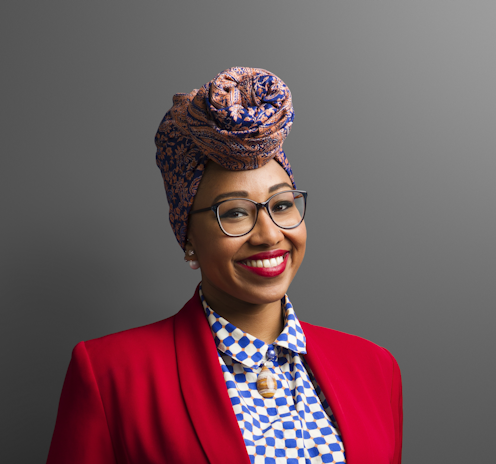
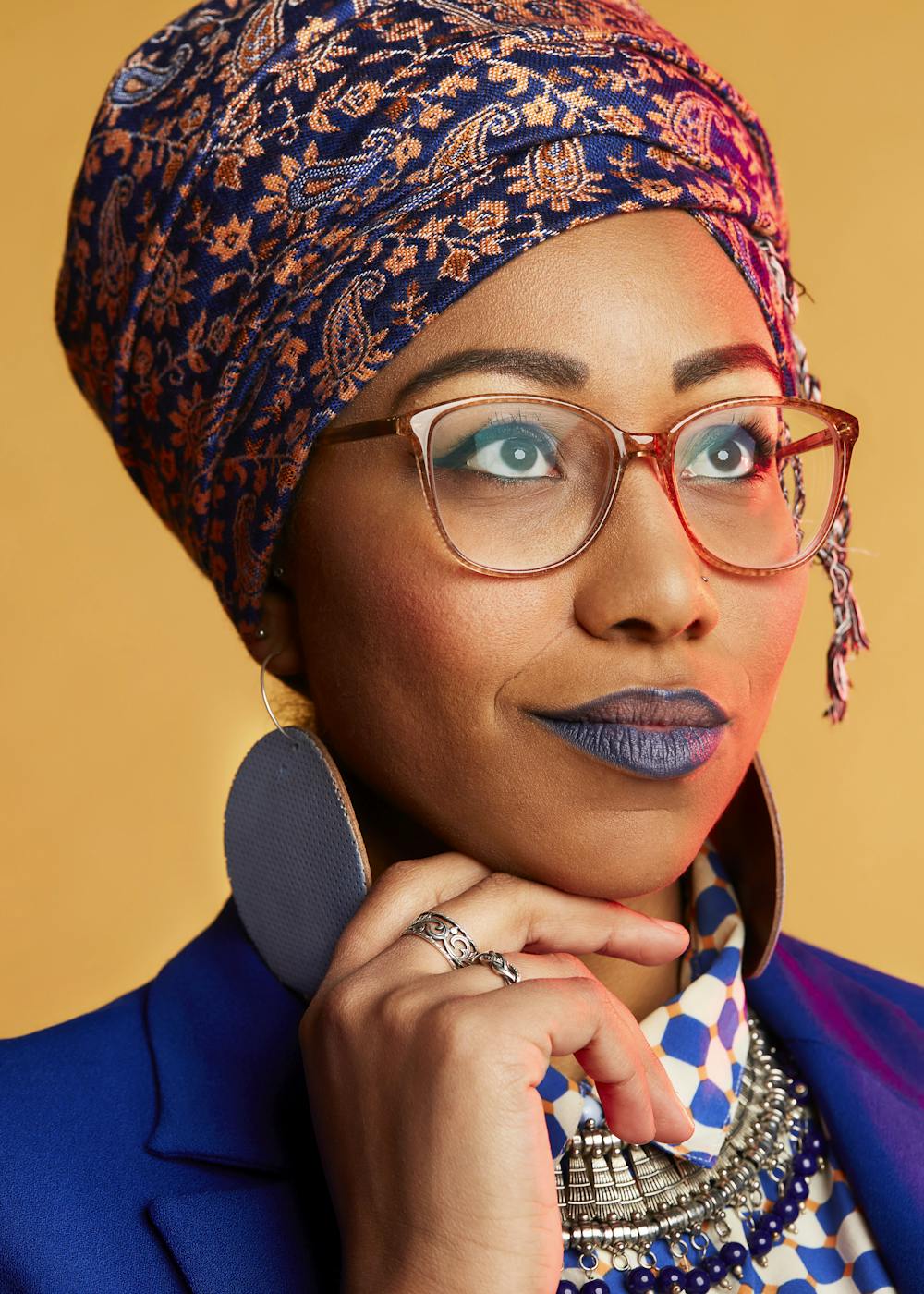 Yassmin Abdel-Magied: hopeful.
Penguin Random House Australia
She remains hopeful that change is happening, stridently believing in the power of words, of resisting oppression. She hopes her essays will inspire readers to “continue believing a better way is possible”.
In a super–diverse, hyper-connected world, citizens no longer passively accept the enduring injustices of settler colonialism or cultural oppression.
Still, Australian Muslim youth have a tough time negotiating their individualised, fluid identities alongside their ethno-religious communities and their broader sense of national belonging. Certainly, that collective, racialised depiction of all Muslims as somehow always potentially “suspect” subjects, needs to be critically deconstructed, allowing for personal agency, capacity for self-empowerment, and the potential to engineer social change.
Has racism in Australia become more or less salient since Abdel-Magied left the country five years ago? In terms of diversity and representation, I’d like to think we are moving in the right direction, especially in the wake of the recent federal election and the recently released ABS census reports.
And though racism is not going to disappear from the Australian landscape any time soon, I remain hopeful, as is Abdel-Magied, that everyone will one day be able to speak their mind without a fear of “getting Yassmined”.
Authors: Fethi Mansouri, Professor/UNESCO Chair-holder; Founding Director, Alfred Deakin Institute for Citizenship and Globalisation, Deakin University
Yassmin Abdel-Magied: hopeful.
Penguin Random House Australia
She remains hopeful that change is happening, stridently believing in the power of words, of resisting oppression. She hopes her essays will inspire readers to “continue believing a better way is possible”.
In a super–diverse, hyper-connected world, citizens no longer passively accept the enduring injustices of settler colonialism or cultural oppression.
Still, Australian Muslim youth have a tough time negotiating their individualised, fluid identities alongside their ethno-religious communities and their broader sense of national belonging. Certainly, that collective, racialised depiction of all Muslims as somehow always potentially “suspect” subjects, needs to be critically deconstructed, allowing for personal agency, capacity for self-empowerment, and the potential to engineer social change.
Has racism in Australia become more or less salient since Abdel-Magied left the country five years ago? In terms of diversity and representation, I’d like to think we are moving in the right direction, especially in the wake of the recent federal election and the recently released ABS census reports.
And though racism is not going to disappear from the Australian landscape any time soon, I remain hopeful, as is Abdel-Magied, that everyone will one day be able to speak their mind without a fear of “getting Yassmined”.
Authors: Fethi Mansouri, Professor/UNESCO Chair-holder; Founding Director, Alfred Deakin Institute for Citizenship and Globalisation, Deakin University 

















