

workers and customers on the gig economy (and how to make it better)
- Written by: David Bissell, Associate Professor, The University of Melbourne
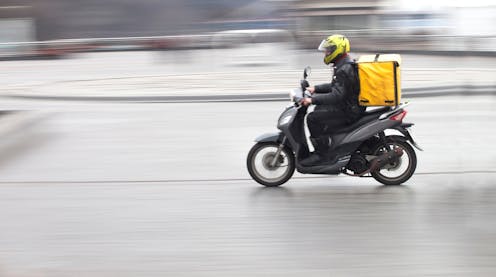
The gig economy is in trouble. Rideshare drivers are cancelling in droves. Wait times for food delivery are ballooning out and driver shortages are leading to food waste.
So, what’s going on? To find out more, I interviewed 30 Melbourne gig workers who worked as rideshare drivers, food deliverers or for task-based platforms such as Airtasker.
I also spoke to 30 customers who use such services, and to 20 industry stakeholders. My colleague, Elizabeth Straughan from the University of Melbourne, conducted a further ten interviews with gig workers after the pandemic set in, to learn how they’d been affected.
Our five years of research reveals an industry facing pushback from both workers and customers. Many workers we spoke to sought to leave the gig economy.
Customers, meanwhile, often have complicated feelings – including guilt and shame – about using rideshare or food delivery services that rely on gig economy workers. Many have already quit them.
Read more: 'Getting onto the wait list is a battle in itself': insiders on what it takes to get social housing
‘It just felt really entitled and selfish’
One of our customer interviewees, “Mel” (all names are pseudonyms), reported feeling uneasy about food delivery:
It just felt really entitled and selfish and gluttonous and ashamed. So, I wouldn’t want people to see me doing it and then I’d close the door and it’d be my secret thing inside […] the packaging made me feel I want to cry because there was so much of it […] so much guilt.
Mel also worried she was robbing herself of skills such as food preparation or interacting with real people when ordering and collecting food herself:
It’s teaching me helplessness.
Others lamented poor service. Khalid said:
It’s kind of lost the sense of quality and customer service that they used to have that I really enjoyed […] it got to the point where, say I’d order twice in one week, both orders would come, and they’d be cold. Basically inedible. The drivers would literally have no idea where they’re going.
His household has since vowed not to use food delivery services.
Another customer, Li, found she was spending too much on food delivery:
There are times where I used it for like breakfast, lunch and dinner and I was spending like almost A$200 a day on it […] I stopped it and started cooking for myself now.
She’s also cut back on ordering rideshares, saying:
It’s so much better to walk, because there’s so many things going on that you miss from a car.
 Some customers reported having complex feelings about using delivery services reliant on gig economy workers.
Shutterstock
Some customers reported having complex feelings about using delivery services reliant on gig economy workers.
Shutterstock
Workers looking for the exit
Many workers we interviewed said they’re looking to exit the gig economy.
James does rideshare and delivery work, but admits to feeling ashamed about it:
I actually don’t share with too many people that I’m doing rideshare. To most people, I just say ‘I’ve just stopped working’.
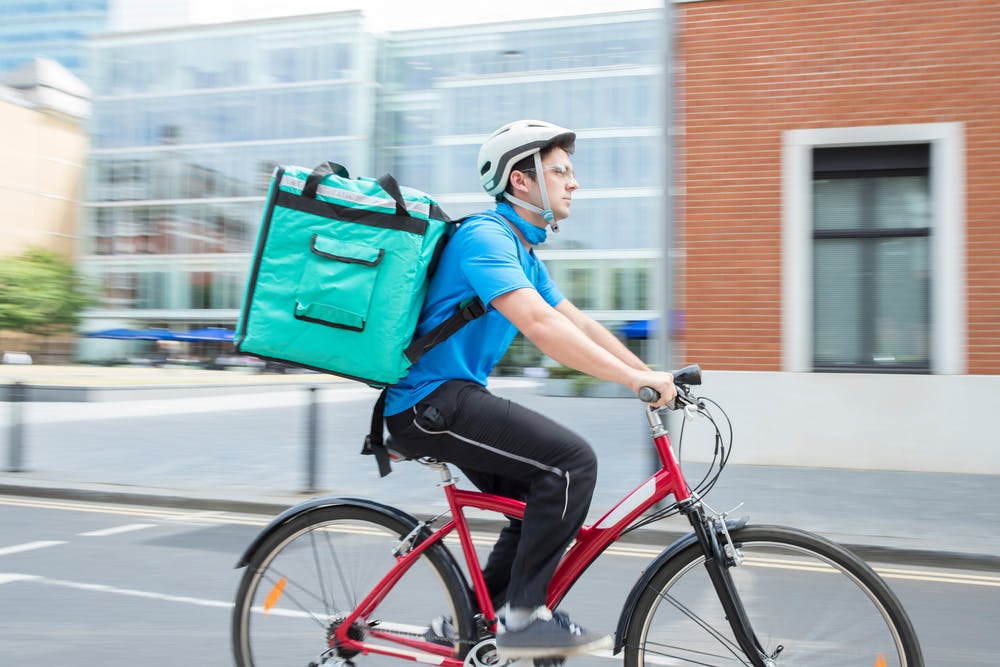
Lui does food delivery on a bike most nights. It’s punishing, low-paid, and he only drinks one glass of water so he doesn’t have to return home to use the bathroom. He told us:
In the future, I still have to get a full-time secure job because this delivery job is not enough for me.
Lui said he will leave this work off his CV.
Vijay, who has experienced racist abuse as a rideshare driver, says he’s also looking to get out:
There is no money in Uber anymore […] I’m desperately looking for work, to just jump into something else.
 The COVID-induced slowdown on migration has reduced the pool of gig workers to replace those leaving the industry.
Shutterstock
The COVID-induced slowdown on migration has reduced the pool of gig workers to replace those leaving the industry.
Shutterstock
Recommendations for policymakers, customers, platforms and gig workers
The gig economy is facing twin challenges: cost-of-living pressures are forcing customers to cut costs, while the COVID-induced slowdown on migration has reduced the pool of gig workers to replace those leaving the industry.
Platform companies are constantly adapting the way they work, but, as our research shows, many workers and customers are growing tired of the gig economy.
Our report made several recommendations to a range of different stakeholders.
Our recommendations for policymakers include:
- enhance oversight and regulation of platform companies by ensuring these workers are recognised as employees
- invest in ways to help people working in industries being displaced by platform-based gig work to transition to new training and employment opportunities
- continue to invest in public transport, a vital public good for the future of cities; rideshare is not a sustainable or socially just replacement for public transport
- provide adequate facilities in urban centres for food delivery riders and rideshare drivers to wait between gigs
- raise public awareness of the hardships faced by many gig workers
- apply tougher penalties for abusive behaviour towards gig workers.
Platform companies should:
- offer fairer and more consistent rates of pay
- provide paid training for workers on how to better deal with challenging interpersonal situations
- better assist workers who have been abused by customers or involved in accidents
- organise social events connecting workers and make them feel part of a valued community.
Customers should:
- always treat gig workers with courtesy and respect – even small kind gestures can significantly improve their well-being
- consider how the use of gig work platforms might reduce the viability of similar established services
- tip gig workers, until regulation improves their pay
- choose more socially progressive options, such as platform cooperatives, where they exist.
We recommended gig workers:
- recognise the transferable “soft skills” they’ve developed doing gig work
- connect with other workers to foster a sense of collective endeavour and belonging
- work together to bring about positive change in the regulation of gig work.
Read more: Growing up in a disadvantaged neighbourhood can change kids' brains – and their reactions
Authors: David Bissell, Associate Professor, The University of Melbourne
&media=https://www.modernaustralian.com/https://images.theconversation.com/files/469962/original/file-20220621-25-bx024p.jpg?ixlib=rb-1.1.0&rect=0%2C7%2C4861%2C2714&q=45&auto=format&w=496&fit=clip&description=workers%20and%20customers%20on%20the%20gig%20economy%20(and%20how%20to%20make%20it%20better) "Pin It")

















