
Sri Lankan asylum seekers are being deported from Australia despite fears of torture
- Written by: Kirsty Anantharajah, Research Associate at ANU School of Regulation and Global Governance (RegNet), Australian National University
Earlier last month, Thileepan Gnaneswaran was separated from his wife and 11-month-old baby and deported from Australia back to Sri Lanka, the country from which he had fled six years ago. On his arrival in Colombo, he was taken into custody and questioned by Sri Lankan police.
He’s since been released, but the ordeal was no doubt a traumatic experience, given his claims of being interrogated and tortured by Sri Lankan security forces during the country’s long-running civil war due to his family’s connections with to Tamil separatist group, the Liberation Tigers of Tamil Eelam (LTTE).
Read more: Not 'all is forgiven' for asylum seekers returned to Sri Lanka
Two other Tamil asylum seekers from Sri Lanka, a married couple in Queensland only identified publicly by their first names (Nadesalingam and Priya) for security reasons, also received deportation notices this year. They and their two small children were taken from their home in a dawn raid by immigration officials, and are currently being held in detention.
In late June, a court order temporarily halted the deportation of Priya and her eldest daughter. But the family now faces the possibility of being separated, as well.
These are just two of the more public cases of Tamil asylum seekers facing deportation from Australia in recent months. Given Australia’s intense secrecy on asylum issues, we know much less about 116 Sri Lankans who were in detention as of April, or the 42 holding precarious bridging visas who also face an uncertain future.
Wave of Tamil asylum seekers
Like Gnaneswaran, most Tamil asylum seekers in Australia have serious claims of abuse at the hands of Sri Lankan security forces.
This is generally due to actual or perceived links to the LTTE, which waged a 26-year insurgency against the Sri Lankan government. The war came to a brutal end when the Tamil fighters were defeated in 2009. Upwards of 100,000 civilians are believed to have died in the war.
Since the end of the war, some 115,000 Sri Lankans have fled the country, some ending up in Australia. Sri Lankan boat arrivals to Australia spiked in 2012, when they comprised the largest source country of asylum seekers. Between 2012-13, only 11.6% of their applications were accepted, even though many claimants had documented evidence of experiencing torture and violence in Sri Lanka.
Read more: Handing over Tamils to the state they fled breaks international law
Due to the increase in boat arrivals during this time, the Australian government introduced a policy of enhanced screening for asylum seekers in October 2012. The policy sought to “screen in” or “screen out” asylum seekers on the basis of a single entry interview, before they were even able to lodge a protection visa application. Because those “screened out” were never told why they’d been rejected, the policy lacked transparency and accountability.
The Australian Human Rights Commission noted that as of May 2013, immigration officials had conducted 2,596 screening interviews of Sri Lankan asylum seekers and returned more than a third of them to Sri Lanka.
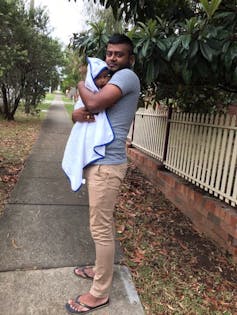 Tamil asylum seeker Thileepan Gnaneswaran before his deportation from Australia.
Tamil Refugee Council, Author provided
Tamil asylum seeker Thileepan Gnaneswaran before his deportation from Australia.
Tamil Refugee Council, Author provided
Two versions of the current political climate
Australian immigration officials rely heavily on “country information reports” provided by the Department of Foreign Affairs and Trade (DFAT) to determine claims for asylum. Passages from the reports are often extracted by immigration officials in visa refusal letters.
But in the case of Sri Lanka, these reports often differ from the experiences of Tamils living there and the observations of international organisations and human rights groups.
Take, for example, the issue of the threat of torture by police or the military. The 2018 DFAT report states:
The International Truth and Justice Project (ITJP) cited 24 cases of torture in 2016 and 2017. An Associated Press article published in November 2017 claimed 52 incidents of torture, which included the cases reported by the ITJP. … However, DFAT is unable to verify allegations of torture in 2016 and 2017.
A 2017 report on Sri Lanka by the UN High Commissioner for Refugees takes a more cautious approach:
The use of torture remains a serious concern. In its report submitted to the Committee against Torture, in November 2016, the Human Rights Commission of Sri Lanka stated that complaints it had received illustrated the routine use of torture by the police throughout the country as a means of interrogation and investigation.
In its 2017 report, ITJP documents torture during the same time period involving beatings, whippings, burnings with cigarettes, brandings with hot metal rods and other methods.
In addition, rape and other forms of sexual violence and humiliation continue under the (Maithripala) Sirisena regime. The methods of torture remain consistent and the severity of the torture is not diminishing in the cases the ITJP has studied for this report.
What happens when Tamils go home
There’s evidence that asylum seekers being sent back from Australia this year are also being targeted by security forces.
Shantaruban, a Tamil asylum seeker and former member of the LTTE, was deported in February this year, despite a request for a delay from the UN Committee Against Torture while it investigated whether he would face torture upon returning to Sri Lanka.
Read more: Why the increase in Sri Lankan asylum seekers?
According to the Tamil Refugee Council, a grassroots group that advocates for Tamil asylum seekers in Australia, Shantaruban was arrested at the airport in Colombo and has experienced ongoing harassment. Security forces have made multiple visits to his home and recorded the details of his wife and children, including the school his children attend.
Returned asylum seekers will continue to face such uncertainty and strife until policymakers in Australia – and other countries where Tamils have sought refuge – start looking beyond their country information reports and listen to the accounts of asylum seekers to find the truth instead.
Authors: Kirsty Anantharajah, Research Associate at ANU School of Regulation and Global Governance (RegNet), Australian National University


















