

Back-to-school blues are normal, so how can you tell if it's something more serious?
- Written by Vanessa Cobham, Professor of Clinical Psychology, The University of Queensland
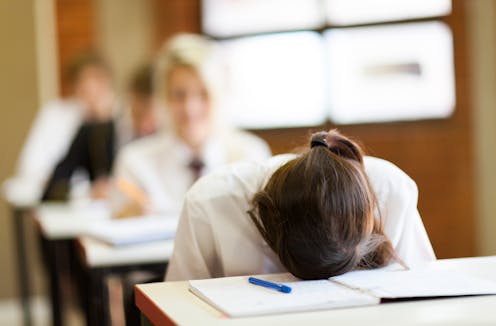
Many children come down with a case of the back-to-school blues as summer slips away. Having spent the holidays staying up late and having fun with friends and family, it can be a struggle to get back into a routine.
For some children, going back to school can also be daunting if they are worried about keeping up with schoolwork, friendship problems or how they might go with a new teacher and class. Nerves about returning to school can manifest in a number of ways, from irritability to tears at the school gates.
How can you cope with this routine challenge? And how do you tell if is it something more serious?
How to tackle black-to-school blues
There are a few ways you can support your child and the family as you all head back the daily routine of school.
Plan ahead together
There are lots of ways you can gently work in a new routine – from encouraging kids to pack their bag the night before, to thinking of lunchbox ideas together.
Giving your child choices and the chance to be part of the decision-making process around routines will give them a sense of ownership and independence. For example, you could negotiate bedtime for the school term.
There are other fun, simple ways you can support them through this time. For example, you could could create a music playlist for the school run, set aside a regular time after school to do something you both enjoy (like a play at the park, seeing friends or buying an ice-cream) or set up a reward system for getting homework done on time.
Chat about school
Check in regularly with your child about how they are feeling, particularly in the early weeks.
Try to do this in a way that shows that you’re interested rather than concerned. For example, keep the questions open-ended: “what happened in your day?”. And keep a positive focus: “what was the best bit of your day?”
Look after yourself
With a hundred different things to think about, many parents and carers often forget about their own needs. But it is crucial to give yourself time to recharge, and reach out for support from friends, family or a health professional if needed.
If you are calm and positive, your kids will find it easier to remain calm and positive, too.
Read more: A message to anxious parents as 320,000 Australian children start school
When is it more than the blues?
Nervousness about returning to school is normal. But some children will experience a level of anxiety about going to school that causes them significant problems.
Because everybody feels worried or anxious from time to time, it can be really tough to know how to distinguish between “normal” nervousness and problematic (or clinically significant) anxiety.
There are two key ideas to keep in mind: are the feelings causing high and persistent levels of distress? Are they stopping your child from doing what they want or should be able to do?
What should I look for?
When it comes to school-related anxiety, here are some specific signs to look for:
frequently feeling physically sick (such as a tummy or headache) and unable to go to school. Anxiety causes real physical changes in our bodies, so when kids say they’re feeling sick, they’re telling the truth. It’s just they might be describing “worry sick” as opposed to “doctor sick”
becoming teary, angry or aggressive when thinking or talking about school
being uncharacteristically slow to get moving on school mornings
avoiding activities that relate to school, such as joining a sporting team, putting on their uniform or going on a play date.
Is this school refusal?
School refusal or avoidance (when a child regularly fails to attend class for some or all of the day) has anecdotally been on the increase since COVID. The Senate is currently conducting an inquiry into the issue, with a report due in March.
If you’re starting to think your child’s anxiety may be falling into the problematic zone, you are not the only one. Anxiety is the second most common mental health problem experienced by all children in Australia (among girls, it takes first place).
Without treatment, children with clinically significant anxiety don’t tend to “just grow out of it”. Anxiety (often together with ADHD), tends to be the cause of school reluctance or refusal.
Next steps
If you notice your child is struggling to get to school, it’s important to act quickly. The more time kids miss in school, the harder it becomes for them to return.
The first thing to do is work with school staff. Your child’s classroom teacher will be able to tell you if they or someone else in the school is the best person to be talking to.
If necessary, seek further support from a health professional. You can start with your GP, who may suggest a referral to a psychologist. There are also free, evidence-based programs been developed by clinical psychologists for parents of children who are experiencing anxiety.
Although it can be daunting, it is important to know you are not alone and there are interventions that can help.
If this article has raised issues for you or someone you know, you can call Lifeline on 13 11 14 or Kids Helpline on 1800 55 1800.
Authors: Vanessa Cobham, Professor of Clinical Psychology, The University of Queensland

















