

The world’s oldest fossils or oily gunk? New research suggests these 3.5 billion-year-old rocks don’t contain signs of life
- Written by Birger Rasmussen, Adjunct Professor, The University of Western Australia
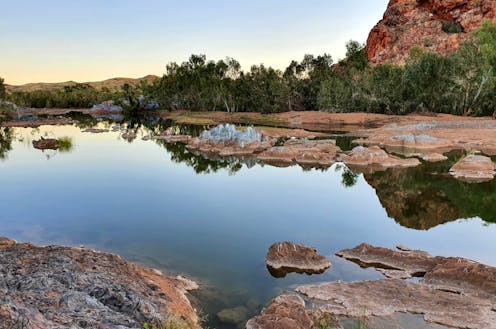
The Pilbara region of Western Australia is home to one of the most ancient surviving pieces of Earth’s crust, which has been geologically unchanged since its creation some 3.5 billion years ago.
Some of the oldest signs of life have been found here, in the North Pole area west of the town of Marble Bar, in black rocks composed of fine-grained quartz called chert.
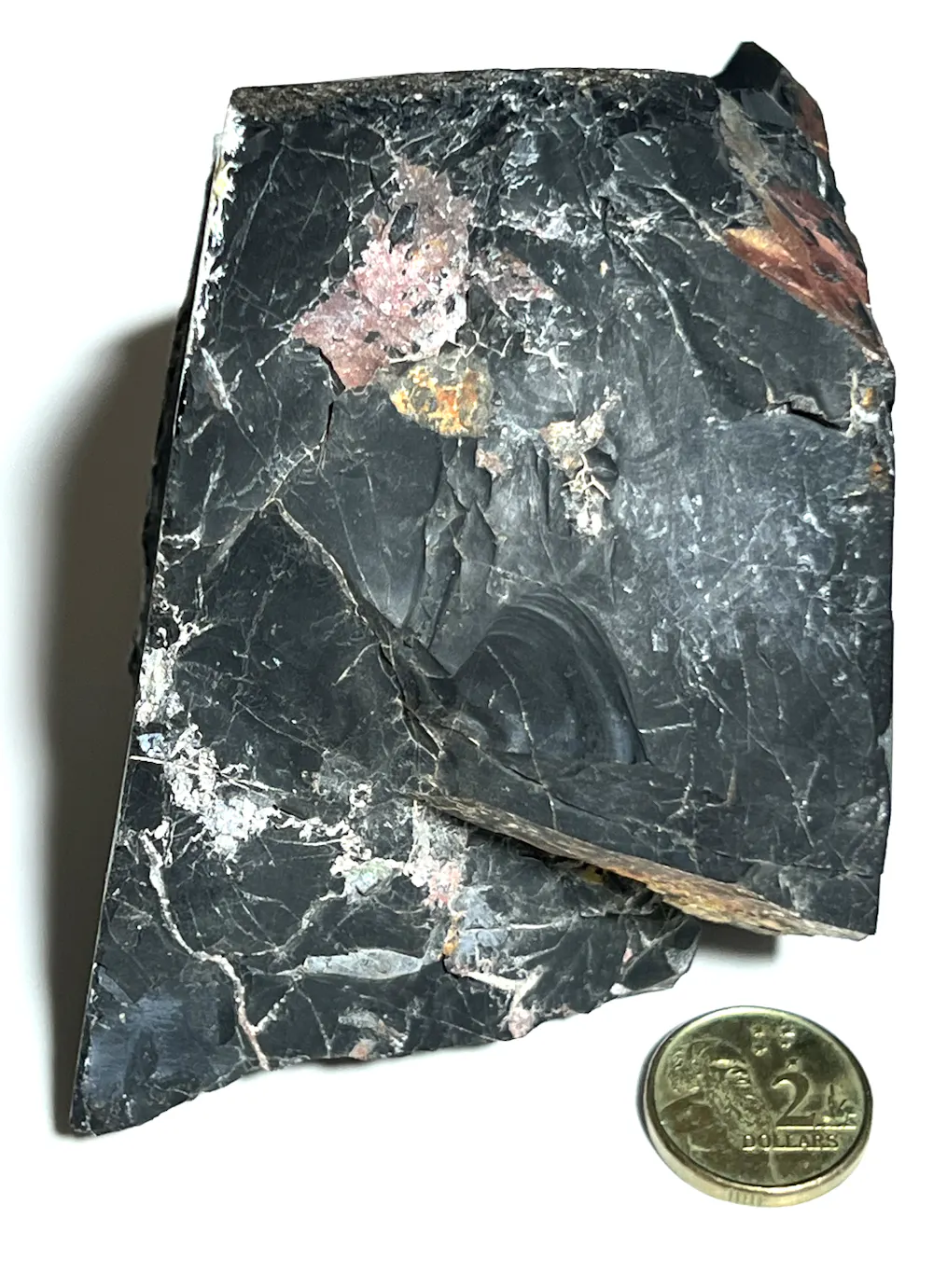
Some features in the so-called “Apex chert” have been identified as the fossilised remains of microbes much like the bacteria that still survive today. However, scientists have debated the true origin of these features ever since they were discovered 30 years ago.
In new research published in Science Advances, we show the carbon-rich compounds also found in the chert may have been produced by non-biological processes. This suggests the supposed “fossils” are not remnants of early lifeforms but rather artefacts of chemical and geological processes.
Controversial Pilbara fossils
In 1993, American palaeobiologist William Schopf spotted carbon-rich filaments in outcrops of the 3.45 billion year old Apex chert. He interpreted them as the charred remains of fossilised microbes similar to cyanobacteria, which were Earth’s first oxygen-producing organisms and are still abundant today.
The existence of fossilised cyanobacteria in such old rocks would imply that life was already pumping oxygen into the air more than a billion years before Earth’s atmosphere became rich in oxygen.
A key piece of evidence in favour of life was the association of organic compounds with the ancient fossils. This is because living cells are made up of large organic molecules, which comprise mainly carbon as well as hydrogen, nitrogen, oxygen and other elements.
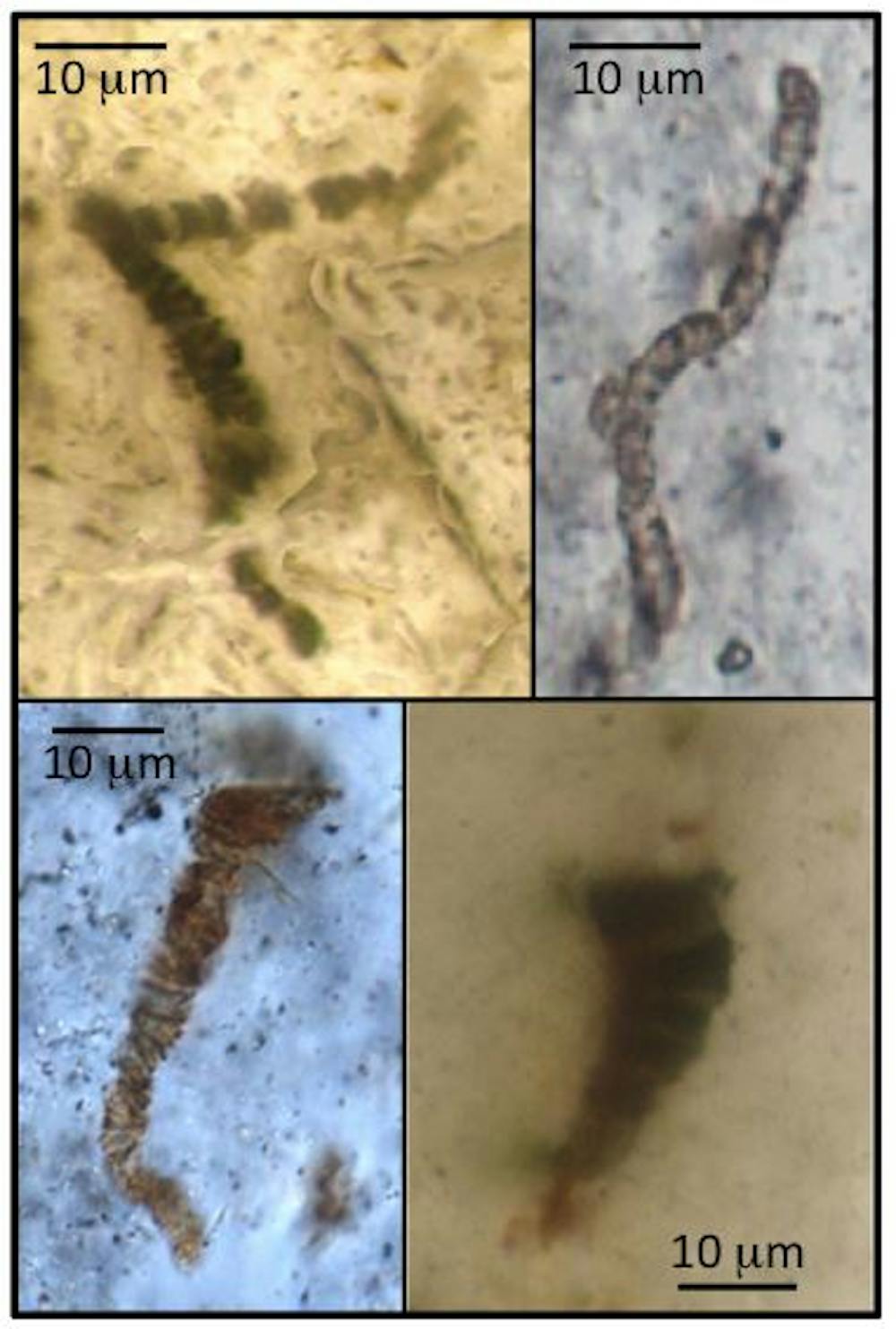 Tiny structures like these, found in ancient black chert, have been interpreted as fossilised bacteria.
Brasier et al.
Tiny structures like these, found in ancient black chert, have been interpreted as fossilised bacteria.
Brasier et al.
In 2002, Schopf’s interpretation was challenged by English palaeobiologist Martin Brasier and his team. They showed the “fossils” displayed a variety of shapes and sizes uncharacteristic of cyanobacteria, and indeed, inconsistent with microbial life. What’s more, they also showed the fossil-bearing black cherts were not horizontal beds deposited on the seafloor, but angled veins cutting across the underlying layers of rock.
The fossil-bearing cherts appeared to have formed at high temperatures during volcanic activity. Brasier argued this environment was hostile to life and the “fossils” were, in fact, formed from graphite impurities in the rock. They also speculated that the carbon associated with the “fossils” may not even be biological in origin.
A lively debate ensued, and it has continued ever since.
Microbes or hot fluids?
To try to determine where the carbon-rich deposits in the black chert veins came from, we took a very close look at them with a high-magnification electron microscope.
We found it did not come from fossilised bacteria. The oil-like substance occurs as residues in fractures and as petrified droplets, which have previously been mistaken for ancient fossils.
The textures in the black chert veins indicate they were formed when hot fluids rich in silica and carbon moved through cracks in lava flows below vents in the seafloor similar to modern “black smoker” vents. Upon approaching the seafloor, the hot fluids infiltrated layers of volcanic sediment, replacing it with black chert.
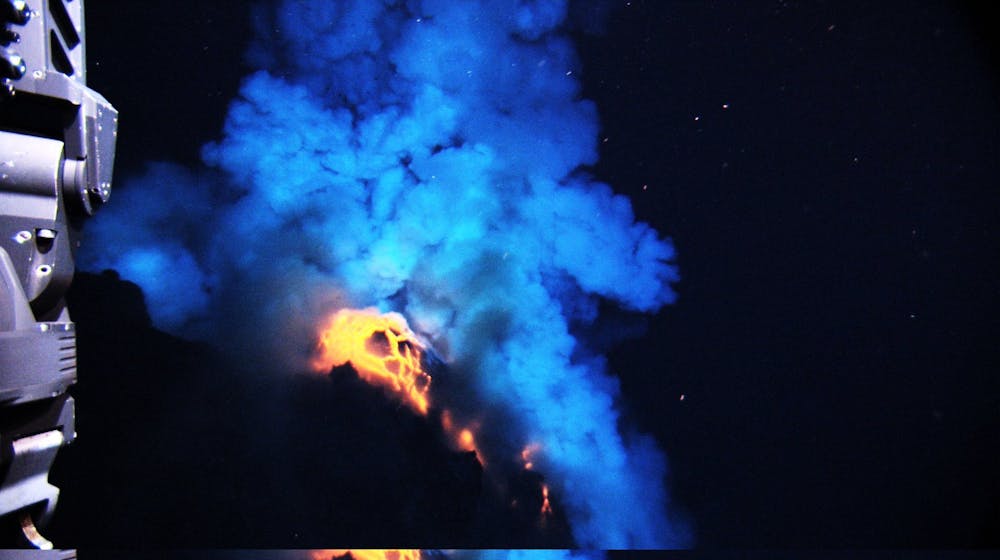 Black chert veins may have formed when water came into contact with lava at seafloor vents.
NOAA
Black chert veins may have formed when water came into contact with lava at seafloor vents.
NOAA
If the carbon came from such a hot fluid, this supports findings that the carbon-rich filaments in the Apex chert are not fossils. However, it also raises a new question.
Typically, organic compounds such as oil and gas, which are referred to as “fossil fuels” because they form from the dead remains of algae, bacteria and plants, are generated when these remains are buried and heated to temperatures above 65℃. Chemical reactions release organic compounds, which may accumulate to form oil and gas fields.
However, the sediments from the North Pole area are very thin (less than 50m thick), poor in organic molecules, and sandwiched between kilometres of lava flows. So, how did the organic compounds form in such surroundings?
Seafloor vents on early Earth
A possible alternative pathway is suggested from experimental evidence and research on Martian meteorites. In the absence of traditional biological sources, some of the organic molecules in the chert veins could have formed by non-biological processes.
For instance, when hot water circulates through lava or other igneous rock, water and carbon dioxide can react with mineral surfaces to form organic compounds. Similar reactions have been proposed to explain the presence of organic molecules in Martian meteorites and in some igneous rocks on Earth.
Read more: A 3.5-billion year old Pilbara find is not the oldest fossil: so what is it?
The carbon in black cherts from the Pilbara outback may therefore represent relics of organic compounds that were produced by reactions between water and rock. Indeed, on the early Earth seafloor vents may have created more organic compounds than biological processes did, making it difficult to distinguish between authentic carbon-bearing fossils and oily artefacts.
While more work is underway, early results suggest life was only just surviving 3.5 billion years ago, struggling to gain a foothold in an inhospitable environment. The world then was wracked by regular volcanic eruptions that covered Earth’s surface in lava, and bathed in harsh solar radiation streaming through an atmosphere with no protective ozone layer.
Looking further back in time, the black cherts offer a glimpse of a lifeless planet. Reactions between water and rock at seafloor vents produced a cocktail of organic compounds, perhaps supplying the raw materials for the assembly of the first living cells.
Authors: Birger Rasmussen, Adjunct Professor, The University of Western Australia

















