

200 experts dissected the Black Summer bushfires in unprecedented detail. Here are 6 lessons to heed
- Written by Libby Rumpff, Senior Research Fellow, The University of Melbourne
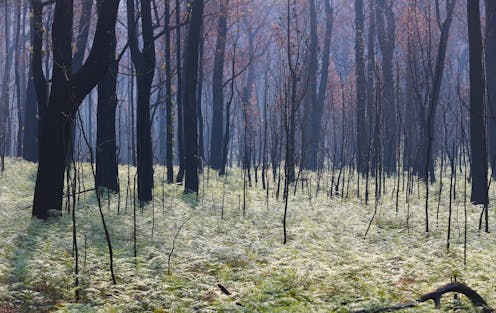
The Black Summer bushfires of 2019-20 were cataclysmic: a landmark in Australia’s environmental history. They burnt more than 10 million hectares, mostly forests in southeast Australia. Many of our most distinctive, ancient and vulnerable species were worst affected.
A new book released today, titled Australia’s Megafires, synthesises the extent of the losses. The work involved contributions from more than 200 scientists and experts. It provides the most comprehensive assessment yet of how the fires affected biodiversity and Indigenous cultural values, and how nature has recovered.
The work reveals a picture of almost unfathomable destruction. More than 1,600 native species had at least half their range burnt. And hundreds of species and ecosystems became nationally threatened for the first time, or were pushed closer to extinction.
We must use Black Summer as an opportunity to learn – and make fundamental changes. Here, we outline six lessons to heed.
We must use Black Summer as an opportunity to learn – and make fundamental changes. Shutterstock1. Natural systems are already stressed
Problem: Even before Black Summer, most Australian ecosystems were already struggling due to multiple threats.
The threatened alpine bog communities in the Australian Capital Territory, for example, were already being damaged by climate change, weeds and feral animals. Then the Black Summer fires came through and burnt 86% of known sites.
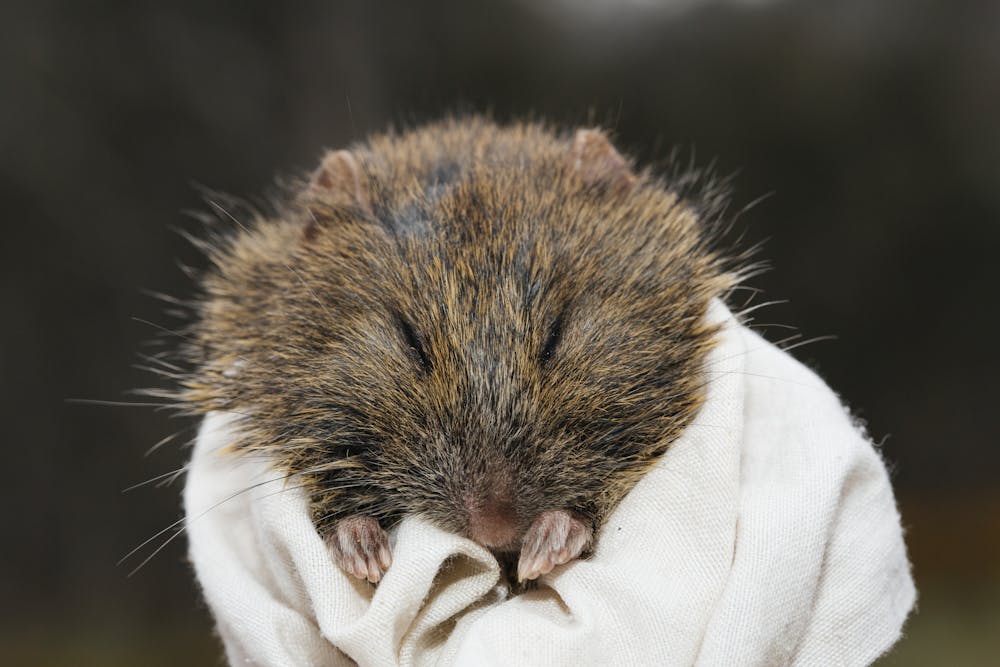
Put all these threats together, and recovery for these ecosystems – which are slow to develop – will not be easy. They may be lost altogether, along with threatened animals that call the bogs home, such as the broad-toothed rat.
Solution: Managing crises such as fires is not enough on its own. Our natural systems must be made more resilient. More effective legislation and management is needed to control all threats that degrade nature. And in some cases, threatened species may need to be relocated to put them out of harm’s way.
2. We don’t know what, or where, all species are
Problem: Thousands of Australian species are not (or barely) known to science. It’s very hard to protect a species if we don’t know it exists, where it lives or how it responds to fire.
For example, it’s likely that the Black Summer fires sent many invertebrate species – such as insects and spiders - to extinction. But we’ll never know because they were never described by Western science, and their distributions were never traced.
Only about 30% of Australia’s estimated 320,000 invertebrate species have been described by taxonomists. Of those that are described, most are known from only one or two records, which provides only limited insight. Information is similarly poor for fungi.
Solution: We need to gather more information about how species and environments respond to fires, and to what extent conservation efforts after fires are working. This is especially true for poorly known species groups. And the data should be made accessible to all who seek it.
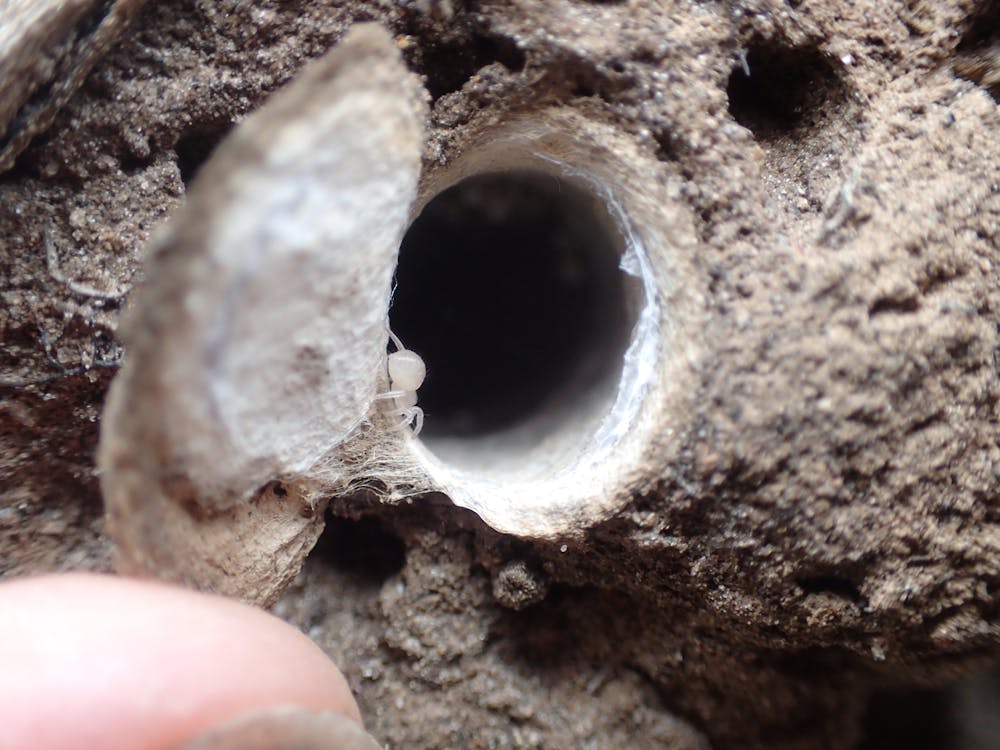 Kangaroo Island Micro-trapdoor spiders were among the many invertebrate species affected by the fires.
Photo: Jess Marsh
Kangaroo Island Micro-trapdoor spiders were among the many invertebrate species affected by the fires.
Photo: Jess Marsh
3. Emergency responders don’t have enough information
Problem: Emergency responders told us that during the fires, they didn’t have the information to prioritise the most important areas for conservation.
We found across 13 agencies, just two threatened species were covered by a specific and accessible emergency plan: the Wollemi pine and the eastern bristlebird. These plans told emergency responders what rescue action was needed.
For example, a plan was in place to protect the only known natural stand of Wollemi pines, in New South Wales. This prompted an extraordinary firefighting effort during the Black Summer fires. The effort was successful.
Solution: More than 1,800 of Australia’s plant and animal species are at risk of extinction. We must identify which are a priority, where they are, and how to protect them from bushfires. This information must be communicated to emergency responders and incorporated into regional fire management plans.
4. Biodiversity usually comes last
Problem: Traditionally, the hierarchy of what to protect in disasters goes like this: first human life, then infrastructure, and finally biodiversity. If this hierarchy continues, some of our most significant species and natural environments will be lost.
In one example recounted to the book’s researchers, fire authorities decided to prioritise saving a few farm sheds over 5,000 hectares of national park.
Solution: There are cases, such as avoiding extinctions, where protecting nature is more important than saving infrastructure. Community priorities should be surveyed, and the information used to inform planning and policy.
Legal obligations to protect biodiversity in fires are few. The current re-working of federal environment laws provides an opportunity to change this.
5. Conservation funding is grossly insufficient
Problem: Decades of sustained management effort is needed to recover many species and environments affected by fire. Unfortunately, funding for the task is short-term and inadequate.
For example, both state and federal governments invested heavily in controlling feral herbivores, such as deer, in the months after the fires. This was done to protect unburnt and regenerating vegetation. Yet, eventually the funding dries up and feral populations rebound.
Extra funding for some short-term recovery projects flowed in the wake of the Black Summer fires – from governments, the private sector and the community. But for many species, recovery will be a long-term proposition – if it happens at all.
Solution: Governments must stop seeing spending on the environment as optional. It’s as fundamental to our society and well-being as health and education – and funding levels should reflect this.
6. First Nations knowledge has been sidelined
Problem: First Nations people have used fire to manage forested landscapes for millenia. Yet their knowledge and perspectives have not been incorporated into forest fire management and recovery.
So how has this come about? Barriers identified in the book include inadequate employment and training opportunities for First Nations people to undertake cultural burning activities. Also, First Nations people are frequently denied access to Country to rekindle and develop their land management skills, and lack the legal authority to undertake cultural burning.
And as the book shows, cross-cultural challenges mean non-Indigenous fire officers can have limited appreciation or knowledge of Indigenous cultural burning protocols.
Solution: Indigenous people should be supported to rekindle cultural fire practices in forests. And non-Indigenous fire managers should, with consent from First Nations people, incorporate these practices into policies governing fire management and recovery.
What’s more, species and sites that are culturally important to First Nations people should be prioritised for protection and recovery.
Read more: Fire management in Australia has reached a crossroads and 'business as usual' won’t cut it
Harnessing our grief
The Black Summer fires showed people care. The disaster triggered an outpouring of grief from Australia and around the world. We understood one thing clearly: we were losing what enriches our lives.
But protecting our precious natural assets requires a fundamental reset of Australia’s fire management.
More broadly, the Black Summer fires kickstarted a huge collaborative recovery effort from governments, conservation and research organisations, and First Nations groups. If we’re to be better prepared for future megafires, this impetus must continue.

Authors: Libby Rumpff, Senior Research Fellow, The University of Melbourne

















