

NZ's critical infrastructure is too important to fail – greater resilience is urgently needed
- Written by Suzanne Wilkinson, Professor of Construction Management, Massey University
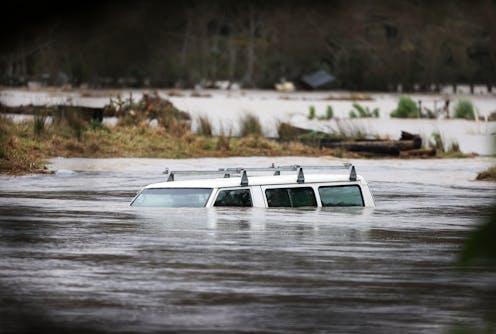
Flooded roads, our largest international airport underwater, overwhelmed storm water systems and significant sewage discharge into the sea and streams. The recent floods and then cyclone in Auckland are a stark reminder that our basic infrastructure lacks the resilience needed to survive major weather events.
When we talk about infrastructure resilience, we’re talking about an infrastructure system that continues to meet community needs – even after earthquakes, floods or cyclones.
After years of neglect, Auckland’s roads and water systems were simply unable to cope with the unprecedented rainfall and flooding seen in January. While the rainfall may have broken records, there have long been calls to future-proof the city’s infrastructure in the face of climate change.
In large part, this has not happened.
The importance of lifeline utilities
Roads, airports and water systems are included on a list of critical infrastructure described as “lifeline utilities”. These fall under the Civil Defence Emergency Management Act 2002, which requires that the utility is able to function to the fullest possible extent during and after an emergency.
The fact that many of Auckland’s lifeline utilities buckled during the floods points to failures to meet the basic requirements of the Act.
The Auckland Lifelines Group – of which Auckland Council, Auckland Airport, Vector and Watercare are members – falls under the National Lifelines Council. Both organisations have been helping Auckland’s essential utilities develop resilience and keep critical infrastructure running during an emergency.
They have also been calling for more investment in infrastructure resilience, including highlighting the problem in transportation.
Remove profit requirements
According to the 2020 edition of the New Zealand Critical Lifelines Infrastructure National Vulnerability Assessment, significant action is required to prevent lifeline utilities from being locked into inflexible or short-term response options.
The report also took a dim view of the funding and regulatory models for both public and private utility organisations that required a commercial return on resilient infrastructure improvement projects.
Read more: Slippery slopes: why the Auckland storm caused so many landslides – and what can be done about it
Creating resilience in infrastructure should not require a commercial return on investment. Instead, resilience should be embedded in every decision made regarding infrastructure development and improvement.
The Infrastructure Commission endorses this view in their recently released report. The authors argued that making New Zealand’s infrastructure more resilient and investing in resilience planning will enable quicker recovery from natural and human-created disasters, minimising the impact on our society and economy.
Long-term planning needed
We need to rethink what infrastructure gets built and what gets retrofitted. We also need to reexamine how we incorporate and fund resilience thinking across the organisations that manage our lifeline utilities.
Resilience needs to start at the organisational level by engaging staff in problem solving, scenario planning and by providing training to develop innovative thinking.
Resilience also needs to be embedded at all levels of an organisation. Without training and advice, employees are less likely to be proactive and useful during an event.
During the recent flooding, the response from Auckland Airport, Auckland Transport and Auckland Council showed there was a lack of organisational resilience planning.
But there is a more serious issue: we have infrastructure that is ageing, built in unsuitable places or built for today’s population, not the population of the future. Resilience requires an inter-generational approach, which means creating infrastructure that will suit growing populations and changes in the way we live.
Our research on flooding in Northland advocated for better community-led response plans that were integrated with infrastructure improvements and collaboration with councils to reduce the risk of future floods.
The current methods of decision making are not optimal, meaning infrastructure is built without an intergenerational view. We inevitably end up with infrastructure that is not fit for the populations they are supposed to serve, such as new roads that are congested soon after opening.
Nor do our design standards adapt swiftly to new pressures that come with climate change.
Robustness and redundancy
Infrastructure needs to have some robustness and redundancy. Robustness means being able to withstand hazard events without significant damage. Redundancy means spare capacity, such as alternative routes for transport.
With both, we have infrastructure that can operate during unusual conditions. For Auckland Transport, for example, this means rethinking routes and creating alternatives before events occur. It also means creating a network strong enough to cope with increased demands beyond business-as-usual traffic levels.
Utility providers don’t have to reinvent the wheel to identify what needs to change. Auckland Lifelines Group, the National Lifelines Council and Massey University’s School of Built Environment have done research to identify critical infrastructure, critical interdependencies between infrastructure and how to build resilient infrastructure.
Critical infrastructure – such as airports, significant roads and our water systems – should be treated as too important to fail. The recent floods are a warning that prioritising resilience for our infrastructure is urgently needed.
Authors: Suzanne Wilkinson, Professor of Construction Management, Massey University

















