

Clear nutrition labels can encourage healthier eating habits. Here's how Australia's food labelling can improve
- Written by Gary Sacks, Professor of Public Health Policy, Deakin University
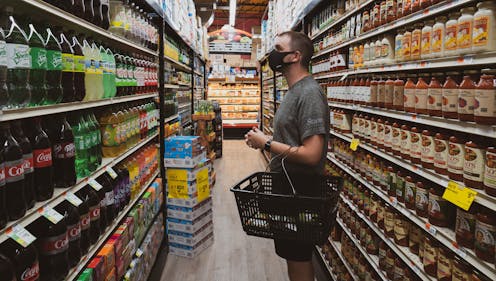
In your trips to the supermarket, you’ve probably come across the Health Star Rating on the front of some foods. You might even be one of the 70% of Australians who say they read the detailed nutrition information on the back of product packaging.
Nutrition labelling is designed to help people make informed food purchases, and encourage shoppers to select and eat healthier options.
But Australia’s food labelling system is under-performing. Here’s how we can make it more effective.
Read more: Australia is dragging its feet on healthy eating. In 5 years we've made woeful progress
Labels help us choose healthier options
Nutrition labelling has been shown to lead to small but important improvements in the healthiness of what people eat.
A recent review concluded that food labels tend to encourage people to consume higher amounts of healthier foods. But most food label formats aren’t very effective in stopping people from selecting unhealthy foods.
While the effects of food labels may be small, such changes on a large scale can lead to healthier eating habits across the population.
Which labelling format works best?
Studies show people favour having front-of-pack nutrition labels in addition to the more detailed back-of-pack information.
People tend to understand simpler, colour-coded labels more easily than more complex, monochrome labels. And they consistently prefer “interpretive” labelling, like Australia’s Health Star Rating, that provides clear guidance on how healthy a particular product is.
Recent evidence indicates warning labels, such as those indicating high amounts of particular nutrients, are likely to be helpful in steering people away from unhealthy foods.
Several countries have recently introduced warning labels on unhealthy foods. In Chile, for example, it is mandatory for products to display black, octagon-shaped “stop” signs on foods that exceed limits for sugar, sodium (salt), saturated fat and energy.
The introduction of Chile’s warning labels, as part of a comprehensive nutrition policy suite, has led to improvements in the healthiness of Chilean diets at the population level.
How do Australia’s labelling rules stack up?
Australia’s Health Star Rating system performs relatively well in helping people to understand the healthiness of different products.
And it has likely led to some improvements in product healthiness, as manufacturers have reformulated products to achieve a higher Health Star Rating.
But, as a voluntary scheme, Health Star Ratings have been implemented on less than half of eligible products. This limits people’s ability to compare product healthiness across the board.
Perhaps as a result of the limited rollout, there’s no compelling evidence to show that the Health Star Rating system has changed what people buy.
How can we make our food labelling more effective?
Research points to several suggestions to optimise the design of food labels in Australia.
First, if the Health Star Rating scheme were made mandatory, it would help people compare the healthiness of each product – not just the select few products that are labelled now.
This would work best if coupled with improvements to the algorithm used to calculate health stars to better align the scheme with the Australian Dietary Guidelines.
Read more: We looked at the health star rating of 20,000 foods and this is what we found
Second, the addition of colour (through the use of a spectrum linked to the product’s healthiness) to the existing Health Star Rating design would increase its visibility and is likely to enhance the performance of the scheme.
One option for colour-coding would be for the healthiest rating to be green, with red for the least healthy.
Third, the addition of warning labels could be used to clearly show products high in risky nutrients such as sodium and sugar.
There is emerging evidence that the use of warning labels and Health Star Ratings in combination is more effective, and can discourage consumption of unhealthy products.
Flipping to the back of food packaging, public health groups consistently recommend including added sugar levels in the existing nutrition information panel. This is currently under consideration by the food standards regulatory body.
What else could we do?
In considering ways to enhance the impact of food labels, it’s worth looking to other elements of package design.
The packaging on many unhealthy Australian products, such as sugary breakfast cereals and snack bars, currently features cartoon characters and other promotional techniques designed to appeal to children.
Chile banned the use of cartoon characters on food packaging alongside the implementation of warning labels. This likely contributed to the benefits observed there.
More radical options include exploration of plain packaging for unhealthy food – similar to the packaging rules for tobacco. Evidence from New Zealand has shown plain packaging can lower young people’s desire to buy unhealthy products such as sugary drinks.
Experts have argued plain packaging would help challenge the marketing power of large food manufacturers. It would also put unhealthy foods on a level playing field with unbranded fruits and vegetables.
The inclusion of environmental sustainability labelling, alongside Health Star Ratings, is likely to provide additional important information for shoppers.
We need a comprehensive approach
While food labelling is an important tool to inform people about product healthiness, it is only likely to play a supporting role in efforts to address unhealthy diets.
Broader changes to the way foods are produced and marketed are likely to be more potent. These changes, such as legislation to reduce children’s exposure to unhealthy food marketing and taxes on sugary drinks, can work in conjunction with food labelling regulations as part of a cohesive strategy to improve population health.
Read more: Are home-brand foods healthy? If you read the label, you may be pleasantly surprised
Authors: Gary Sacks, Professor of Public Health Policy, Deakin University

















