

the meaning of food in crime fiction
- Written by: M. Jean Anderson, Associate Professor / Reader in French, Victoria University of Wellington
In English, we might claim we could “murder a good steak”. Italian and Spanish speakers might “kill for a coffee”, and Germans refer to acute hunger as Mordshunger or murderhunger – but do people really kill for food?
Cannibalism is by no means the only way in which crime and food are linked. Disputes over food may lead to murder. In the Bible, when Abel’s sacrifice of meat is preferred to Cain’s second-rate offering of produce, jealousy results in a deadly attack.
Food may also be a deadly weapon, killing through poison, or as in Roald Dahl’s fiendish short story Lamb to the Slaughter, serving as a blunt instrument.
Indeed, research has shown that the brain does not differentiate between real-life and fictional sensory triggers. Food memories can really bring a story alive.
We are the editors of Blood on the Table: Essays on Food in International Crime Fiction, in which scholars from around the world offer readings of 20th and 21st-century crime writing from several countries. Authors considered include Stieg Larsson, Sara Paretsky, Donna Leon, Andrea Camilleri, Fred Vargas, Ruth Rendell, Anthony Bourdain, Georges Simenon, Arthur Upfield, Leonardo Padura, and Jean-François Parot.
Television productions analysed include the Inspector Montalbano series, the Danish-Swedish Bron/Broen (The Bridge) and its remakes, the English-French The Tunnel and the American The Bridge.
 Luca Zingaretti in Inspector Montalbano: loves a good meal.
Palomar,Rai Fiction
Luca Zingaretti in Inspector Montalbano: loves a good meal.
Palomar,Rai Fiction
Rather than serving to highlight a limited range of functions (as a weapon, as an element of characterisation or setting), food has immense potential in crime fiction. Our book addresses a broad range of questions, including what role recipes play in these narratives, whether crimes can be committed against food and how eating rituals relate to cultural belonging, sex, gender or class.
Read more: Friday essay: from convicts to contemporary convictions – 200 years of Australian crime fiction
Culinary mysteries
In chef and author Anthony Bourdain’s fictional and factual writings, eating and the preparation and experience of food are always situated on the edge. The professional kitchen is not primarily a place where delicious food is produced but is instead a site of violence.
This kitchen-as-crime-scene contradicts its expected role as the cultural and emotional centre of the domestic and social sphere.
 A mural in California commemorating the late Anthony Bourdain: his food writings depicted the kitchen as a site of violence.
Eugene Garcia/EPA
A mural in California commemorating the late Anthony Bourdain: his food writings depicted the kitchen as a site of violence.
Eugene Garcia/EPA
Food is a pervasive element of Andrea Camilleri’s Inspector Montalbano franchise. Eating rituals may increase dramatic suspense, but they also mark place and cultural identity and contribute to the psychological characterisation of the detective hero.
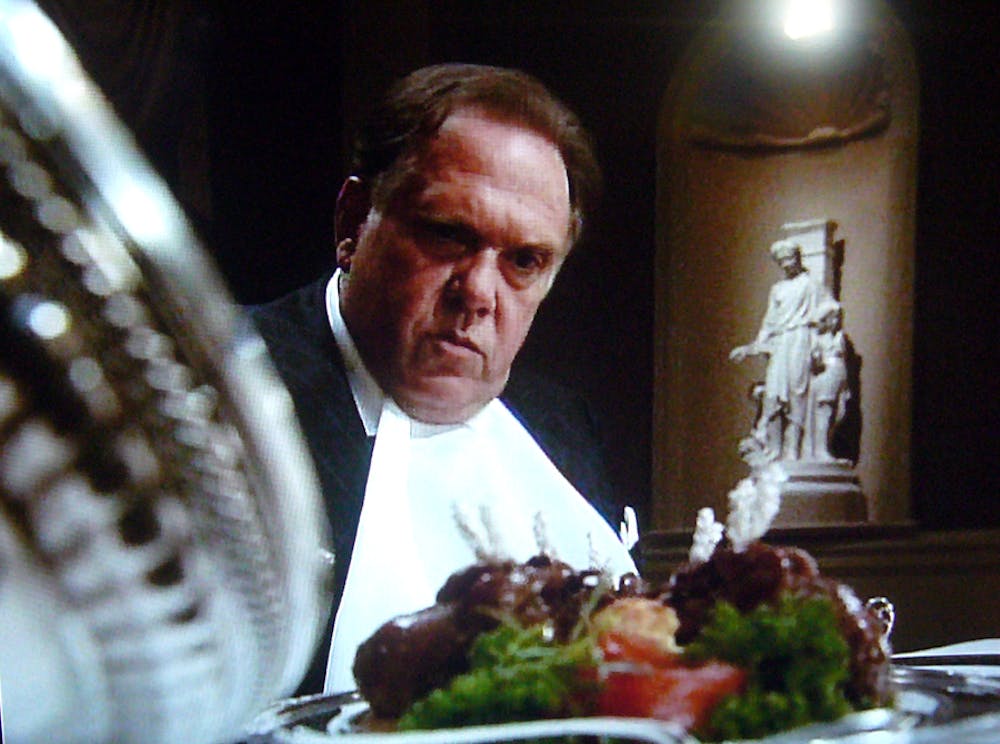 Maury Chaykin in The Golden Spiders: A Nero Wolfe Mystery (2000).
A&E Television Networks,Jaffe/Braunstein Films,Pearson Television International
Maury Chaykin in The Golden Spiders: A Nero Wolfe Mystery (2000).
A&E Television Networks,Jaffe/Braunstein Films,Pearson Television International
Food plays a crucial role in outlining Montalbano’s distinctive personality, just as it does for other famous detectives such as Georges Simenon’s Maigret, for whom eating is an essential part of any investigation. Rex Stout’s Nero Wolfe is a connoisseur of fine cuisine. Vázquez Montalbán’s Pepe Carvalho is both an experienced cook and a famous glutton.
In recent years, culinary mysteries have become very popular in Germany, marketed to both fans of detective fiction and food aficionados. Ella Danz’s Georg Angermüller mystery series features a police inspector who likes to cook and eat. In her novel Geschmacksverwirrung (Taste Confusion), a food critic dies after being force-fed goose liver pâté in the same way geese and ducks are force-fed to produce foie gras.
 While investigating the crime, the detective confronts issues like factory farming and ethical food production. Solving crimes requires skills that can equally be used to discover hidden truths about food. Truffled goose liver pâté may contain large amounts of pork fat and only a tiny amount of truffle. Factory animals never get to see the green grass and blue sky on the packaging.
Danz provides an appendix with recipes, a practice that has proven popular with readers. Adding recipes to culinary mysteries also allows bookstores to display the books in both the cook book and and mystery sections, thus doubling exposure.
Feminist food rituals
Feminist crime fiction sheds a different light on food. Sue Grafton, Sara Paretsky and Dominique Sylvain all portray eating as an expression of female independence and agency in opposition to gender norms, challenging the cultural ideal of thinness.
The eating habits of Grafton’s Kinsey Millhone not only signal that women are allowed to enjoy heavy food (McDonald’s), but they are just as much a commentary on the obsession with health and healthy food in American culture. In the French context, both Sylvain’s and Fred Vargas’s female detectives show strong appreciation for good food, prepared well.
While investigating the crime, the detective confronts issues like factory farming and ethical food production. Solving crimes requires skills that can equally be used to discover hidden truths about food. Truffled goose liver pâté may contain large amounts of pork fat and only a tiny amount of truffle. Factory animals never get to see the green grass and blue sky on the packaging.
Danz provides an appendix with recipes, a practice that has proven popular with readers. Adding recipes to culinary mysteries also allows bookstores to display the books in both the cook book and and mystery sections, thus doubling exposure.
Feminist food rituals
Feminist crime fiction sheds a different light on food. Sue Grafton, Sara Paretsky and Dominique Sylvain all portray eating as an expression of female independence and agency in opposition to gender norms, challenging the cultural ideal of thinness.
The eating habits of Grafton’s Kinsey Millhone not only signal that women are allowed to enjoy heavy food (McDonald’s), but they are just as much a commentary on the obsession with health and healthy food in American culture. In the French context, both Sylvain’s and Fred Vargas’s female detectives show strong appreciation for good food, prepared well.
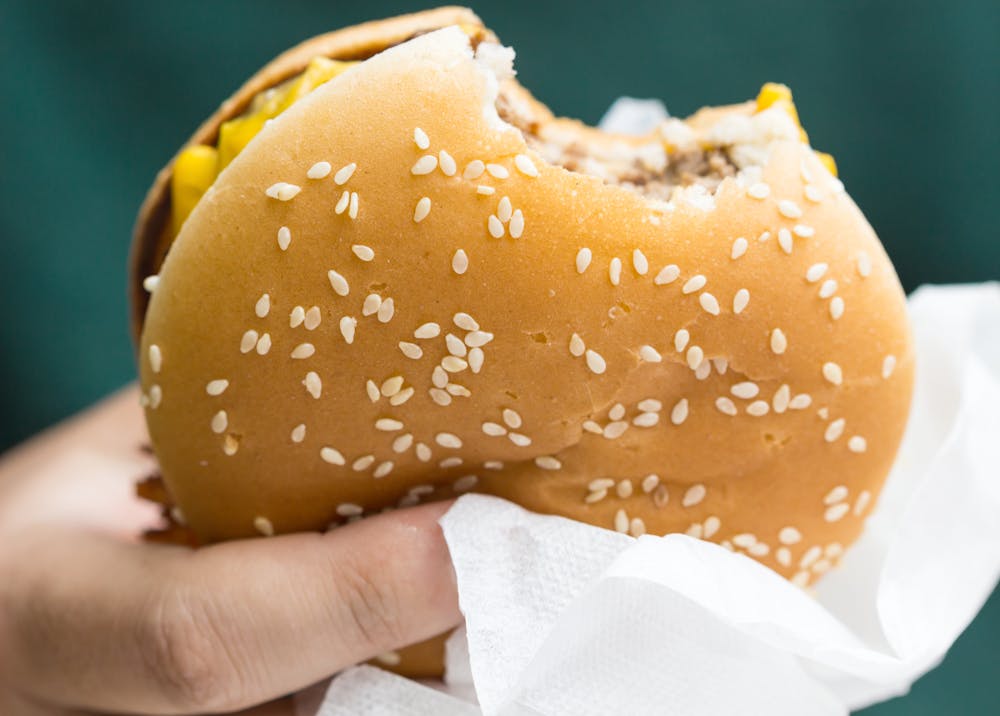 Even eating McDonalds can be a sign of liberation for a fictional female detective.
Shutterstock
Another, somewhat opposing idea in the novels is an indifferent or oblivious attitude to eating. The female detective who stares into her empty fridge is a recurrent scene in all the series, representing another blow to the traditional association of femininity and domesticity. Replacing marriage and family with friends is a typical feature of feminist crime fiction that rejects traditional gender roles, highlighting the female detective’s independence.
Bars and restaurants play a crucial role in this. The importance attached to the local eating place that functions as a headquarters inhabited by friends, as opposed to family, reflects the detective’s liberation from the domestic sphere and traditional femininity.
Even eating McDonalds can be a sign of liberation for a fictional female detective.
Shutterstock
Another, somewhat opposing idea in the novels is an indifferent or oblivious attitude to eating. The female detective who stares into her empty fridge is a recurrent scene in all the series, representing another blow to the traditional association of femininity and domesticity. Replacing marriage and family with friends is a typical feature of feminist crime fiction that rejects traditional gender roles, highlighting the female detective’s independence.
Bars and restaurants play a crucial role in this. The importance attached to the local eating place that functions as a headquarters inhabited by friends, as opposed to family, reflects the detective’s liberation from the domestic sphere and traditional femininity.
 The female protagonist and first-person narrator of Ruth Rendell’s novella Heartstones is 16-year-old Elvira, whose mother has died from cancer. Through her retrospective narrative, the novella follows Elvira’s descent into anorexia, her obsession with her emotionally distant father Luke and her relationship with her younger sister Spinney, who overeats.
The clues Elvira later discovers suggest Spinney murdered Luke and his new fiancée, and may murder her, too. The narrative focuses on the denial of food and the compulsion either to eat or to avoid eating. Food is the enemy, a form of poison, and eating is the crime. Rendell uses the domestic noir genre, which highlights intimate experiences from the personal and domestic sphere to create a feminist critique of eating disorders and the patriarchal family as a “crime scene”.
Food and identity
Like Saga Noren (Bron/Broen) and Sarah Lund (The Killing), Lisbeth Salander in Stieg Larsson’s Millennium trilogy is lacking in emotional intelligence, which prevents her from establishing a personal relationship to the social code of food. The emphasis on the very narrow range of food she consumes stands in clear contrast to the other characters in the stories. She lives on frozen instant meals, mostly pizza, heated in the microwave or the oven, bread, apples, and of course coffee, which she usually consumes alone.
The female protagonist and first-person narrator of Ruth Rendell’s novella Heartstones is 16-year-old Elvira, whose mother has died from cancer. Through her retrospective narrative, the novella follows Elvira’s descent into anorexia, her obsession with her emotionally distant father Luke and her relationship with her younger sister Spinney, who overeats.
The clues Elvira later discovers suggest Spinney murdered Luke and his new fiancée, and may murder her, too. The narrative focuses on the denial of food and the compulsion either to eat or to avoid eating. Food is the enemy, a form of poison, and eating is the crime. Rendell uses the domestic noir genre, which highlights intimate experiences from the personal and domestic sphere to create a feminist critique of eating disorders and the patriarchal family as a “crime scene”.
Food and identity
Like Saga Noren (Bron/Broen) and Sarah Lund (The Killing), Lisbeth Salander in Stieg Larsson’s Millennium trilogy is lacking in emotional intelligence, which prevents her from establishing a personal relationship to the social code of food. The emphasis on the very narrow range of food she consumes stands in clear contrast to the other characters in the stories. She lives on frozen instant meals, mostly pizza, heated in the microwave or the oven, bread, apples, and of course coffee, which she usually consumes alone.
 Rooney Mara as Lisbeth Sander in The Girl With the Dragon Tattoo: she lives on instant meals.
Columbia Pictures Corporation,Metro-Goldwyn-Mayer (MGM),Scott Rudin Productions
Eating frozen pizza not only blurs the boundaries between child and grown-up, but also introduces a male characteristic — refusing to take on the female role in the kitchen — that fits perfectly in the masculine area of the nerd and the hacker.
Rooney Mara as Lisbeth Sander in The Girl With the Dragon Tattoo: she lives on instant meals.
Columbia Pictures Corporation,Metro-Goldwyn-Mayer (MGM),Scott Rudin Productions
Eating frozen pizza not only blurs the boundaries between child and grown-up, but also introduces a male characteristic — refusing to take on the female role in the kitchen — that fits perfectly in the masculine area of the nerd and the hacker.
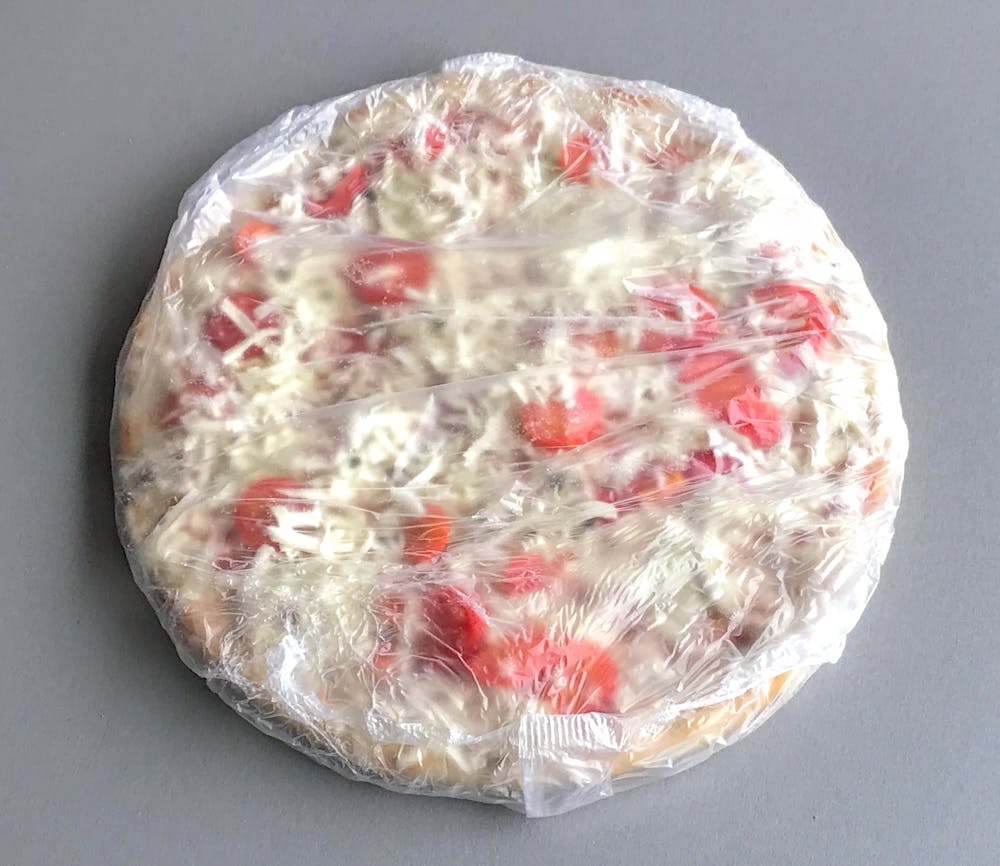 Frozen pizza can be deeply symbolic.
Wikimedia Commons
The relationship between food and identity, and the use of food as a symbol of the diversity of identities, place Cuban writer Leonardo Padura’s work in line with recent trends of international crime fiction. He uses traditional food and drink to expand and challenge the definition of Cubanness. Cooking is a way to preserve the richness and variety of local and traditional culture.
Many traditional Cuban dishes, such as the stew ajiaco, are under threat because of the scarcity of ingredients. Padura suggests here that the richness of Cuban culture is a victim of the revolutionary government’s attempt to create a coherent national narrative and a standardised identity model.
National dishes represent identity in other contexts, too. Cultural differences appear in Georges Simenon’s work through references to food. Where, when, what and with whom people eat are all potentially useful clues for Maigret. They can serve first, when among people of the same nationality, to underline difference and make clear the boundaries between people. Second, when foreigners are involved, they can confirm similarity, suggesting unity and togetherness.
Frozen pizza can be deeply symbolic.
Wikimedia Commons
The relationship between food and identity, and the use of food as a symbol of the diversity of identities, place Cuban writer Leonardo Padura’s work in line with recent trends of international crime fiction. He uses traditional food and drink to expand and challenge the definition of Cubanness. Cooking is a way to preserve the richness and variety of local and traditional culture.
Many traditional Cuban dishes, such as the stew ajiaco, are under threat because of the scarcity of ingredients. Padura suggests here that the richness of Cuban culture is a victim of the revolutionary government’s attempt to create a coherent national narrative and a standardised identity model.
National dishes represent identity in other contexts, too. Cultural differences appear in Georges Simenon’s work through references to food. Where, when, what and with whom people eat are all potentially useful clues for Maigret. They can serve first, when among people of the same nationality, to underline difference and make clear the boundaries between people. Second, when foreigners are involved, they can confirm similarity, suggesting unity and togetherness.
 Rupert Davies as Inspector Maigret in the 1960 television adaptation of Simenon’s novels.
BBC
In the case of the English-born Australian writer Arthur Upfield, food offers insights into complex race relations and colonial influences on the traditional owners of the land. One example is seen in Upfield’s most famous protagonist, Napoleon Bonaparte (Bony), and the detective’s ability to identify, through observation alone, an Aboriginal Australian who has been living on a white man’s menu rather than a traditional indigenous diet.
Ranging from “meals” to “grub”, food is critical to establishing, maintaining and handing on cultural practices and social identity. The suspects in Bony’s investigations — male, female, single, married, working class, upper class — are separated by what, and how much, they eat and drink as easily as they are by gender, living situation and occupation.
The representation of food in international crime fiction, running the gamut from giggles to gore, is clearly a rich field for exploration.
Rupert Davies as Inspector Maigret in the 1960 television adaptation of Simenon’s novels.
BBC
In the case of the English-born Australian writer Arthur Upfield, food offers insights into complex race relations and colonial influences on the traditional owners of the land. One example is seen in Upfield’s most famous protagonist, Napoleon Bonaparte (Bony), and the detective’s ability to identify, through observation alone, an Aboriginal Australian who has been living on a white man’s menu rather than a traditional indigenous diet.
Ranging from “meals” to “grub”, food is critical to establishing, maintaining and handing on cultural practices and social identity. The suspects in Bony’s investigations — male, female, single, married, working class, upper class — are separated by what, and how much, they eat and drink as easily as they are by gender, living situation and occupation.
The representation of food in international crime fiction, running the gamut from giggles to gore, is clearly a rich field for exploration.
Authors: M. Jean Anderson, Associate Professor / Reader in French, Victoria University of Wellington
Read more http://theconversation.com/friday-essay-the-meaning-of-food-in-crime-fiction-98005


















