Modern Australian
Men's Weekly

.

Super tax concessions don't cost $45 billion a year and won't cost more than the pension

  • Written by Andrew Podger, Honorary Professor of Public Policy, Australian National University

Super tax concessions don't cost $45 billion a year and won't cost more than the pension

You may have read this week that Australia’s super tax breaks are excessively generous (“well beyond any plausible purpose”) and that their costs unsustainable.

The claim came from a Grattan Institute report, Super savings. But is it realistic?

The figures quoted – A$45 billion a year or 2% of GDP “and set to exceed the cost of the age pension” – are derived from Treasury’s Tax Expenditures Statement and the government’s 2021 Retirement Income Review.

The benchmark for these estimates involves the income tax rate that is applied to ordinary income. Yet very few countries actually tax retirement savings in anything like that way.

$45 billion per year, but compared to what?

Grattan itself doesn’t suggest employers’ super contributions and super fund earnings should be taxed like ordinary income.

If all its recommendations for scaling back “tax breaks” were accepted, the breaks it claims to be concerned about would still exceed $30 billion a year and still be on track to cost more than the age pension.

A better benchmark would be the arrangement in most member countries of the Organisation for Economic Cooperation and Development in which savings are taxed at standard marginal rates on entering or leaving the system and untaxed while growing in the system, known technically as a TEE or EET regime.

In most cases, tax is applied only on leaving the system, an “EET” regime.

The Grattan Institute report In 2017, the Treasury prepared a parallel calculation of superannuation tax expenditures using a TEE benchmark, meaning contributions taxed at full marginal rates with both earnings and withdrawals untaxed. It found that instead of the tax break for employer contributions costing $16.9 billion per year and the low rate on fund earnings costing $19.25 billion, the first cost $16.9 billion and the second cost minus $9.45 billion (because Australia taxes fund earnings at 15% instead of zero), cutting the total cost by $30 billion. Had the Treasury used the EET benchmark, which exempts contributions and earnings and taxes only withdrawals, its measure of total tax expenditure on super would almost certainly have been negative (largely because our super system is not yet mature and we don’t yet have big retirement incomes to tax). In fact, our present system has a similar impact to the EET system common among OECD countries, even though it is achieved differently. Making it harder for high earners to save Without offering a clear benchmark for comparison, it is impossible to properly assess the Grattan Institute’s specific proposals. Two would probably not shift the current regime too greatly away from the EET benchmark common in the OECD, although neither is essential. One is a more progressive tax on contributions. The other is extending the 15% tax on fund earnings pre-retirement to presently exempt earnings in retirement (though this should probably be balanced by a reduction in the rate). But another, a tightening the annual cap on pre-tax contributions from $27,500 to $20,000 and the cap on post-tax contributions from $110,000 to $50,000, has the potential to undermine super’s role in spreading lifetime incomes for middle and high income earners. The government’s review that, for all but low-income workers, a retirement income of 65-75% of pre-retirement income was needed to provide a reasonable balance between living standards in working life and retirement. Read more: Super has become a taxpayer-funded inheritance scheme for the rich. Here's how to fix it – and save billions The average mandated contribution rate in the 35 OECD countries with specific pension contributions delivering this level of income maintenance is 18.2%. For those not eligible for any age pension (likely to be around 40% of retirees in the future), in one form or another, that is probably the level of savings they should be setting aside, though as the government’s review noted many retirees have significant savings from outside superannuation. That means the Grattan Institute’s proposed $20,000 cap might cut in too soon, at about $100,000 a year, which is hardly a top income amongst those in their fifties, particularly amongst public servants and academics (many of whom are already contributing 15-20%). The things Grattan missed By continuing to focus on the taxation of super, Grattan is failing to focus on the desperate need to put in place the final piece of Australia’s retirement income system – to help people convert their accumulated savings into secure incomes that maintain living standards and meet the risks of old age. The Institute is right to highlight that too much of superannuation savings are being passed on in inheritances rather than used in retirement, with the real risk of exacerbating inequality amongst future generations. Too many retirees are skimping in retirement and leaving more in inheritances than they want to because of fear about future risks including long lives and health and aged care costs. Read more: Yes, women retire with less, but boosting compulsory super won't help Sensible proposals are being developed for a “covenant” requiring funds to offer products in retirees’ best interests, including those that help them manage risks. But they are yet to be implemented. I suspect that implementation of the covenant will identify major challenges, including market failures that make it hard for funds to offer value-for-money indexed annuities and to identify what is in their members’ best interests given the complexities of the age pension income and assets tests. It is very likely that the government will need to simplify the means tests and consider ways to encourage the provision of indexed annuities including the option of selling government-created annuities. Now there’s an agenda Grattan might usefully focus upon. Authors: Andrew Podger, Honorary Professor of Public Policy, Australian National University

Read more https://theconversation.com/super-tax-concessions-dont-cost-45-billion-a-year-and-wont-cost-more-than-the-pension-203655

Why Doctors in Bundoora Play an Important Role in Community Health

Access to quality healthcare is essential for maintaining a healthy lifestyle and managing medical conditions effectively. Visiting experienced doctor...

Backyard Aesthetics Decoded: Mediterranean, Coastal, Retro, Rustic, and Beyond

Backyard design has come a long way from a patch of lawn, a barbecue in the corner, and a few chairs chosen purely for practicality. Today, outdoor ...

What Stops a Home From Feeling Flat-Pack Generic

There is nothing wrong with convenience. Flat-pack furniture, fast styling decisions, and online checkouts have made it easier than ever to furnish ...

5 Best Dental Clinics in Beecroft, NSW

The best dental clinics in Beecroft, NSW are Beecroft Smiles Dental Surgery, Beecroft Elegant Dental Clinic, McConnell Dental, Dentistry for Life, a...

Executive Recruitment: Finding Leadership Talent That Drives Organisational Success

Hiring the right leadership team can significantly influence the direction and performance of any organisation. Strong executives bring strategic thin...

Understanding the Importance of Abrasive Blasting in Industrial Surface Preparation

Surface preparation is an essential step in many industrial processes. Whether preparing metal structures, removing old coatings, or cleaning equipmen...

Farm Machinery Costs Set to Rise

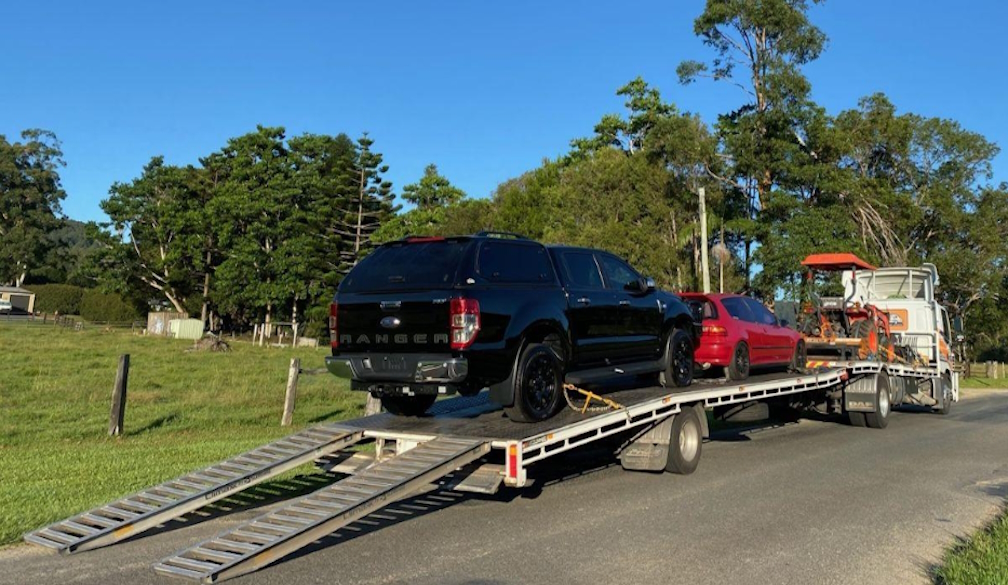
With steep rises in fuel prices and the need for specialised maintenance, farm machinery costs are set to rise across Australia. The need for transpor...

Why an Employer Recruitment Agency Helps Businesses Build Stronger Teams

Finding the right employees is one of the most important responsibilities for any organisation. Businesses rely on skilled professionals who can con...

Why Quality Trailers Are Essential for Transport and Trade Businesses

Transportation plays a major role in industries ranging from construction and landscaping to logistics and agriculture. Businesses that frequently m...

Why Professional Car Removal Services Are The Best Way To Dispose Of Unwanted Vehicles

When a vehicle reaches the end of its useful life, owners often face the challenge of deciding how to remove it safely and responsibly. Old vehicles...

Why Professional Commercial Carpet Cleaning Matters for Modern Workspaces

Clean office environments influence how employees work, how clients perceive a business, and how long workplace interiors last. Carpets in commercia...

Why Hiring Removalists Makes Moving Easier And More Efficient

Relocating to a new home or office can be an exciting yet demanding experience. Packing belongings, organising transport, and ensuring that items ar...

The Importance of Hiring Local Lawyers in Melbourne for Business Protection

When it comes to protecting a business, the legal support you choose matters just as much as the decisions you make day to day. Working with lawyers...

Why Packaging Boxes Are Important for Product Protection and Logistics

Packaging plays a crucial role in modern commerce, ensuring that products are transported safely from manufacturers to consumers. One of the most wide...

Best Practices for Promoting Crypto Payment Options to Your Customers

Promoting crypto payment options is no longer a futuristic concept but a present-day strategy for venues aiming to reduce transaction costs, attract a...

What Is Allocated vs Unallocated Gold?

Gold has been a trusted store of value for thousands of years, prized for its rarity, durability, and universal recognition. Even in the modern financ...

Physiotherapy Strategies for Improving Independence in Daily Living

For many individuals living with permanent and significant disabilities, the concept of "independence" is not about a total absence of support, but ra...

Mobile Patrol Security vs Static Guards: What’s Best for Brisbane Businesses?

Business security is very nuanced; a cookie-cutter approach doesn’t necessarily always work in a city like Brisbane. The bigger the city, the more...