Restoring forests often falls to landholders. Here's how to do it cheaply and well
- Written by Penny van Oosterzee, Adjunct Associate Professor James Cook University and University Fellow Charles Darwin University, James Cook University
From the outside, planting trees seems simple. Seedlings want to grow – pop them in the soil, water them and walk away.
But Australia has never seriously invested in restoration and has barely monitored outcomes when it has been done. Recent research into the replanting of 20 million trees nationwide found little impact on the threatened species these trees were meant to support.
This matters, because Australia is a major global deforester. Efforts to preserve forests are important, but the remnants that remain are highly fragmented. Before 1788, forest covered an estimated 30% of the continent. Only half of Australia’s forest coverage has survived colonisation.
For a little over a decade, we’ve experimented with different planting methods on our own land in Queensland’s wet tropics. In our recent research, we collated what works well and cheaply. Use a planter spade, make sure both sapling and soil are wet, gently press the seedling into the hole, and only spray weedkiller where needed.
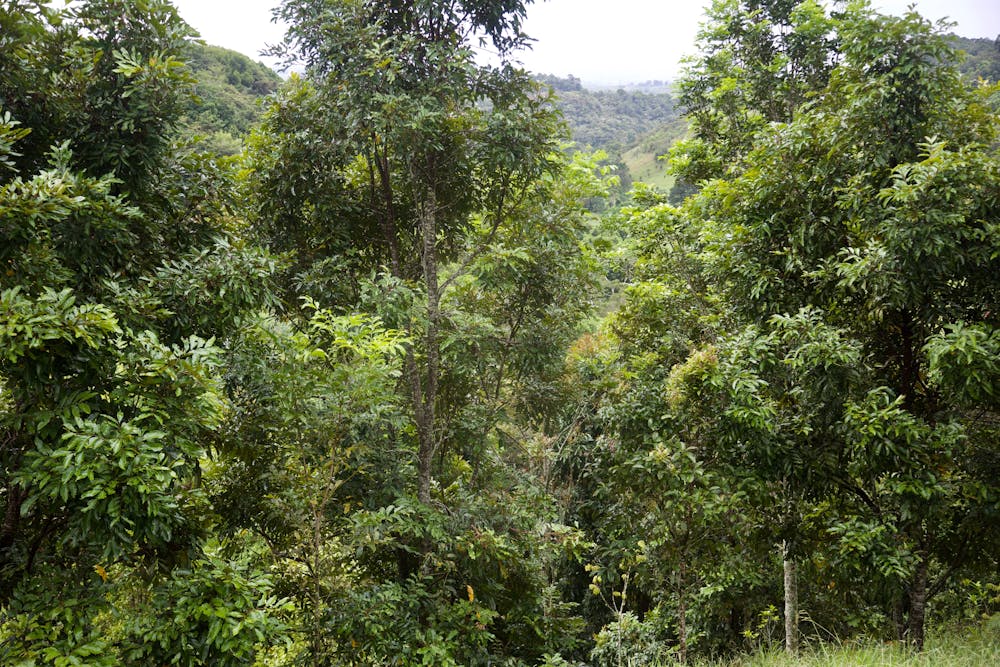
Australia still isn’t serious about restoration
Forests support most of life on Earth. But in just the last century, the world has lost as much forest as it had in the previous 9,000 years. Today half of the Earth’s land previously covered by trees has been cleared. Of the forests remaining only 40% have high ecosystem integrity.
Under First Nations stewardship, around 30% of Australia was originally covered with forest.
Read more: Nature is in crisis. Here are 10 easy ways you can make a difference
Australia remains one of the world’s top deforesters – the only developed nation on the list.
All climate action pathways limiting warming to 1.5℃ rely on intact forests. But we still lack basic information on how to do restoration best. Most native species have not been tested for their survival and growth rates.
Globally, improving seedling survival has proved difficult because of lack of evidence of best practices. The evidence we do have shows seedling mortality can be as high as 30-40%.
Landscape-scale restoration now relies largely on private investment, often done at small scale on bush blocks owned by individuals and small groups.
A major problem is money. Community restoration in the wet tropics, for instance, has been estimated to cost over A$60,000 a hectare for densely planted native seedlings. This cannot stretch to the scale of restoration desperately needed across Australia’s iconic landscapes.
But there’s good news – since 2011, we’ve been experimenting with how to restore land effectively and for much, much less money.
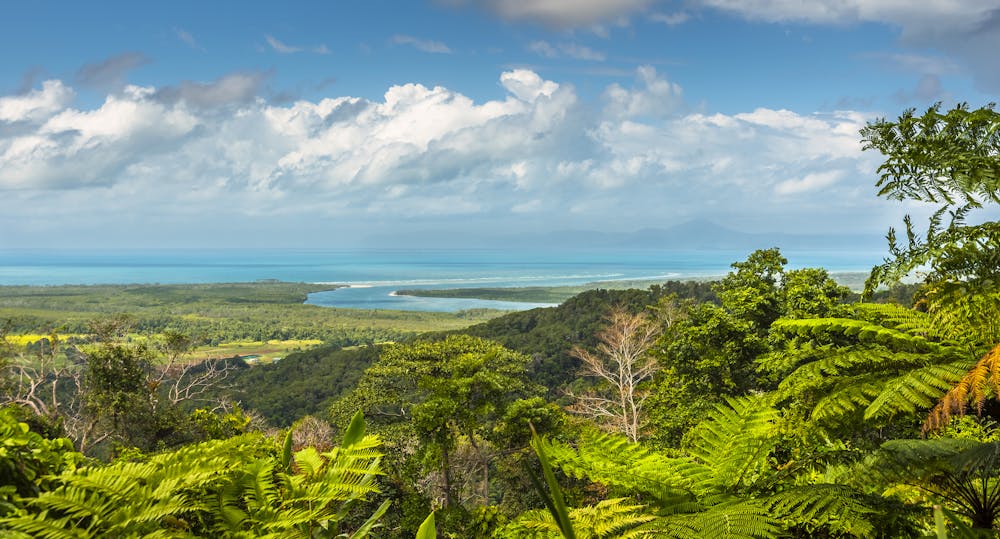 The Daintree is a surviving fragment of the larger wet tropics tropical rainforest.
Shutterstock
The Daintree is a surviving fragment of the larger wet tropics tropical rainforest.
Shutterstock
Restoring forests means mastering replanting
Eighteen years ago, we bought Thiaki – 180 hectares of land on the Atherton Tablelands, in Queensland’s wet tropics. Covering just 0.3% of Australia, this biome supports more species diversity than anywhere else, including cassowaries, tree kangaroos, striped and lemuroid possums.
Much was cleared early on for dairy. But since the 1940s, many farmers have left the industry due to new economic realities. This has provided new opportunities for restoration.
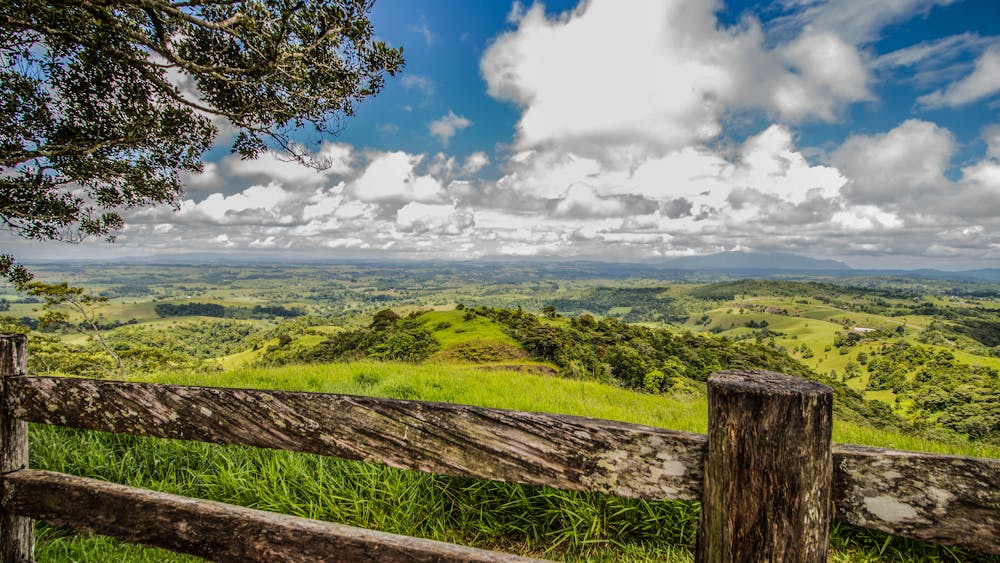 The Atherton Tablelands were largely cleared for dairy farming.
Shutterstock
The Atherton Tablelands were largely cleared for dairy farming.
Shutterstock
We bought a patch of forest and set it up as a research project looking at cost-effective restoration for carbon and biodiversity using native species.
While the immediate challenge was cost, there were other challenges. Which trees do you plant, where do you plant them and what time of year? How do you plant them quickly and cost-effectively?
Here’s what works
In our latest research, we tested many combinations of technique, spacing and planting care across three landscape-scale experiments. What we found sounds simple. But recreating a forest relies on doing these things right.
Here are five tips:
Use a spade: Using a two-person tree planting auger made no difference to survival versus a simple planter spade. But the humble planter spade was four times cheaper and four times faster, which substantially reduces costs of restoration.
Saturate the seedling and the soil. This sounds like common sense, but it’s often overlooked, particularly when plantings are scheduled for drier months. When we planted seedlings into drying soil, we lost up to 40% in the first four months.
Treat saplings with care. Damaging roots by yanking a seedling out of the tube or kicking them instead of closing the soil gently with the toe of your boot can cut survival by 20%.
Don’t lose sleep over spacing. We found the distance between plants had little impact on survival. It didn’t matter whether we planted six or 24 different species.
Don’t blanket the area with weedkiller. In places like the wet tropics, fast-growing grasses can make it impossible for trees to establish. But spraying weedkiller across an entire area isn’t necessary. We found just spraying the rows where seedlings will be planted gave the same survival rates. This cuts costs, reduces erosion and protects soil biodiversity.
What else did we learn?
It’s vital to maximise survival in the first months. Boosting survival rates by 10% in the first four months of a planting program proved to be an indicator of up to 40% better survival rate 18-20 months later.
Many restoration programs plant species expecting them to grow as they do in intact forests. Their behaviour in the wild, however, does not necessarily translate to saplings in restoration projects. So it’s also important to take on board experience of sapling survival in other plantings, and nursery experience and provenance.
We kept a close record of costs, and found it was possible to slash restoration costs more than seven-fold, to below $8,000 a hectare – even in areas where costs are usually higher. When you bring the cost down this low, it makes carbon farming worthwhile in agricultural landscapes (if prices are above $37/tonne of CO₂).
Some of these tips may not be as important in every ecosystem. But caring for saplings will be true everywhere.
To help Australians at work restoring their bush blocks, it would be useful to have regional best-practice guidance documents – particularly around cost-effective planting, monitoring, species selection and case studies.
While the work of individual landowners is laudable, it won’t be enough – even if carbon farming and biodiversity markets take off.
Ideally, governments would knuckle down and help restore these denuded landscapes at scale. But if they prefer to stand back, the only option will be to set prices for carbon and biodiversity to reflect the true value of bringing our forests back.
Read more: Fungi: the missing link in tree planting schemes
Authors: Penny van Oosterzee, Adjunct Associate Professor James Cook University and University Fellow Charles Darwin University, James Cook University