

Sex, technology and disability – it's complicated
- Written by: Phillippa Carnemolla, Senior Research Fellow, School of the Built Environment, University of Technology Sydney
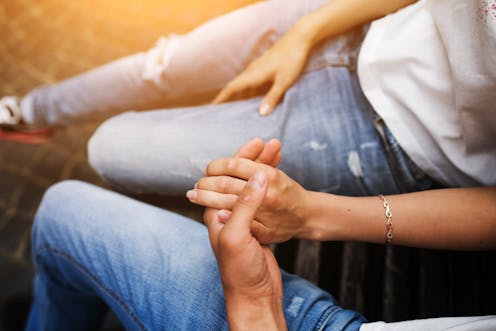
People living with disability are largely excluded from conversations about sexuality, and face overlapping barriers to sexual expression that are both social and physical.
Media portrayals of sexuality often focus on a visual and verbal vocabulary that is young, white, cisgender, heterosexual and … not disabled.
My research into inclusive design explores how design can – intentionally or unintentionally – exclude marginalised or vulnerable people, as well as how design can ensure that everyone is included. That might mean design of the built environment, everyday products, or even how information is presented.
UTS has been collaborating for over a year with Northcott Innovation, a nonprofit organisation based in NSW that focuses on solutions for people with disability, to understand the barriers people face, and how inclusive design can help break them down.
When it comes to sexuality, new technologies have a role to play – but we need to look at both the opportunities and risks that these developments bring.
Starting the conversation
David* is a young man living with cerebral palsy who expresses a deep frustration about being unable to have his sexual desires met. He revealed his thoughts during facilitated discussions around sex and disability.
I can’t get into a lot clubs in my wheelchair – or restaurant or cafés for that matter. So where do I go to meet someone? Or go on a date? Let alone if we wanted to be intimate!
Northcott Innovation’s executive director Sam Frain isn’t surprised by what these conversations are revealing:
People with disability want to date, fall in love, or even fall out of love. They want to be recognised as the adults they are. In acknowledging their capacity for meaningful relationships, we must also acknowledge their sexuality – in whatever form that takes.
David faces complex social barriers too. Because it’s hard to for him to discuss his sexuality at all, coming out to his mother feels particularly fraught:
My mum doesn’t really know that I want to meet a future husband, not wife. I want to go on more dates. I don’t just want to meet other men with disability either. I want to meet lots of guys – but where can I go and how do I do this?
Inclusive sex toys
People living with disability have diverse physical and social support needs when it comes to expressing their sexuality. That means there isn’t going to be a one-size-fits-all solution. Rather we need a design approach that allows for customisation.
A new research project at RMIT, led by industrial design lecturer Judith Glover, is investigating the design of customised, inclusive sex toys.
Read more: Pleasure, porn and power: rethinking sex and disability
Aside from some engineering research undertaken earlier this year at the University of São Paulo into the neurodildo – a sex toy operated remotely by brain waves – inclusive sex toys are an under-explored area of design research.
Glover feels strongly that designing sexual health products or services – whether for therapy or for recreation – should be treated as any other area of design. She acknowledges that the sex toy industry has barely started to address sex toys for an ageing population, let alone solutions for people with various disabilities:
Some of the people I meet, who are physically incapable of holding and moving objects, may have trouble communicating verbally – yet who really yearn to be able to develop their own sexual practice. Plus who doesn’t need to just get off every once in a while?
David agrees:
I really want to explore the option of sex toys more, but I don’t know what to try, or how to use it.
Social media and intellectual disability
Connecting communities together is an important strategy to overcome marginalisation and amplify the voices of people with disability.
Social media is a space where technology brings like-minded people together. But creating safe online spaces for people to express their sexuality can create unforeseen challenges – particularly for people with intellectual disability.
Deakin University and the Intellectual Disability Rights Service (IDRS) set up a closed Facebook support group earlier this year for people with intellectual disability who identify as LGBTQI. Jonathon Kellaher, an educator with IDRS, says:
Group administrators quickly realised that people who were not “out” and did not understand that group members can be viewed publicly were at risk of accidentally “outing” themselves when requesting to join the group.
To address this issue, the group privacy setting was set to “secret”. But this meant new members had to wait to be added, so it became a barrier to the group’s potential as a social connector. Deakin is now working on a project with GALFA to learn more about how people connect in this space.
Technology must promote inclusion
Then there is the elephant in the room: sex robots.
Manufacturers claim sex robots provide health and social benefits for people with disability, but researchers have been quick to point out that there’s no evidence to support the range of claims that have been made.
While it’s possible to see the introduction of sex robots as a form of assistive technology – a new way to experience pleasure, or to explore preferences and body capabilities – there’s another, more tragic, side.
Viewing sex robots as a solution to the loneliness of people with disability (or anyone for that matter), or as a remedy for a lack of available dates, risks perpetuating and exacerbating the social and sexual exclusion of people with disability.
Read more: Disabled LGBT+ young people face a battle just to be taken seriously
Technology can’t replace human connection, so it’s critical that new technologies support greater inclusion for people living with disability. It’s a human right to be able to safely express and enjoy sexuality, and have the choice to live a life with pleasure.
For David, that fits in to his ideal world very clearly:
One day I really want a husband to love me, two children, and to own my own restaurant.
* David’s name has been changed to protect his identity.
Authors: Phillippa Carnemolla, Senior Research Fellow, School of the Built Environment, University of Technology Sydney
Read more http://theconversation.com/sex-technology-and-disability-its-complicated-99849


















