how kids in some disadvantaged schools improved their results during COVID
- Written by Andrew Miller, Senior Lecturer in Education, University of Newcastle
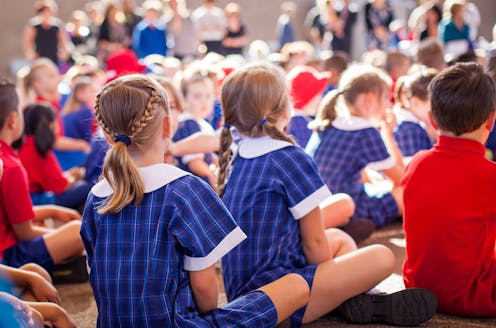
Students from schools in low-income communities did not suffer significant “learning loss” during the pandemic years of 2020-2021, but instead improved in certain areas of study.
That’s one key finding from our research, published recently in the journal The Australian Educational Researcher.
In fact, we found students considered most at risk of “learning loss” during the pandemic actually achieved greater growth in mathematics and equivalent growth in reading in 2021 when compared with a similar group of students from 2019.
Our results reveal one silver lining from the past three challenging years, and underscore what’s possible when programs aimed at helping the most disadvantaged students are well funded.
Overall, however, we still have a long way to go to remove pervasive and structural inequities baked into Australia’s school systems, and to narrow achievement gaps.
Read more: Early NAPLAN results show promise, but we don’t know the full impact of COVID school closures yet
What we did and what we found
Our study involved data on Year 3 and 4 academic results, collected as part of a randomised controlled trial with 125 New South Wales public schools.
From this data we carried out two studies – one comparing student results in 2020 to 2019, the second comparing 2021 to 2019.
In other words, one analysis compared student results from the first year of the pandemic with pre-pandemic kids. The other compared academic results of pre-pandemic kids with those who’d lived through consecutive years (which included remote learning).
The groups of students for each year of the study – 2019, 2020 and 2021 – were carefully “matched” so we could be confident we were comparing like with like.
When comparing 2020 and 2019 cohorts, we found no significant differences overall in maths or reading achievement.
However, analysing these same data by school Index of Community Socio-Educational Advantage (a measure of school-level advantage that accounts for school location, parent education and percentage of Indigenous students) revealed worrying inequities.
In this 2019 and 2020 comparison (which compared pre-pandemic students to those living through the first year) we found students in disadvantaged schools achieved less growth in maths. Those in mid-range schools had achieved slightly more.
Then when the pandemic continued, we were able to also compare pre-pandemic kids (the 2019 group) with those who’d lived through both years (the 2021 group).
This allowed us to measure the impact of consecutive years of disrupted learning.
Surprisingly, we found students from disadvantaged schools achieved three months additional growth in maths and equivalent growth in reading compared to their 2019 pre-pandemic peers.
Meanwhile, students in mid-range and advantaged schools achieved about the same as their pre-pandemic peers.
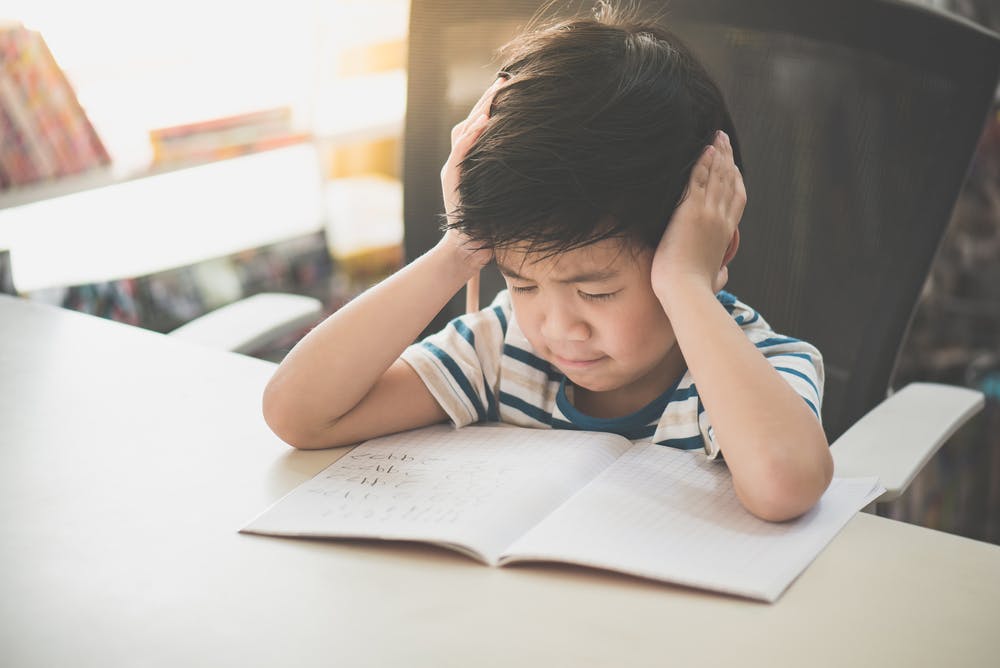
Concerns about ‘learning loss’
Early in the pandemic, teachers, parents, researchers, government, and the media worried and speculated that student results would decline.
As our research shows, major concerns about widespread diminishing academic achievement did not materialise.
Even where students did not achieve at the same rates as they did in pre-pandemic years, they still learned.
In hindsight, the idea of “learning loss” or of students’ learning going backwards was likely a source of unnecessary worry for families.
However, overseas results show Australia was an outlier.
World Bank analysis of 35 empirical studies on the impact of COVID-19 on student learning concluded students around the world fell behind by “roughly a one-half year’s worth of learning.”
It also found students from disadvantaged contexts were more likely to be negatively affected.
Researchers at Harvard University found remote and hybrid learning during the pandemic contributed to significantly widening achievement gaps for disadvantaged students.
In this global context, the recent academic achievement of students in our NSW studies are cause for real celebration.
 In hindsight, the idea of ‘learning loss’ or of students’ learning going backwards was likely a source of unnecessary worry for families.
Shutterstock
In hindsight, the idea of ‘learning loss’ or of students’ learning going backwards was likely a source of unnecessary worry for families.
Shutterstock
What’s behind these results?
When the pandemic brought lockdowns and uncertainty, governments and education departments around Australia found hundreds of millions of dollars to put toward preventing students from falling behind.
The NSW Department of Education’s tutoring scheme, launched in 2021, may have contributed to the positive academic results we found.
The COVID intensive learning support program funded schools to employ more educators to deliver small group literacy and numeracy tuition to students identified as needing it most.
The program has been extended to June 2023, but has been criticised for not being particularly well targeted.
The widespread teacher shortage has also been a factor. Hard-to-staff schools in disadvantaged and rural and remote areas, where arguably tutoring was needed most, reported struggling to hire classroom teachers let alone additional educators for the tutoring program.
It’s also possible our key finding could be explained by the strict focus on literacy and numeracy in primary schools when students returned after periods of remote learning.
However, this “back to basics” focus – at the exclusion of sport, assemblies, excursions and the other extracurricular activities that punctuate school life – may also have negatively affected student and teacher wellbeing.
Read more: As students return to school, small-group tutoring can help those who are falling behind
Where to from here?
The achievement gap between students from marginalised groups and their more advantaged peers looms large in the Australian education system.
The students in our study from disadvantaged schools, while showing academic improvement in maths in 2021, still started and ended the year well behind their more advantaged peers.
In fact, their achievement level at the end of 2021 was still below where students in advantaged schools began their school year.
There are clear lessons to be learned from the pandemic and our research on its effects.
For decades, funding models left marginalised students at real disadvantage. But when the pandemic hit, governments were able to find significant funding for programs and initiatives actually targeted at those with the greatest need.
Can such special funding be sustained to stem ongoing inequities in Australian schooling? David Gonski, appointed by the Gillard government in 2011 to review Australian school funding models, certainly thought so.
Our results could not be more timely. Federal education minister Jason Clare recently announced an expert panel and ministerial reference group to advise on a new National School Reform Agreement.
This agreement sets out five-year initiatives and targets, which are tied to funding and agreed between the federal government and states. It represents our best opportunity to finally get school funding right.
Read more: What is the National School Reform Agreement and what does it have to do with school funding?
Authors: Andrew Miller, Senior Lecturer in Education, University of Newcastle