

In defence of conspiracy theories (and why the term is a misnomer)
- Written by: David Coady, Senior Lecturer in Philosophy, University of Tasmania
Before 2012, if you had voiced suspicions that the Australian government had been anything but open and honourable in dealing with East Timor – its newly independent but impoverished neighbour – you would likely have been dismissed as a conspiracy theorist. But it was then revealed Australian Secret Intelligence Service agents had bugged East Timor’s cabinet office during treaty negotiations over oil and gas fields.
Read more: When whistleblowers are prosecuted, it has a chilling effect on press freedom in Australia
Yesterday’s conspiracy theories often become today’s incontrovertible facts. In the mid-1990s, journalist Gary Webb’s claims that CIA officials conspired with drug dealers bringing crack cocaine into the United States were dismissed by many as a prime example of a conspiracy theory. But the claims were true.
It’s reasonable to suppose many of the views that are now dismissed or mocked as conspiracy theories will one day be recognised as having been true all along. Indeed, the net effect of terms such as “conspiracy theory” and “conspiracism” is to silence people who are the victims of conspiracy, or who (rightly or wrongly) suspect conspiracies may be occurring. These terms serve to herd respectable opinion in ways that suit the interests of the powerful.
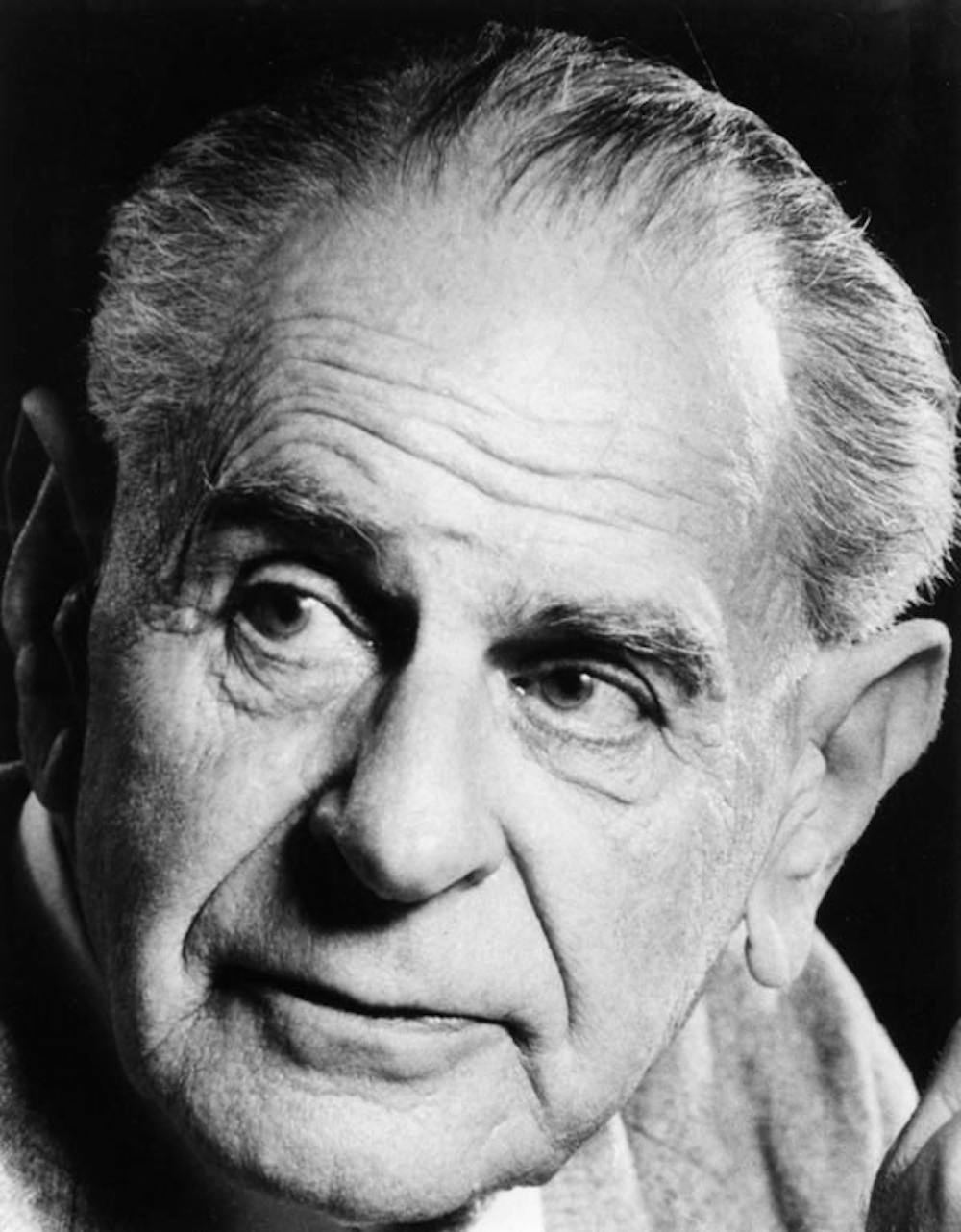 Karl Popper: popularised the term ‘conspiracy theory’.
Wikimedia Commons
Karl Popper: popularised the term ‘conspiracy theory’.
Wikimedia Commons
Ever since the philosopher Sir Karl Popper popularised the expression in the 1950s, conspiracy theories have had a bad reputation. To characterise a belief as a conspiracy theory is to imply it’s false. More than that, it implies people who accept that belief, or want to investigate whether it’s true, are irrational.
On the face of it, this is hard to understand. After all, people do conspire. That is, they engage in secretive or deceptive behaviour that is illegal or morally dubious.
Conspiracy is a common form of human behaviour across all cultures throughout recorded time, and it has always been particularly widespread in politics.
Virtually all of us conspire some of the time, and some people (such as spies) conspire virtually all of the time. Given people conspire, there can’t be anything wrong with believing they conspire. Hence there can’t be anything wrong with believing conspiracy theories or being a conspiracy theorist.
Thinking of conspiracy theories as paradigmatically false and irrational is like thinking of phrenology as a paradigm of scientific theory. Conspiracy theories, like scientific theories, and virtually any other category of theory, are sometimes true, sometimes false, sometimes held on rational grounds, sometimes not.
It’s a striking feature of much of the literature on conspiracy theories, like much of the literature on terrorism, that authors assume they are referring to the same phenomenon, while a glance at their definitions (when they bother to offer them) reveals they are not.
Read more: Online conspiracy theorists are more diverse (and ordinary) than most assume
But seeking a fixed definition of the term “conspiracy theory” may be an idle pursuit, since the real problem with the term is that, although it lacks a fixed meaning, it does serve a fixed function.
It’s a function similar to that served by the term “heresy” in medieval Europe. In both cases these are terms of propaganda, used to stigmatise and marginalise people who have beliefs that conflict with officially sanctioned or orthodox beliefs of the time and place in question.
If, as I believe, the treatment of those labelled as “conspiracy theorists” in our culture is analogous to the treatment of those labelled as “heretics” in medieval Europe, then the role of psychologists and social scientists in this treatment is analogous to that of the Inquisition.
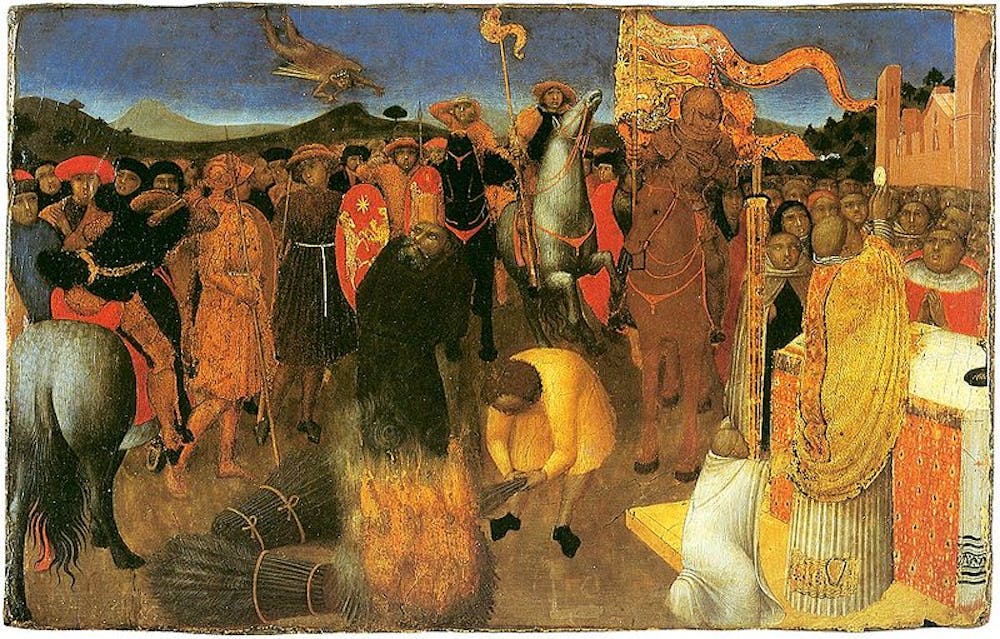 Stefano di Giovani, The Burning of a Heretic, circa 1423-1426.
Wikimedia Commons
Stefano di Giovani, The Burning of a Heretic, circa 1423-1426.
Wikimedia Commons
Outside the psychology and social science literature some authors will sometimes offer some, usually heavily qualified, defence of conspiracy theories (in some sense of the term). But among psychologists and social scientists the assumption that they are false, the product of an irrational (or nonrational) process, and positively harmful is virtually universal.
Whenever we use the terms “conspiracy theory”, “conspiracism” or “conspiracist ideation”, we’re implying, even if we don’t mean to, there is something wrong with believing, wanting to investigate, or giving any credence at all to the possibility people are engaged in secretive or deceptive behaviour.
One bad effect of these terms is they contribute to a political environment in which it’s easier for conspiracy to thrive at the expense of openness. Another bad effect is their use is an injustice to the people who are characterised as conspiracy theorists.
Following the philosopher Miranda Fricker, we may call this a form of “testimonial injustice”. When someone asserts that a conspiracy has taken place (especially when it is a conspiracy by powerful people or institutions) that person’s word is automatically given less credence than it should because of an irrational prejudice associated with the pejorative connotations of these terms.
When professional psychologists imply these terms it can constitute a form of gaslighting; that is, a manipulation of people into doubting their own sanity.
I hope and believe that in the future these terms will be widely recognised for what they are: the products of an irrational and authoritarian outlook. Prior to Popper, we got along perfectly well without these terms. I’m sure we can learn to do so again.
Authors: David Coady, Senior Lecturer in Philosophy, University of Tasmania
Read more http://theconversation.com/in-defence-of-conspiracy-theories-and-why-the-term-is-a-misnomer-101678
&media=https://www.modernaustralian.com/https://images.theconversation.com/files/234168/original/file-20180830-195301-1r680ev.jpg?ixlib=rb-1.1.0&q=45&auto=format&w=237&fit=clip&description=In%20defence%20of%20conspiracy%20theories%20(and%20why%20the%20term%20is%20a%20misnomer) "Pin It")

















