

Indigenous rangers are burning the desert the right way – to stop the wrong kind of intense fires from raging
- Written by Rohan Fisher, Information Technology for Development Researcher, Charles Darwin University
Even though it’s still winter, the fire season has already started in Australia’s arid centre. About half of the Tjoritja West MacDonnell National Park west of Alice Springs has burnt this year.
The spread of buffel grass (Cenchrus ciliaris) has been seen as a key factor. This invasive grass has been ranked the highest environmental threat to Indigenous cultures and communities because of the damage it can do to desert Country.
Widespread rains associated with the La Niña climate cycle trigger a boom in plant growth. When the dry times come again, plants and grasses dry out and become potential fuel for massive desert fires.
These fires often don’t get much notice because nearly all Australians live near the coast. But they can be huge. In 2011, over 400,000 square kilometres burnt – about half the size of New South Wales.
After three years of La Niña rains, we’re in a similar situation – or potentially worse. Fire authorities are warning up to 80% of the Northern Territory could burn this fire season.
That’s why dozens of Indigenous ranger groups across 12 Indigenous Protected Areas have been hard at work in an unprecedented collaboration, burning to reduce the fuel load before the summer’s heat. So far, they’ve burned 23,000 square kilometres across the Great Sandy, Tanami, Gibson and Great Victoria Deserts.
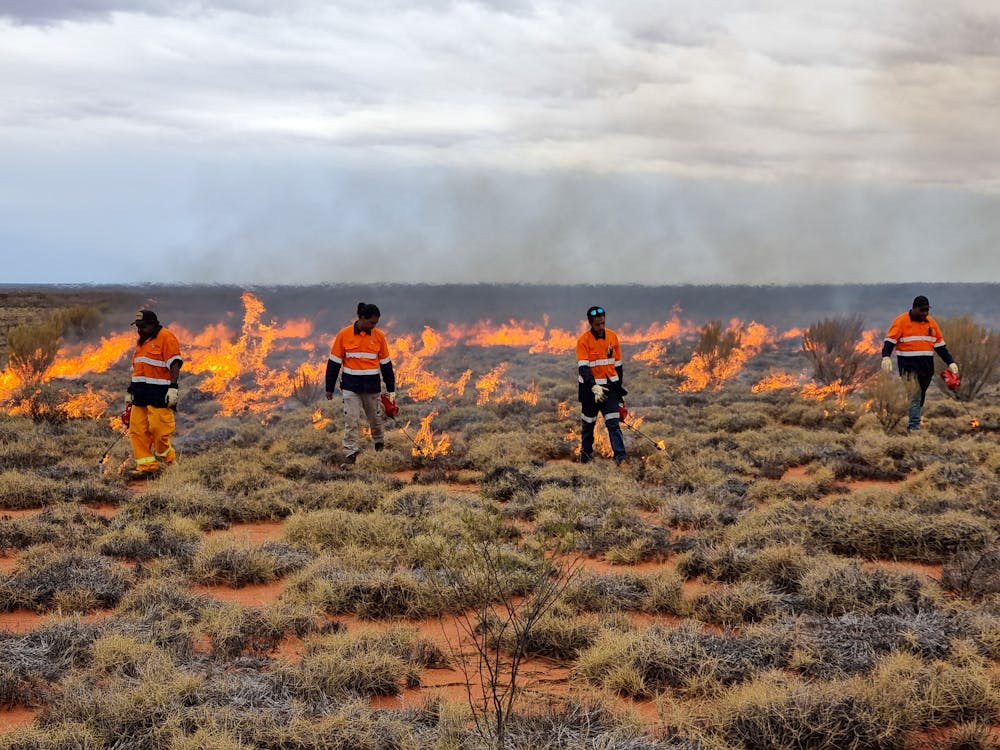
Burning the arid lands
Australia now has 82 Indigenous Protected Areas, covering over 87 million hectares of land. That’s half of the entire reserve of protected lands, and they’re growing fast as part of efforts to protect 30% of Australia’s lands and waters by 2030. These areas are managed by Indigenous groups – and fire is a vital part of management.
This animation shows landscape burns conducted by Indigenous rangers in the Tanami Desert in 2023. North Australia Fire Information, firenorth.org.au.The goal is to protect against devastating summer bushfires, which are more destructive. Without Indigenous rangers expertly managing the deserts through landscape-scale fire management, these protected lands would be at risk of decline.
As Braeden Taylor, Karajarri Ranger Coordinator, says:
A big wildfire just destroys everything, it destroys Country. The first aim is to do a bit of ground burning and then aerial burning, that way we know everything is protected. Using the helicopter and plane, we can access Country that’s hard to get to in a vehicle. It might not have been burnt in a long time and we can break it up
It’s good working with other groups. Fires that start on their side might come over to us and fires on ours might go to them. Working together we protect each other, looking after neighbours.
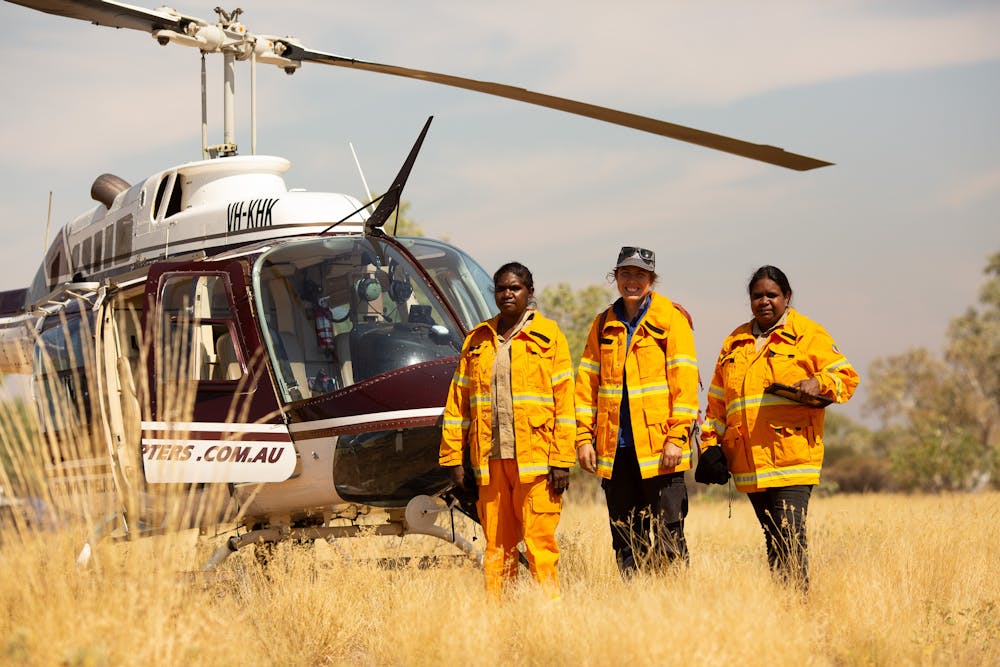 Ngurrara Ranger Regina Thirkall and Hannah Cliff from Indigenous Desert Alliance and Ngurrara Ranger Sumayah Surprise at Kuduarra preparing for aerial incendiary burning.
Tom Montgomery/Indigenous Desert Alliance, CC BY-ND
Ngurrara Ranger Regina Thirkall and Hannah Cliff from Indigenous Desert Alliance and Ngurrara Ranger Sumayah Surprise at Kuduarra preparing for aerial incendiary burning.
Tom Montgomery/Indigenous Desert Alliance, CC BY-ND
So how do the rangers cover such distances? These protected areas are extremely remote. There is often no or very limited road access. So rangers work from the sky – and, where possible, the ground. The ranger fire program relies on helicopters and incendiaries [fire starting devices]. This year, rangers have spent 448 hours in the air, covering 58,457 kilometres and dropping 299,059 incendiaries.
When the incendiaries hit the ground, they begin burning. Not every incendiary hits the right spot, so it takes time to guarantee a good burn is under way. These arid lands tend to have more grass than trees, so the fires move along the ground and don’t get too intense.
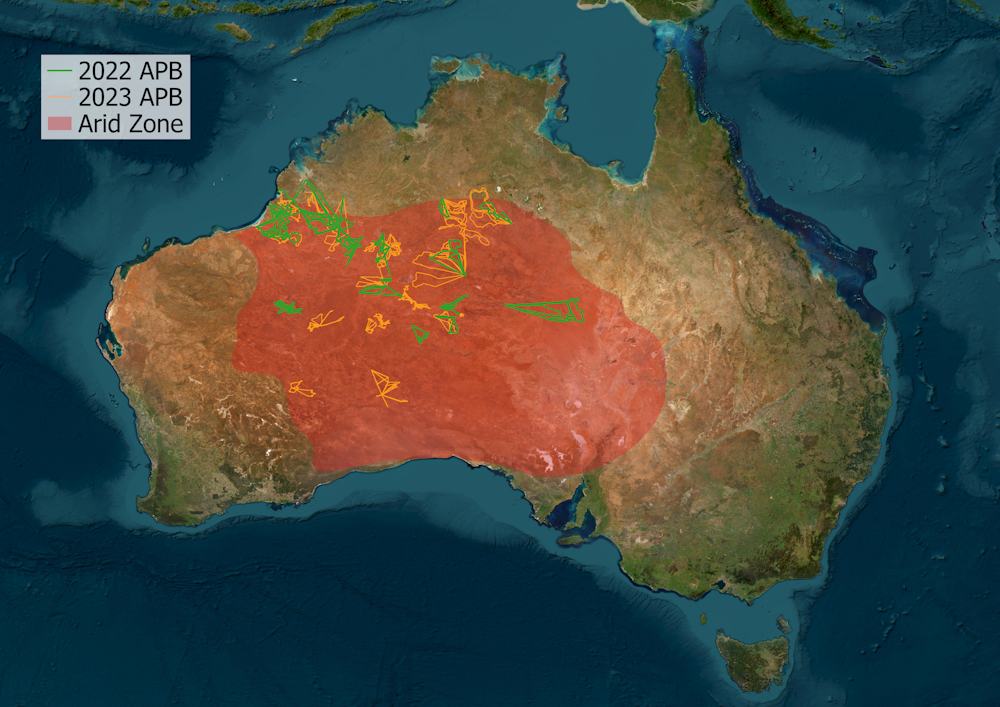 This image shows flight lines from aerial prescribed burns (APBs) in 2022 and 2023.
Indigenous Desert Alliance, CC BY-ND
This image shows flight lines from aerial prescribed burns (APBs) in 2022 and 2023.
Indigenous Desert Alliance, CC BY-ND
Rangers couple aerial burning with fine-scale ground burning using drip torches around sensitive areas. That’s to ensure protection of cultural sites and threatened species like the bilby, night parrot and great desert skink.
This is vitally important, given about 60% of desert mammal species have already gone extinct over the last 250 years, while many others have seen their range reduce. Changes to fire regimes are a major factor in these declines.
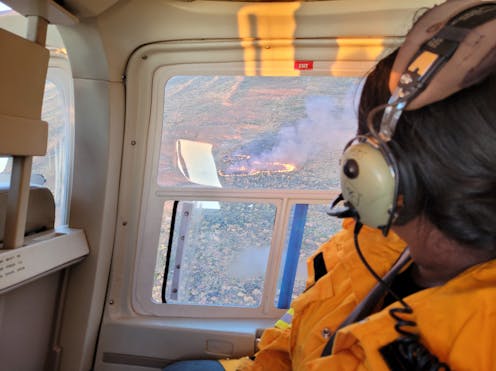
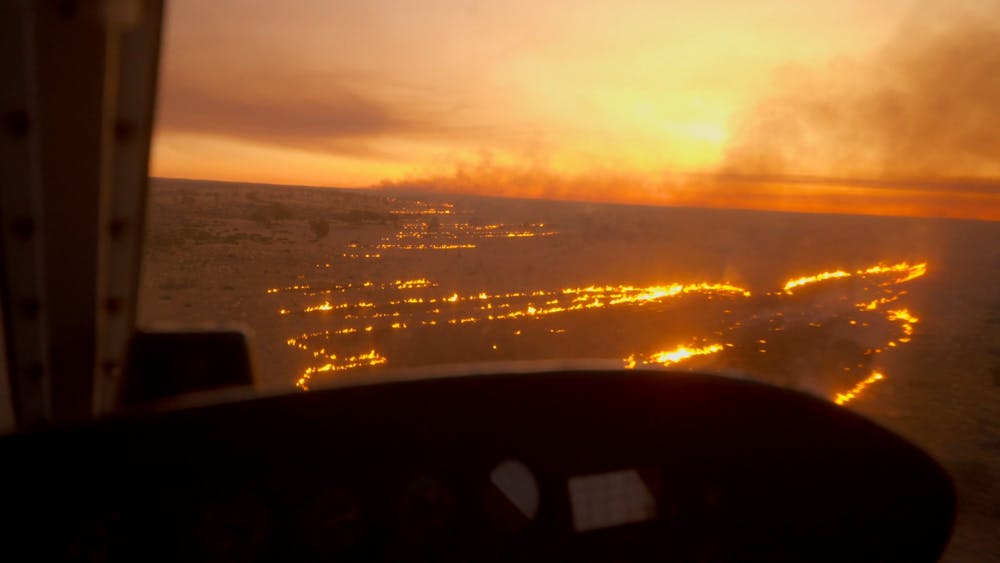 View from a helicopter during an aerial planned burn on Haasts Bluff Aboriginal Land Trust.
Indigenous Desert Alliance, CC BY-ND
View from a helicopter during an aerial planned burn on Haasts Bluff Aboriginal Land Trust.
Indigenous Desert Alliance, CC BY-ND
Fire can forge community
These desert-spanning fire projects give Traditional Owners the ability to see remote Country, practice culture and transfer knowledge down the generations.
As Ronald Hunt, Ngaanyatjarra Ranger, says:
When we burn it cleans up all the spinifex grass and when the rain comes it all grows up fresh. It’s good for the animals, the bushfood and all. Its good using the helicopter, going places that it’s hard to get to. It’s good to work together with other groups, sharing stories and looking after the Country. They have their stories, and we have ours, and then we come together to work.
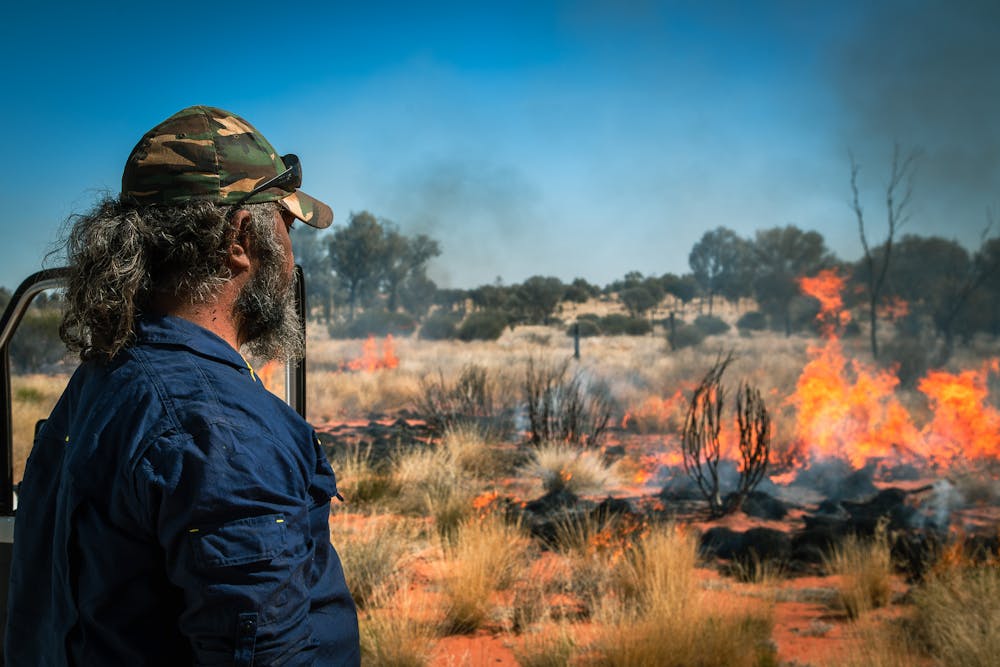 Watching the burn from the ground with Anangu Luritjiku Ranger Preston Kelly on Haasts Bluff Aboriginal Lands Trust.
Andre Sawenko, CC BY-ND
Watching the burn from the ground with Anangu Luritjiku Ranger Preston Kelly on Haasts Bluff Aboriginal Lands Trust.
Andre Sawenko, CC BY-ND
In recent years, there has been a surge of interest in Indigenous fire management – especially after the devastation of the Black Summer fires of 2019–2020.
The goal is to shift from wrong-way fire – where fuel builds up until large, damaging bushfires ignite – to right-way fire, culturally informed fire regimes led by Traditional Owners.
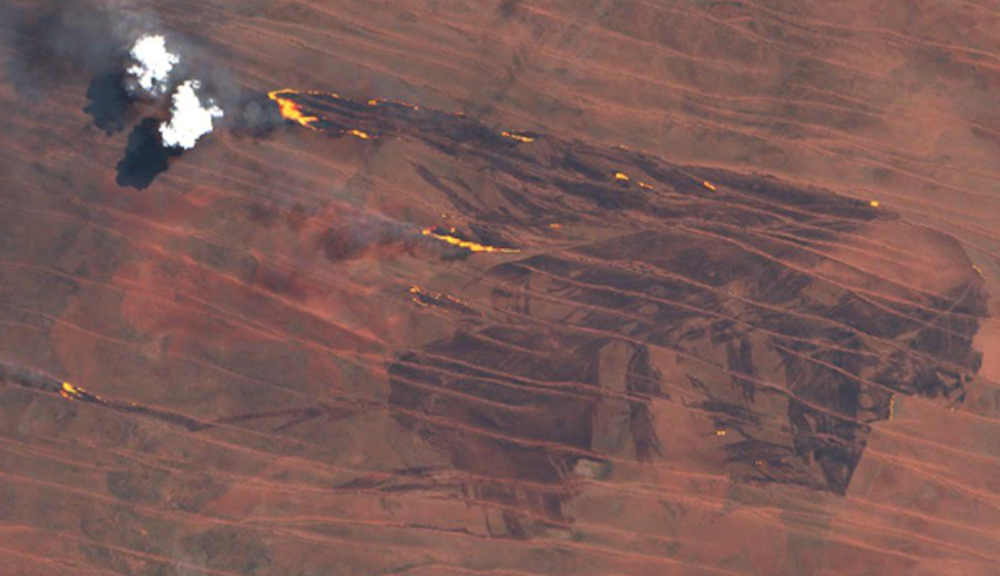 A Sentinel 2 satellite image of burns in the Great Sandy Desert on 21st March this year.
Contains modified Copernicus Sentinel data (2023), processed by EO Browser, CC BY-ND
A Sentinel 2 satellite image of burns in the Great Sandy Desert on 21st March this year.
Contains modified Copernicus Sentinel data (2023), processed by EO Browser, CC BY-ND
These fires are done regularly, with small fires of varying intensity producing a fine-scale mosaic of vegetation at different stages of recovery and maintaining long-unburned vegetation as safe harbours for wildlife and plants.
Recent research shows the return to these right-way fire regimes at a landscape scale is having a real effect. In areas where this is done, the desert landscape is returning to a complex, pre-colonisation pattern of mosaic burns.
These large-scale efforts should make Country healthier and bring reprieve from dangerous fire.
Authors: Rohan Fisher, Information Technology for Development Researcher, Charles Darwin University

















